aljazeera Press
China slaps export controls on dozens of Japanese entities
Images
1 / 7
2 / 7
3 / 7
4 / 7

5 / 7

6 / 7

7 / 7
China’s Ministry of Commerce says measures are a response to Tokyo’s ‘new militarism’.

Save

Share

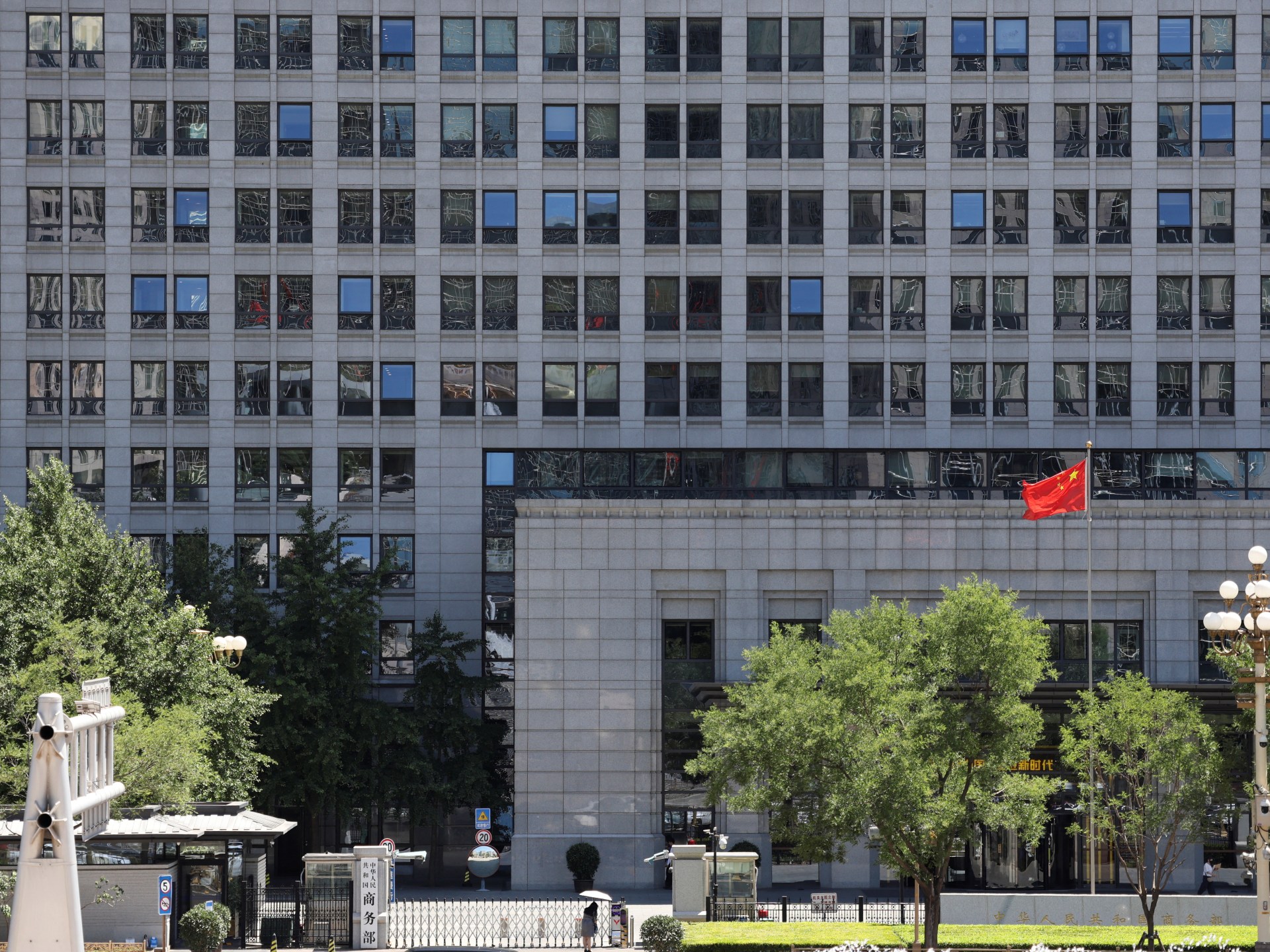
China has slapped export controls on dozens of Japanese entities over Japan’s alleged “militarism”, Beijing’s latest economic salvo in a months-long feud with Tokyo.

China’s Ministry of Commerce said on Monday that it added 20 organisations to its blacklist of entities barred from receiving dual-use items with potential military applications, citing national security and non-proliferation concerns.

The blacklisted entities include the state-affiliated National Institute for Defense Studies, Naval Systems Research Center and Ground Systems Research Center, as well as firms Mitsubishi Precision, MHI Logitech, and Kawajyu Gifu Manufacturing

The Commerce Ministry also added 20 organisations, including Mitsui E&S, Terra Drone and Hitachi Advanced Systems, to its watch list of entities that are required to submit a risk assessment and a written assurance that their exports will not contribute to Japan’s military capabilities.

China’s move is “entirely legitimate, reasonable, and lawful”, and does not affect “normal China-Japan economic and trade exchanges”, a Commerce Ministry spokesperson said.

“Regrettably, for some time now, Japan has shown no remorse; instead, it has gone further down the wrong path, accelerating its push towards ‘new militarism,’ speeding up ‘remilitarisation,’ deploying offensive weapons, and launching offensive missiles overseas,” the spokesperson said.

Minoru Kihara, Japan’s chief cabinet secretary, urged Beijing to revoke the measures, calling such moves “unacceptable”.

The latest export controls come after Beijing in February added 20 Japanese entities to its blacklist and 20 others to its monitoring list amid an escalating spat over self-governing Taiwan.

China and Japan have long had an uneasy relationship due to historical and territorial disputes, but their ties took a sharp turn for the worse late last year after Japanese Prime Minister Sanae Takaichi suggested that Tokyo could militarily intervene if China attempted to take control of Taiwan.

Takaichi’s remarks that a Chinese invasion could justify Japan exercising the right of collective self-defence under its anti-militarist constitution enraged Beijing, which considers Taiwan an integral part of its territory that must be “reunified” with the Chinese mainland.

Takaichi has made national defence a priority of her administration since winning the leadership of the conservative Liberal Democratic Party and taking office in October, raising military spending to 2 percent of gross domestic product (GDP) and pushing to amend the pacifist clause of the country’s war-renouncing constitution.

Naoise McDonagh, a lecturer at Edith Cowan University in Perth, Western Australia, whose research focuses on punitive economic measures, said Beijing’s latest export controls demonstrate its determination to use economic pressure against actors that challenge “core interest” such as Taiwan.

“The significant level of ongoing economic coercion against Japan in this instance signals the degree of sensitivity of the Taiwan issue not only to Japan, but also to other countries,” McDonagh told Al Jazeera.

“Hence, while Beijing is clearly intent on punishing Japan and Takaichi, there is also a broader goal of showing other countries that violating Bejing’s defined red lines on Taiwan risk long-term economic pain. Beijing thereby hopes to influence the wider strategic environment in its favor, by leveraging its control over key technology and related supply chains.”
Comments
You must be logged in to comment.