yahoo Press
Ford’s AI wasn’t smart enough to replace veteran engineers — so it hired 350 of them to fix quality control issues
Images
1 / 6
2 / 6

3 / 6

4 / 6

5 / 6

6 / 6
Ford made a grave mistake with AI, and has learned the hard way what happens when you overcommit to the technology without properly training it — alienating top talent in the process.

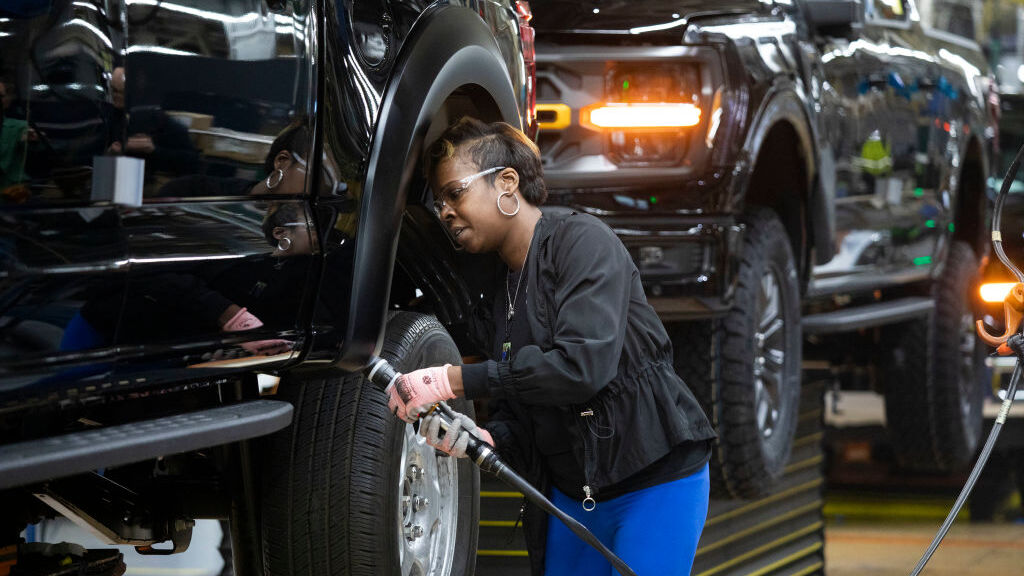
The automaker said this week that it relied too heavily on AI instead of experienced engineers to bring its cars to market. Because of this, Ford has reversed course in the last three years and hired, promoted or rehired 350 experienced technical specialists as part of a sweeping effort to shore up vehicle quality control.

"Artificial intelligence is a fantastic tool, but it's only as good as the information you use to train it," said Charles Poon, Ford's vice president of vehicle hardware engineering, in a briefing with reporters this week (1). "Mistakenly, we thought that by just introducing artificial intelligence and ingesting the design requirements that we had, that would produce a high-quality product."

Poon added that some of the company's most experienced personnel left Ford before all of their years of knowledge were fully implemented into Ford's AI. Industry veterans are now ensuring quality control, mentoring younger staff and improving the data collection and AI training that Ford uses for its automated systems.

The press briefing with reporters coincided with Ford's celebration of its new status as No. 1 in JD Power's (2) initial quality ranking among mainstream automakers. This is the first time it has achieved the milestone in 16 years.

This follows years of quality and vehicle dependability issues.

The Detroit automaker issued a whopping 152 recalls in 2025 (3), breaking the record for a year set by General Motors (77) in 2014. Ford has cut down recalls this year to 51 — still ahead of all other automakers (4) — but it blames many of the recalls on cars manufactured in the last decade, according to Business Insider (5).

The JD Power win is proof that the company's new approach, forged in 2023, is working, it said.

In addition to relying on more human talent, Ford has done away with its passive approach to finding problems with its cars. In the process, it also brought engineering, manufacturing and supply chain teams closer together.

COO Kumar Galhotra said that Ford had previously relied too heavily on a "find and fix" approach to quality control. In other words, it often identified problems after they showed up on the plant floor instead of preventing them outright.

Technical specialists, at the heart of the turnaround (6), now lead mandatory design reviews and look for points of failure.

"We're moving from that find-and-fix mentality to preventing issues before they occur," Galhotra said. "We're focused on enablers and early indicators versus outputs. Stop admiring the problem and start solving it."

Ford is not abandoning its use of AI, but its pivot to use AI in conjunction with experienced human oversight, at least for now, cools some fears that AI will completely replace humans in the workforce.

Last year, Ford CEO Jim Farley notably said that AI will replace half of all white-collar jobs (7), while imploring more young adults to enter the trades.

We rely only on vetted sources and credible third-party reporting. For details, see our ethics and guidelines.

The Verge (1); Ford (2); Dealership Guy (3); Motor1 (4); Business Insider (5); Bloomberg (6); The Wall Street Journal (7)

This article originally appeared on Moneywise.com under the title: Ford's AI wasn't smart enough to replace veteran engineers — so it hired 350 of them to fix quality control issues

This article provides information only and should not be construed as advice. It is provided without warranty of any kind.
Comments
You must be logged in to comment.