yahoo Press
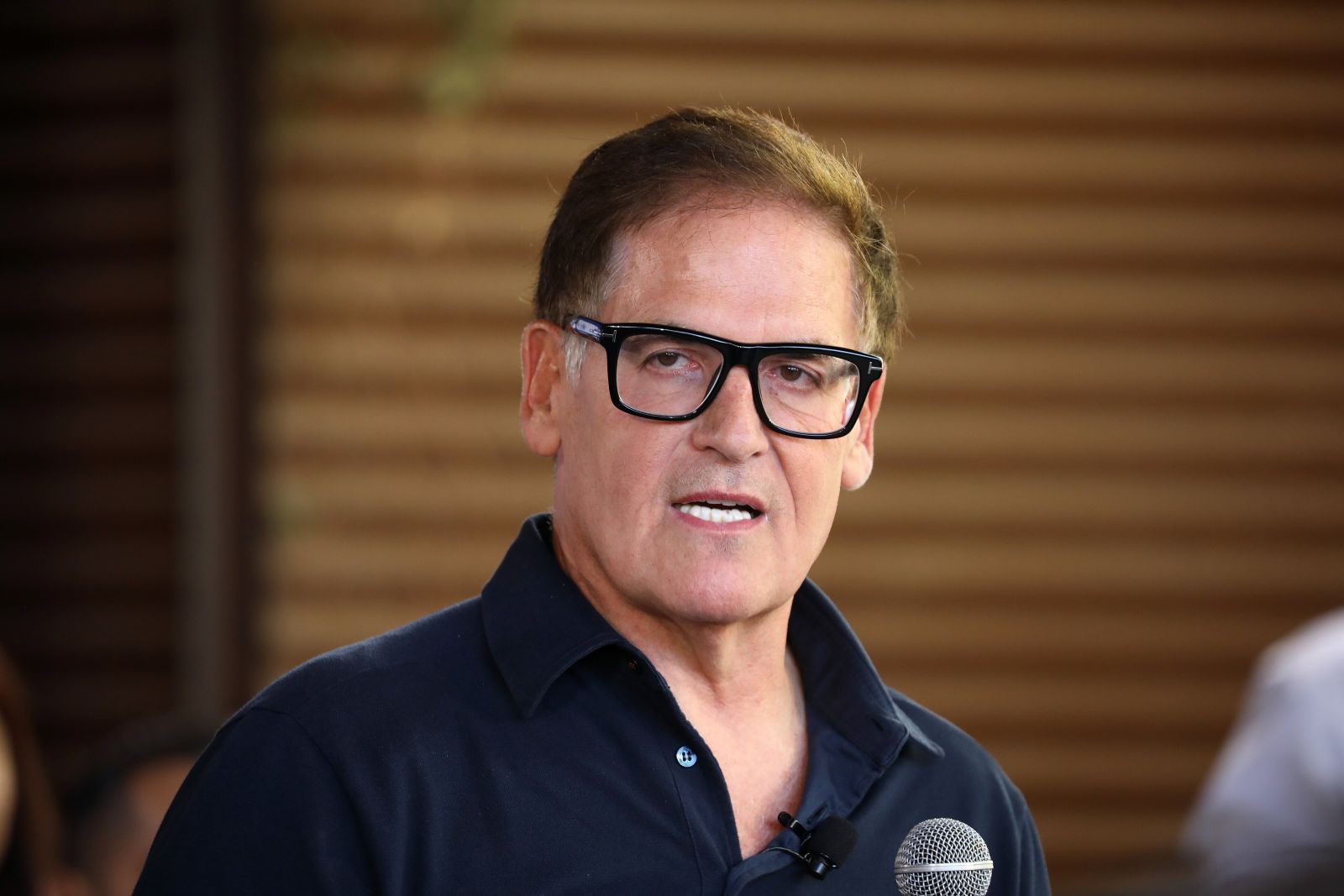
Billionaire Mark Cuban Asks If AI ‘Collapses’ And Data Centers Turn Into ‘Chuck E Cheeses,’ Would That ‘Create A Revival Of Jobs?’
Images
1 / 6
2 / 6

3 / 6

4 / 6

5 / 6

6 / 6
Today's artificial intelligence race is fueled by one assumption: demand will keep climbing.

Mark Cuban just spent a day asking what happens if it doesn't.

As Trump Doubles Down on Quantum Computing, This Is the Top-Performing Stock to Buy YTD

Why Verizon, AT&T, and T-Mobile Should Be Terrified of Elon Musk's Next Move

Middle East Tensions, Tesla Deliveries and Other Can't Miss Items this Week

Markets move fast. Keep up by reading our FREE midday Barchart Brief newsletter for exclusive charts, analysis, and headlines.

On June 26, the billionaire entrepreneur returned to X with a follow-up to his previous day's warning that the backlash against data centers had become a backlash against AI itself. Rather than doubling down on that argument, he explored the opposite scenario: What if the critics are right? What if AI demand falls, data centers sit empty and the industry's massive spending spree backfires?

Instead of predicting disaster, Cuban turned it into a thought experiment.

"If demand collapses and most of the data centers are turned into Chuck E. Cheeses or whatever," he wrote, "wouldn't that soon create a revival of jobs as entrepreneurs step up to fill the void and create jobs?"

Then he pushed the idea one step further.

"SMBs create 60 pct of jobs every year," Cuban wrote, referring to small and midsize businesses. "Maybe you get what you want? AI gone. No AI businesses driven by entrepreneurs that don't use it?"

The post built directly on Cuban's June 25 message, when he argued that opposition to data centers had become "a proxy for the hate towards AI and the concentration and accumulation of wealth it's creating."

In that earlier post, he urged the companies behind large language models, or LLMs, to stop trying to sell the benefits of artificial intelligence and start listening to communities worried about jobs, creative careers and the local effects of large data-center projects.

His June 26 comments asked what happens if those concerns ultimately reshape the industry's future.

Cuban acknowledged that today's AI leaders are making enormous bets.

He said they are "borrowing a f*** ton of money" to build data centers and computing infrastructure because they believe the companies with the greatest capacity will ultimately dominate the market.

But he also recognized the risks if public sentiment shifts and demand fails to match expectations.

"Not all that much different than what happened in 2001," Cuban wrote, comparing the possibility to the collapse of the dot-com bubble after years of aggressive spending on internet infrastructure.

Rather than dismissing critics, he explored where that chain of events could lead.

The image of abandoned data centers becoming Chuck E. Cheese locations was classic Cuban — part humor, part economics.

His broader point was that even if the current AI boom stumbled, economic activity would not necessarily disappear with it.

If large AI companies scaled back, entrepreneurs could eventually repurpose the people, capital and infrastructure left behind. Cuban pointed to small and midsize businesses as the country's largest engine of job creation and suggested they could fill whatever vacuum emerged.

The scenario was not a forecast. It was a reminder that markets rarely move in straight lines, and that periods of disruption often create opportunities for new businesses.

Despite laying out the downside, Cuban made clear he has not changed his long-term view.

"Now I personally think AI will be a positive for everyone," he wrote.

He argued that many of the industry's current challenges stem from poor communication rather than the technology itself, saying AI companies have struggled to connect with the people most worried about its impact.

Cuban closed the discussion by emphasizing that he was not trying to persuade anyone.

"I'm not trying to change your mind or convince you of anything," he wrote. "Just trying to learn."

For investors, that may be the most valuable takeaway. Even one of AI's most outspoken supporters believes the strongest investment thesis is the one that has survived its toughest questions.

On the date of publication, Caleb Naysmith did not have (either directly or indirectly) positions in any of the securities mentioned in this article. All information and data in this article is solely for informational purposes. This article was originally published on Barchart.com
Comments
You must be logged in to comment.