yahoo Press
They put thousands into a savings app that promised safety and a free lottery — when it fell apart, some got $0.75 back
Images
1 / 6
2 / 6

3 / 6

4 / 6

5 / 6

6 / 6
Chad Fenner thought he wasn't taking a gamble with his savings but still lost thousands of dollars.

In 2021, he opened an account with Yotta, a savings app that marketed itself as a no-loss lottery — the more you save, the more free tickets you earn toward weekly prize drawings.

Jeff Bezos backs a platform that lets anyone invest in rental homes for as little as $100 — here are 5 ways to build wealth like a landlord without actually being one

Robert Kiyosaki says this 1 asset will surge 400% in a year and begs investors not to miss this 'explosion'

Millionaires under 43 hold only 25% of their wealth in stocks. Here's where their money is actually going

He set up an auto-transfer of $50 every week or two, watched the balance grow and held on to the detail that mattered most: The deposits were FDIC-insured. The app said so on its website.

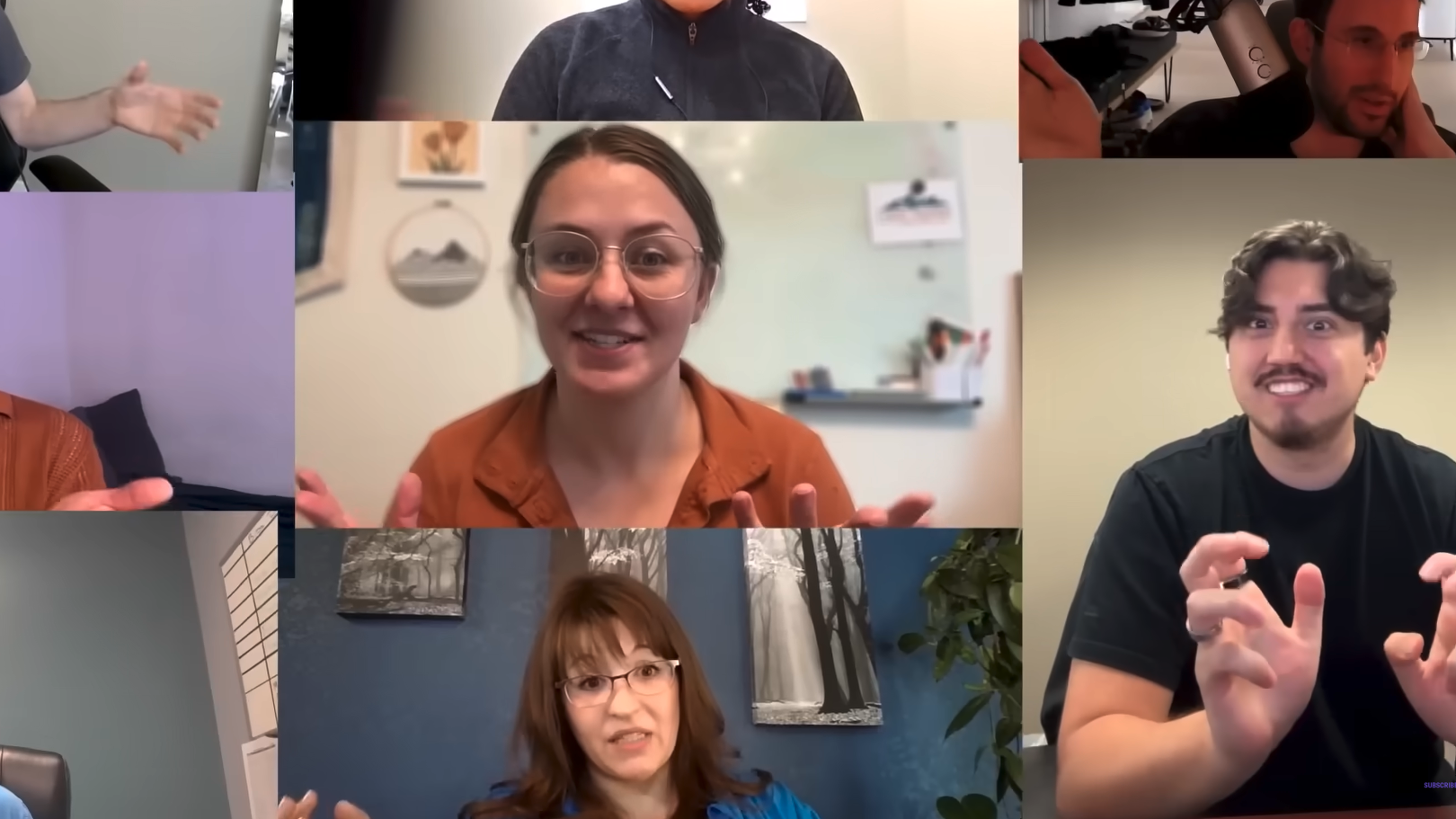
"I was expecting the same thing as what I had already had in my credit union," Fenner says in a More Perfect Union documentary (1), "except the potential for greater interest returns."

By May 2024, he had $23,419 saved. Then he tried to withdraw $10,000 — but couldn't. Two full years later, he still can't access his money.

Fenner is one of 85,000 (2) Yotta customers who lost access to their accounts in a collapse that co-founder Adam Moelis said resulted in $112 million (3) of customer funds missing.

The debacle, which is still unfolding, is a painful reminder that not every company that accepts your money will take good care of it — and it's not easy for ordinary people to know the risks.

Yotta Technologies was not a bank. It was a financial technology company, which meant it couldn't hold deposits itself, so it routed customer funds through a San Francisco middleware company called Synapse Financial Technologies. Synapse then placed those funds at partner banks, including Arkansas-based Evolve Bank & Trust.

Yotta pooled a portion of the interest earned on deposits and paid it out as lottery prizes. For every $25 saved, customers got one ticket in weekly drawings for a top prize of up to $10 million. And the app told customers their deposits were always safe, backed by FDIC insurance at the partner banks (4).

What Synapse did with that money is what made the collapse so destructive. Rather than keeping a separate account for each customer, Synapse pooled thousands of people's savings together into large "for-benefit-of" accounts (5) held at partner banks. As the documentary puts it, a for-benefit-of account is like hundreds of people sharing one bank account (1). Only Synapse tracked how much of the pooled balance belonged to each person.

"I went through [the fine print] before we joined the bank," one user says in the documentary, "and was like, you know what? This checks out. It is FDIC-insured."

FDIC insurance guarantees the federal government covers deposits up to $250,000 if a chartered bank fails (6). For these customers, it felt like the ultimate safety net, but it wasn't.

What Yotta had not made clear was that in October 2023, it had moved customer accounts from Evolve to Synapse Brokerage LLC (a Synapse subsidiary that did not carry FDIC protection), despite, as California regulators later found, having "serious concerns about Synapse" at the time (7).

When California's Department of Financial Protection and Innovation fined Yotta $1 million in May 2026 for this, Commissioner KC Mohseni said: "Yotta blatantly deceived thousands of California customers regarding the risk to their accounts (7)."

Don't Miss: Paying too much for car insurance? 3 clever (and free) ways to slash your bill today

Synapse filed for Chapter 11 bankruptcy in April 2024 (8). By May 11, (9)Evolve had frozen all withdrawals through Yotta (9). Debit cards stopped working. Transfers stopped processing, and people just couldn't access their money.

The reason FDIC coverage didn't apply: the Federal Deposit Insurance Corporation insures deposits when a chartered bank fails. Synapse was middleware, not a bank. And because Synapse alone kept the ledgers tracking how much of each pooled balance belonged to each customer, its bankruptcy wiped out the record keeping.

Apparently, the problem had been there for years. A November 2022 email obtained by Jason Mikula, publisher of Fintech Business Weekly, showed Evolve writing to Synapse that "the balances tend to differ a couple hundred million on the daily (10)." Years before the collapse, the two sides knew they couldn't reconcile hundreds of millions in customer funds.

Evolve did not immediately respond to a request for comment.

"There is no playbook for the failure of a third-party technology service provider like Synapse," Mikula says in the documentary.

When reconciliation letters started arriving, the amounts were so small that it shocked everyone. One person who said they saved $21,000 received $17 back. Another was offered $0.75 back from her $15,000 savings.

Others missed mortgage payments, drained retirement accounts and took on credit card debt. "My mom got sick with cancer, and all of these costs compounded," one user said.

In November 2025, the Consumer Financial Protection Bureau (CFPB) allocated $46.2 million from its Civil Penalty Fund to compensate Synapse victims nationally (11). California required Yotta to notify affected California customers that they may be eligible for relief from the CFPB's Civil Penalty Fund as part of its $1 million consent order in May 2026 (7).

Yotta is still in the App Store, now operating as a gambling app with blackjack and roulette.

Hilary J. Allen, financial regulation expert and professor of law at American University Washington College of Law, told the documentary what she sees as the core problem: "The fintech industry essentially, through these partnerships, [is] trying to free ride on those benefits without having to pay for the compliance costs."

She also acknowledges that people shouldn't have to bear the burden of protecting themselves in these situations: "I'm a law professor who studies financial regulation for a living and it's hard for me to parse the fine print sometimes. To say that individuals bear the burden of protecting themselves from those business models is a really messed up way, frankly, of dealing with things."

According to the documentary, if you use Chime, Cash App, PayPal or Venmo (or any app that is not itself a chartered, regulated bank), your money may be sitting in the same kind of pooled accounts that made Synapse's collapse so untraceable. You can check whether your deposits are insured by using the FDIC's online tools to look up the bank and estimate your coverage (12).

Chad Fenner's $23,419 is still frozen, alongside tens of thousands of other people. "Like, no one is responsible for my money," one Yotta user said, and after two years of Yotta, Evolve and Synapse pointing at each other, that's still the most accurate summary of where things stand.

Dave Ramsey warns this is the most common Social Security mistake — here's what it is and how to fix it ASAP

Here's the average income of Americans by age in 2026. Are you keeping up or falling behind?

When he dies, Warren Buffett said 90% of his wife's inheritance will go into a single investment. Here's why (and how you can do it too)

The tax breaks in Trump's 'big beautiful bill' expire after 2028 — and experts say most people won't act in time. What to do before the window closes

Join 250,000+ readers and get Moneywise's best stories and exclusive interviews first — clear insights curated and delivered weekly. Subscribe now.

We rely only on vetted sources and credible third-party reporting. For details, see our ethics and guidelines.

YouTube (1); Business Journalism (2); CNBC (3); WithYotta (4); Modern Treasury (5); FDIC (6); DFPI (7); Consumerfinance.gov (8); Banking Dive (9); Fintech Business Weekly (10); Crowdfund Insider (11); EDIE FDIC (12)

This article originally appeared on Moneywise.com under the title: They put thousands into a savings app that promised safety and a free lottery — when it fell apart, some got $0.75 back

This article provides information only and should not be construed as advice. It is provided without warranty of any kind.
Comments
You must be logged in to comment.