huffpost Press
The Democratic Insurgency Is Sweeping Through Colorado
Images
1 / 12

2 / 12
3 / 12
4 / 12
5 / 12
6 / 12
7 / 12
8 / 12

9 / 12
10 / 12
11 / 12

12 / 12
DENVER — The insurgency rocking the Democratic Party is set to reach mile-high heights on Tuesday, with a trio of primaries in Colorado giving voters a chance to express their anger with the party’s establishment.

The Colorado races are distinct: an ideological battle for a safe blue House seat in Denver, a governor’s race where a longtime senator is in an unexpectedly tight race and a fight for the chance to knock off a vulnerable Republican in the suburbs north of the city. In all three, however, momentum seems to be on the side of the candidate most willing to buck the party’s old ways in a state where moderate Democrats have long reigned.

“Voters are tuning against anybody associated with the establishment,” said Rick Ridder, a longtime Democratic pollster in the state, pointing to this week’s progressive victories on the other side of the country. “We saw it in New York. The same attitudes exist among Democratic primary voters everywhere.”

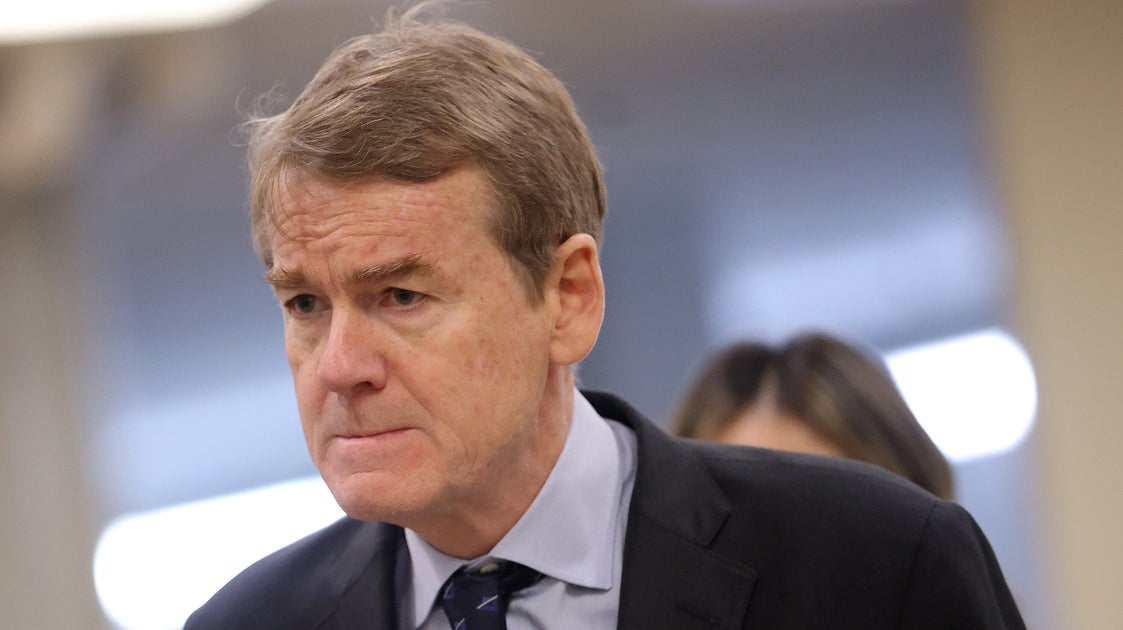
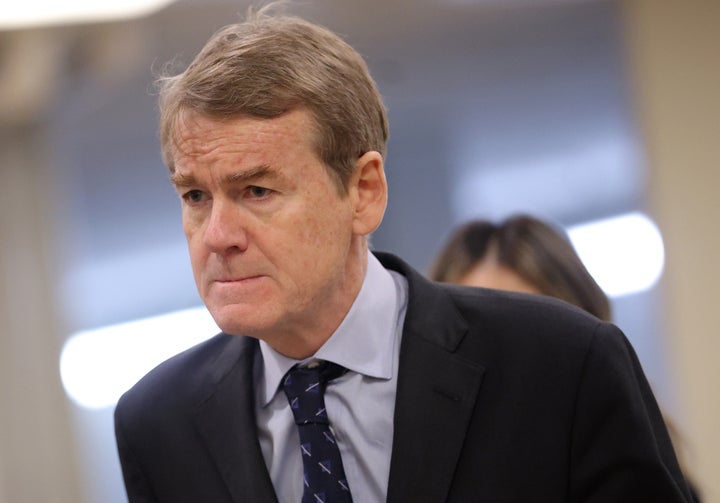
The most shocking outcome may be the possible failure of Sen. Michael Bennet’s campaign for governor. Bennet ran for the 2020 Democratic presidential nomination and was a leading supporter of the expanded child tax credit, which in 2021 paid parents across the country a monthly allowance of as much as $350 per child. The benefit slashed child poverty and represented a high-water mark for progressive policy, but Bennet and likeminded Democrats failed to make it permanent.

While polling gave Bennet a massive 31-point lead over Attorney General Phil Weiser last summer, the race is now seen as a nail-biter. Weiser, who, like Bennet, is a center-left mainstream liberal, has a 9-point lead heading into the primary, and there is a high number of undecided voters in the state, according to a survey conducted by Public Policy Polling this week on behalf of a pro-Weiser super PAC.

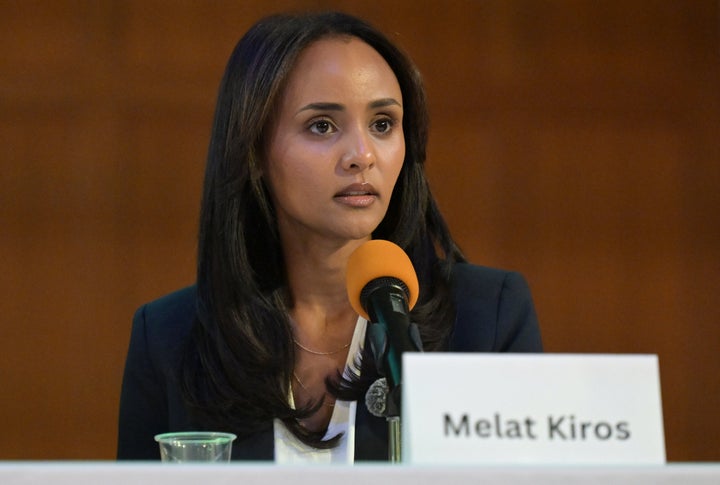
Suzanne Spruce, a Denver resident who teaches first grade in a nearby suburb, told HuffPost she voted for both Weiser and Melat Kiros, a democratic socialist challenging longtime incumbent Rep. Dianna DeGette in the 1st District.

“We need some new faces and voices,” she explained.

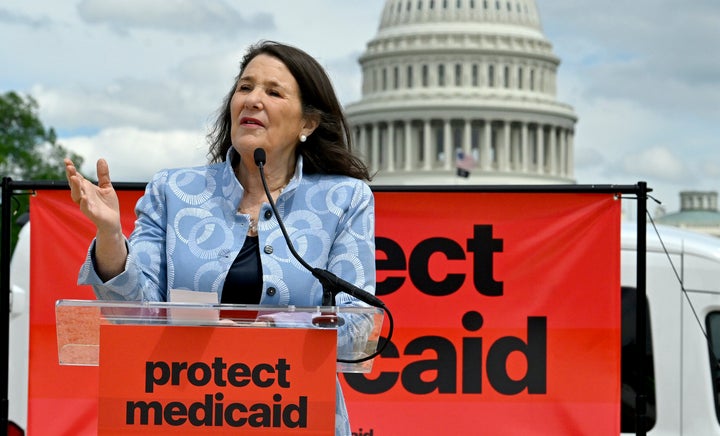
Establishment-aligned groups are rushing to try to save DeGette, who has held her seat since 1997. She’s facing a spirited challenge from Kiros, a progressive who lost her job as a lawyer for writing an op-ed criticizing the backlash to criticism of Israel. Kiros has attracted the support of the progressive group Justice Democrats and Sen. Bernie Sanders (I-Vt.).

“People in Denver are witnessing their everyday cost of living just get more and more expensive,” Kiros said in an interview with HuffPost earlier this year. “And they’re seeing the same people in the same leadership positions over the course of the last few decades, who haven’t done anything to make a tangible difference in people’s daily lives.”

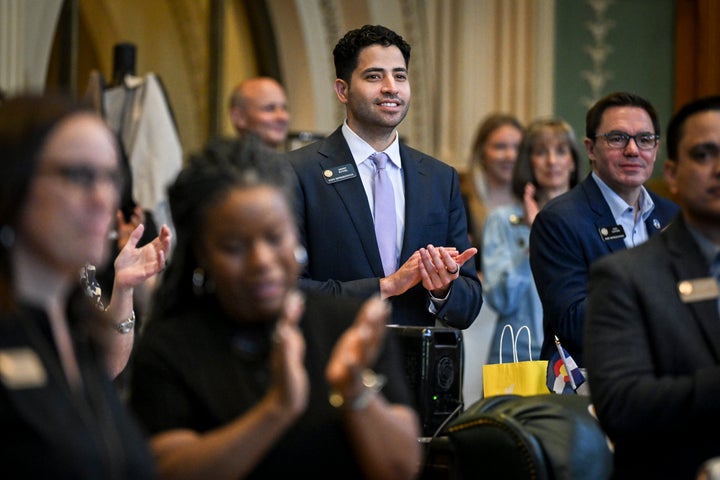
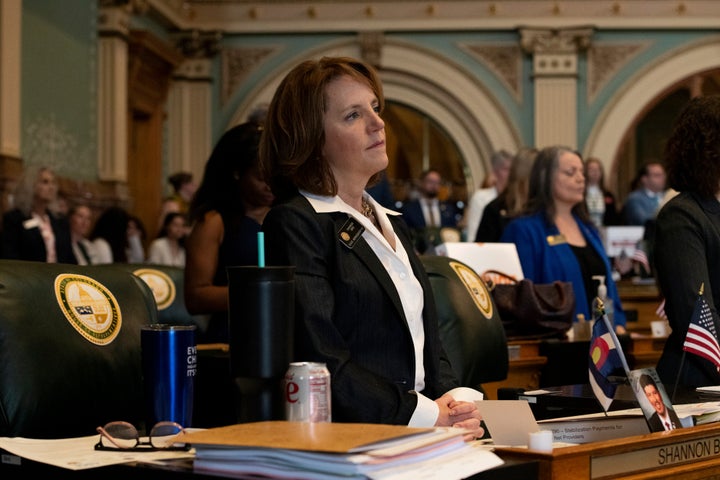
And in the 8th District, Rep. Manny Rutinel, a 31-year-old who positioned himself as a social-media-friendly outsider and received millions in support from groups focused on AI safety, is now seen as a near-lock. He seems poised to defeat fellow state lawmaker Shannon Bird, a more conventional Democrat who was the initial favorite of Washington insiders, for the right to challenge GOP Rep. Gabe Evans in a swing district.

Some establishment candidates are better positioned: Sen. John Hickenlooper (D-Colo.) is expected to toss aside a challenge from state Sen. Julie Gonzales, who managed to win the backing of the progressive group Indivisible but raised less than $900,000 to Hickenlooper’s $9.8 million. And Colorado Secretary of State Jena Griswold, a younger establishment-aligned candidate known for trying to boot President Donald Trump off the state’s ballot, is favored to win the primary for state attorney general over consumer lawyer David Seligman.

But in a state where center-left politicians like Bennet, Hickenlooper and incumbent Gov. Jared Polis have had a lock on power for more than a decade, the success of any insurgent campaign amounts to a major shock to a political consensus built on a unique combination of progressivism and libertarianism whose proponents have touted it as a national model.

The progressive charge has also frustrated many establishment figures in the state, who have argued its leaders are already plenty progressive. Bennet was one of the godfathers of the Democratic push for a massive child tax credit expansion, DeGette supports “Medicare for All” and helped manage President Donald Trump’s impeachment in 2019, and Polis helped create a universal free preschool program in the state.

Robert Greer, a 41-year-old nonprofit housing attorney in Denver, told HuffPost he’s supporting Bennet because he thinks Weiser gives “vibes” of being progressive while his policies are decidedly less so.

“I think Bennet is more progressive, which is really contrary to the conventional wisdom,” Greer said, citing the senator’s stances on housing affordability, transportation, climate change and a statewide public option for health insurance.

A yearslong surge of transplants to Denver and its suburbs has infused the state with more and more young and independent voters who are casting their ballots in Democratic primaries, and many of them are frustrated with the high cost of housing in the state.

“The Colorado dream is less and less of an opportunity for them,” Ridder said. “People are looking for a rationale as to why their dreams are being curtailed.”

Another major issue: The state’s leaders have taken a noticeably friendlier approach to Trump than many of their blue-state counterparts, even though former Vice President Kamala Harris won Colorado and New York by similar margins. Hickenlooper and Bennet voted for 10 and eight of Trump’s Cabinet nominees, respectively, among the highest number for any Democratic senator. And Polis has both publicly aligned himself with Health and Human Services Secretary Robert F. Kennedy on certain issues and pardoned Tina Peters, a county elections clerk and conspiracy theorist who stole voter data, at Trump’s urging.

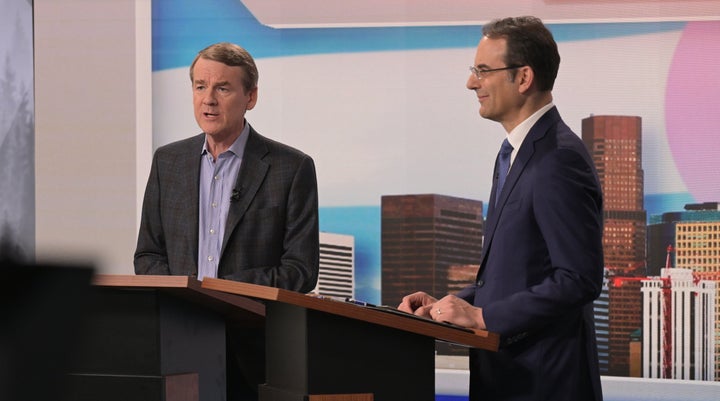
Weiser has taken advantage of this in his race against Bennet, repeatedly contrasting his 67 lawsuits against the Trump administration with Bennet’s votes for Trump’s Cabinet secretaries. At a debate this month, Weiser noted Bennet’s vote for USDA Secretary Brooke Rollins, who has implemented drastic changes to federal food assistance.

“He stands by that vote. I’ve had to sue her four times,” Weiser said.

It’s working on an electorate that loathes Trump.

“The primary electorate is very upset about Jared Polis and they want to make sure they don’t make that mistake again,” said Adam Carlson, a Democratic pollster who has done extensive work in Colorado this cycle. “They want to make sure their next governor is a solid progressive.”

Democrats aren’t sure Bennet’s campaign is reassuring voters the way the state’s senior senator might hope. A Democratic consultant in the state, requesting anonymity to speak frankly about a powerful member of his party, pronounced himself “baffled” by a Bennet ad where the senator touts endorsements from three Colorado members of Congress: Democratic Reps. Jason Crow, Joe Neguse and Brittany Pettersen.

“The knock on you is that you’re too D.C., and you run an ad featuring three different people who want you to appoint them to the Senate?” the consultant asked, referring to how Bennet would be able to appoint his successor if elected.

During a debate this month, Bennet repeatedly mentioned his time in the state as a school superintendent.

“I, as a former school superintendent, when I went to D.C., led the fight for the Enhanced Child Tax Credit, which cut childhood poverty in America in half,” Bennet said. “That unfortunately has gone away at the national level.”

In a statement, Bennet’s campaign said he’s the candidate who can take Colorado in a new direction.

“As we close out this campaign, the difference between the candidates couldn’t be more clear: Michael’s offering a vision for a bolder, stronger Colorado and his opponent is relying on the same, tired politics-as-usual,” Bennet spokesperson Jordan Fuja said.

Bennet and Weiser have raised roughly similar amounts into their campaign, with Bennet loaning his campaign $1 million earlier this month. But the senator has had an advantage on the television airwaves because of support from Rocky Mountain Way, a super PAC that has taken $3.5 million from former New York City Mayor Michael Bloomberg.

Outside cash is also playing a major role in the 1st District, where the cavalry may have arrived too late to help DeGette. Heading into the final week of the race, $2.1 million had been spent on television ads, according to a media-buying source, with more than half of that set to come in the final week of the campaign — a massive sum considering Colorado’s all-mail voting system means many voters have already cast their ballots.

And that was before Elect Pro-Choice Women, a group that has received backing from the American Israel Public Affairs Committee in the past, put an additional $1.1 million into the race on Thursday night.

Many of the ads have heavily attacked Kiros for her limited involvement in civic life before her run, with some of the ads seemingly implying she had not lived in Denver before last year — an odd strategy in a state filled with transplants. (Her family immigrated to Colorado when she was less than 1 year old, and she moved back to Denver after losing her job.)

DeGette, whose campaign did not respond to a request for comment, has also asked outside groups to attack Kiros for comments she made suggesting American foreign policy led to the Sept. 11, 2001, terrorist attacks and for refusing to label a firebombing attack in Boulder last year as an act of anti-Semitism.

The topic came to a head earlier this month, after a Kiros campaign rally featuring popular far-left political streamer Hasan Piker was suspiciously canceled three times in a row by three prominent event spaces around town. Kiros claimed DeGette was behind the string of cancellations; DeGette called the accusation “an absolute lie.”

“She’s free to make her own mistakes, and campaigning with an infamous anti-Semite who says he ‘hates this country’ and thinks we ‘deserved 9/11’ is a big one,” DeGette responded, referring to Kiros and comments by Piker.

While both the governor’s race and the 1st District are solidly Democratic, the 8th is a swing district Trump won by 2 percentage points. In the final weeks of the race, Rutinel — who has attracted support from a super PAC focused on AI safety and from Latino Victory Fund — has developed a massive resource advantage over the more moderate Bird, who has not aired any television ads in the last two weeks.

While Bird was never added to the DCCC’s Red to Blue program, it was widely known that she was initially the preferred candidate of national Democratic leaders. But a pro-Democratic political environment and Rutinel taking some steps toward the center on issues like oil and gas production have the party confident he’ll be able to unseat Evans, the first-term Republican.

The GOP is not so sure.

“Out of touch Democrats Manny Rutinel and Shannon Bird have done nothing but race to the far left, fight amongst themselves, and throw cash out the window throughout their messy primary,” National Republican Campaign Committee spokesperson Zach Bannon said in an email. “Whoever escapes will be a bruised and broke liberal who will be rejected by Colorado voters this November.”

Ryan Grenoble reported from Denver. Kevin Robillard and Arthur Delaney reported from Washington.

By entering your email and clicking Sign Up, you're agreeing to let us send you customized marketing messages about us and our advertising partners. You are also agreeing to our Terms of Service and Privacy Policy.
Comments
You must be logged in to comment.