buzzfeed Press
Most Women Were Taught To Do This 1 Thing For Years. And Now Our Bodies Are Paying For It.
Images

1 / 18

2 / 18

3 / 18

4 / 18

5 / 18

6 / 18

7 / 18

8 / 18

9 / 18

10 / 18

11 / 18

12 / 18

13 / 18

14 / 18
15 / 18

16 / 18

17 / 18
18 / 18
“I see it all the time clinically in women dealing with pelvic floor symptoms, core dysfunction, back pain, hip pain, and breathing restrictions.”

“The body is resourceful that way,” she continued. “But surface tension was never designed to be a full-time job.”

Experts say this pattern, sometimes referred to as “hourglass syndrome,” can affect everything from breathing mechanics and pelvic floor function to posture and chronic back pain.

Hourglass syndrome isn’t a formal medical diagnosis. Rather, it’s a term clinicians use to describe a common pattern of abdominal tension.

According to Packard, years of pulling the stomach inward can train the body to rely on the outer abdominal muscles for stability instead of the deeper muscles that are designed to support breathing, posture and pressure management.

“Hourglass syndrome is what that looks like on the outside,” Packard said. “On the inside, the surface muscles you can grip with are doing too much, and the deeper system that’s supposed to coordinate pressure has gotten quieter and quieter.”

Melissa Brandon, a pelvic floor physical therapist and founder of Homebody Wellness, told HuffPost that the pattern is surprisingly common and often goes unnoticed.

“In my clinical practice, I see underlying abdominal gripping in at least 75% of clients I work with, and it is often subconscious,” she said.

Brandon explains that chronic abdominal tension changes how the body manages pressure.

“Many people think ‘sucking it in’ is a harmless posture habit, but chronic abdominal gripping can fundamentally change the way we breathe, move, and coordinate pressure throughout the body,” she said.

Normally, the diaphragm moves downward during inhalation as the rib cage expands and the pelvic floor lengthens in response. But when the upper abs stay tight, breathing becomes more shallow and chest-driven.

Brandon said this can increase reliance on the neck and upper chest muscles, making breathing less efficient and more effortful.

Packard adds that the diaphragm and pelvic floor are meant to function as a coordinated system. When one is restricted, the other is affected.

“When you grip your upper abs, you restrict the diaphragm from being able to lower and expand,” Packard said. “The pelvic floor never gets the input it needs to lengthen.”

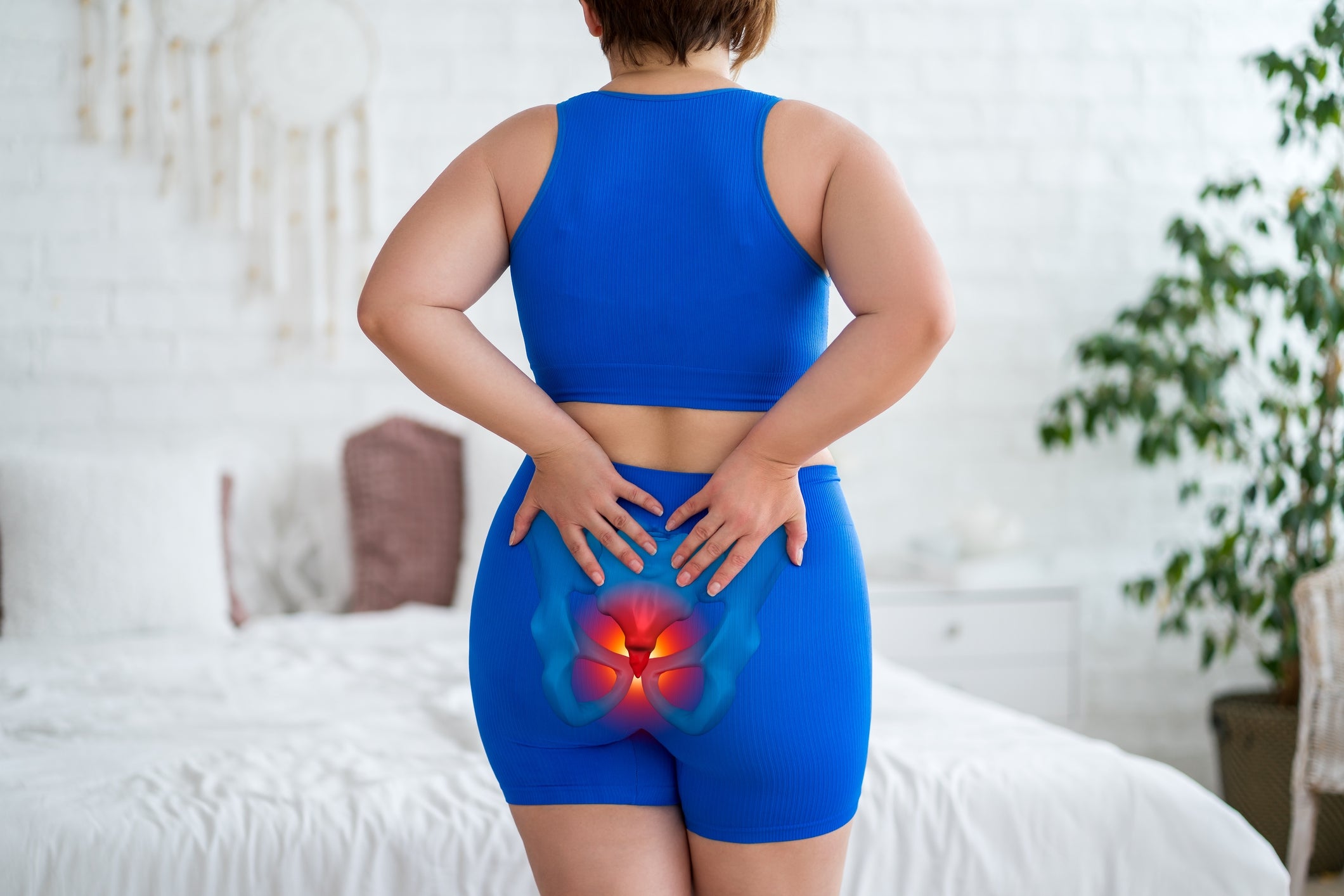
Over time, this altered pressure system may contribute to urinary leakage, pelvic pressure, prolapse, painful sex, and persistent lower back pain.

Packard notes that these symptoms are often misinterpreted as weakness.

“Here’s what surprises people: the pelvic floor in these cases usually isn’t weak in the way people imagine. It’s tight,” Packard explains. “Imagine holding your bicep contracted all day. By the time you actually went to use it, it would be tired, and it wouldn’t work very well.”

Because of this, she cautions that more Kegels are not always helpful. If the pelvic floor is already shortened and overactive, strengthening alone can reinforce the problem.

Brandon agrees that the first step is not strengthening.

“Stop defaulting to more Kegels,” she said. “For many women, the first step isn’t strengthening. It’s learning how to relax, lengthen, and coordinate the system.”

Back pain is also a sign of hourglass syndrome. When the body’s deeper stabilizing muscles aren’t coordinating properly, other muscles often compensate. The lower back, hips, and rib cage may take on more work than they were designed to handle.

According to Brandon, this can contribute to chronic back pain, tension, and difficulties managing pressure through the trunk.

“The diaphragm becomes less efficient, forcing our accessory neck muscles to work harder,” she explains. “Our obliques can become overactive, while our deepest core stabilizer, the transverse abdominis, takes a back seat, leading to back pain and issues with trunk pressure management.”

Both Packard and Brandon emphasize that the first step is awareness of when and how abdominal gripping is happening.

This article originally appeared on HuffPost.
Comments
You must be logged in to comment.