yahoo Press
Dave Ramsey tells Arkansas mom, 51, with no savings: ‘You’re gonna get there’ — can retire a millionaire. Here's how
Images
1 / 4
2 / 4

3 / 4

4 / 4
Moneywise and Yahoo Finance LLC may earn commission or revenue through links in the content below.

Finding yourself divorced at 51 after being a lifelong stay-at-home mom would make almost anyone feel overwhelmed. And that's before having to figure out how to take financial control of your life.

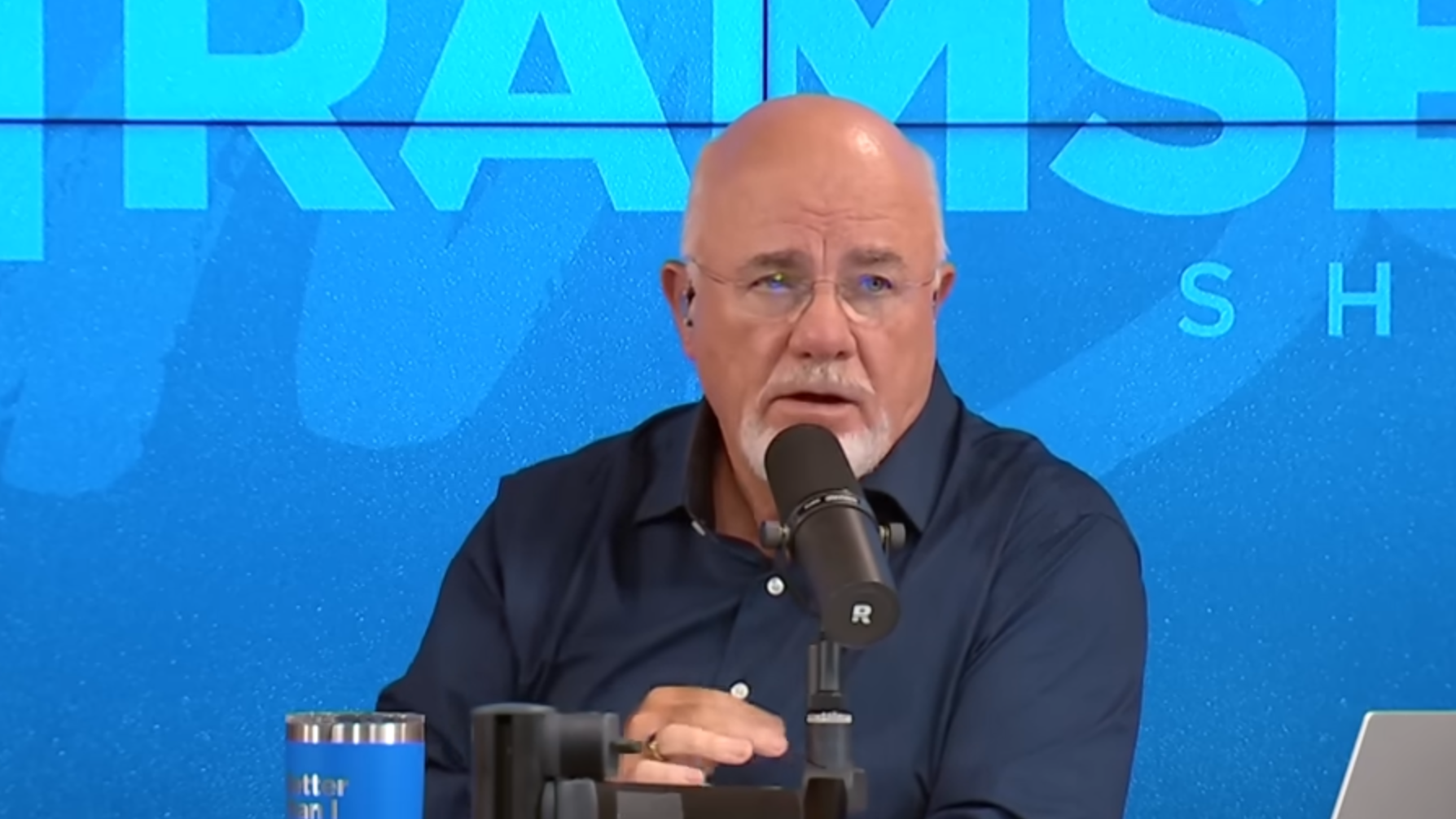
That's what happened to Trisha, who called into The Ramsey Show when her husband left after 22 years in 2022 (1), taking his $130,000 annual income with him but leaving behind the new car he'd bought her the month before, which came with a $596 monthly payment.

Dave Ramsey warns nearly 50% of Americans are making 1 big Social Security mistake — here's how to fix it ASAP

JP Morgan sees gold hitting $6,000/oz before 2027 — and a Gold IRA lets you hold the physical metal while deferring the tax bill. Get your free guide from Priority Gold

The ultra-rich use these 5 real estate strategies to build wealth while they sleep — you can start with just $100

Now that she's had a few years to sort herself out, Trisha's looking to find a way forward. In addition to having to support herself, she is scared about retirement. She told hosts Ramsey and Jade Warshaw, "I spent my whole life raising kids, homeschooling. I have basically no retirement."

But Ramsey says she can get back on track, even if she starts saving late.

"Lots of 51-year-olds making $50,000 a year, $75,000 a year with your extra income coming in have become millionaires by the time they were 65 or 70. Lots of them," Ramsey said.

Here's what to do if you find yourself struggling to make up for lost time when it comes to retirement savings.

Despite Trisha's fear for her future, Ramsey was at ease, saying, "Your math is going to be OK. You're gonna get there."

Trisha told the hosts she had refinanced her car loan to save her money, started a second job, and had $38,000 saved in a money market fund, along with $3,000 in another account.

With this fairly solid footing, Ramsey recommended his 7 Baby Steps program (2), which details his approach to building wealth.

These steps are:

1. Saving a $1,000 starter emergency fund

2. Paying off all debt (except the mortgage)

3. Saving three to six months of living expenses in an emergency fund

4. Investing 15% of your household income

5. Saving for college for your kids

6. Paying off your home early

7. Building wealth and giving

Ramsey went through the steps with Trisha, advising her to first pay off the remaining balance on the car, which was around $25,000.

"Write a check today and pay off the car," he said. While he acknowledged this would be "very scary," he also pointed out she would still have $16,000 left in savings, which was a good start to the emergency fund.

Read More: Thanks to Jeff Bezos, you can become a landlord for $100 — without the headache of actually being one

If you're just starting to build your emergency fund like Trisha, don't let your cash sit gathering dust. An ideal emergency fund will typically combine high liquidity, so you can get to your cash when you need it, with a solid interest rate to keep growing your savings.

But traditional savings accounts typically have low interest rates. This makes finding the right high-yield alternative essential for boosting your saving power.

A high-yield account like a Wealthfront Cash Account can be a great place to grow your uninvested cash, offering both competitive interest rates and easy access to your money when you need it.

A Wealthfront Cash Account currently offers a base APY of 3.30% through program banks, and new clients can get an extra 0.75% boost during their first three months on up to $150,000 for a total variable APY of 4.05%.

That's ten times the national deposit savings rate, according to the FDIC's May report.

Wealthfront is also offering new clients who enable direct deposit ($1,000/mo minimum) to their Cash Account and open and fund a new investment account an additional 0.25% APY increase with no expiration date or balance limit, meaning your APY could be as high as 4.30%.

With no minimum balances or account fees, as well as 24/7 withdrawals and free domestic wire transfers, your funds remain accessible at all times. Plus, you get access to up to $8M FDIC Insurance eligibility through program banks.

As it stands, Trisha is earning $52,400 and has a second job that made $14,000 last year. She is also eligible for an employer match on her 401(k). Running the numbers, Ramsey felt confident that if she invested 15% of her income from age 51 to 70, she'd end up with $600,000 to $800,000 — even if she never got another raise.

He left her with one key piece of advice: "You have to continue to be very process driven, math driven, and let the facts talk to you," he said. "You can fight through this. You can do it."

Tracking where your money is going at all times isn't just a quick fix for someone in Trisha's situation. It's the start of a lifelong commitment to financial literacy. That's the process driven part of Ramsey's advice.

But managing all of your inputs and outputs yourself can be a major time drain, especially if you're working two jobs.

Monarch Money's expense tracking system makes managing your finances easier. The platform seamlessly connects all your accounts in one place, giving you a clear view of where you're overspending.

By linking your credit card accounts, you can monitor your payment progress in real-time and set specific goals to get out of credit card debt faster.

For a limited time, you can get 50% off your first year with the code WISE50.

Trisha's fear about retirement isn't unique. While 59% of Americans have a retirement account such as a 401(k) or IRA, only about half of them believe their savings will be enough to live on comfortably, according to a Gallup poll (3).

And the balances don't inspire much confidence either. Vanguard's 2025 How America Saves Report shows the average retirement account balance for Vanguard participants was $148,153, but the median balance — a better reflection of the typical saver — was $38,176. And even for those closest to retirement, the median balance was $95,642 (4).

That number may sound large, but under the common "4% rule," it would generate less than $4,000 a year in retirement income.

For someone like Trisha, the takeaway is clear: Getting serious about consistent investing now can be the difference between barely scraping by and retiring with confidence later in life.

If you're behind on saving for retirement, or starting almost from scratch like Trisha, there are concrete steps you can take to catch up.

Determine your retirement number: A general rule of thumb is to aim for 10 times your final salary saved by retirement.

For example, if you plan to retire earning $60,000 a year, you'd need about $600,000 saved. Use a calculator, like the one at Investor.gov, to plug in your current age, expected contributions and time horizon to see what it will take.

Max out catch-up contributions: Workers 50 and older can contribute an additional $8,000 to a 401(k) in 2025, on top of the $24,500 standard limit. IRA holders can add an extra $1,100 to the $7,500 annual limit (5).

These provisions are specifically designed for late starters.

Delay retirement if possible: Working a few extra years can dramatically increase your nest egg by giving your investments more time to grow while also reducing the number of years you'll need to draw down your savings.

Invest for growth: A diversified portfolio of ETFs can be one key to building wealth over the decades. While bonds offer safety, equities can provide the long-term growth you need if you're starting late.

That said, building up your retirement fund doesn't always have to mean moving all your money into a huge investment account. You can start small — even by saving spare change from everyday purchases. It all adds up over time, especially if you start early.

For instance, saving just $3 each day adds up to over $1,000 in a year — and that's before it compounds and earns money in the market.

If you find it difficult to stop overindulging, you can start by building savings habits into everyday spending. With Acorns, you can automatically invest spare change from your everyday purchases into a diversified portfolio of ETFs managed by experts at leading investment firms like Vanguard and BlackRock.

For instance, if you buy a donut for $3.25, Acorns will round up the purchase to $4 and invest the change in a smart investment portfolio. So a $3.25 purchase automatically becomes a 75-cent investment in your future.

Sign up today and get a $20 bonus investment.

Once you've established a solid investment portfolio at a baseline, it's time to start thinking about diversification to protect yourself. One common strategy is to balance your stocks and bonds with market-resilient alternative assets like real estate or private equity.

For many, investing in real estate automatically translates to getting a mortgage and taking on "good" debt. However, there are other options available to investors. If you're not married to the idea of a mortgage,

For example, the Arrived Real Estate Income Fund is designed to generate regular dividend income while focusing on capital preservation.

The fund already manages more than $83 million in assets and has historically delivered an annualized cash yield of more than 8.1%. To put this in perspective, even the "aristocrats" of dividend stocks struggle to reach a high-water mark of 5.51%, according to Morningstar (7).

How it works is simple: Arrived offers short-term loans for professional real estate projects seeking to renovate, refinance or fund new construction. Each loan goes through a disciplined selection process and is backed by residential real estate, adding another layer of underwriting rigor and downside protection.

Even better, Arrived Real Estate Income Fund investors also have quarterly liquidity options beginning six months after their initial investment, offering more flexibility than many traditional income-focused investments.

Starting at 51 may feel intimidating, but as Trisha's example shows, it's not too late.

With focused saving, smart investing and steady discipline, you can still build a meaningful retirement fund and reclaim control of your financial future.

Drivers who shop around could save up to $1,100 a year on car insurance. Compare 100+ quotes with Insurify in just 5 minutes — no phone calls required

Robert Kiyosaki says this 1 asset will surge 400% in a year and begs investors not to miss this 'explosion'

The new tax breaks in Trump's 'big beautiful bill' expire after 2028 — and financial experts say most people won't act in time. Here's what to do before the window closes

I'm 49 years old and have nothing saved for retirement. What do I do? Don't panic. Here are 10 ways to catch up fast

Join 250,000+ readers and get Moneywise's best stories and exclusive interviews first — clear insights curated and delivered weekly. Subscribe now.

We rely only on vetted sources and credible third-party reporting. For details, see our editorial ethics and guidelines.

The Ramsey Show Highlights/ YouTube (1); Ramsey Solutions (2); Gallup (3); Vanguard (4); IRS (5); YCharts (6); Morningstart (7)

This article provides information only and should not be construed as advice. It is provided without warranty of any kind.
Comments
You must be logged in to comment.