huffpost Press
Supreme Court Hands Trump A Major Win — Prompting Warnings Of ‘Violent, Needless Deaths’
Images
1 / 9
2 / 9
3 / 9
4 / 9

5 / 9

6 / 9
7 / 9

8 / 9

9 / 9
WASHINGTON — Hundreds of thousands of immigrants are just a few months away from losing their legal status and with it, their work permits, driver’s licenses, and the lives they have built over decades in the United States.

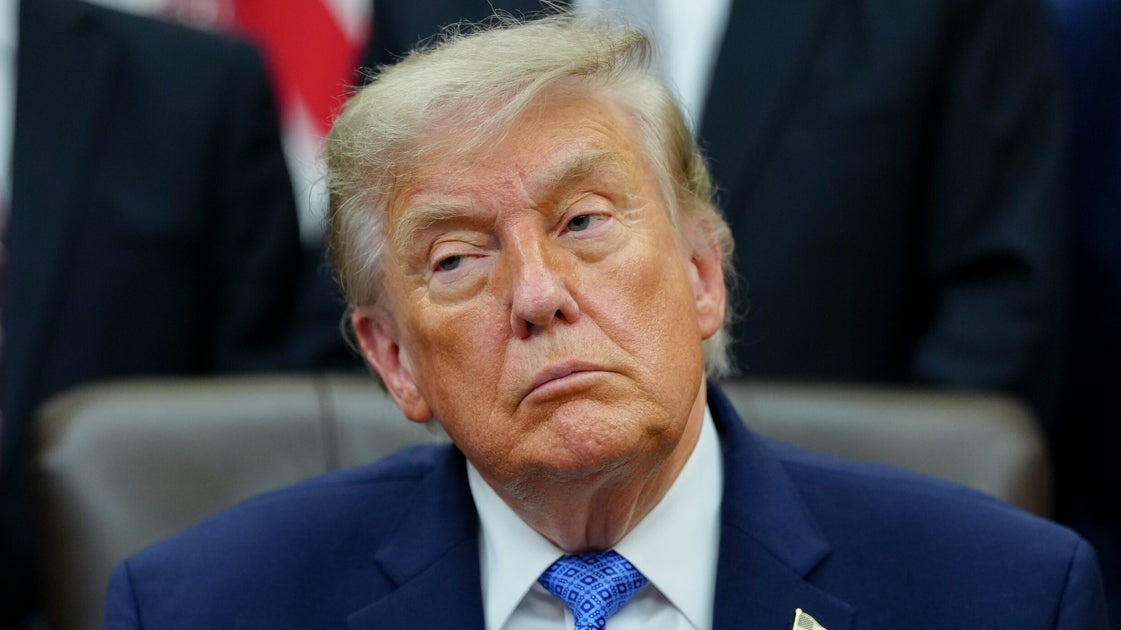
The Supreme Court ruled on Thursday to allow the administration to strip some 6,000 Syrian immigrants and more than 350,000 Haitians of temporary protected status, making them eligible for detention and deportation. The ruling sent a shockwave through immigrant communities across the country and unleashed a torrent of panic.

“When I heard the decision, obviously my heart sank even though I knew this was a possibility. But hearing the decision still felt really devastating. I was hopeful that justice would prevail, but unfortunately it did not,” Dahlia Doe, the main plaintiff and Syrian TPS holder who sued to stop the Trump administration’s termination of the TPS program, told HuffPost. “As someone who lived under TPS for a long time, I know what it feels like to build a life while never knowing if the ground beneath you will suddenly shift. But I never expected the day to come where the Supreme Court of the United States is ruling against us, our ability to live and continue what we built here.”

The feeling is echoing through the Haitian community as well.

“It is the saddest day of my life,” Viles Dorsainvil, a TPS holder and the executive director of the Haitian Support Center in Springfield, Ohio, said on a press call with the International Refugee Assistance Project (IRAP). “And now we are in a situation where we don’t know how things will be for our community. Families have started asking us questions that we are not able to answer.”

Carl Ruby, a Springfield, Ohio-based pastor, said on the call that churches and nonprofits aiding Haitians with legal services, food and clothes have been inundated. “I see them as the ones making a big difference,” he said. But it has been a large undertaking. “They were swamped yesterday,” Ruby said about a church in town the day before the ruling.

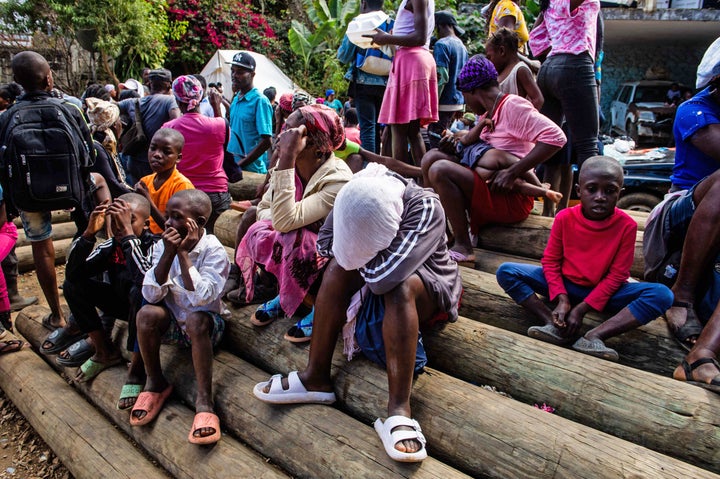
TPS is a special status given to foreign nationals who can’t safely return to their home countries because of natural or manmade disasters such as civil wars or earthquakes. Haitians were given TPS in 2010 after a deadly earthquake and again in 2021 when the assassination of Haitian president Jovenel Moises prompted widespread violence. People have been forced to flee their homes as gang members have taken over their communities. More than 1 million people have been displaced. Advocates worry that deporting people to Haiti could mean death.

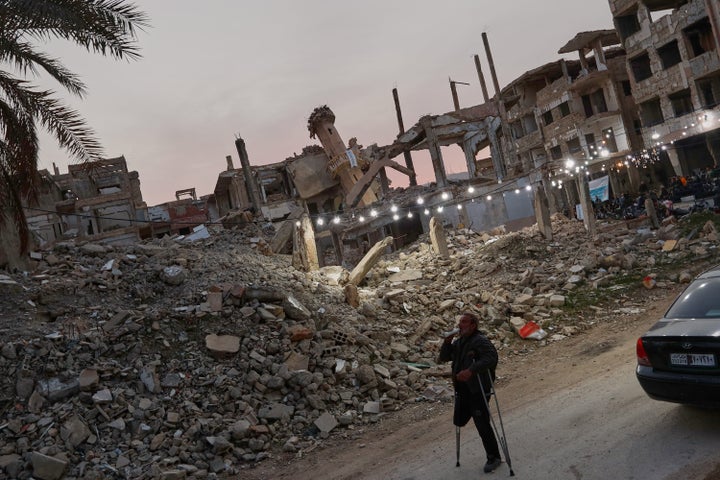
Syrians became eligible for TPS in 2012 at the onset of the country’s ongoing civil war. Today, the United Nations considers Syria on a road to recovery, but emphasizes that the country is still overwhelmed with problems, including a lack of access to food, water or electricity. The U.S. war in Iran is having its own negative effect in the country, and Syria today has the world’s third-largest population of internally displaced people at 6 million. (The U.S. Department of State also warns that neither Haiti nor Syria is a safe place to travel.)

“The Supreme Court’s decision means that many, many people are going to die violent, needless deaths,” Geoff Pipoly, one of the lead lawyers for the Haitian plaintiffs, said on the Springfield call. “That’s the bottom line. That’s the thing that’s kept me up nights for the past eight months.”

And unless a court intervenes to extend the timeline, Haitian and Syrian TPS recipients will be eligible for detention and deportation in approximately three months. The TPS decision will go into effect in 31 days, and then immigrants will have 60 days to leave.

Megan Hauptman, the staff attorney for IRAP, said Doe and other TPS holders are still concerned, however, that the government could “file something to try and speed up that timeline.”

Every TPS-holder scenario is different. Some people will be subjected to immediate deportation or removal proceedings once the status officially ends.

Doe’s application to stay in the country is still pending, but with TPS protections removed, she does not technically have “legal status,” putting her at risk of removal. Her pending status means she is still able to work, at least for now. How long that will continue is unclear.

“I’m still at risk just in general because of that lack of status,” Doe said. “The current really difficult and challenging environment when it comes to immigration [is that] we are seeing people with statuses, with even green cards, getting detained. That’s really scary.”

Doe and Dorsainvil are just two of hundreds of thousands of people from Haiti and Syria who are bracing for the worst-case scenario, along with the families, friends and communities that depend on them.

Approximately 270,000 U.S. citizens live with Haitian TPS holders, and another 7,000 live with Syrian recipients, according to the latest data from FWD.us, an organization focused on criminal justice and immigration. TPS holders getting deported could mean leaving American citizen children, spouses or other loved ones behind, leading to a massive family separation crisis.

Dorsainvil was hoping that the threat of family separations would help the justices make a different decision.

“Coming from where it is not safe and that there would be some family separation, I expected the Supreme Court to take those into consideration, and do a better ruling,” he said. “Unfortunately, this is not the case.”

Alongside her full-time job, Doe is also the primary caregiver for her elderly father, who has Parkinson’s disease. Doe said she tries to protect her father and mother from the stress of her being forced to leave them.

“My dad’s situation is unfortunately deteriorating,” she said. “Recently, he started falling, and not being able to dress on his own. …With that in mind, I’ve been trying to shield my parents from a lot of the news and not scaring them.”

“I try to just spend time with them and not talk about this subject to shield them from the stress and the worry that comes with them thinking we might be separated,” she added.

Adding to this already massive amount of stress, there are fears that the same racist rhetoric the Trump administration has used to target immigrants in the past, particularly Haitian immigrants, will ramp up. Trump’s history of disparaging Haitian immigrants is well documented. He’s referred to Haiti as a “shithole” country, said that all Haitians have AIDS and that Haitian immigration is a “disaster” for the U.S. After his lies about Haitians eating people’s pets in Springfield during the 2024 presidential campaign went viral, the community experienced dozens of bomb threats as well as intimidation, bullying and assaults, causing widespread fear in Haitian communities.

Dorsainvil said the community fears Springfield could be targeted again.

“The administration will enforce actions upon people. They know they’ve become vulnerable … it will be chaotic in our community,” Dorsainvil said.

For many, returning to high-risk nations is a very dangerous option. But staying put isn’t safe either.

Immigration and Customs Enforcement agents have never been known to be benign, but the Trump administration has made immigration enforcement an increasingly arbitrary and violent system. Since Trump returned to power in January 2025, at least 52 people have died in ICE custody. It’s the highest rate of deaths in immigration custody in the last decade.

The path forward for TPS recipients is murky. There are very limited options for people who want to stay legally, and it’s likely that tens of thousands of people who lose their legal status will not be able to work or live freely.

“There is no question that we are witnessing the largest delegalization effort in modern U.S. history unfold before us,” United We Dream, a youth-led immigrant organization, said in a statement. “Paving the way to end TPS for Haiti and Syria, [Thursday’s] Supreme Court decision is devastating proof that the administration is dismantling legal and successful programs like TPS, DACA, asylum and humanitarian protections in order to pursue its mass deportation agenda.”

The prospects are bleak, Doe acknowledged.

But she, like so many immigrants, hasn’t given up on the dream of America.

“I came here because I did believe in this country’s values, the opportunity it provides and the rule of law,” Doe said. “You know I moved from the Arab world, where it’s dictatorships and all sorts of human rights violations, to come here and to be free and knowing my rights will be protected.”

What she’s watched unfold in the last couple of years, she said, has been difficult and deeply disheartening, but she believes that the values she loves about America are alive, despite the country “going through a really dark phase right now.”

She says she is still holding on to hope amid the fear.

“Maybe I’m a hopeless romantic, if you will but I hope we will return to justice and the real America where people have their freedoms, immigrants thrive and we all coexist in a more loving and positive way than we are today,” she said.

By entering your email and clicking Sign Up, you're agreeing to let us send you customized marketing messages about us and our advertising partners. You are also agreeing to our Terms of Service and Privacy Policy.
Comments
You must be logged in to comment.