yahoo Press
Venezuela earthquakes live updates: At least 188 dead and over 1,500 injured after powerful twin tremors
Images
1 / 20
2 / 20

3 / 20

4 / 20
5 / 20

6 / 20

7 / 20
8 / 20
9 / 20
10 / 20
11 / 20
12 / 20
13 / 20
14 / 20
15 / 20

16 / 20
17 / 20
18 / 20
19 / 20

20 / 20
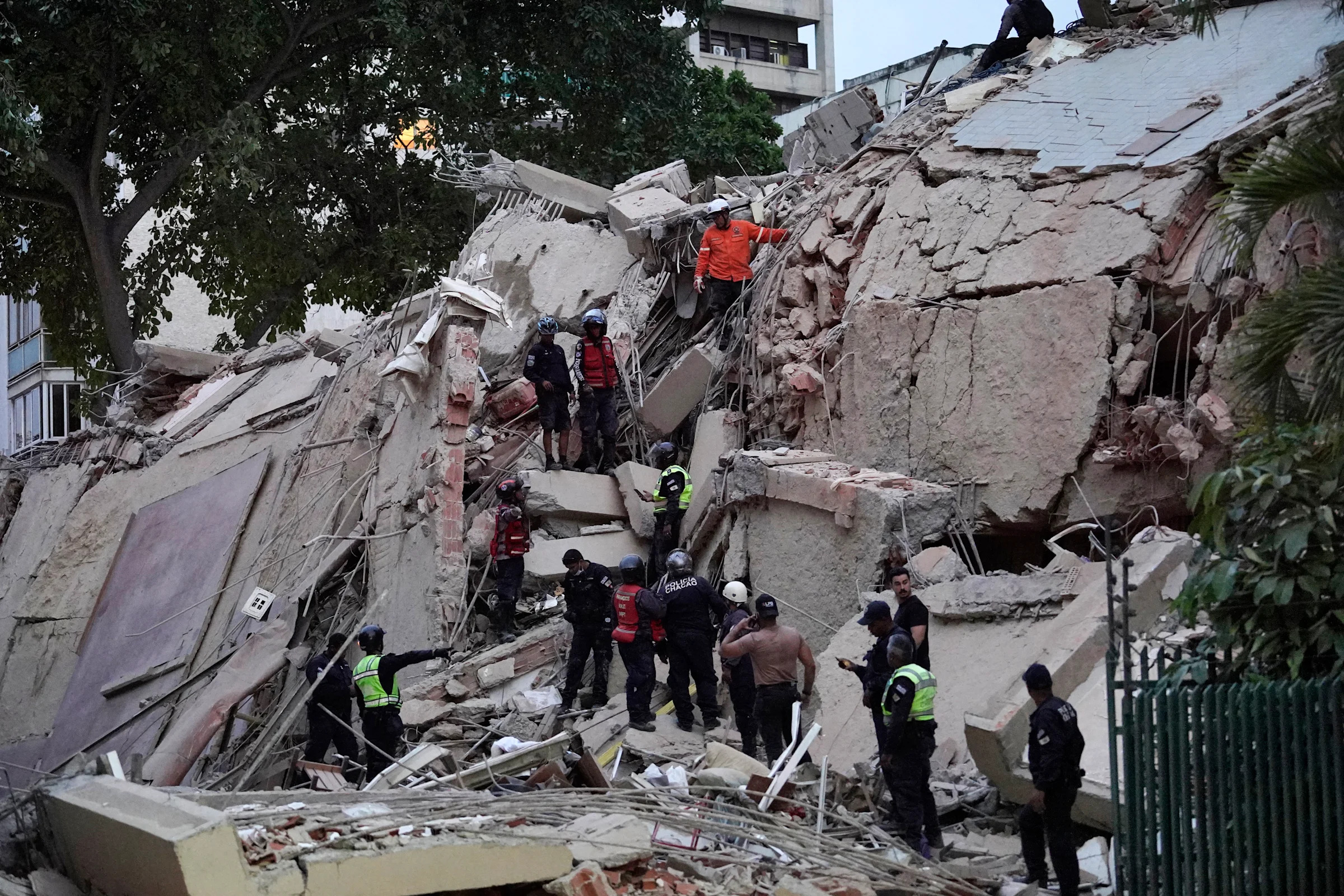
At least 188 people have been killed and 1,520 injured in Venezuela after powerful back-to-back earthquakes rocked the country, according to a Thursday afternoon update provided by National Assembly President Jorge Rodríguez.

More than 200 people remain trapped under collapsed or damaged buildings after a magnitude 7.2 earthquake hit about 100 miles west of the capital, Caracas, followed less than a minute later by a magnitude 7.5 tremor, according to the U.S. Geological Survey (USGS).

The USGS said the death toll would most likely run into the thousands, with a substantial probability of it exceeding 10,000. The state of La Guaira, which is believed to be the area hardest hit and which Venezuelan Interim President Delcy Rodríguez described as a "disaster zone."

The quakes were among the strongest to strike Venezuela in more than a century and could be felt throughout the region.

Appealing for unity in an address on state television, Rodríguez said: "This is a true tragedy. From here, we send our message of solidarity, and to those families who have lost loved ones, we reaffirm our condolences and our support in these difficult hours.

"We are at this moment working very hard in rescue operations to save the lives that God permits us to save."

In a Truth Social post, President Donald Trump said: "The U.S.A. stands ready, willing, and able to help! I have instructed all agencies of our government to get ready to move quickly. We will be there for our new and great friends."

Rescue teams are continuing to search through the rubble for survivors after Venezuela's back-to-back earthquakes killed at least 235 people and injured more than 4,300.

The official death toll was announced by Venezuela Health Minister Carlos Alvarado late Thursday, and is expected to rise.

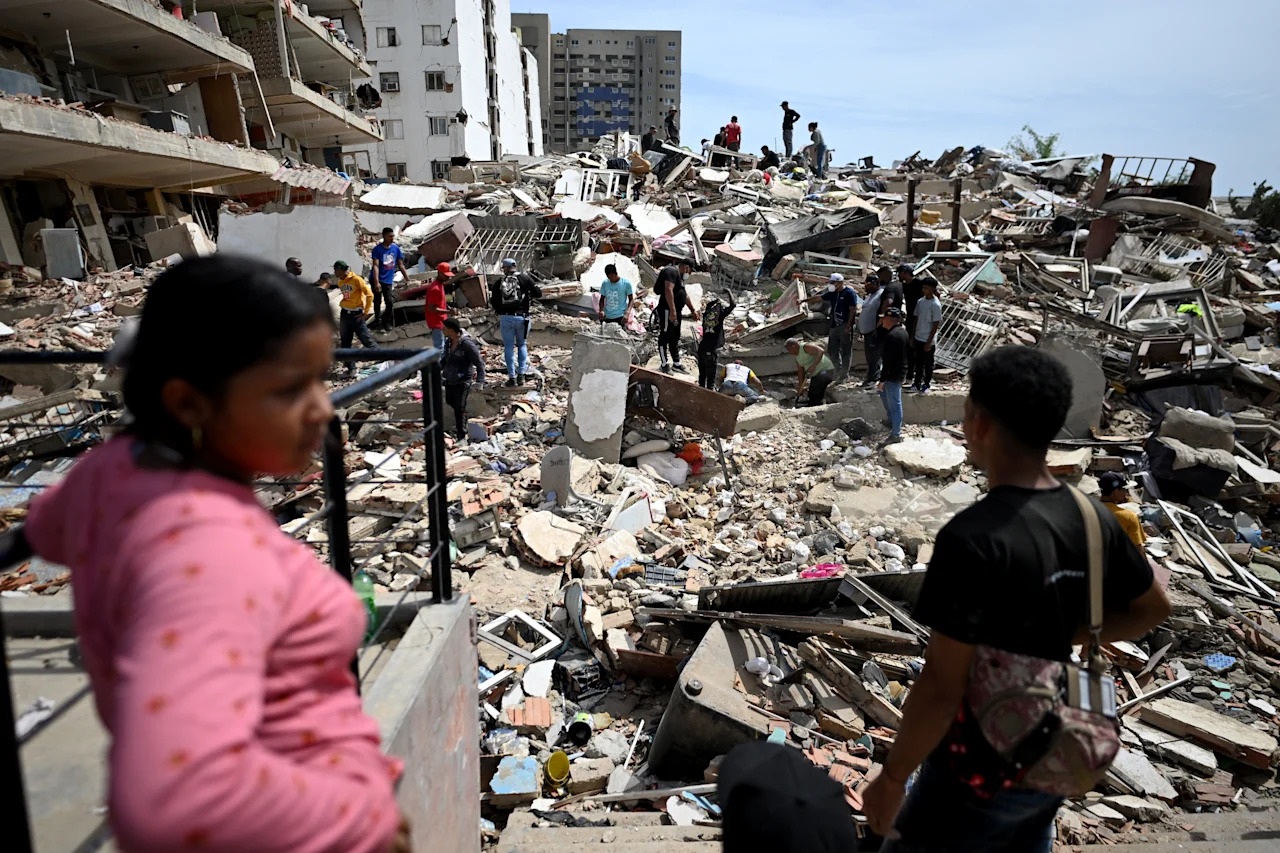
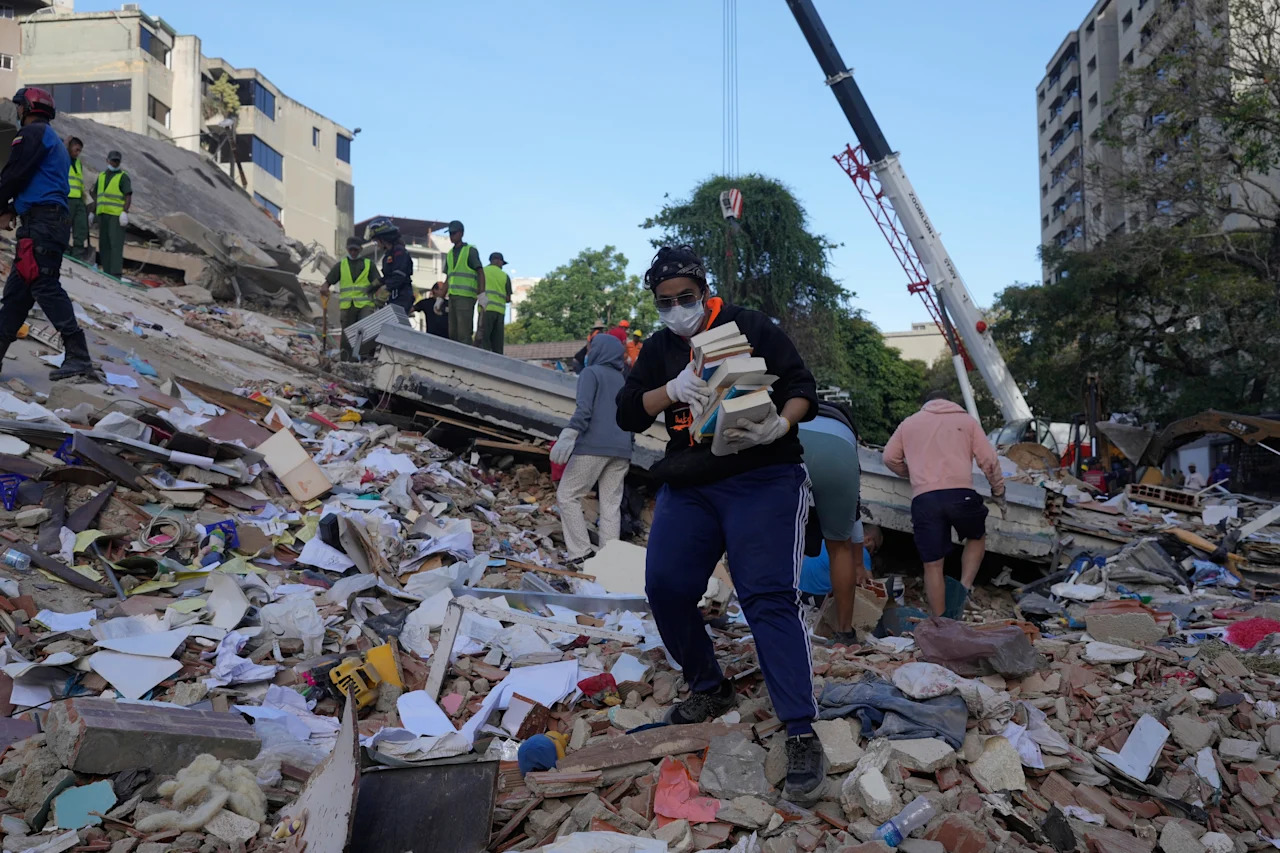
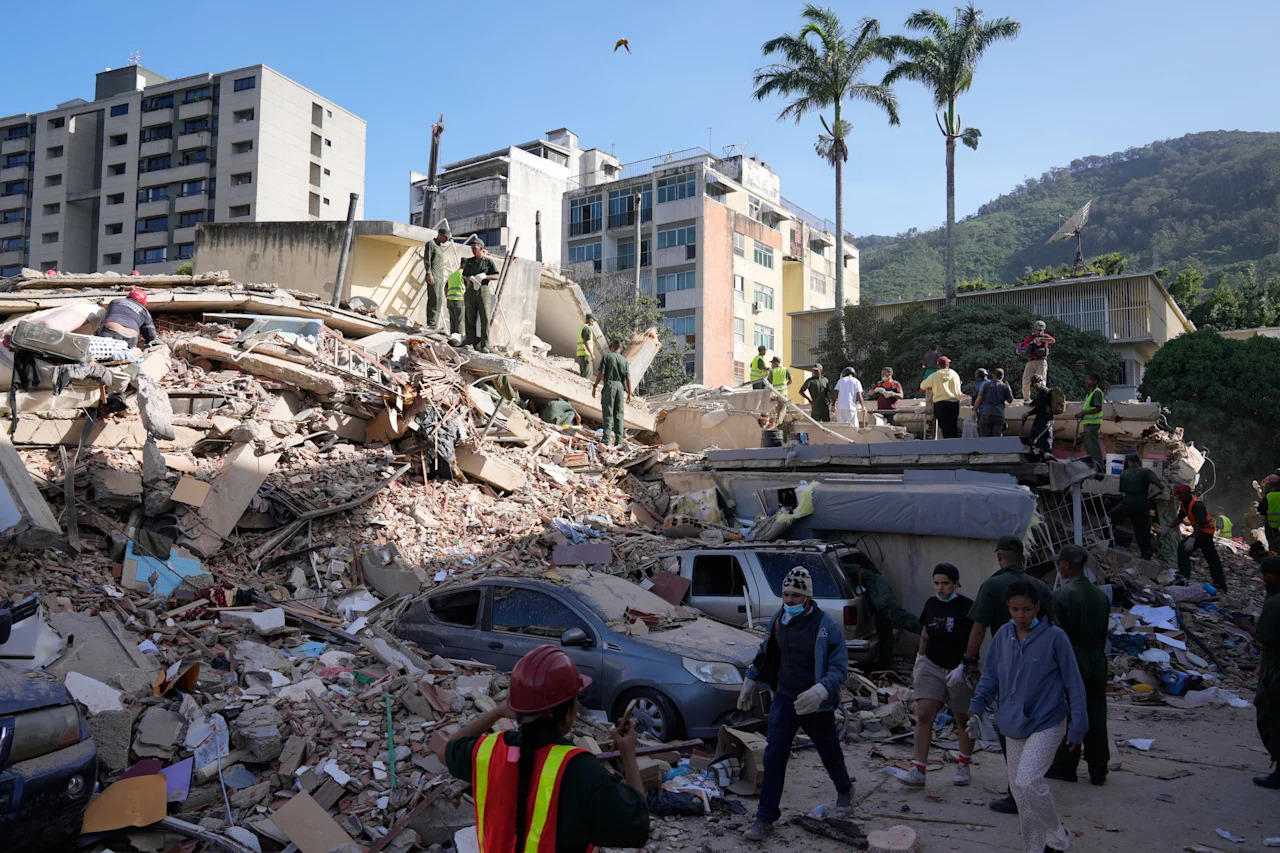
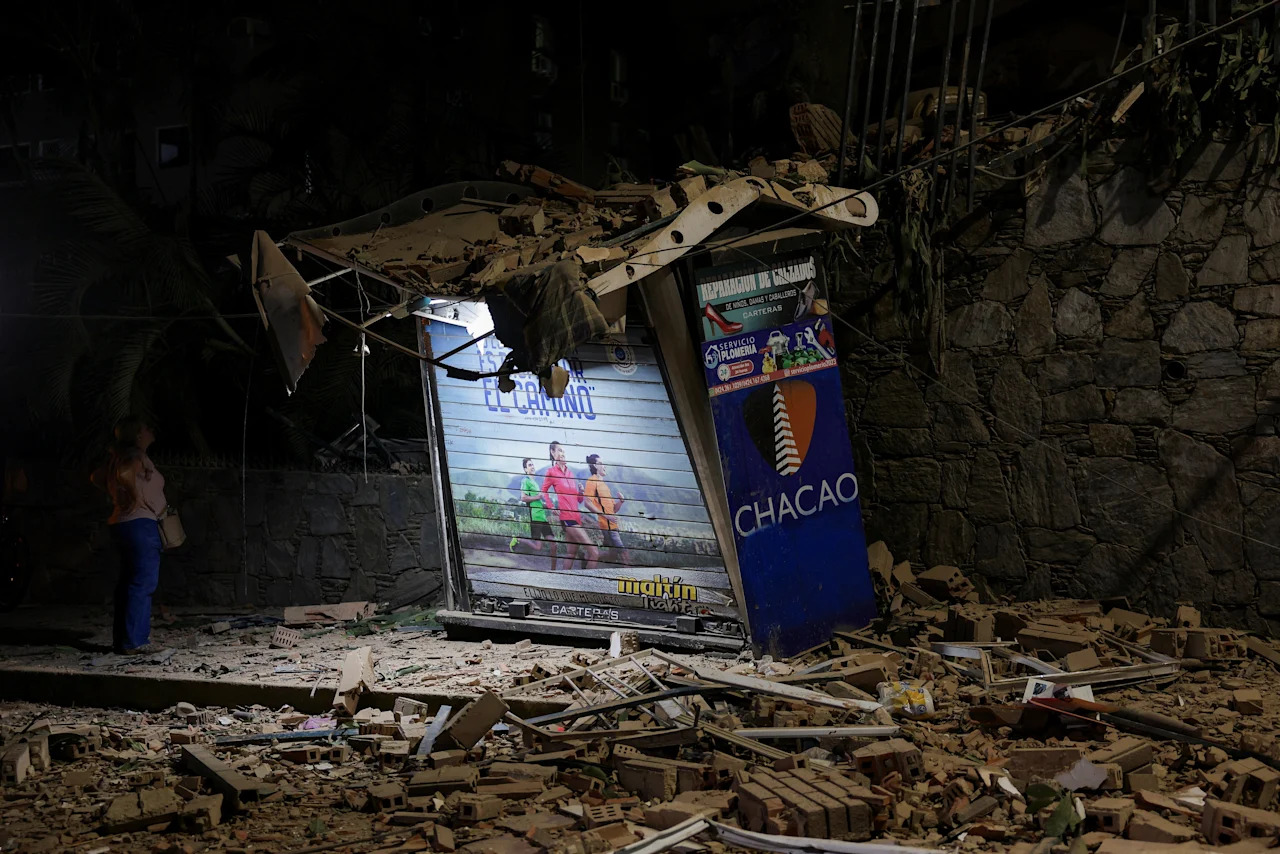
Across northern Venezuela, neighbors are helping one another dig through the rubble in search of family and friends.

Some of the rescue efforts have been televised, including the dramatic rescue of a woman who was trapped beneath a concrete slab with only one bare foot visible before rescuers pulled her to safety.

In Caracas and La Guaira, people could be heard calling for help from beneath the rubble of collapsed buildings, the BBC reported.

The magnitude 7.2 and 7.5 earthquakes struck just 38 seconds apart on Wednesday evening, devastating communities in Caracas and the country's main Caribbean seaport, La Guaira.

The number of people who have died from the two powerful earthquakes that struck Venezuela on Wednesday evening has risen from 164 to at least 188, according to a Thursday afternoon update from Venezuela's top lawmaker, Jorge Rodríguez.

The number of people injured also increased from nearly 1,000 to at least 1,520.

About 200 people are trapped under collapsed or damaged buildings, Rodríguez said.

Former Venezuelan President Nicolás Maduro sent a message of solidarity and support to his homeland from his New York jail cell.

In a post on X, Maduro addressed the "beloved people of Venezuela," adding: "Cilia and I offer up our prayers for every affected family, for the injured, for those who are suffering, and for all our people."

The U.S. launched a military strike in Venezuela on Jan. 3, capturing then-President Nicolás Maduro and his wife, Cilia Flores, and installing acting President Delcy Rodríguez.

Maduro is imprisoned at the Metropolitan Detention Center in Brooklyn, NY., and awaits trial.

The successive earthquakes that struck northern Venezuela on Wednesday evening were "relatively shallow" in the Earth's tectonic plate, amplifying their destruction, an expert has said.

The source of the earthquake near the capital of Caracas was only "under 10 miles to about 15 miles down in the earth," triggering widespread destruction and the second earthquake 38 seconds later.

"From the initial reports, it looks like in the case of these two earthquakes in Venezuela, the source was relatively shallow in the Earth's tectonic plate, the layer we call the crust," professor Mark Allen, head of the department of Earth sciences at Durham University, told Reuters.

"That's unfortunate because it means that not only were these earthquakes very large in terms of the total amount of energy released, the so-called magnitude of the earthquake, but they weren't occurring that far down in the earth, so that a lot of the energy reached the surface in the regions above them," he explained.

He said that "the energy released and the stress transferred from that first event, I believe, literally only about 40 seconds later, has probably triggered a second earthquake."

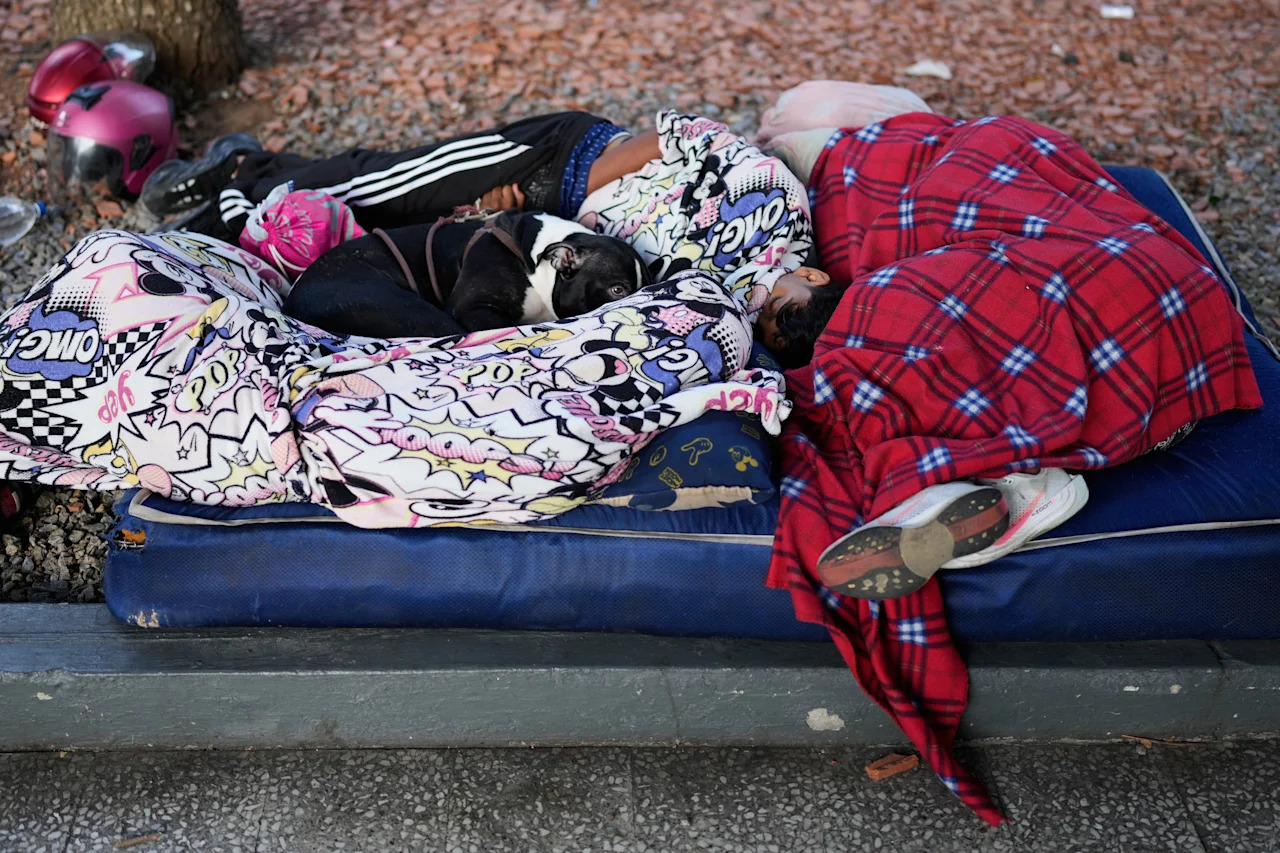
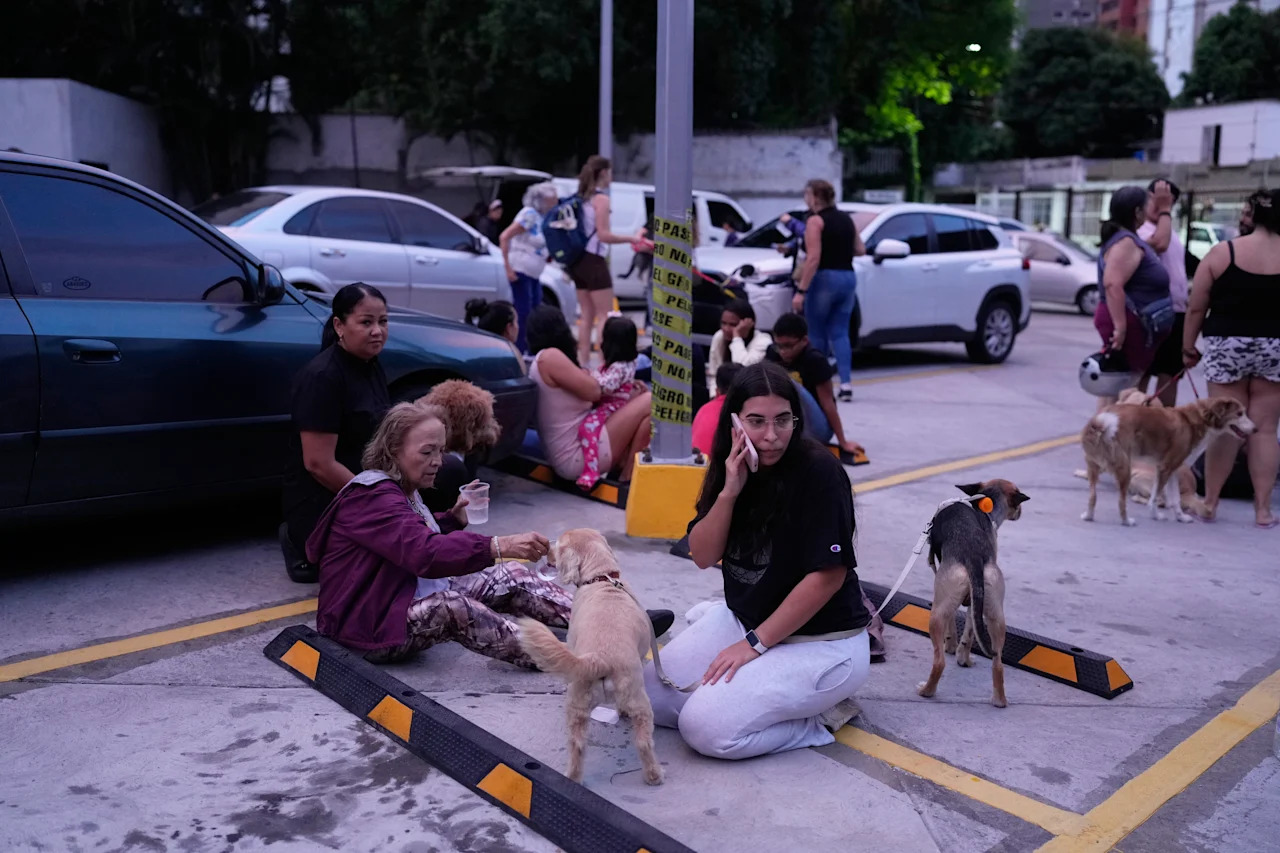
Hundreds of people spent the night outdoors near buildings that had been evacuated following the earthquakes.

Maria Cristina Diaz, a 41-year-old cleaner, told the Associated Press that she was unable to sleep all night and stayed at Plaza Candelaria in downtown Caracas, as it is one of the few open spaces near her home.

Venezuelan cities lack designated assembly points where people can gather following natural disasters like earthquakes.

"We were afraid the buildings would collapse on us," Diaz said. "We were cold. My mother, daughter and I didn't sleep a wink, but we didn't want to spend the night alone at home."

Others spent the night in vehicles parked on the street. Authorities have urged people not to return to homes with structural damage.

Americans in Venezuela who need emergency consular assistance are being urged to contact the U.S. Department of State Consular Affairs at 1-202-501-4444.

Family and friends can find out your location and well-being by enrolling at http://step.state.gov, a free service to allow U.S. citizens and nationals to register their trip abroad so the Department of State can accurately and quickly contact them in case of emergency.

The U.S. Department of State also operates a Security Updates for U.S. Citizens WhatsApp channel where those affected can get the latest updates.

Internet users in Venezuela have regained access to X following the two earthquakes that struck the country last night.

The platform is now available to users for the first time in nearly two years, after it was blocked under a government order in August 2024.

Users can now access X through internet and cellular providers CANTV, Thundernet, Digitel and Movistar, BBC News Mundo reported.

Earlier, the UN urged the country to unblock all media and social networks after the devastating earthquakes, warning that "access to information is life or death."

"There can be no excuse for failing to do so immediately," the UN Human Rights Council added.

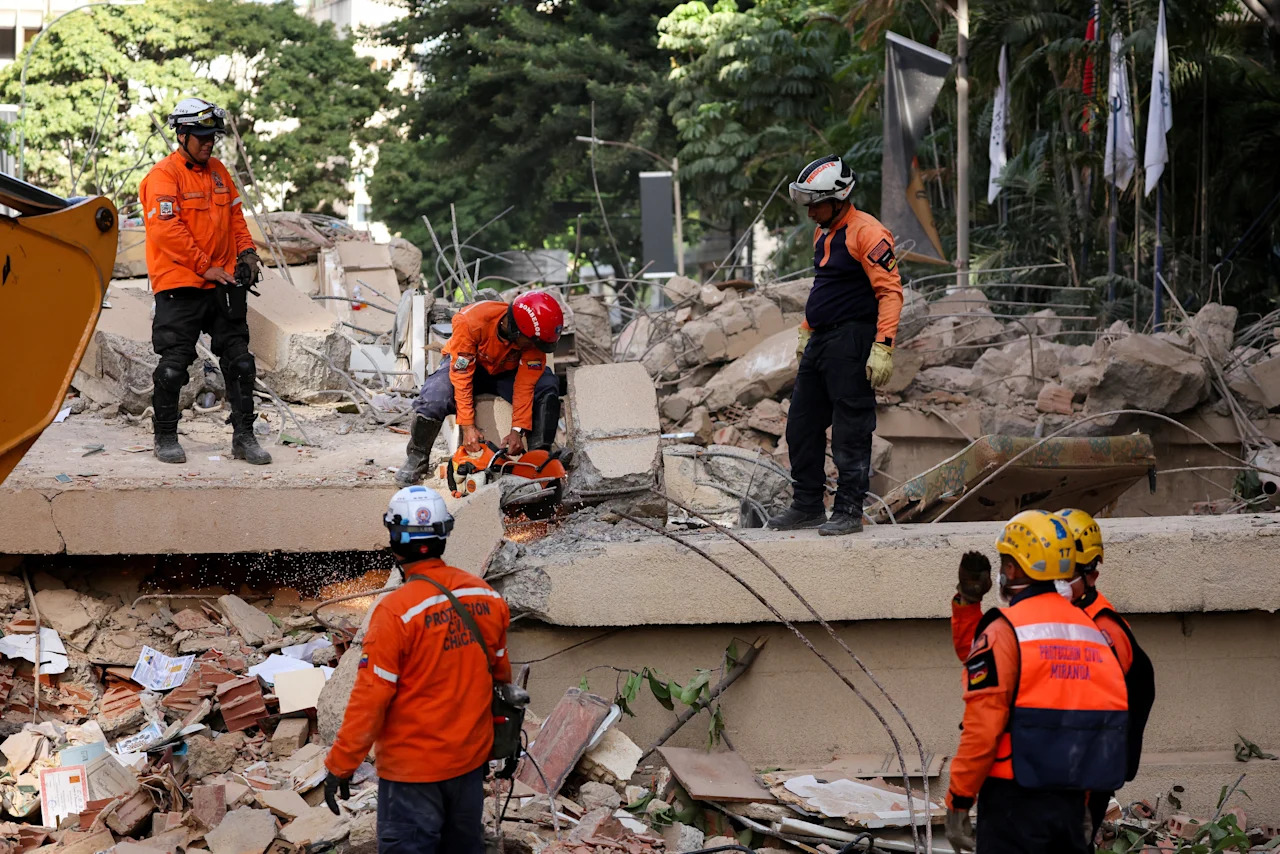
Some 15 hours after the earthquakes struck, emergency rescue teams are still working tirelessly to find and recover anyone trapped in the rubble.

The U.S. Geological Survey, using predictive modeling to estimate the death toll, said it would most likely run into the thousands, with a substantial probability of exceeding 10,000.

Issuing a red alert following the double earthquake, there is a 40% chance of between 10,000 and 100,000 casualties, and a 14% chance of it exceeding that range, according to the modeling.

The estimated economic losses for the country are estimated to be 1% to 5% of Venezuela's GDP.

“Overall, the population in this region resides in structures that are vulnerable to earthquake shaking, though resistant structures exist. ,” the USGS said.

Marco Rubio said Thursday that the United States was deploying search and rescue teams, medical resources, and humanitarian assistance to Venezuela.

"We will have a whole-of-government response," the U.S. secretary of state said in Bahrain. "It will be big. It will be fast. It will be effective."

He added that one of the runways at Caracas's international airport was cracked in the earthquake, making landing aircraft there difficult, forcing the U.S. to lean on the Defense Department to land relief assets in difficult conditions.

Rubio said he had spoken by phone with acting Venezuelan President Delcy Rodríguez and that the U.S. was deploying rescue teams from Fairfax County, Va., and Los Angeles, with more to follow.

The most urgent need, he said, was pulling survivors from collapsed buildings in the first 48 to 72 hours, "while you can still save their lives."

A longer-term phase would follow once crews were on the ground, Rubio said, focused on housing for the displaced and restoring communications, internet and telecom service.

A video shared online by a local Venezuelan official showed the severe aftereffects and active moments of panic inside the Simón Bolívar International Airport (Maiquetía Airport), in La Guaira, in the aftermath of the earthquakes.

Large parts of the terminal's ceiling tiles and panels can be seen collapsing onto the floor as the building violently shakes, with lights flickering as the airport suffered power fluctuations.

Corridors were also covered in scattered masonry, broken installations and thick clouds of falling dust, prompting frightened passengers and airport staff to run through the terminals, shouting, and attempting to safely evacuate toward designated gates.

In the video, recorded and shared on X by the deputy-elect for Barinas state, Wilmer Azuaje, he said that everything was "totally destroyed" and "finished" by the high-magnitude doublet quake.

The airport has been completely closed in response.

Reuters has shared a video of a building collapsing in Naguanagua, in Carabobo state, roughly 25 to 35 miles east of the twin earthquake epicenter.

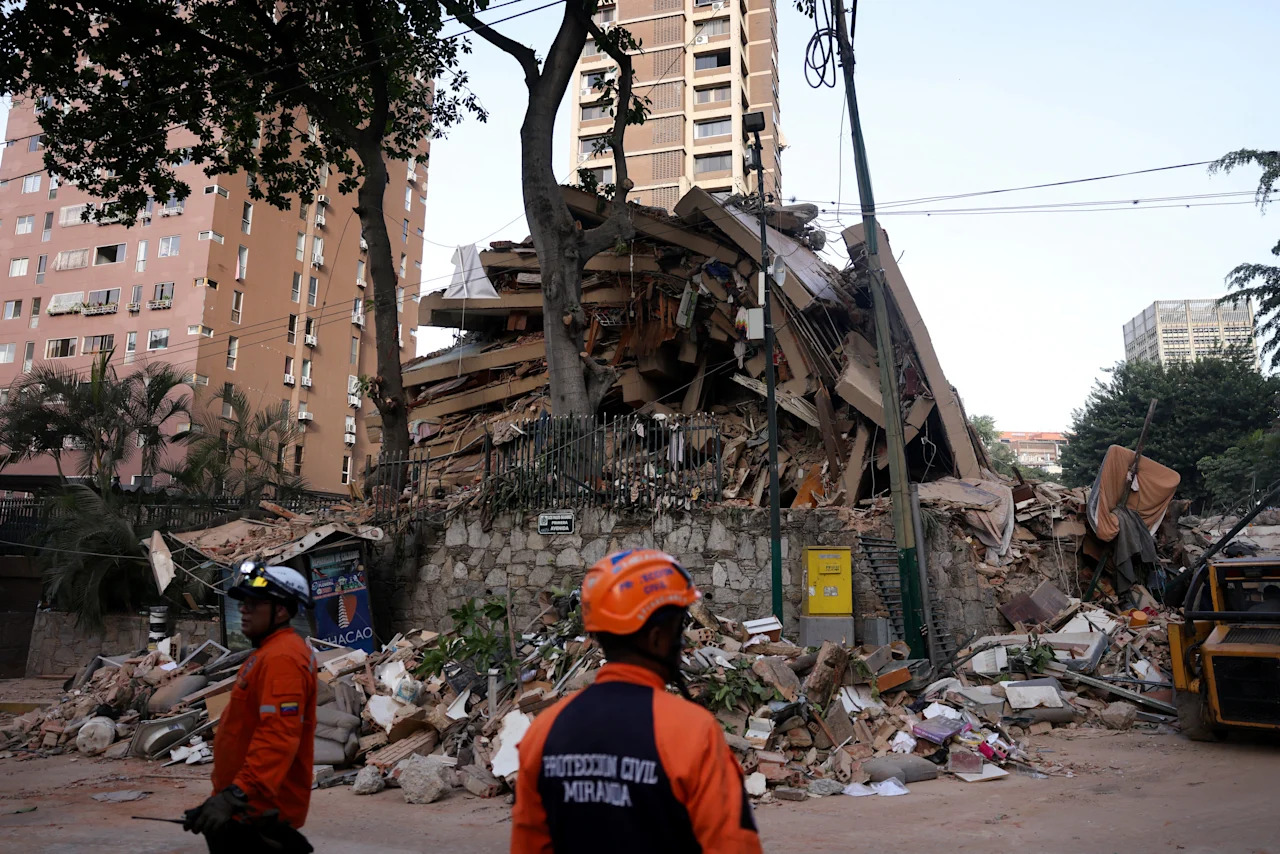
Rescuers continue to search the rubble across large areas of the region after the twin tremors, which wreaked havoc in and around the capital Caracas, trapping people beneath collapsed buildings and setting off powerful aftershocks.

Dazed survivors were taken away, some on stretchers, while others continued to search for loved ones.

Many Venezuelans were at home when the quakes struck during a public holiday. 164 people have been killed and thousands more are feared dead.

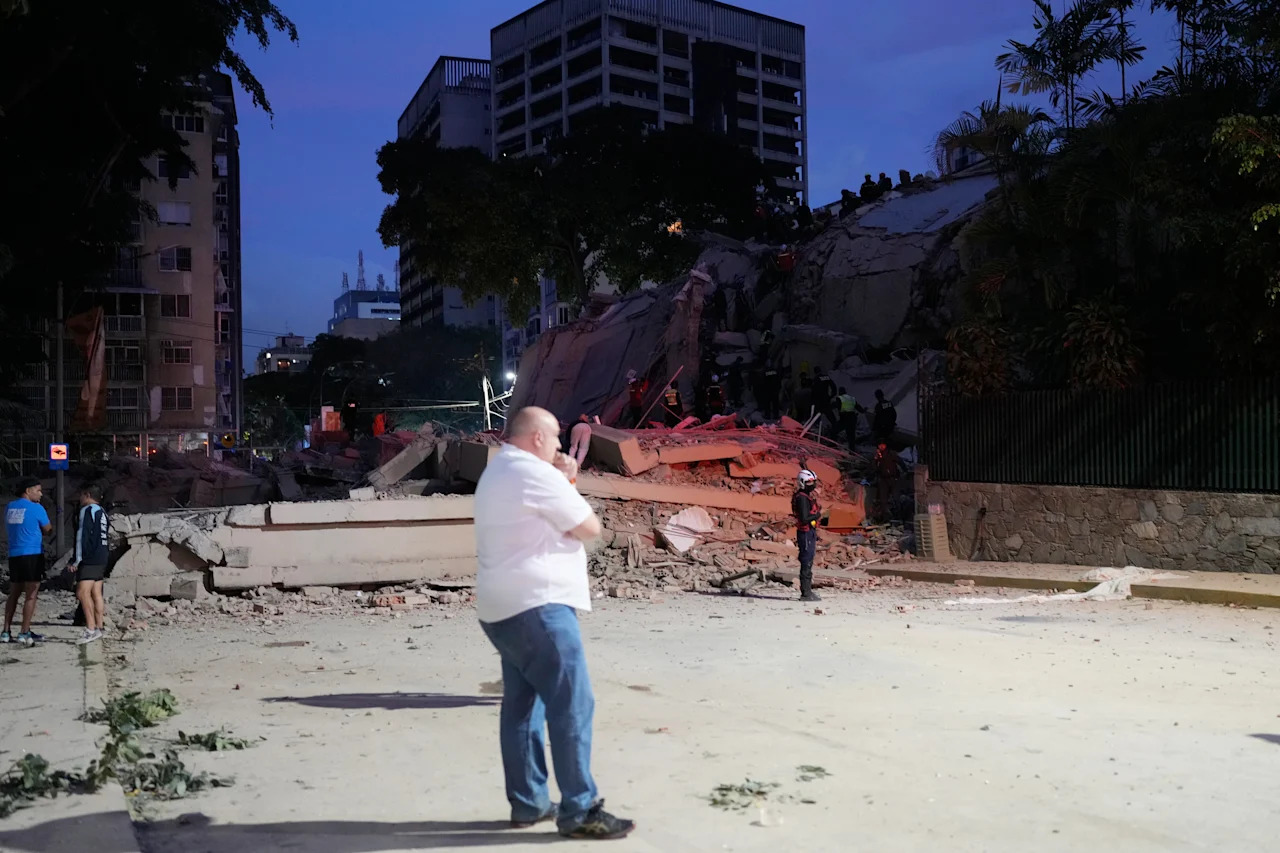
Venezuela's acting president Delcy Rodríguez said "dozens of buildings have collapsed" in La Guaira, a coastal city about 25 miles north of Caracas.

She said rescue crews from other countries would arrive soon as she thanked leaders including U.S. President Donald Trump.

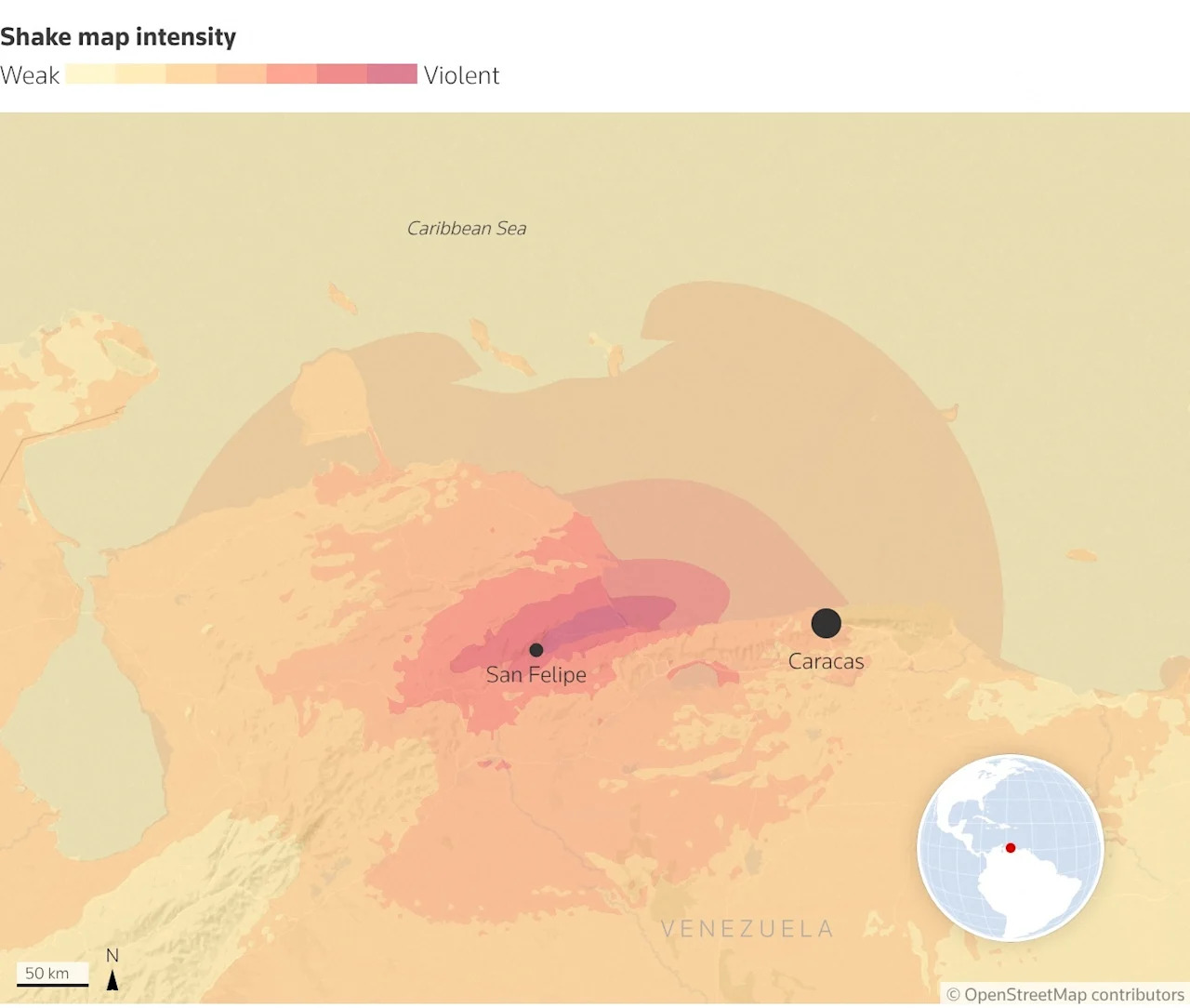
This earthquake locator map details the epicenter of the two earthquakes.

The 7.2 magnitude earthquake, followed by a 7.5 magnitude tremor, struck near the small town of San Felipe, to the west of Caracas.

The impact has been felt in the Brazilian Amazon, where buildings in Manaus, Belem and Macapá i were evacuated, between 1,100 and 1,600 miles (1,750 to 2,550 kilometres) away from the quakes, according to TV Globo.

Private sector companies have been asked to aid in the rescue efforts, acting President Delcy Rodríguez said.

"I wanted to address the country to request the support of the private sector so that we can rent heavy machinery for the rescue work," she said.

"Early this morning, I spoke with the president of Fedecámaras [Venezuela's principal private sector business union], and they are activating all business and commercial chambers to facilitate this process, so that, in these early hours of daylight, we can make use of the light and speed up the rescue efforts for those who are still buried and trapped, and make this rescue process faster."

At Caracas' Hospital de Clinicas, staff doubled up on the night shift to help treat the injured, a worker there told Reuters.

School classes were canceled for the rest of the week. The city's stock exchange was closed and will be used to help rescue efforts.

The Venezuelan Red Cross said its headquarters had been critically damaged but that it had sent rescue teams to the worst-affected areas. France said its embassy was badly damaged.

Residents across Caracas, which was also hit by a deadly magnitude 6.3 earthquake in 1967, rushed to evacuate as buildings shook.

Maria Romero, an 80-year-old pensioner in southern Caracas, said police helped her get out of her home. "This earthquake was horrible, even worse than the one in 1967," she told Reuters.

Another resident, a 41-year-old office worker who declined to be named, said she received an earthquake alert on her phone just before the shaking intensified.

"As I picked it up and started listening to what it was saying, I first felt light shaking. Then, in less than two seconds, everything started moving."

Roberto Gamas, another Caracas resident, said the building he was in "shook from side to side. Unreal. The force was incredibly strong," he told the Associated Press.

A shake map detailing the intensity of the earthquakes shows northern Venezuela with a color scale of ground shaking from weak (beige) to violent (dark red).

The strongest intensity surrounds San Felipe, capital city of the Yaracuy state in northern Venezuela, fading toward Caracas to the east.

The mayor of Baruta, Caracas, has reported that at least three people died following the collapse of two buildings in the southeastern municipality.

Speaking on X, he said they were the only deaths reported in the area so far.

This was one of the first reports regarding fatalities to be released by Venezuelan authorities.

At least 164 have now been reported dead and 971 injured after the two earthquakes, according to acting President Delcy Rodríguez.

Recovery operations are firmly underway after the quakes have toppled buildings, shut down the country's main airport and sent terrified residents of the capital fleeing into the streets.

The number of fatalities is expected to rise, with an early projection from U.S. Geological Survey predicting that the final death toll could be in the thousands.

Footage on state broadcaster VTV early Thursday showed three children — covered in dust but alive — being helped out of the rubble in the northern state of La Guaira. Rodríguez described the state as a "disaster zone", AP reported.

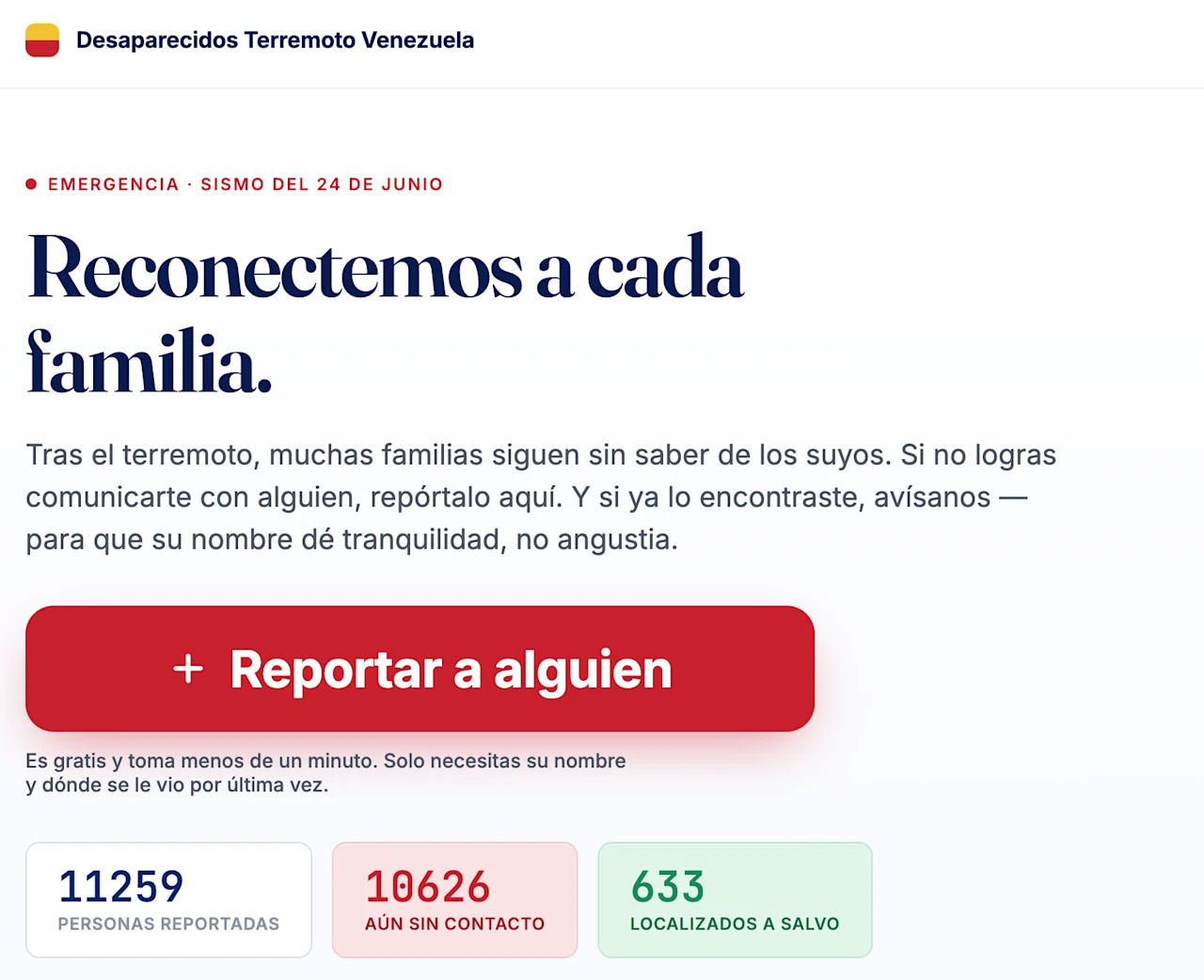
Citizens are setting up online platforms to report on and locate missing loved ones affected by the devastating earthquakes.

Venezuelans can report missing and found people on Desaparecidos Terremoto Venezuela. Some 11,259 people have been logged on the platform, with 10,626 people still without contact and 633 marked as safe.

"If you cannot reach someone, report it here," the website urges. "If you have found them, let us know so that their name brings peace of mind rather than anxiety."

Another initiative, Venezuela Te Busca, is also urging people to register their details on the website, according to the BBC's Spanish service, BBC Mundo.
Comments
You must be logged in to comment.