yahoo Press
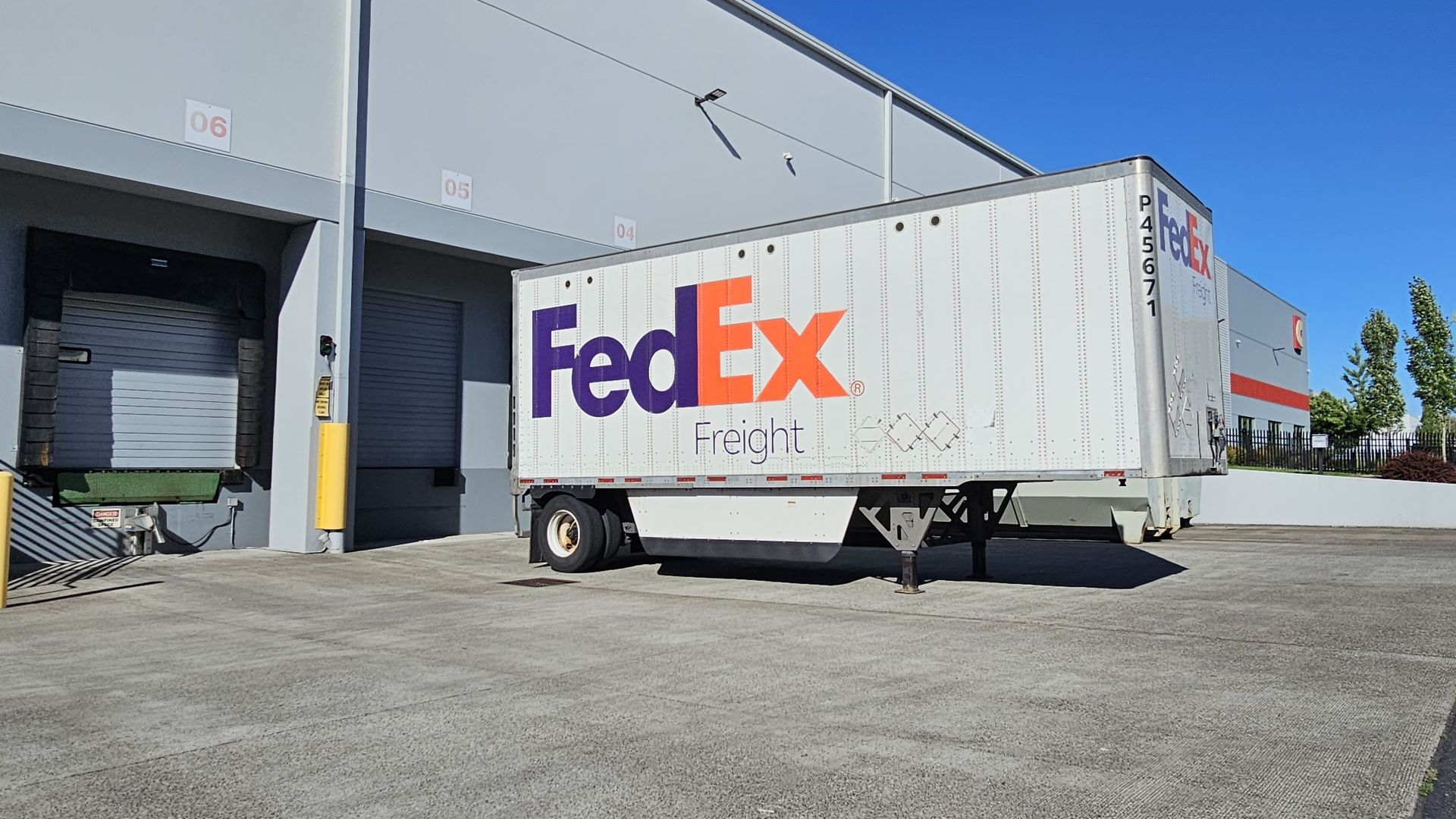
FedEx Freight forecasts growth as standalone company
Images
1 / 5
2 / 5

3 / 5
4 / 5

5 / 5
The above button links to Coinbase. Yahoo Finance is not a broker-dealer or investment adviser and does not offer securities or cryptocurrencies for sale or facilitate trading. Coinbase pays us for certain activity generated through this link. Prices displayed are informational.

(UPDATED June 26, 2026, 9 a.m. ET)

FedEx Freight got off to an inauspicious start on Thursday reporting its first earnings report as an independent company since being spun off from FedEx Corp. on June 1 when a technical glitch prevented some investors from logging into a webcast with analysts.

The less-than-truckload carrier said revenue increased 4.8% to $2.4 billion in the fiscal fourth quarter ended May 31 thanks to higher fuel surcharges and weight per shipment, beating expectations. The numbers were not new because they were included in FedEx's earnings numbers on Tuesday.

New information came in the guidance. For the remaining seven months of the year FedEx Freight (NYSE: FDXF) is expected adjusted earnings per share of $2.40 to $2.60, excluding any spin off costs. It also forecasts 4% to 6% revenue growth compared to the same period last year and an operating margin of 9% to 9.5%, up from 7.8% growth in 2025. Management said it expects recent quarter volume declines to begin reversing as the year progresses and turn positive heading into 2027.

Adjusted fourth-quarter operating income decreased 24% year over year to $363 million, with an operating margin of 15%. Results were impacted by separation costs, lower shipments, a $33 million gain from the sale of a terminal during the prior year and increased wage rates. Average daily shipments fell 5.9% to 86,700. Weight per shipment was 948 pounds, up 3%. Revenue per shipment of $415.22 represented an 11.5% increase.

FedEx Freight is the largest LTL company in the United States with a 17% market share, 355 service centers and about 30,000 vehicles. About two-thirds of its revenue comes from manufacturing, where growth has accelerated during the past five months. It has a dedicated sales force of more than 500 representatives.

"For the first time in years, our sales teams are back in our service centers, working side by side with operations to support customers where they are located. This level of integration is driving more direct engagement in the field with sales team members partnering closely with our drivers, even joining them on delivery routes and meeting customers face-to-face," CEO John Smith said on an earnings call with analysts.

The company has successfully separated IT systems from FedEx Corp. and is now able to offer more fully optimized LTL solutions for customers, including a new automated freight pricing system, than when resources and planning were shared across the parcel business, he added. The company incurred about $80 million in separation costs.

Nearly half of FedEx Freight customers use both priority and economy services. Smith said Priority is approximately 40% faster than its nearest competitor based on published transit times. Priority shipments have shorter lengths of haul and more time-sensitive characteristics, which support stronger yield and premium pricing. Economy tends to involve longer-distance moves and is often paired with intermodal rail.

"A lot of companies don't do the dual offering is because it is complicated, and it's very hard to get set up. … [We've had success] being able to keep customers when they want and need that fastest service in the market, but also sometimes needing that cost-effective Economy product, that kept the customers from switching back and forth between competitors. It's not an easy thing to do. It's hard to engineer. Over the years, we've refined it, and we feel really good about going forward with this dual product. The other piece that sometimes is tough to manage is also the rail. We have, over the years, have spent a lot of time with our rail partners and have negotiated the rates that are good for the Economy product, as well as the speed that we also need from the train in order to hit those Economy service standards," Smith explained.

Jefferies analyst Stephanie Moore wrote in a client note this week that FedEx Freight stands to significantly benefit from an industrial recovery because it has 30% spare capacity to soak up extra demand. The truckload market is also experiencing tight capacity due to a compliance crackdown by the U.S. Department of Transportation and LTL carriers like FedEx Freight could pick up spillover shipments as demand increases, said Smith.

For the full year, revenue reached $8.8 billion, a 1.1% decline.

Earlier, FedEx Corp. announced it would reduce $4.1 billion in debt using cash provided by FedEx Freight under terms of the separation agreement.

FedEx Freight stock price dipped nearly 2% during the day and was down 1.2% in afterhours trading, with a price of $156.68 per share. It closed on June 1 at $149.53 per share.

Click here for more FreightWaves/American Shipper stories by Eric Kulisch.

Write to Eric Kulisch at ekulisch@freightwaves.com.

FedEx boosts revenue behind premium parcel, freight

FedEx slowly recovers from operational meltdown in Vietnam

The post FedEx Freight forecasts growth as standalone company appeared first on FreightWaves.
Comments
You must be logged in to comment.