bbc Press
What are Andy Burnham's potential policies?
Images
1 / 9

2 / 9
3 / 9

4 / 9
5 / 9
6 / 9
7 / 9
8 / 9
9 / 9
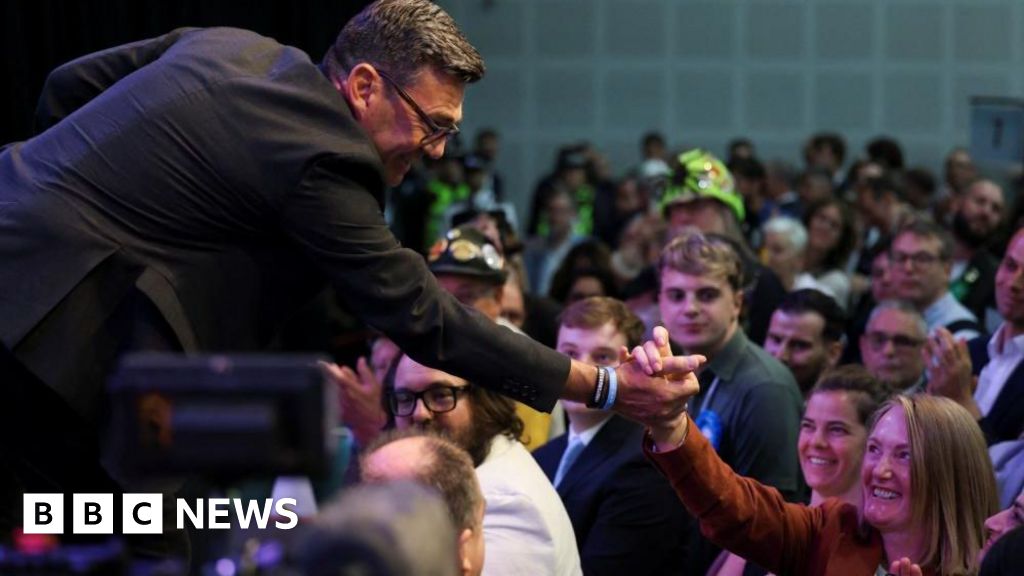
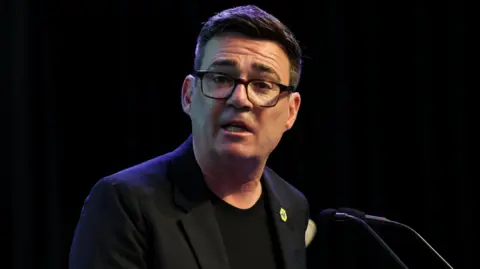
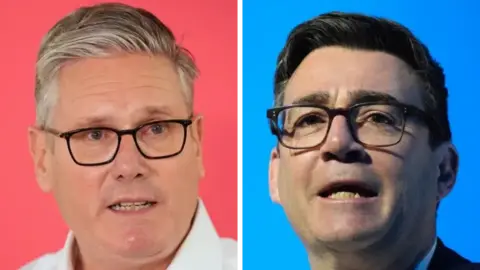
Andy Burnham's victory in the Makerfield by-election means there is now a real prospect he will challenge Sir Keir Starmer for the leadership of the Labour Party - and the country.

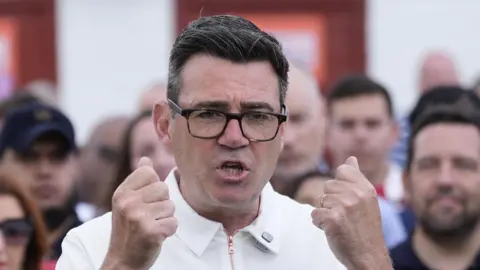
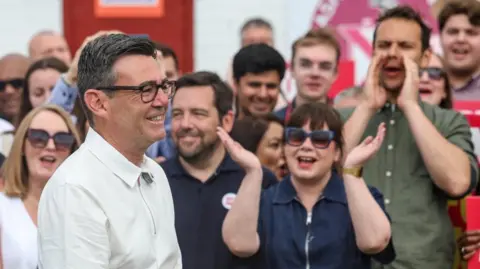
During the by-election campaign, he set out a number of policy ideas.

Burnham committed to the economic rules Chancellor Rachel Reeves set, in a signal that if he became PM, he would not oversee a large rise in borrowing.

And he has also committed to Labour's manifesto promise not to increase the main rates of income tax, VAT or National Insurance, which would limit his ability to raise significant sums from tax.

Helen Miller, director at the Institute for Fiscal Studies, said: "Whoever is the prime minister, they will find that, within the fiscal rules, there is very limited scope to increase spending on a particular area without cutting back spending elsewhere or raising taxes."

There are still many areas of policy which Burnham has not covered during his campaign, but here are some of the changes he might try to implement if he enters Downing Street.

Burnham has repeatedly advocated bringing water "back under stronger public control", pointing to the Greater Manchester bus network, which is run by private operators but has public oversight and control, as a model. He has, however, advocated public ownership for companies like Thames Water.

"We do need to bring down water bills, energy bills, rail fares, just as we brought down bus fares in Greater Manchester, to make life more affordable for people," he said in his victory speech after winning the Makerfield seat.

The government estimated the cost of nationalising the water industry as a whole would be £100bn, although that has been disputed by some think tanks.

But if a Burnham government followed the plan of bringing rail companies under public ownership gradually as their contracts came up for renewal - which Louise Haigh, who ran Burnham's campaign, instigated when she was transport secretary -  that could reduce the cost significantly.

It's hard to put a figure on how much "stronger public control" - without nationalisation - of key utilities would cost without more detail.

Burnham has been a long term supporter of reform to social care, dating back to his time as a health minister under Tony Blair in 2006-07 and then health secretary under Gordon Brown in 2009-2010.

He has repeatedly suggested inheritance tax should be replaced with a "national care levy" which, he said in a speech in 2023, would mean the "care [that] is provided is free" and "everybody would pay but obviously the wealthiest would pay the most."

Asked about those commitments during the by-election campaign, Burnham said he did not "resile" from his previous stance on inheritance tax.

But it's not clear how much that levy would raise.

And the cost of reforming social care would depend on which model was adopted. The Health Foundation think tank estimated in 2024 that a NHS-style model of universal and comprehensive care could cost around £17bn in additional funding by 2035/36.

But a model, like the one used in Scotland, of basic protection for everyone against some care costs would cost around £7bn by 2035/36 to replicate that in England.

In his campaign launch speech, Burnham said he wanted "the biggest programme of council house building since the Second World War".

He suggested this could be funded by rediverting the existing £39bn affordable housing programme entirely to social rent homes.

In an interview with iNews, Burnham said he wanted to resurrect the northern leg of HS2 between Birmingham and Manchester.

At the time it was scrapped by Rishi Sunak in 2023, the estimated cost of completing this was £36bn.

Burnham has suggested some of that cost could be recovered by capturing the rise in value of land around new stations.

"You don't take all the windfall off the landholder, but you share the proceeds of that windfall, and the increase in land values created by the infrastructure is captured to pay back the cost of the infrastructure," he told the paper.

However it isn't clear how much could be recouped using this method.

The Institute for Fiscal Studies has examined how Burnham might pay for this by looking at how previous big infrastructure projects were funded - CrossRail and the Northern Line expansion.

The think thank says it is possible to fund rail investments by levying additional business rates in areas the network would connect up, and it is also possible to ringfence developer contributions or business rates growth.

But it says most of this is not "new money". It is instead, the IFS says, a recognition that to the extent that new infrastructure boosts land values and economic activity, it can generate revenue which helps pay for it.

Burnham has called for a "new drive of re-industrialisation" across the north of England and the rest of the UK.

"It's about time we started backing British business and British industry so we can re-industrialise places like this," he said after winning the seat.

During the by-election campaign, his team sent out a policy document promising a cut in business rates for pubs and music venues by 20%.

That would be paid for, they said, by higher taxes of out-of-town warehouses used by online retailers like Amazon. Burnham also wants to raise the threshold at which business rates kick in, taking lots of small high street shops out of paying altogether.

Over the years, Burnham has repeatedly emphasised the importance of young people having alternative routes to training and employment, aside from university.

In his speech after victory in Makerfield, Burnham said he wanted an education system that was not dominated by the university route, but one which "offers a path for everybody, academic and technical in equal balance".

He also said he wanted to secure more work placements for 16 to 18-year-olds and guarantees of apprenticeships.

Burnham told BBC Newsnight he wanted to reconsider the increase in National Insurance paid by employers, brought in by Rachel Reeves in the 2024 Budget.

The Office for Budget Responsibility forecasts the increase that would generate revenue of £16.1bn in 2029/30.

Burnham isn't promising to overturn the raise completely, although he said it was the "wrong decision" - so it's not clear if he would seek to partially reverse the policy.

Possibly one of the most pressing issues facing Burnham if he replaces Sir Keir in No 10 is the ongoing row over the government's defence investment plan.

Last week, John Healey resigned as Sir Keir's defence secretary, claiming the draft government proposals would take UK defence spending to 2.68% of GDP by 2030, falling "well short" of the 3% target he considered necessary.

It came amid reports that the Ministry of Defence (MoD) was seeking £28bn more in funding between now and the end of the decade, but had only been offered an additional £10bn.

Speaking to the Times a day after Healey's resignation, Burnham said alongside the 10-year approach to defence and security, there needed to be reform of public investment and procurement.

He told the paper that this would reduce the welfare bill by bringing recipients into the workforce, ensuring more money was available for defence.

"I am not squeamish about saying that the plan would be to reduce the welfare bill. Not at all," he said.

Burnham has been a public supporter of the 3.6 million women born in the 1950s who claim they lost out because they were not properly informed of changes to the state pension age. The cost of a scheme to pay all the Waspi women would cost up to £10.5bn.

Burnham was reported to have told a hustings event during the campaign he would "stick by the Waspi women because they deserve some recompense for the unfairness".

But following concern about the cost of such a scheme, a spokesperson clarified that he "accepts the final decision" of the government not to grant compensation.

Sign up for our Politics Essential newsletter to read top political analysis, gain insight from across the UK and stay up to speed with the big moments. It'll be delivered straight to your inbox every weekday.

The MPs and advisers likely to be influential if Burnham succeeds in gaining the keys to Number 10.

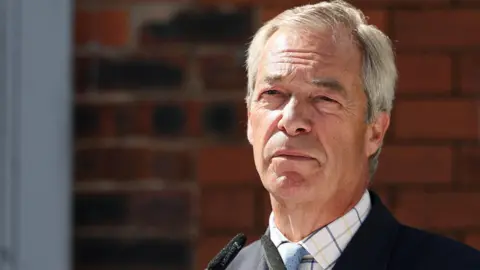
The Reform UK leader says he is "disappointed" with his party's performance in the key by-election.

Labour's Ruth Jones says Sir Keir Starmer should step aside after Burnham's Makerfield victory.

Residents react after the now ex-mayor of Greater Manchester stormed to victory in Makerfield.

How could MPs who want Sir Keir Starmer to be replaced force a leadership contest and who could stand?
Comments
You must be logged in to comment.