yahoo Press
Michael Burry is questioning SpaceX's $3-trillion market valuation — and says he'd be tempted to bet against it
Images
1 / 4
2 / 4

3 / 4

4 / 4
The above button links to Coinbase. Yahoo Finance is not a broker-dealer or investment adviser and does not offer securities or cryptocurrencies for sale or facilitate trading. Coinbase pays us for certain activity generated through this link. Prices displayed are informational.

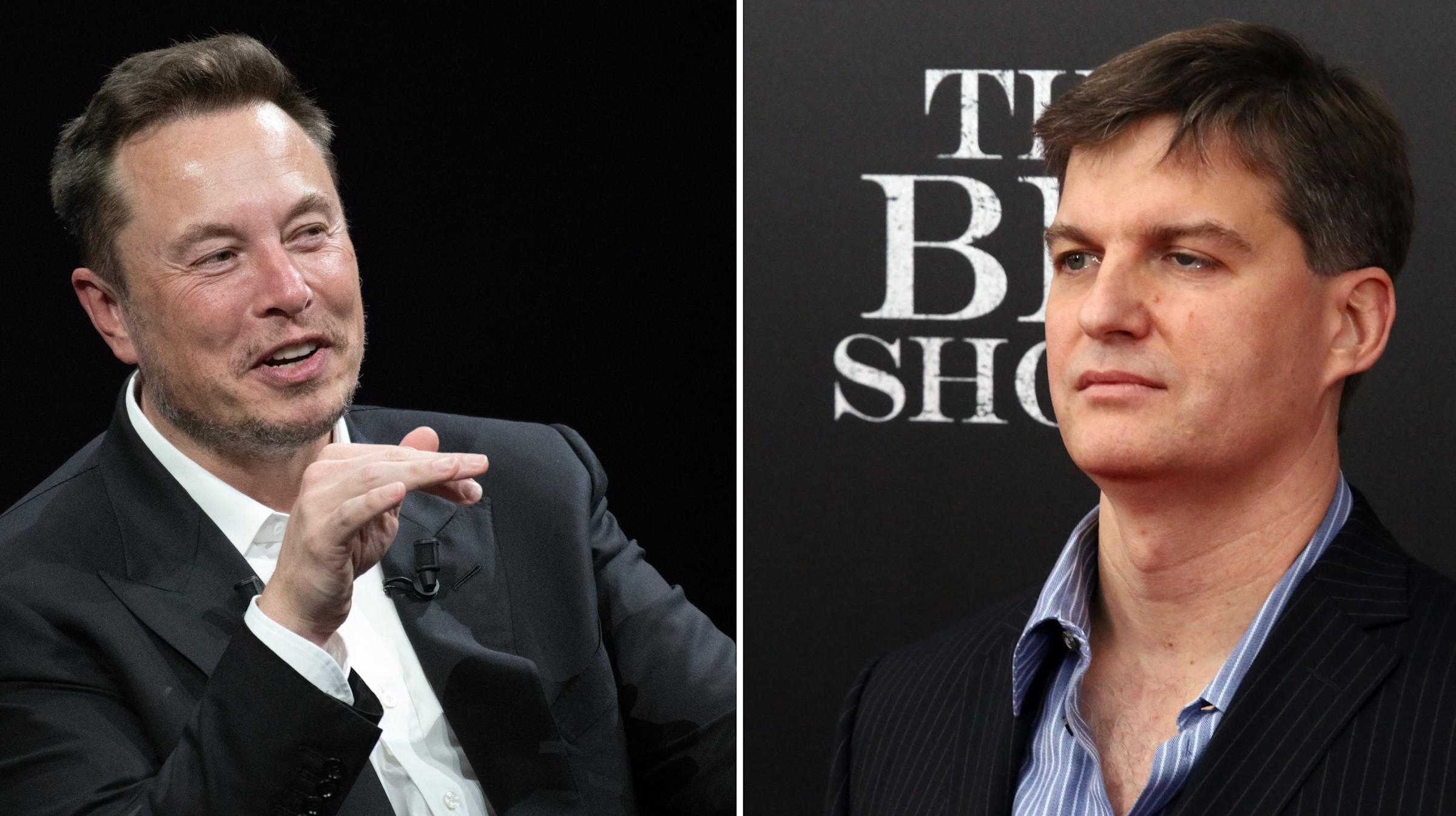
SpaceX’s stock-market debut has now minted CEO Elon Musk as the world’s first trillionaire, but not everyone is convinced of the company’s valuation. Among the skeptics is famed investor Michael Burry, who recently revealed that he is choosing neither to buy in, nor to wager against SpaceX, despite his skepticism.

In a post on Substack, (1) the investor, best known for predicting the U.S. housing collapse before the financial crisis, said he examined several options trades betting against the rocket-and-AI company, but has decided to pass.

The ultra-rich use these 5 real estate strategies to build wealth while they sleep — you can start with just $100

Robert Kiyosaki says this 1 asset will surge 400% in a year and begs investors not to miss this ‘explosion’

Millionaires under 43 hold only 25% of their wealth in stocks. Surprised? Here’s where their money is actually going

Put options are among the most common ways investors bet against a stock. They give the holder the right to sell shares at a predetermined price, called the strike price, before a set expiration date. If the stock falls below that level, the investor profits.

Burry says a put option with a $100 strike price expiring in December 2028 was trading at approximately $25. Similar contracts expiring in June 2027 and December 2026 were priced around $13 and $6.75, respectively.

“Tempted by that one. But no thank you,” Burry said of the December 2026 option, adding that “with any luck,” SpaceX stock will settle somewhere in the mid-$200s.

SpaceX’s stock has been trading between $190 and $200 per share following its highly anticipated debut on June 12. If Burry were to buy put options with a $100 strike price, he’d be betting that the stock would fall below $100 — a drop of more than 50%.

Despite his reputation for bearish (2) (or pessimistic) investing, Burry emphasized that he currently has no position in SpaceX.

“I am not involved with SpaceX now. Neither short nor, ahem, long,” he said.

The investor is no stranger to betting against popular companies. (3) A regulatory filing from November revealed the billionaire’s hedge fund purchased five million put options on Palantir, a surveillance tech company that has had an incredible run on the stock market, and one million on giant computer chip manufacturer Nvidia, among others.

Burry hasn’t just decided to pass on wagers against SpaceX. He’s also calling into question its nearly $3-trillion market valuation, calling it “fundamentally a small space company.”

Burry argues the company is still too niche to be able to dwarf many established businesses, fortunes and national economies, pointing out that it still generates less than $20 billion in annual revenue (4).

“With that $2.8 trillion, SpaceX’s market cap could buy Page, Brin, Bezos, Zuckerberg, Ellison, Arnault, Huang, Buffett, and Ortega and still have $1 trillion left over,” Burry said, naming off a cadre of billionaires.

SpaceX debuted with an IPO priced at $135 a share. (5) It sold more than 555 million shares to raise roughly $75 billion, making it the largest IPO in history.

Burry isn’t alone in his concern about SpaceX’s valuation. There has been heated debate over whether the company is overvalued. On Wednesday, the stock fell for the first time (6) since the company went public, breaking a three-session streak. The reversal raised questions about whether the frenzy around the stock can be sustained.

Musk, however, doesn’t seem too concerned. In a post on X, (7) he said he believes SpaceX could generate $1 trillion of revenue in 2030.

Read More: About 1 in 5 Americans over 50 has zero retirement savings. Here's why it's not too late

Burry’s skepticism extends beyond SpaceX. He has previously warned the rapid rise of artificial intelligence-related stocks bears similarities to the dot-com bubble of 1999 and 2000. He argues that many technology companies are being driven too aggressively by investor excitement and public momentum.

According to Burry, stock prices have become increasingly disconnected from traditional indicators such as economic data and consumer sentiment. That environment, he believes, creates the potential for sharp corrections.

Dave Ramsey warns this is America's most common retirement mistake — here's how to fix it ASAP

Insurance companies profit most from drivers who auto-renew without shopping around. Comparing 100+ quotes takes 2 minutes and costs nothing

Thanks to Jeff Bezos, you can now become a landlord for as little as $100 — without managing a single property

Here are the 4 costs Americans (still) overpay for every single month. How many of these are sabotaging your budget?

Join 250,000+ readers and get Moneywise’s best stories and exclusive interviews first — clear insights curated and delivered weekly. Subscribe now.

We rely only on vetted sources and credible third-party reporting. For details, see our ethics and guidelines.

CNBC (1), (5); Investopedia (2); Yahoo Finance (3), (4), (6); X (7)

This article originally appeared on Moneywise.com under the title: Michael Burry is questioning SpaceX's $3-trillion market valuation — and says he'd be tempted to bet against it

This article provides information only and should not be construed as advice. It is provided without warranty of any kind.
Comments
You must be logged in to comment.