huffpost Press
JD Vance Can't Help Doing This 1 Thing In Interviews — And Experts Say It May Be A Tactic
Images
1 / 9

2 / 9
3 / 9
4 / 9

5 / 9

6 / 9
7 / 9

8 / 9

9 / 9
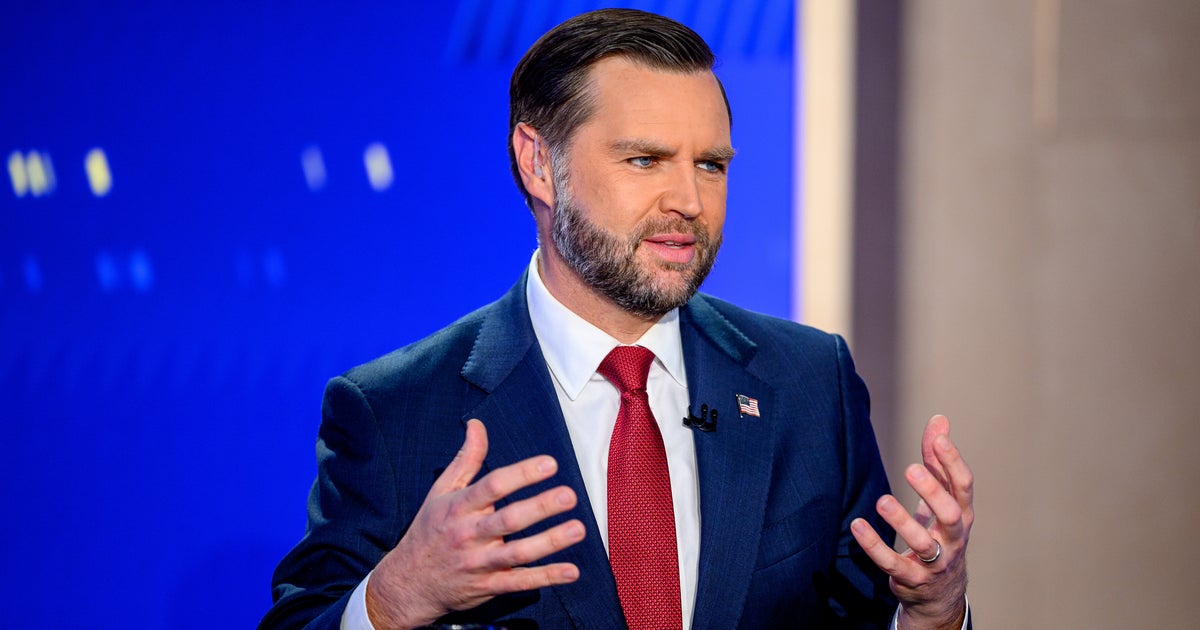
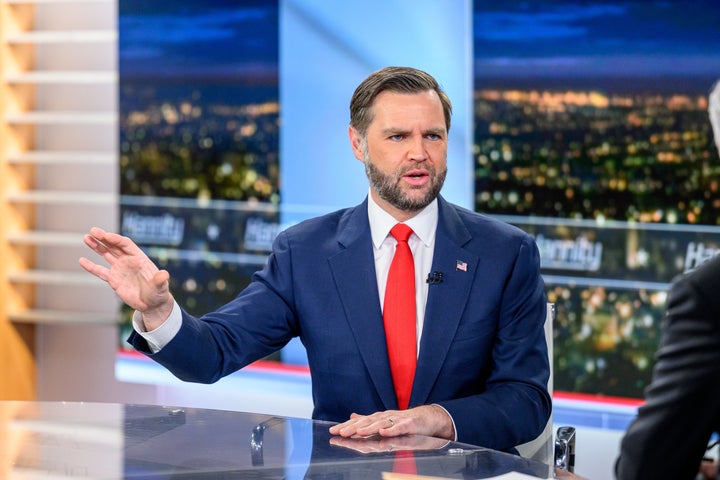
If you’ve watched any of JD Vance’s recent TV appearances, you may have noticed a verbal habit that’s hard to ignore once you catch it: He drops the interviewer’s first name into many of his responses.

Appearing on “The View” on Tuesday, the vice president frequently started his sentences with the panelists’ names ― for example, “Well, Joy...” and “What he said, Ana...”

It’s a longstanding practice for Vance. Looking at the transcript of a 2024 interview he did with Margaret Brennan on “Face the Nation,” you can see he said “Margaret” at least 20 times.

Politicians are often taught to communicate this way in one-on-one interactions with voters, Karrin Anderson, a communications studies professor at Colorado State University, told HuffPost.

“When politicians are preparing for so-called ‘retail politics,’ they are encouraged to use people’s first names because it communicates presence and attention if someone introduces themselves and you remember their name,” she explained. “It’s analogous to a teacher calling a student by name ― it signals that you care enough to learn and use their name.”

This practice isn’t always the politician’s idea, either.

“Sometimes media outlets encourage politicians to use the interviewer’s first name because it builds recognition and attachment with the audience,” said Todd Belt, a professor and political management program director at the Graduate School of Political Management at George Washington University. “Politicians also do it in order to humanize themselves and to make it look like they are not giving prepackaged answers. Also, some politicians like to do it because they think it builds a relationship with the reporter, and they will get fewer tough questions.”

Communication and body language expert Karen Donaldson noted that saying the other person’s name can give an impression of confidence, control and engagement.

“For the purpose of politicians, it can soften a response, slow the pace of the exchange, used in place of a pause, and it can make the conversation feel more human instead of transactional. It also allows the politician to show up as more sincere,” she said.

Using someone’s name in conversation is a technique taught in sales, media training, leadership, interpersonal development and more.

“This persuasion tactic is not just for politicians,” said Traci Brown, a communication and body language expert. “It’s great for anyone wanting to connect more deeply with those around them in business or social settings. The premise? People love it when they feel deeply, unconsciously connected to others. Using their name will do this.”

There’s a neuroscience component to the theory around using people’s names, noted communication and body language expert Patti Wood.

“It affects the auditory cortex of the brain, and that part of your brain is attached tightly to memory and emotions ― so you give your immediate attention to the person who’s using your name,” she explained, adding that this technique can also light up the prefrontal cortex, middle frontal cortex and superior temporal cortex.

As a result, the interviewer might feel that their subject recognizes them as a unique individual, and they might even start thinking about themselves more than their subject. Basically, it can be a form of distraction, confusing the interviewer with apparent niceness so that they take a less assertive approach.

“It affects the amygdala, which decides emotional responses,” Wood added. “If you, the journalist, like your name, then it creates a positive response. We like people who make us feel good. If you have a positive response to your name and someone’s using it, you give positive attributes to the person using it.”

She cited the principle of reciprocity that a person is more likely to comply with a request or be nice to someone if they have done something nice for you ― like saying your name. The interviewer might be compelled to take a softer approach to the conversation due to a sense of social connection.

“There’s also, in the theory of association, a perception in the audience that when someone being interviewed uses the interviewer’s name, they assume the two have a close relationship ― so if the journalist is aggressive in their questioning, the journalist looks like the bad guy,” Wood said.

While there’s a clear theory behind using someone’s name in conversation to build rapport with them, it’s not always effective in practice.

“Ideally, it should build trust and familiarity so that a voter views the candidate as more relatable and authentic,” she said. “But context matters, and the effect may be quite different when a politician is engaging with a journalist versus a voter.”

She pointed to the power dynamics of journalists engaging with politicians in the context of a Donald Trump administration that routinely attacks the free press by singling out and insulting reporters, threatening funding and pushing for control over news outlets.

“In this environment, repeatedly using a journalist’s first name could be viewed as a threat ― a sign that Vance and his MAGA supporters know where ostensibly hostile questions are coming from and they may retaliate,” Anderson said. “Additionally, since it’s customary for journalists to use politicians’ professional titles, there is also a power difference being underscored if the Vice President uses a first name while the journalist uses a professional title.”

Indeed, it’s not as though a reporter would respond, “Well, JD...”

She also raised a question worth considering: How does this approach show up depending on the interviewer’s identity, including their gender or political affiliation?

“Since calling someone by their first name, by definition, isn’t deferential, it defines the person whose name is being used as less than their title or position,” said Peter Loge, associate professor of media and public affairs and director of the Project on Ethics in Political Communication at The George Washington University School of Media & Public Affairs.

“As such it can be patronizing, it says that the person you’re talking to does not deserve the respect of their title and should be referred to casually. This is a standard sitcom and movie joke ― someone trying to prove a point or being a jerk meets someone important and calls them by a nickname, is told they shouldn’t do that, and does it anyway.”

Say it once, and then you don’t really need to do that again. Otherwise, it comes off as artificial, like a salesman.

When it comes to using someone’s first name in a public setting, the experts say delivery and frequency make a difference.

“Overuse can just be cringe-inducing,” Belt said. “But, if the use of the name is done in an aggressive way, it can look condescending.”

Communication expert Denise Dudley believes only the most skilled and charming communicators can get away with using someone’s name multiple times in these contexts.

“It’s a diminishing returns thing,” she explained. “The more you say a person’s name, the worse it gets. It’s effective as it’s invisible, but once people start to realize you’re using names so often, it starts to get irritating. Say it once, and then you don’t really need to do that again. Otherwise, it comes off as artificial, like a salesman.”

Wood similarly calls this tipping point “the used-car salesman effect.”

“If used too often, it loses its power, and if the vocal delivery and body language aren’t friendly, it sounds inauthentic to the audience,” she said.

Dudley pointed out that the same phrase can land completely differently depending on tone.

“You could say, ‘Great question, Ana’ with a really appreciative tone, or it could sound sarcastic, parental, maybe dismissive,” she said. “And if you add a smirk or roll your eyes, the same words become something that’s really condescending and an attack.”

With regard to the vice president, Dudley believes he’s simply not a very competent communicator, but she believes former presidents Barack Obama and George H.W. Bush were “very sophisticated communicators.”

In an easy exchange, using someone’s name can deepen connection, but in a tense or defensive conversation, it comes off as a power move. Donaldson sees that in some of Vance’s interactions with press.

“For most of his interactions the overuse of someone’s first name seems highly scripted and performative, causing it to feel insincere and condescending,” she said. “However, in some instances, it seems personable and confident. I don’t think the use of a tactic itself is the issue ― it’s the delivery and context that truly determines whether it lands well and looks like a deeper connection or a dismissive move.”

Wood offered a related but slightly different diagnosis, pointing to Vance’s background as a debater.

“He used all of the debate techniques, including those under persuasion theory, and he used many media interview techniques,” she said. “On the surface, that can make a first-time viewer think he is smart, but with the repetition of the deflection techniques ― like not answering the question and instead ‘bridging’ to a preplanned talking point that you want to say or ad hominem attacks on the interviewer ― eventually the viewer thinks, ‘I have heard this before.’ And they stop watching his interviews.”

Belt noted that Vance’s communications approach in recent media appearances might be part of a broader image effort.

“Vice President Vance has faced criticism for looking wooden in his public appearances, and he’s trying to turn things around ahead of an expected presidential run,” he said. “He had a pretty authentic performance when he subbed for Karoline Leavitt a few weeks back, and he’s looking to build on that success.”

Of course, speculation about the motives behind the vice president’s particular brand of communication is just that ― speculation. But experts say the effectiveness of his communication style may have less to do with his intent than with who’s in the audience.

“A challenge in all persuasion is being someone people can believe. People tend to believe other people they think are being sincere,” Loge said. “If it sounds to people he wants to reach as if the vice president is being sincere, then the approach works. If it sounds fake to those who the vice president needs to reach, then the approach is failing. The vice president doesn’t need to persuade everyone he’s a good guy; the vice president only needs to persuade the people necessary for him to get what he wants.”

So if the people he’s trying to reach like this tactic, then it’s working. Don’t ignore the role of preconceived bias, either.

“As with all communication in politics, what is heard matters more than what is said,” Loge noted. “Regardless of the vice president’s motives, those who tend to disagree with him will hear his informality as an insult. On the other hand, those who tend to agree with the vice president will hear the informality as putting a reporter in their place or as Mr. Vance trying to be nice.”

By entering your email and clicking Sign Up, you're agreeing to let us send you customized marketing messages about us and our advertising partners. You are also agreeing to our Terms of Service and Privacy Policy.
Comments
You must be logged in to comment.