yahoo Press
Stock market today: Nasdaq futures climb as Dow, S&P 500 stall ahead of Fed rate decision
Images
1 / 3

2 / 3

3 / 3
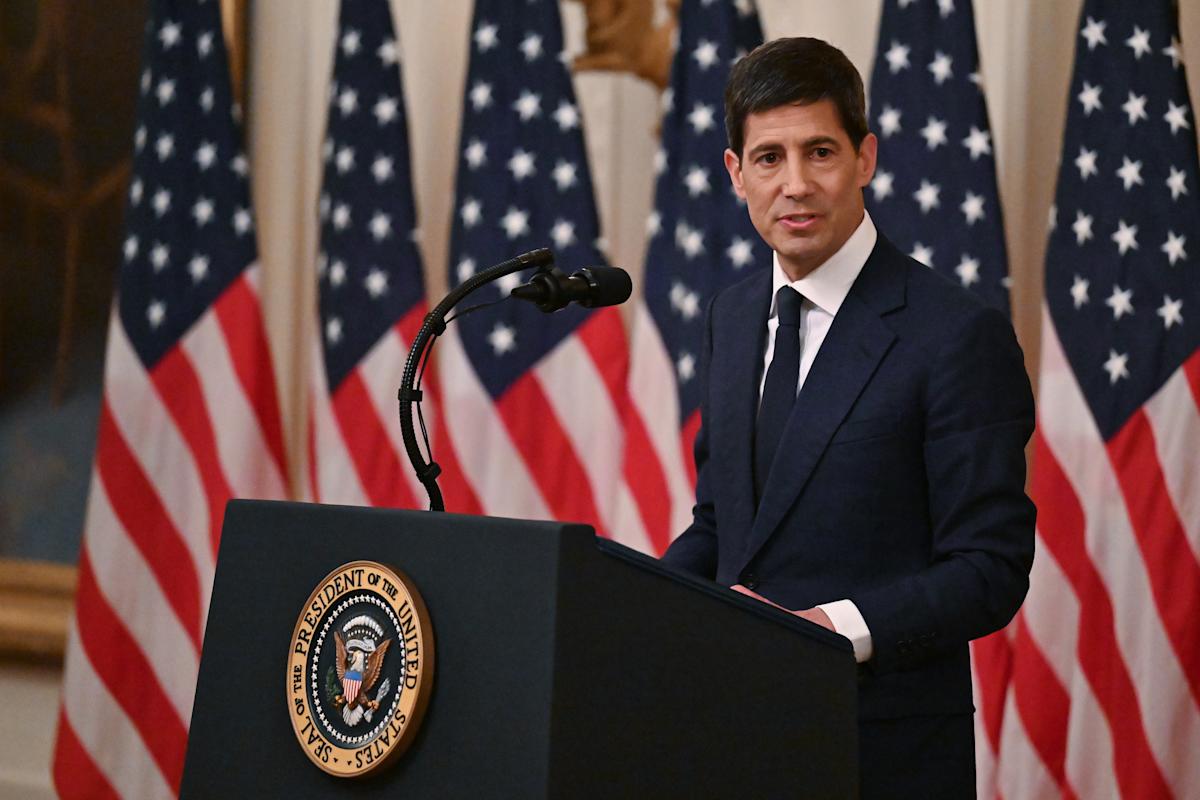
US stock futures were mostly steady on Wednesday as techs eyed a rebound ahead of the Federal Reserve's interest-rate decision, the first under new Chairman Kevin Warsh. Contracts on the tech-heavy Nasdaq 100 (NQ=F) climbed 0.5%, while those on the S&P 500 (ES=F) floated above the flat line. Dow Jones Industrial Average futures (YM=F) were also little changed after the blue-chip benchmark closed at a record high amid uncertainty around the US-Iran peace deal. The Fed is widely expected to hold rates steady on Wednesday. As a result, investors will focus on discerning Warsh's view of monetary policy and whether rate hikes could be on the horizon. Hot inflation data amid the US war with Iran, combined with signs of a steady job market, has taken rate cuts off the table. Investors are also debating whether the blocked oil flows through the Strait of Hormuz could be cleared quickly, as they weigh the US-Iran interim deal to end their conflict. After coming to terms on a draft 14-point memorandum, the two sides are aiming to formally sign an agreement on Friday. But President Trump said the memo wasn’t final and the US could “go right back to dropping bombs right smack in the middle of their head” if he didn’t like it, speaking at the G7 summit on Wednesday. Meanwhile, SpaceX (SPCX) shares moved up around 2%, poised to extend a post-IPO rally that has seen the Elon Musk-led rocket company eclipse Amazon (AMZN) in market value in just three days of trading. Stock futures held steady after President Trump underscored on Wednesday that the memorandum of understanding between the US and Iran was not final. "It's a memorandum of understanding,” Trump said at the G7 summit in France, per Reuters. “And if I don't like it, we'll go back to shooting at them, dropping bombs on their head." The MOU is scheduled to be signed on June 19, instituting a 60-day negotiation period to end the war. Oil prices edged higher, but still remain below their mid-war peaks. Brent crude futures (BZ=F) were trading at around $79 per barrel, while WTI crude futures (CL=F) traded at $75 per barrel. SpaceX (SPCX) shares rose before the bell, set for a fourth day of gains after the Elon Musk-led rocket company overtook Amazon (AMZN) by market value. Bloomberg reports: Shares of Elon Musk's rocket and AI company Space Exploration Technologies Corp. rose 4.5% in New York premarket trading Wednesday, signaling a slower pace of gains than previous sessions. The company formally known as Space Exploration Technologies Corp. has rallied about 49% since going public through Tuesday's close, overtaking Amazon in value to become the fifth-largest stock in the world, and is now roughly $150 billion away from Microsoft Corp. (MSFT). … SpaceX stock's run is "really not at all unexpected, especially with the fact that they had 30% of the issue available for retail investors," said Brian Mulberry, chief market strategist at Zacks Investment Management. Read more here. The Federal Reserve’s Kevin Warsh era begins Wednesday, as President Trump’s pick to lead the central bank oversees his first policy decision and holds his first news conference. Yahoo Finance’s Jennifer Schonberger looks at what’s in play: Kevin Warsh will preside over his first interest rate-setting meeting as Federal Reserve chairman on Wednesday, when the central bank is expected to hold rates steady. All eyes will be on Warsh as Fed watchers try to discern his views, his personal credibility, and how he will position the Fed in the current landscape. The committee is facing hotter inflation readings as the conflict in Iran has pushed inflation higher. "While Warsh is generally perceived as dovish, he will inherit a committee that has become noticeably more hawkish," said Greg Daco, chief economist at EY-Parthenon. "Warsh's first challenge will not be steering the committee toward easier policy, but demonstrating that his decisions are grounded in economic fundamentals rather than political considerations." Read more here. Bloomberg reports: Oil headed for the longest losing run in 10 months on gathering expectations that a US-Iran deal to reopen the Strait of Hormuz will unleash a wave of supply, loosening the global crude market. Global benchmark Brent (BZ=F) retreated for a fifth day to below $79 a barrel, trading near a three-month low, while West Texas Intermediate (CL=F) was near $76. The interim pact, which is due to be signed on Friday, offers Tehran broad financial incentives, including the right to sell its oil immediately. Crude prices have retreated sharply in recent weeks as moves to end the war between Washington and Tehran are seen easing tightness in global energy markets. Producers, shippers and traders are now assessing whether the agreement will prove to be durable, and how long it will take for vessel transits of the Hormuz chokepoint to be revived in earnest. While technical details are still being finalized and some language may be changed, a 14-point draft memorandum offers the clearest picture yet of the deal, which will pave the way for 60 days of talks aimed at formally ending the war and imposing strict new limits on Iran's nuclear program. Read more here. In a memo seen by Bloomberg, the US and Iran have agreed upon 14 points that make up a draft peace deal, to be signed by both countries in Switzerland on June 19. Ceasefire: Immediate and permanent end to war on all fronts, including Lebanon. Non-interference: The US and Iran agree on sovereignty and territorial integrity. Timeline: Reach a final agreement within a maximum period of 60 days. Blockade: United States to lift the naval blockade. Troops: The United States to withdraw its forces within 30 days. Hormuz: Iran will immediately open the Strait of Hormuz Reconstruction: The US agrees to pay Iran $300 billion in aid for rehabilitation Nuclear weapons: Iran agrees to never produce nuclear weapons. Status quo: US and Iran agree to maintain the agreement as it stands at the time of signing. Sanctions: The US will end all economic sanctions on Iran. Frozen funds: Iranian restricted or frozen funds to be released and made fully available. Implementation: A dedicated 'mechanism' to be put in place to ensure future commitment to the deal. Order of business: No agreement will be signed until 'Articles 4, 5, 10, and 11' are implemented. These being the removal of the blockade, the withdrawal of US troops, the removal of sanctions and the release of funds. United Nations: The deal is to be overseen by the binding resolution of the UN Security Council. Read more here.
Comments
You must be logged in to comment.