huffpost Press
Trump Slung A Nasty Insult At A Group He's Obsessed With — And Experts Say This Word Cuts Deep
Images
1 / 9

2 / 9
3 / 9
4 / 9

5 / 9

6 / 9

7 / 9

8 / 9

9 / 9
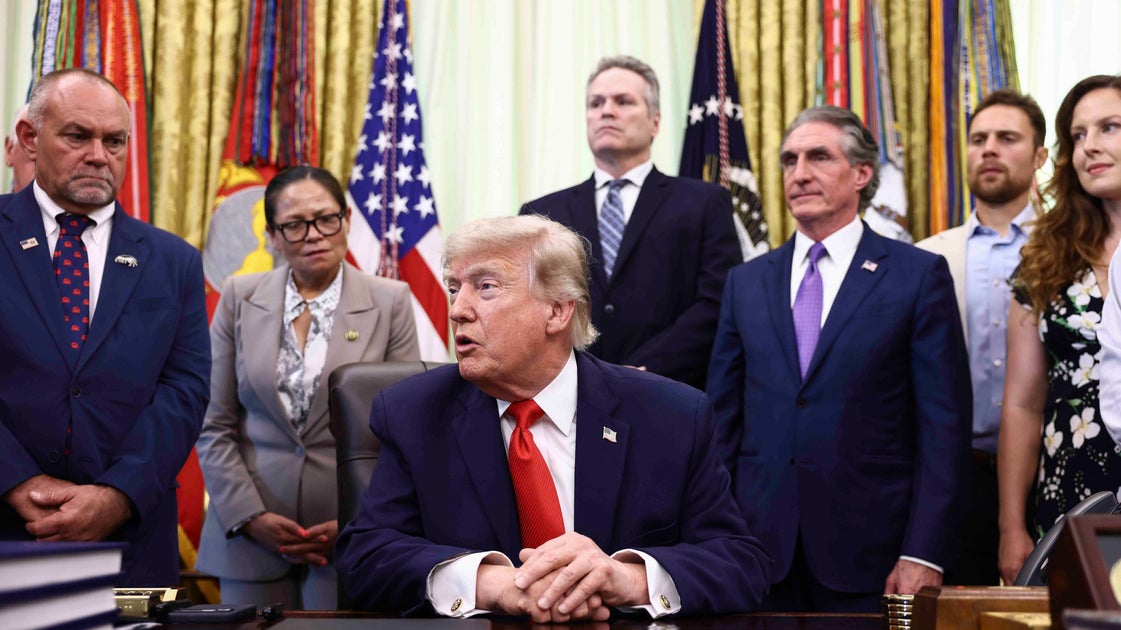
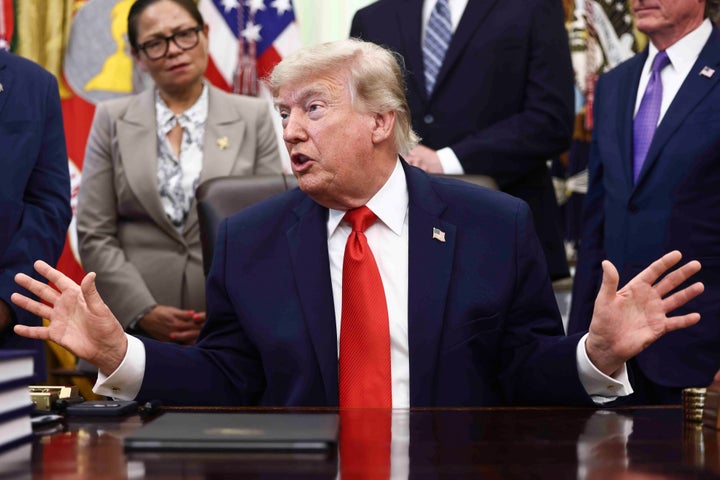
President Donald Trump recycled a common (for him) insult and resurfaced a fairly consistent grudge in comments he made on Thursday after signing a proclamation removing environmental protections for marine national monuments in the Pacific Ocean.

It started with a benign comment complimenting the contributions of farmers and fishermen to the country — and then things took a turn.

“These people built the country, not the complainers. They built the country, whether it’s fishermen, farmers or anything else ... me? Guys like me, they built the country,” Trump proclaimed.

“I watch all these ingrates, they’re always complaining, complaining, they didn’t build anything. They couldn’t build anything,” he continued, before bringing up the state of Minnesota for no discernible reason.

“Look at what’s happened in Minnesota. Somalia, all these people came in from Somalia, they ripped off our system,” he continued, showcasing his longstanding and well-documented disdain for both Minnesota and Somali immigrants in the United States, with a specific fixation on Somali American Rep. Ilhan Omar (D-Minn.).

But experts say there’s something in Trump’s “ingrate” insult that is particularly telling about his attitude as a leader.

“Well, when Donald Trump says [this quote],” Edwin Battistella, author of “Dangerous Crooked Scoundrels: Insulting the President from Washington to Trump” told HuffPost, “what I hear is someone saying that there are makers (guys like him) and takers — and that the latter should be grateful to the former for basic necessities of life or basic functions of government.”

“Two things stand out to me,” Battistella added. “What are the supposed ingrates ungrateful for? And the second is, what is the power relation that allows someone to label them as ingrates?”

This isn’t Trump’s first time pulling out this term, Battistella said, noting that he’s lobbed the insult at Ukraine and, more recently, at Israeli Prime Minister Benjamin Netanyahu.

It does speak to a level of entitlement to throw out the term to begin with and, as Battistella notes, “It seems to reflect his ‘transactional’ world view, that if he does something for you, you [owe] him gratitude and should express it.”

“When he refers to entire populations as ingrates, as he did with the population of Puerto Rico in his first term and has recently done with Somalis, it certainly smacks of a racial and class paternalism,” Battistella said, noting that it “feeds” the larger racist narrative that marginalized people are somehow “ungrateful [or] undeserving.”

And it’s this piece that also stands out to Koritha Mitchell, a literary historian and author of “From Slave Cabins to the White House: Homemade Citizenship in African American Culture.”

This kind of commentary crosses the line thoroughly into something Mitchell coined as “know-your-place aggression.”

As Mitchell previously wrote, know-your-place aggression describes “the flexible dynamic array of forces that answer the achievements of marginalized groups such that their success brings aggression as often as praise.”

“One reason this absolutely qualifies as know-your-place aggression is that it emerges in response to the success of marginalized groups (and to success that benefits marginalized groups),” Mitchell told HuffPost.

In Trump’s case, these comments work to cement the racist narratives that are already built into white American mythology, Mitchell noted, which many Americans unquestioningly absorb and accept without much of a fight.

When Trump says vile things, he’s saying what we’ve all been taught anyway.

“United States citizenship operates with the support of the most basic education everyone gets. No matter how well or poorly we did in school, we all got the message that white people built this country,” Mitchell explained. “We all ‘know’ that Native Americans were savages who weren’t using land and resources well. We all ‘know’ that Black people needed the guidance of white people.”

These larger narratives, over time, can make it harder to correct systems that promote inequity and injustice.

“In other words, we all learned that white people earned their positions; everyone else is lacking and things just worked out as they should. White people were never unjustifiably violent. Even when it might seem that white people were violent, they were justified somehow and we’re all better off because they did what they did.”

“When Trump says vile things, he’s saying what we’ve all been taught anyway,” she said.

Citing that since the killings of Trayvon Martin, Michael Brown and George Floyd as catalysts, Mitchell notes that “more people have awakened” to the lies behind the simplistic and white supremacist narratives that hijacked so much of our history.

And it did feel, for a moment, like the cultural reckoning was coming — or at the very least, like unsung contributors to the American story were finally beginning to be noticed and praised.

“Consider the lesson from the musical ‘Hamilton’ that immigrants ‘get the job done,’” Mitchell said. “That’s an example of the kind of success that know-your-place aggression never leaves unchecked.”

“Typically demonized populations were being recognized for having contributed, despite all the inescapable lies about their being leeches,” she continued. “More people recognizing the contributions of anyone who isn’t a cisgender straight white male is an example of the success that Trump and his allies and followers want to see undone.”

And, ultimately, that is one of the roots of Trump’s “ingrate” insult — and the continued attacks on all immigrants and people of color, in Mitchell’s view

“When he casts women and folk of color in an ugly light, he’s just reinforcing the education none of us can avoid,” she said.

By entering your email and clicking Sign Up, you're agreeing to let us send you customized marketing messages about us and our advertising partners. You are also agreeing to our Terms of Service and Privacy Policy.
Comments
You must be logged in to comment.