yahoo Press
‘Bad policy and even worse politics’: DeSantis spurns potential White House AI preemption
Images
1 / 7
2 / 7

3 / 7

4 / 7
5 / 7

6 / 7

7 / 7
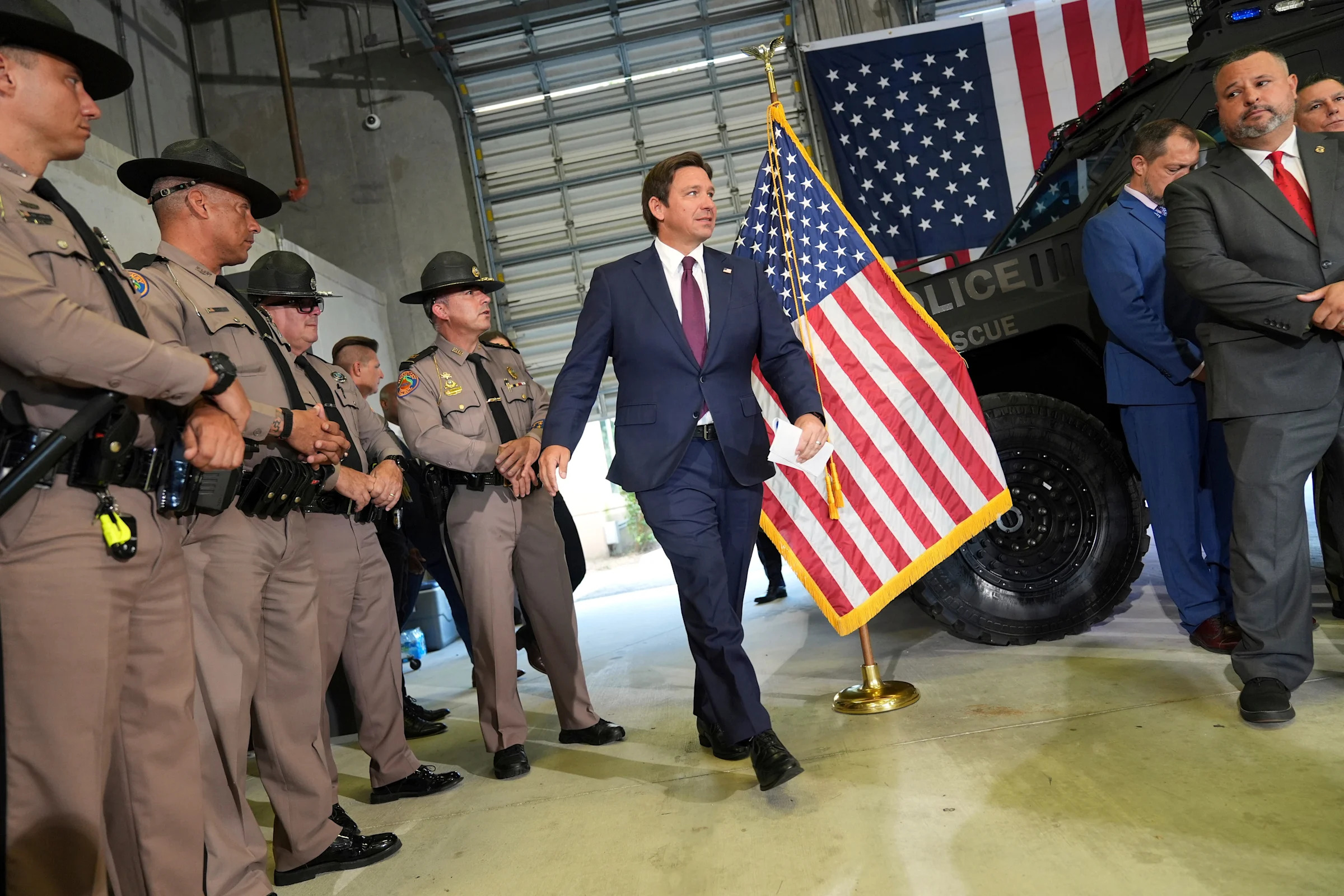
TALLAHASSEE, Florida — Gov. Ron DeSantis, one of the most outspoken Republicans nationally calling for artificial intelligence regulation, denounced the possibility Thursday of the White House pushing to block states from creating their own safeguards against the booming technology.

The Trump administration’s longstanding opposition to state AI laws ultimately killed legislation in Florida — one of the GOP governor’s top priorities during his final year in office — and now DeSantis fears policies in other states could fall by the wayside. The heightened concerns are a response to the White House meeting with tech companies and kids’ safety groups this week, attempting to garner support for bills that could preempt some state laws on AI. This marks the latest play by Republicans to target local regulations after stops and starts by the Trump administration and congressional leadership.

“Preempting states re: AI without enacting a sensible federal framework is just an amnesty for Big Tech,” DeSantis said on social media, reacting to POLITICO’s reporting. “Combined with a potential de facto bailout of OpenAI, it represents bad policy and even worse politics.”

Florida, led by DeSantis and state Attorney General James Uthmeier, is applying more pressure than any other red statewhen it comes to regulating AI through proposed legislation, legal action and even an ongoing criminal investigation into how a chatbot could have aided a suspect in a deadly school shooting. But even DeSantis, who has been mostly successful in getting his ideas through the state Legislature, hit a roadblock this year when the Florida House sided with the White House and declined to even consider his AI bill of rights proposal.

The comprehensive AI legislation sought by DeSantis and passed by the state Senate would have required chatbot platforms to share information with parents, including all interactions their children have with AI. And it would have given parents the ability to limit the amount of time their children spend using chatbots and get notifications if children share any thoughts about harming themselves or others.

Despite DeSantis compelling lawmakers to reconsider the regulations during a special session, the House never gave it a hearing. State House Speaker Daniel Perez, Trump's recent pick for ambassador to Brazil, maintained steadfast support for the White House effort toward a national framework regulating AI, as opposed to a patchwork of state laws.

These are the sort of state regulations and debates that are up in the air as the White House considers blocking a wide swath of state AI rules — a goal the Trump administration and congressional Republicans have aggressively pursued since last year. At the same time, they still could take a narrower preemption focus on issues like age verification for users.

Outside of legislation, Florida is fighting to hold Big Tech accountable by targeting one of the major players — OpenAI — in court and trying to force the company to obtain parental consent for data collection from some of its youngest users. Uthmeier, in a lawsuit filed last week, asked a judge to change how OpenAI operates, from barring certain behaviors to demanding damages on behalf of Floridians. DeSantis only ramped up the scrutiny Thursday by criticizing the idea of the government buying a stake in OpenAI.

And while the AI bill of rights failed in Florida, the Legislature did put new requirements on large data centers to protect ratepayers from “footing the bill” for their development. Under the legislation, public utilities must require data centers to pay their own service costs and prevent those costs from being shifted to ratepayers. But if the federal government passes a strict preemption, DeSantis noted future regulations could be off the table.

“The bottom line is we were successful in enacting protections for ratepayers so that companies can’t pass on costs from data centers to ratepayers,” DeSantis said on social media Thursday. “But the [Florida] House blocked out AI Bill of Rights (passed 37-1 by the Senate) so those protections have not been enacted into law.”
Comments
You must be logged in to comment.