yahoo Press
What is this 'buy, borrow, die' strategy that everyone keeps talking about — and that billionaires like Jeff Bezos deny?
Images
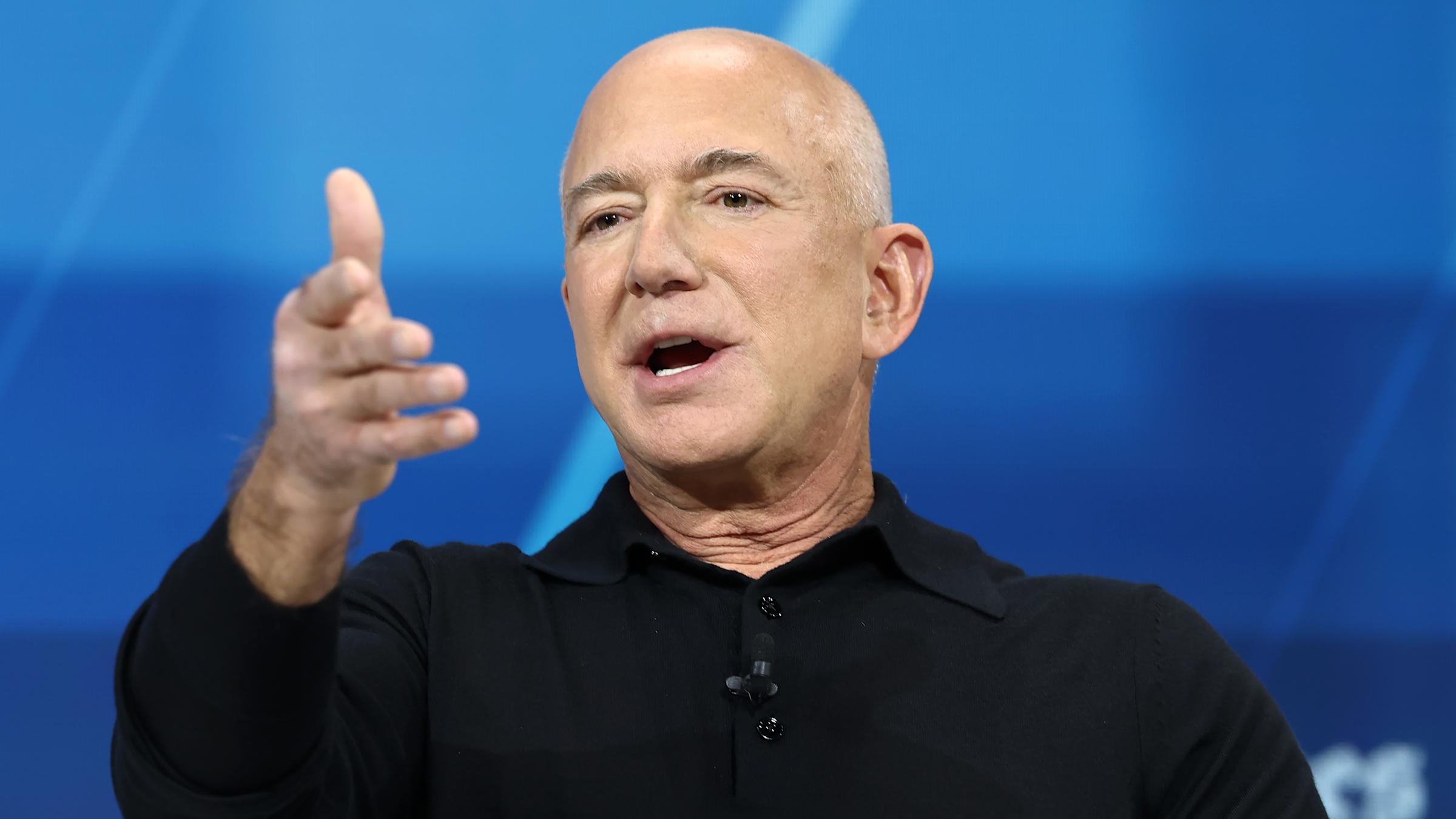
1 / 5
2 / 5

3 / 5
4 / 5

5 / 5
Moneywise and Yahoo Finance LLC may earn commission or revenue through links in the content below.

You might have heard about a sneaky trick the wealthy use to avoid taxes.

The aptly named “buy, borrow, die” strategy was developed by Professor Edward J. McCaffery in the 1990s to describe how rich people get — and stay — rich by paying less in taxes (1).

Despite widespread chatter about the strategy, Jeff Bezos claims it’s not a real strategy.

The ultra-rich use these 5 real estate strategies to build wealth while they sleep — you can start with just $100

The IRS usually taxes gold as a collectible — but this little-known strategy lets you hold physical bullion tax-free. Get your free guide from Priority Gold

Dave Ramsey warns nearly 50% of Americans are making 1 big Social Security mistake — here’s how to fix it ASAP

“There’s no truth to this ‘buy, borrow, die’ thing,” Bezos told CNBC’s Andrew Ross Sorkin in May 2026. “I don’t even know where this comes from” (2).

This strategy has also come under fire from Sens. Elizabeth Warren and Ron Wyden, who insist the loophole should be closed.

“America’s tax code is riddled with loopholes that allow the ultra-wealthy to get away without paying their fair share, while working families have to play by a different set of rules and pay taxes out of each paycheck,” Wyden said (3).

So what is it and how does it work?

“Buy, borrow, die” is a strategy in which wealthy people accumulate appreciating assets, borrow against them and use the estate to pay off the debt after they die. It works because of how taxes are assessed: Not every financial move is a taxable event.

Buy a car? Generally, you’ll pay taxes. Earn money? Pay taxes. Sell $62 billion in stocks? That’s a taxable event. But if you borrow money against those stocks — as Elon Musk did to buy Twitter in 2022 — that’s debt, not income and it isn’t taxed.

In addition to avoiding taxable events, the “buy, borrow, die” strategy also allows whatever assets you borrow against to continue to appreciate, making you even more money. And while you’ll obviously pay interest on the loan, for the uber-wealthy, the math can still work out in their favor.

Read More: Thanks to Jeff Bezos, you can become a landlord for $100 — without the headache of actually being one

The highest income tax bracket, for those earning over $640,601, is 37% (4) but interest rates on loans are typically much lower. In Musk’s case, he would likely have paid capital gains tax had he sold his stocks, which are typically taxed at around 20% (5) — still higher than most interest rates.

So while Bezos might not openly use this strategy, there are definitely some billionaires who do. And this type of loophole isn’t available to most of us.

Most of us can’t pledge billions in stock as collateral for a loan. But there are still plenty of legal ways to keep more of what you earn.

If you own a home, you may be able to borrow against it through a home equity loan or home equity line of credit (HELOC). Many homeowners are richer in equity than they realize.

American homeowners are sitting on nearly $17 trillion in total equity, with approximately $11 trillion considered tappable, according to the Intercontinental Exchange’s March 2026 Mortgage Monitor report (6).

Like the buy-borrow-die strategy, this is debt, not income, so it isn’t typically taxed. You’ll still pay interest, but rates are typically lower than credit cards or personal loans and the interest may even be tax-deductible if the funds are used to improve the home (7).

You can explore home equity loans available to you through platforms like Figure.

Unlike traditional HELOCs that let you borrow gradually, Figure gives you the full approved amount upfront, so it works more like a quick home-equity loan with HELOC-style flexibility.

You can apply online and see your HELOC rates within minutes. Once your application is approved, you can receive funding in as little as five days.

One of the simplest ways to reduce your taxable income is to contribute to accounts designed for it. A 401(k) or traditional IRA lowers your taxable income today, while a Roth IRA grows tax-free for later.

The key isn't just where you save — it's also what you invest in.

While traditional IRAs limit options to stocks, bonds and mutual funds, a self‑directed retirement account changes that. With IRA Financial, you can use a tax‑advantaged IRA or Solo 401(k) to invest in alternatives and public markets, all in one place, while staying compliant with IRS rules.

IRA Financial gives you the freedom to invest in alternative assets like real estate, private equity, precious metals, and crypto within a self-directed retirement account. And now you can add real-time, public market investing, powered by Interactive Brokers, a trusted global brokerage.

For the first time, you can manage both traditional and alternative assets seamlessly within a single self‑directed retirement structure, all for a flat fee.

Complete the application online in minutes to open your self‑directed retirement account with stock trading access powered by Interactive Brokers.

Selling an investment you’ve held for less than a year triggers short-term capital gains taxes, which are taxed as ordinary income — potentially as high as 37%. Hold that same investment for more than a year and you’ll pay long-term capital gains rates instead, which top out at 20% for most investors. Time in the market isn’t just a good investing strategy; it’s a good tax strategy too.

Holding your investments for a longer time frame can also pay off, thanks to the powers of compounding.

“The money is made in investments by investing,” legendary investor Buffett said in a 2016 interview with CNBC, adding, “and by owning good companies for long periods of time. If they buy good companies, buy them over time, they’re going to do fine 10, 20, 30 years from now” (8).

The math adds up. If you invest just $20 each week for 30 years, it can compound to over $179,000, assuming a 10% annual rate of return (9).

If those kinds of returns are too tempting to pass up, platforms like Acorns allow you to turn your spare change from everyday purchases into an investment opportunity.

Signing up for Acorns takes just minutes: All you have to do is link your cards and Acorns will round up each purchase to the nearest dollar, investing the difference — your spare change — into a diversified portfolio managed by experts at leading investment firms like Vanguard and BlackRock.

With Acorns, you can invest in an index ETF with as little as $5 — and, if you sign up today and set up a recurring investment, Acorns will add a $20 bonus to help you begin your investment journey.

Most Americans take the standard deduction — $16,100 for single filers and $32,200 for married couples filing jointly in 2026 (10). But if your deductible expenses exceed that amount, itemizing could save you money. Eligible deductions include state and local taxes (up to $10,000), mortgage interest, charitable donations and unreimbursed medical expenses above a certain threshold.

The ultra-wealthy didn’t write the tax code — they just know how to read it. You don’t need a billion-dollar portfolio to do the same, just a little planning and a strategy to leverage the right accounts.

A financial planner can help you uncover tax-saving opportunities that are easy to miss on your own. If you have a portfolio of $250,000 or more, platforms like WiserAdvisor can connect you with vetted professionals who specialize in this kind of planning.

Simply answer a few questions about your savings, retirement timeline and overall investment portfolio.

From there, WiserAdvisor reviews its network to match you — for free — with up to three vetted, reputable advisors aligned with your specific needs.

You can then schedule no-obligation consultations with your matches to determine who is the best fit for your long-term goals.

WiserAdvisor is a matching service and does not provide financial advice directly. All matched advisors are third parties and specific financial results are not guaranteed.

- With files from Danielle Antosz.

No time to shop for cheaper car insurance? This 2-minute check could slash your bill today — no phone calls required

Robert Kiyosaki says this 1 asset will surge 400% in a year and begs investors not to miss this ‘explosion’

Millionaires under 43 are reshaping investing — just 25% of their portfolios are in stocks. Here’s where their money is going

Here are the 4 costs Americans (still) overpay for every single month. How many of these are sabotaging your budget?

Join 250,000+ readers and get Moneywise’s best stories and exclusive interviews first — clear insights curated and delivered weekly. Subscribe now.

Taxing Wealth Seriously (1); CNBC (2), (8); U.S. Senate (3); Tax Foundation (4); IRS (5), (7), (10); Intercontinental Exchange (6); Acorns (9)

This article provides information only and should not be construed as advice. It is provided without warranty of any kind.
Comments
You must be logged in to comment.