yahoo Press
Uber Turns Driver Downtime Into an AI Data Factory
Images
1 / 5
2 / 5

3 / 5
4 / 5

5 / 5
The above button links to Coinbase. Yahoo Finance is not a broker-dealer or investment adviser and does not offer securities or cryptocurrencies for sale or facilitate trading. Coinbase pays us for certain activity generated through this link. Prices displayed are informational.

Our analysts just identified a stock with the potential to be the next Nvidia. Tell us how you invest and we'll show you why it's our #1 pick. Tap here.

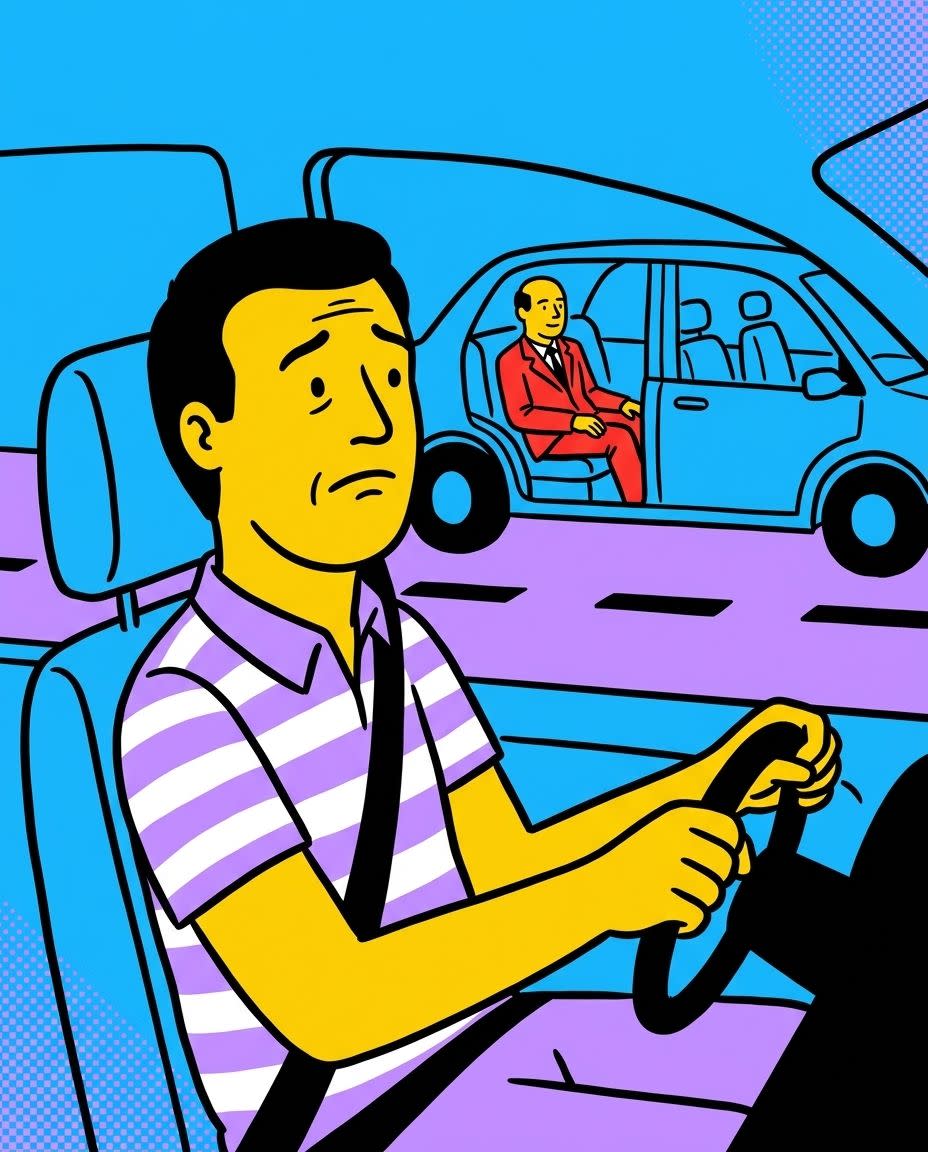
As Uber works to one day make its drivers irrelevant via Waymo and other forms of automation, the $150 billion company is giving those behind the wheel a chance to complete “digital tasks,” to help train AI.

You probably shouldn’t be surprised by this. Uber CEO Dara Khosrowshahi in February predicted AI will be capable of replacing 70-80% of human workers over the next decade, with “intellectual jobs going first.” On June 3, Uber announced it would cut 23% of its “People and Places” division, or less than 1% of its overall 34,000-person staff. It’s a clear signal that when it comes to AI, Uber is all business.

The job cuts extend to those in its human resources, recruitment, workplace facilities, and culture. Those departments could be the first to be replaced by AI. But a spokesperson told Quartz that the cuts, less than 1% of the company’s workforce, aren’t made up of low-to-mid-level employees but actually “senior-level positions.” The rationale is that Uber isn’t totally replacing humans, but replacing a layer of work with AI assistants to do more with less headcount. Chatbots, AI resume scans, and the general organization of Uber’s day-to-day operations — that sort of thing.

This is "The Great Flattening,” something Meta just got finished with in May, cutting some 8,000 middle-management roles. The cuts, paired with the drivers’ digital tasks, are part of Uber’s plan to use their massive data to push into a whole new business segment.

One stock. Nvidia-level potential. 30M+ investors trust Moby to find it first. Get the pick. Tap here.

In June of last year, Uber launched “Uber AI Solutions,” its enterprise-facing AI data and infrastructure platform. This is their push into the data annotation market, which is estimated to grow from about $4 billion in 2025 to nearly $17 billion by 2035, per some estimates. While Uber is far from the biggest player compared to Scale AI, Appen, and Labelbox, its drivers and all-in-one platform do offer a structural advantage, especially to be responsive to fluctuations in demand.

A successful November 2024 pilot in five test markets, including the U.S., Canada, and India, resulted in expansion to more than 30 countries. Though data collection via Uber drivers' “digital tasks” —data labeling, menu scanning, and audio recording— isn’t exactly the “intellectual job” Khosrowshahi predicted would go first, that’s not Uber AI Solutions' endgame. It’s a larger push to turn all the drivers’ “free time,” and lean on the platform’s sheer size, aggregate volume, and diversity, and then turn around and sell those datasets to enterprise customers.

They can do this much more cheaply than other companies like Scale AI, sacrificing quality and expertise found in more specific data annotation companies compared to others because drivers are doing it, not trained professionals. But what these drivers may not know is that this is a key step towards Uber’s plan of eventually automating everything.

There’s a tragic irony here. The thousands of Uber drivers looking to score a couple bucks might actively be undercutting their own roles.

Uber’s chief technology officer, Praveen Neppalli Naga, said in May they are planning on equipping sensors to Uber vehicles to “soak up real-world data for autonomous vehicle (AV) companies.” So Uber has millions of drivers, and a future data gold mine that could become their automation edge.
Comments
You must be logged in to comment.