buzzfeed Press
Surgeons Are Sharing Their Worst Mistakes In The Operating Room, And My Medical Anxiety Is Now At An ALL-TIME High
Images
1 / 14

2 / 14

3 / 14

4 / 14

5 / 14
6 / 14

7 / 14
8 / 14
9 / 14

10 / 14

11 / 14
12 / 14
13 / 14

14 / 14
“The vet prepped the cat for surgery and began the procedure... only to realize he couldn’t find the uterus or ovaries. The cat was male.”

I work as a Writer at BuzzFeed, creating and curating quizzes, listicles, and articles that cover everything from pop culture chaos to food trends I immediately want to try and fashion moments I can’t stop talking about.

"He placed his finger over the tear, which immediately stopped the bleeding, then looked at me, winked, and said: "Well, Taltyelemna, you're in deep shit now, aren't you?" He stitched up the pulmonary artery and finished the procedure. While this story isn't quite as horrifying as some of the others in this thread, it was definitely my first "holy shit" moment."

"Anyway, I had to grab the donor cornea and start stitching as quickly as possible while the patient was actively throwing up. I use 10-0 nylon sutures, which are thinner than an eyelash. It turned out okay, but not great. Don't lie about eating breakfast before surgery, people."

"After the surgery, terrified, he went to explain to the patient what had happened. Expecting anger, distress, and tears, he instead received the response: "That's OK. I was blind in that eye anyway!""

"3.) A surgical robot froze in the middle of a case, and I had to reboot it. The problem was that one of the robotic arms was grasping a major blood vessel. We didn't want to reboot because we were afraid the arms would re-home and release the vessel. To make matters worse, we lost the video feed when the system froze, so we couldn't simply retract the instruments.

There were a lot of people saying, "Oh shit, oh shit..." Meanwhile, I was the one standing there with my finger on the power switch. If the robot tore someone's organs apart, everyone would be looking at me."

"The bowels had become very swollen from the fluids, trauma, and everything else, so when he took the wound vac off, they all slipped out of the patient.

We really just had to step back and say, "Well, shit. How do we get this guy's guts back inside him?" We ended up having to call in six other people to help tuck things in here and there until he could get back to the OR, where they were finally able to put everything back in its proper place."

"It still makes me shudder to think about how close that baby came to hitting the floor headfirst. It has never happened before or since."

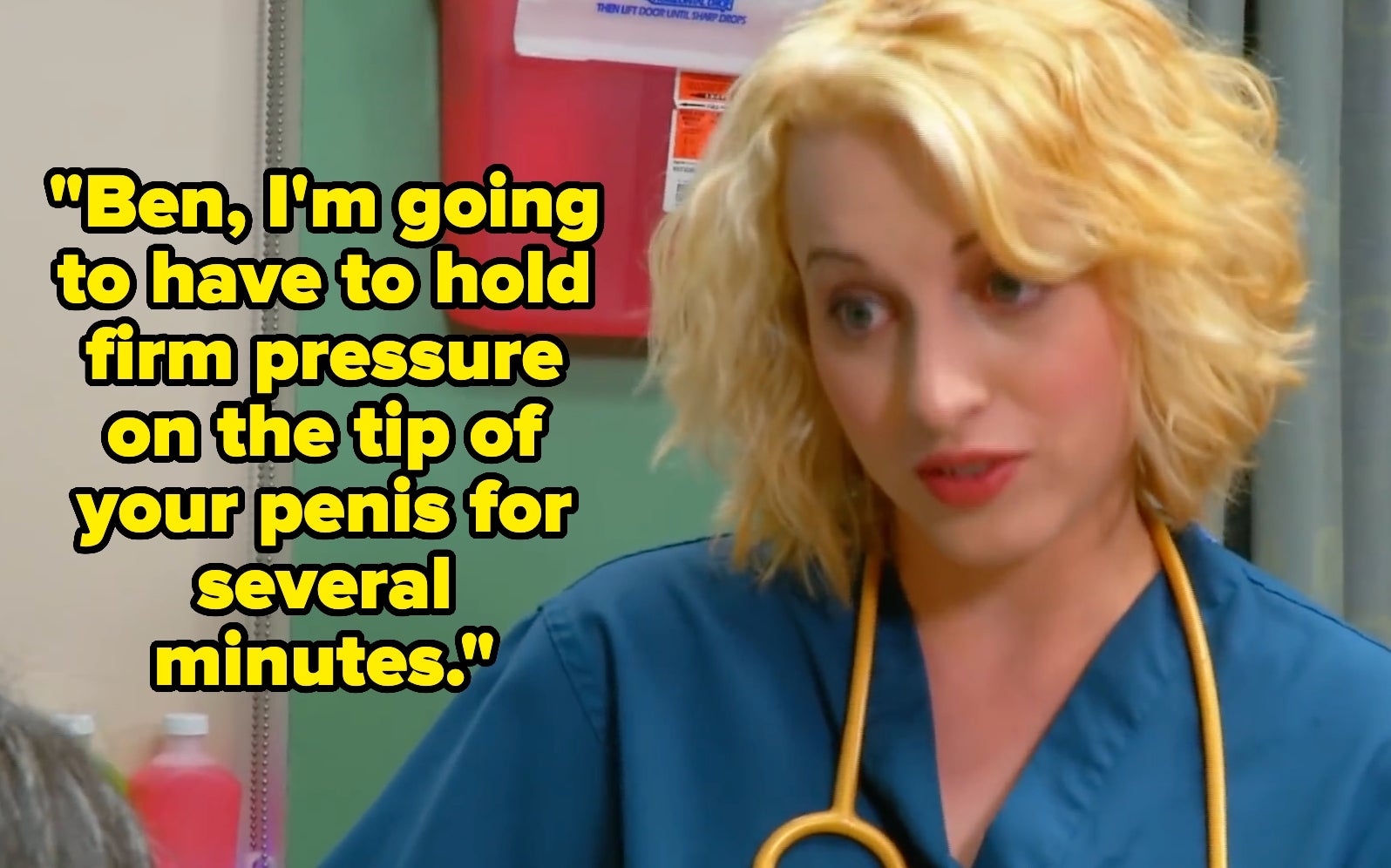
"This patient had no such order, so I went ahead and removed the catheter. Foley catheters are held in place by a balloon at the tip that is inflated with 10 mL of saline. I deflated the balloon, withdrew the 10 mL of saline, and removed the catheter.

As soon as the catheter cleared his penis, blood started pouring out in a heavy stream. It turned out that the nurse who had inserted it on admission hadn't advanced it far enough. Because the patient wasn't producing urine, there was no urine return to confirm proper placement, and the balloon had been inflated while it was still in the urethra, causing significant trauma.

The bleeding would not stop. I had to hold the man's penis closed to apply pressure while my coworker paged the resident. The resident arrived, took one look at the situation, and with what I can only describe as pity, told me to keep holding this thirty-something-year-old man's penis until urology could get there to evaluate him. Every time I eased up to check, it started gushing blood again.

For more than an hour, I stood there holding this man's penis and trying to make polite conversation until the urologist finally arrived."

"Blood burst out of this guy like a pot boiling over.

There was more blood than I had ever seen—and hopefully will never see again. I don't remember anyone saying, "Oh shit," but I do remember everyone getting very quiet. The staff stepped back as blood poured out of him, onto the table, onto the floor, and slowly spread until it came within a couple of feet of me. I was standing about six to eight feet away. Most of the team ended up standing in a literal lake of blood before it finally stopped. The surgeons estimated that at least three liters of blood had come out. They said they had never seen that much blood released all at once either.

The bone had splintered and punctured major vessels, including the aorta and pulmonary vessels. As a result, we had been pumping blood into his pericardium (the sac surrounding the heart), and that was what ruptured when they opened his chest.

There was very little anyone could have done to save him.

After that experience, I was never bothered by the sight of massive blood loss again. I don't think it's possible to see much more blood come out of a person than that."

"At a loss as to what could be going on, we started wondering whether the contrast itself was bad. We drew up some more and, before injecting it this time, looked at the syringe under the X-ray. Of course, the syringe didn't light up either.

While we were trying to get new contrast into the OR, the patient on the table—who was sedated and intubated—began having seizures. We finally looked over at the scrub tech's table and realized what had happened. It turned out she had drawn up 100 cc of lidocaine—twice, mind you—instead of contrast. Lidocaine is a fast-acting anesthetic and is definitely not supposed to be injected directly into the central circulation in those quantities.

Luckily, the patient suffered no permanent harm from the error, but I was working with a very senior vascular surgeon at the time, and I'd never seen her look even slightly fazed by anything. When she realized we had given the patient that much lidocaine, she looked like she was about to faint."

"She survived, but she couldn't move, speak, understand language, or meaningfully interact with the world around her. That case scares me the most because it was such a routine procedure that went so catastrophically wrong."

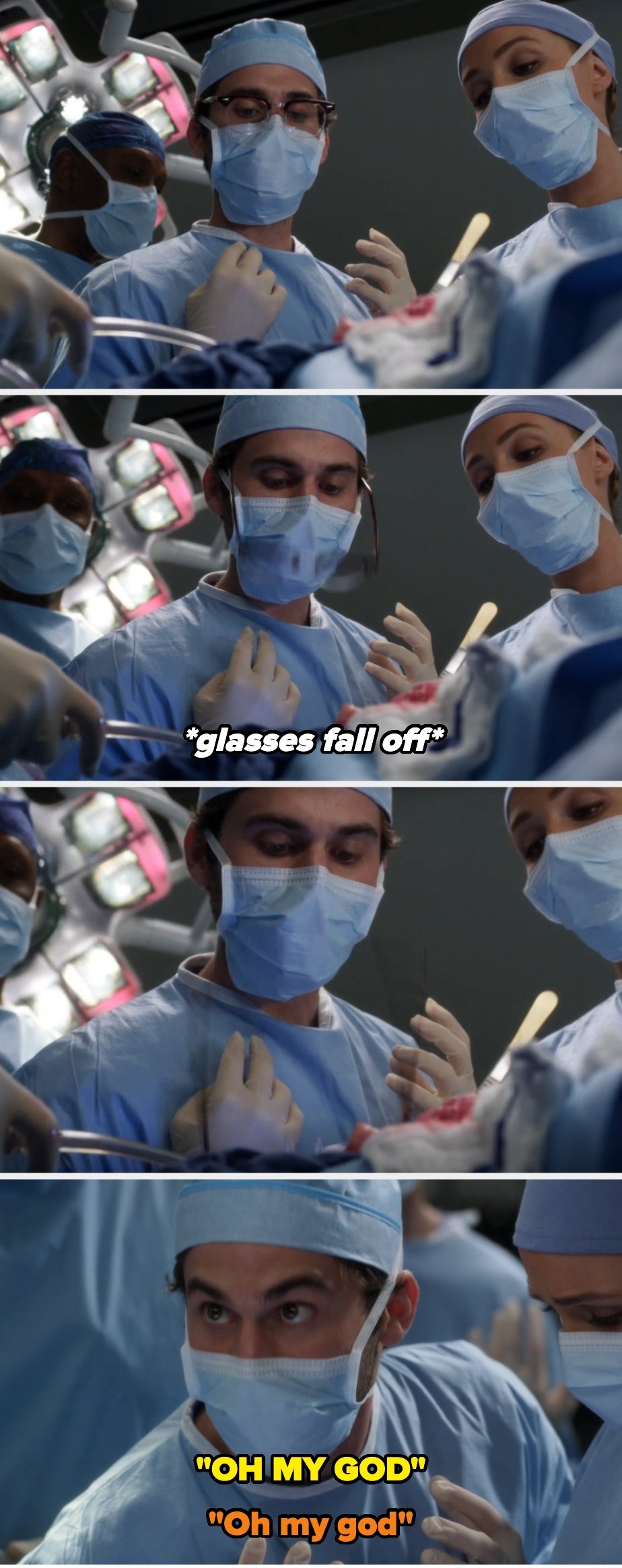
"They were the rimless kind—just lenses connected by a metal bridge across the nose, with arms extending to the ears. The metal bridge snapped right at the screw.

The surgeon immediately started stripping off his gown and other gear (he was wearing the full face shield setup—orthopedic ORs are... splashy) and left the room.

A few minutes later, he came back carrying a roll of tape. He and the circulating nurse tried to fix the glasses, but they couldn't get them back together properly. So he held them against his face while she wrapped tape around his head several times.

Then he suited back up and went right back to work as if nothing had happened. All told, it probably added about ten minutes to the surgery, at least from what I could tell.

I hadn't worked with that surgeon before, but I can't imagine it was his best performance after that, considering his glasses were taped to his face at all kinds of strange angles. But yeah, don't buy $5 reading glasses for the OR."

"Patient went home about four days later, the margins were negative, and they're still doing great. It was the first time I thought: "Oh shit. I'm a surgeon.""

Text has been edited for length and clarity.
Comments
You must be logged in to comment.