yahoo Press
Legal AI startups' new competition: Big Law
Images

1 / 5
2 / 5

3 / 5
4 / 5

5 / 5
Erik McGregor/Getty Images

Harvey and Legora are the standout stars in legal AI, having raised over $2 billion in VC funding collectively and serving over half of the top 100 largest law firms in the US. But law firms have started to take matters into their own hands.

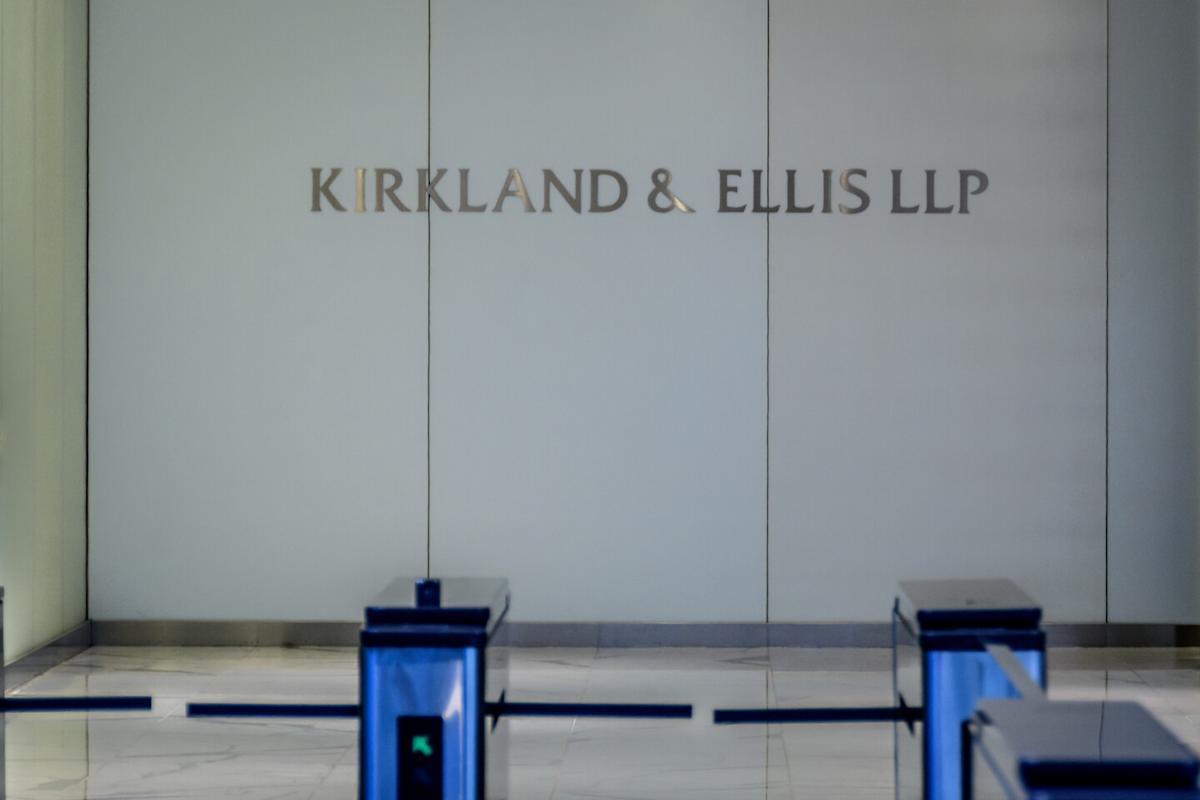
Kirkland & Ellis, one of the industry’s most profitable firms, last month said it will spend $500 million on internal AI projects. Freshfields, a leading firm headquartered in London, recently inked a bespoke deal with Anthropic to train a legal AI model. And more announcements are undoubtedly in the works.

As firms draw more heavily on their own capital and expertise, investors are increasingly questioning both the lofty valuations of venture-backed specialized companies and their ability to capture a large enough share of the market.

“Claude Code and new AI infra solutions make it easier than ever to completely rebuild Harvey or Legora in short order, while giving [firms] full control over the user experience, functionality, workflows and, most importantly, their data,” said Venrock GP Ethan Batraski. Batraski predicted that Kirkland’s peers will follow its lead in the next 18 months. “It totally changes the game,” he added.

Sign up for The Daily Pitch newsletter  Subscribe

Law firms are acutely aware that the game has changed. AI tools enable work to be done faster, and many firms are moving more of their business away from a billable-hour model toward a value-based model.

Among Kirkland’s most ambitious plans is to create its own legal AI platform, trained on the collective intelligence of its attorneys. Eventually, that’s a model that will look very similar to what AI vendors currently offer, according to Batraski.

Moreover, major LLMs are investing significant resources into the opportunity. Anthropic is experimenting with a bespoke deal to win over a high-flying firm: UK Magic Circle firm Freshfields partnered directly with the company to build customized tools integrated into the firm’s systems. In exchange for that knowledge sharing, Freshfields will get early access to Anthropic’s latest models.

“Harvey and Legora’s issue is that there’s starting to be increasingly less differentiation between what they offer and what Claude offers directly,” said Dan Block, director at Sterne Kessler’s Electronics Practice Group, who also leads the law firm’s AI initiatives. “I think the Freshfields announcement is a warning sign for these tools,” Block added.

With that said, Kirkland has said it will continue to license third-party AI tools, and legal AI startups aren’t staying still in the face of new competition. Harvey and Legora, like AI application startups across a host of verticals, are doubling down on AI agents that can perform end-to-end tasks and operate with minimal human oversight.

And using legal AI vendors also involves handing over a firm’s precious commodity: its collective knowledge. And there’s a future many industry insiders are already anticipating, in which firms’ vendors become the competition.

“If you view this technology as being a potentially existential risk to your firm, would you rather own that very core part of your business in-house, or would you rather empower the vendors and arm them to be able to eventually replace you?” said Min-Kyu Jung, founder and CEO of Ivo, a legal AI startup selling to in-house legal teams.

Harvey denies any such plans. “We don’t plan to become a law firm or acquire one—we think the best business for Harvey is to help every law firm become AI-native not become one,” Gabe Pereyra, Harvey co-founder, wrote on X. Legora declined to comment on the topic.

Still, the alternative—firms building their own legal AI models—doesn’t come cheap. For many, the expense won’t be worth it, and a third-party’s legal agent is compelling.

But for some, it may just be. Sixty-two of the top 100 largest US law firms, known as the AM100, posted gross revenue of over $1 billion in 2025. “They’ll want to own the future of their business model,” said Sri Pangulur, partner at Mayfield. “For those types of firms, it’s not about buying a co-pilot or a chatbot. It’s about redesigning their entire service delivery model.”

And such a redesign comes with tradeoffs. A law firm’s net profits will typically be distributed among its equity partners, so any added expenses cut into that pot of gold.

Elite-tier partners can command tens of millions in annual bonuses. “The fundamental question is, there’s a really good market for premium partners, they command a lot of money,” said Ryan Daniels, CEO of AI-native law firm Crosby AI. “Can you retain them by paying them less? And can you get them bought into this vision?”

Kirkland, at least, is moving toward a business model that looks a little less like a law firm and a little more like a technology company. So the $500 million question is: how many firms will follow?

This article originally appeared on PitchBook News
Comments
You must be logged in to comment.