yahoo Press
Palo Alto CEO Tells Jim Cramer We Must 'Fight AI' With AI, Jabs CrowdStrike: 'We're Still Slightly Bigger'
Images
1 / 4
2 / 4

3 / 4

4 / 4
The above button links to Coinbase. Yahoo Finance is not a broker-dealer or investment adviser and does not offer securities or cryptocurrencies for sale or facilitate trading. Coinbase pays us for certain activity generated through this link. Prices displayed are informational.

Benzinga and Yahoo Finance LLC may earn commission or revenue on some items through the links below.

Palo Alto Networks Inc. delivered a strong fiscal third-quarter 2026 earnings report, beating analyst estimates and boosting its full-year outlook. Despite the strong print, shares slipped 3.17% in after-hours trading following a volatile post-market session.

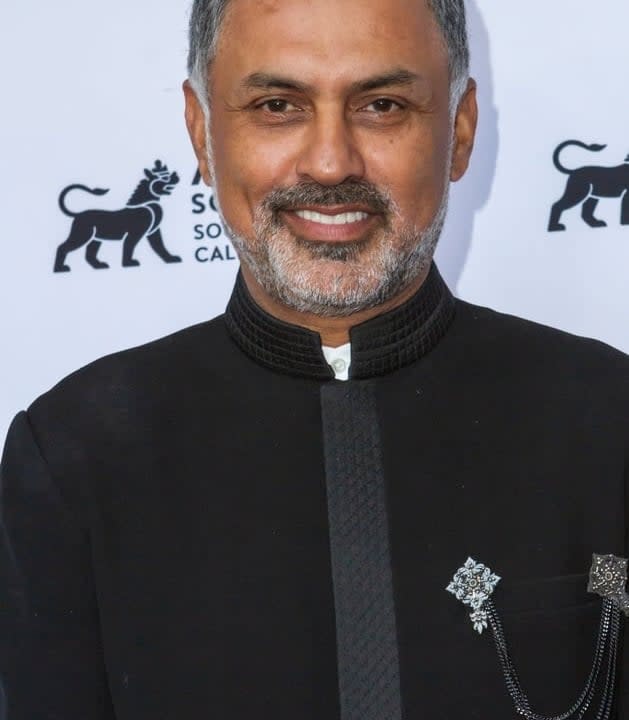
Appearing on CNBC's Mad Money, Palo Alto Networks Chairman and CEO Nikesh Arora declared a paradigm shift in the cybersecurity industry.

He warned that frontier AI models like “Mythos” have significantly compressed cyberattack timelines, giving adversaries the capability to execute comprehensive ransomware campaigns in mere minutes.

Don't Miss:

A single bad hire can set a startup back years. Here are the 5 hires founders most often misjudge — and why

Still Learning the Market? These 50 Must-Know Terms Can Help You Catch Up Fast

To counter this weaponized automation, Arora told host Jim Cramer that enterprises must fundamentally overhaul their defensive strategies.

“There is only one long-term solution, to consolidate platforms, bring all your cyber data in one place, and fight AI with AI,” Arora emphasized.

The discussion quickly shifted to the rapidly consolidating security landscape, with Cramer asking if the industry had devolved into a duopoly between Palo Alto Networks and its fierce rival, CrowdStrike Holdings Inc..

Arora praised CrowdStrike CEO George Kurtz for doing a “tremendous job,” but could not resist a playful competitive swipe at his prominent peer.

“We’re still slightly bigger than them. So please tell him that when you see him tomorrow,” Arora teased Cramer.

Robust financial metrics back the executive’s confidence. Palo Alto reported third-quarter revenue of approximately $3 billion, beating the $2.94 billion analyst consensus, alongside adjusted earnings of 85 cents per share.

Next-generation security annual recurring revenue (NGS ARR) surged 60% year-over-year to $8.13 billion, driven by aggressive customer “platformization” and high throughput hardware demand for AI data center build-outs.

Looking ahead, the company raised its full-year fiscal 2026 revenue guidance to a range of $11.415 billion to $11.425 billion, underscoring sustained momentum as AI transitions from experimental phases to enterprise-wide production.

Trending: Avoid the #1 Investing Mistake: How Your ‘Safe' Holdings Could Be Costing You Big Time

In comparison with the Nasdaq 100’s 21.64% year-to-date advance, shares of PANW have advanced by 56.01% over the same period. It closed 1.10% lower at $297.18 apiece on Tuesday. The stock was lower by 3.39% in premarket on Wednesday.

Over the last month, PANW stock was up 58.70%, and it rose 53.08% and 49.35% over the last six months and the year, respectively. Benzinga’s Edge Stock Rankings indicate that PANW maintains a strong price trend in the long, medium, and short terms, with a poor value ranking.

Image via Shutterstock

Read Next:

Skip the Regrets: The Essential Retirement Tips Experts Wish Everyone Knew Earlier.

Think you're saving enough for your kids? You might be dangerously off — see why

Building a resilient portfolio means thinking beyond a single asset or market trend. Economic cycles shift, sectors rise and fall, and no one investment performs well in every environment. That's why many investors look to diversify with platforms that provide access to real estate, fixed-income opportunities, precious metals, and even self-directed retirement accounts. By spreading exposure across multiple asset classes, it becomes easier to manage risk, capture steady returns, and create long-term wealth that isn't tied to the fortunes of just one company or industry.

Backed by Jeff Bezos, Arrived Homes makes real estate investing accessible with a low barrier to entry. Investors can buy fractional shares of single-family rentals and vacation homes starting with as little as $100. This allows everyday investors to diversify into real estate, collect rental income, and build long-term wealth without needing to manage properties directly.

Fine wine and rare whiskey have historically moved independently of the stock market, making them a compelling alternative asset. Vinovest manages authenticated, insured portfolios of investment-grade wine and whiskey starting at $5,000 — sourcing, storage, and insurance all handled for you.

Farmland has historically held its value through market volatility and delivered returns uncorrelated to stocks and bonds. For accredited investors, FarmTogether offers direct access to high-quality U.S. farmland starting at $15,000 — fully managed, with no landlord headaches.

For accredited investors looking beyond stocks and bonds, EquityMultiple provides access to vetted commercial real estate deals starting at $5,000, with only ~5% of opportunities passing their due diligence process.

For investors who want crypto exposure with tax advantages, Bitcoin IRA allows you to trade 60+ cryptocurrencies inside a self-directed IRA or roll over an existing 401(k), with 24/7 trading and institutional cold storage. Minimum $3,000 to start. Crypto investing involves substantial risk of loss and early withdrawal penalties apply.

© 2026 Benzinga.com. Benzinga does not provide investment advice. All rights reserved.
Comments
You must be logged in to comment.