yahoo Press
Fed's Hammack says rates may need to rise if rising inflation does not abate
Images
1 / 5
2 / 5

3 / 5

4 / 5
5 / 5
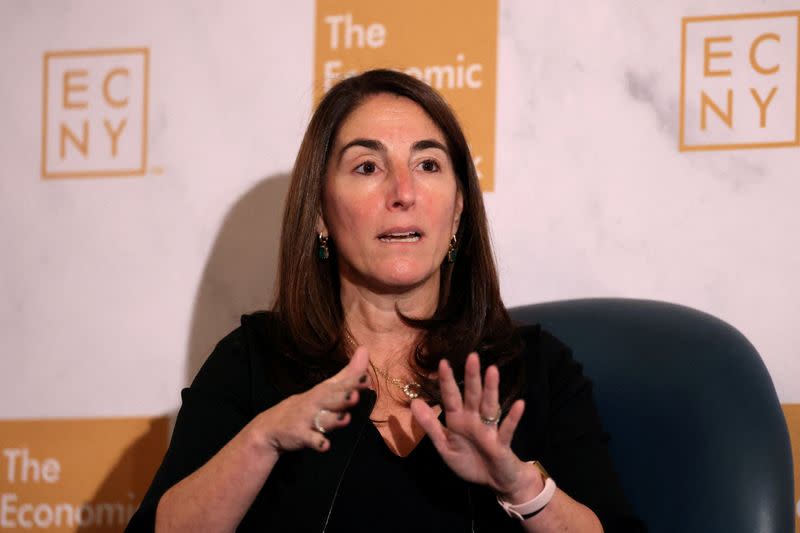
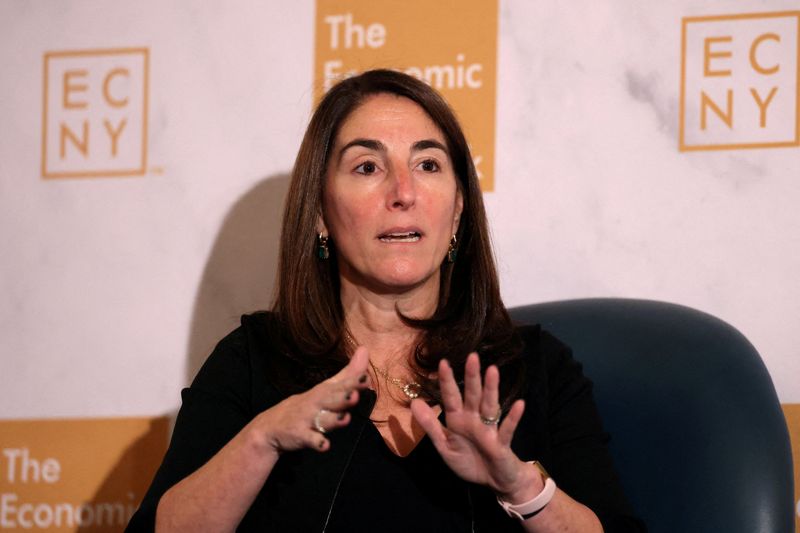
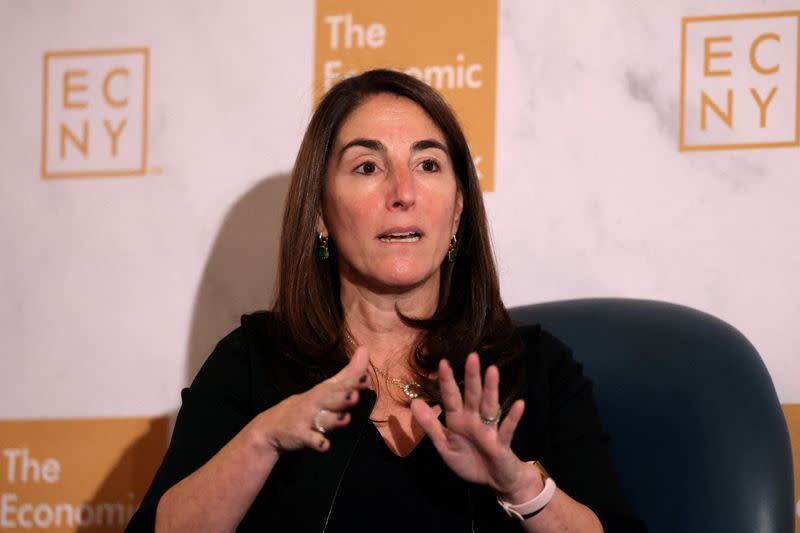
By Michael S. Derby June 2 (Reuters) - Cleveland Federal Reserve President Beth Hammack said on Tuesday the U.S. central bank may need to raise interest rates soon should already-high inflation pressures continue to mount. "Based on the data, I'm more concerned about the growing risks of persistently elevated inflation than the risks to full employment and also that monetary policy may not be sufficiently restrictive to bring inflation down to 2%," Hammack said in a speech to the City Club of Cleveland. "If we wait for definitive evidence that high inflation has become embedded in the economy, it may require larger policy adjustments, at greater cost," she said. Hammack flagged the importance of current inflation expectations and said further moves higher would "warrant taking decisive action" to ensure the public expects price pressures to retreat to the Fed's target. Hammack added that for now, "it's reasonable to keep rates steady given the uncertainties around the economic outlook. But if recent trends continue, it may soon be appropriate to act." The Fed is expected to leave its benchmark interest rate in the 3.50%-3.75% range at its June 16-17 policy meeting. Hammack, a voting member of the central bank's policy-setting committee, dissented at the April 28-29 meeting against the policy statement's inclusion of language that suggested the Fed's next move would be a rate cut. The next meeting will be the first held under the leadership of Fed Chairman Kevin Warsh, who came into the role advocating for rate cuts despite data showing inflation has been above the central bank's target for many years. Inflation has accelerated because of the U.S.-backed war with Iran, which has disrupted global energy markets and caused Fed officials to speculate about the possible need for rate hikes. Interest rate futures markets show the Fed's next move will be a hike. 'PICTURE FOR INFLATION IS NOT ENCOURAGING' In her remarks, Hammack noted that even a swift end to the war would leave supply chains and the energy market roiled for a time. "What I've heard from business contacts, particularly in the energy sector, is that even if the (Strait of Hormuz) was opened tomorrow, it's going to be months before we actually rebuild that flow of oil," and that will generate rippling disruptions through the economy, she said. Hammack said "the picture for inflation is not encouraging. Inflation is too high and is moving higher," and data shows "relatively broad-based price pressures across goods and non-housing services." "There is a growing risk that inflation could remain elevated if energy costs do not come down quickly and if businesses feel they have no choice other than to raise prices," Hammack said. She added that inflation is also being driven by electricity costs, health insurance and software. The broader economy, however, is showing resilience and the labor market is stable with a jobless rate near full employment, Hammack said, adding that "measures of financial conditions are supportive of growth rather than holding it back." (Reporting by Michael S. Derby; Editing by Chizu Nomiyama and Paul Simao)
Comments
You must be logged in to comment.