bbc Press
The best ever World Cup shirts - and what makes them iconic
Images
1 / 20
2 / 20
3 / 20
4 / 20
5 / 20
6 / 20
7 / 20
8 / 20
9 / 20
10 / 20
11 / 20
12 / 20
13 / 20
14 / 20
15 / 20
16 / 20
17 / 20
18 / 20
19 / 20
20 / 20
Some say you can measure a life by World Cups. Four-year notches on a timeline from wide-eyed kid to tuned-in teen and beyond. A showreel of footballing memories - teams you loved, heroes you worshipped, the iconic shirts they wore.

It is those shirts we're looking at today. The jerseys that tell a story. Timeless masterpieces. But what is it that makes a kit's legacy so enduring?

Matthew Wolff is best known for designing the hugely popular Nigeria outfits at the 2018 World Cup, as well as those for winners France.

The American's portfolio includes Paris St-Germain, a host of Major League Soccer and National Women's Soccer League teams, and even the United Soccer League club he co-founded, Vermont Green. So he knows his way around a kit.

"Most of my favourite football kits are from my childhood in the '90s and early 2000s," explains Wolff. "That's the phase of life when the players really feel like superheroes and their kits feel so magical.

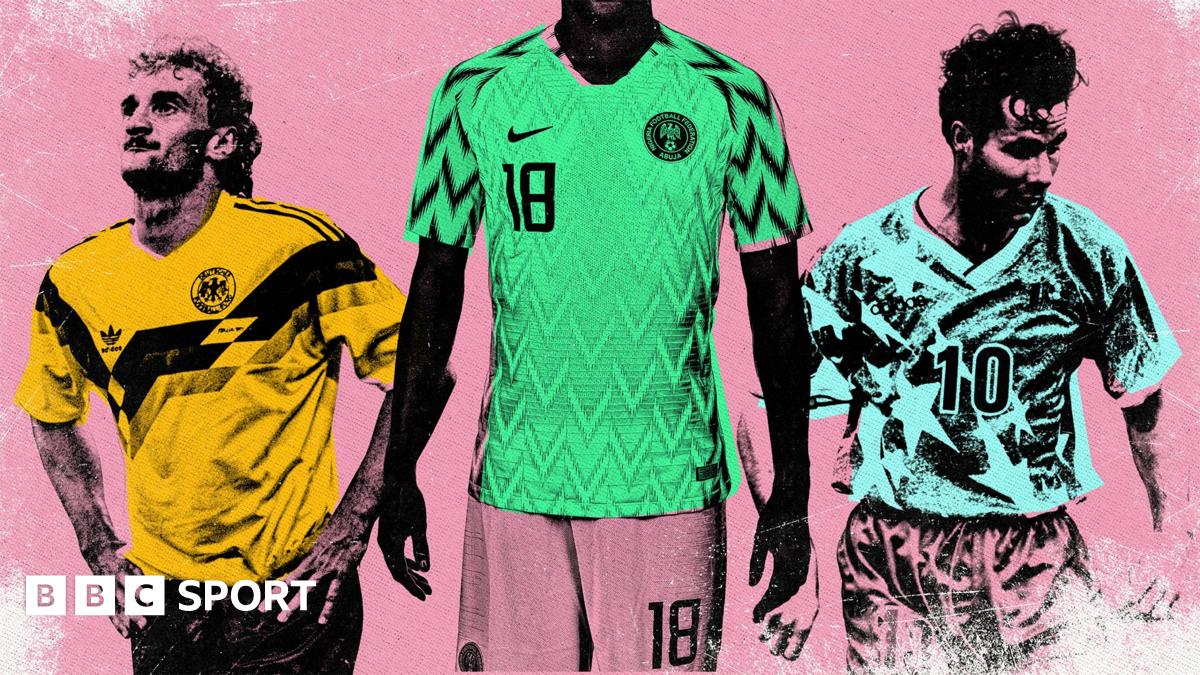
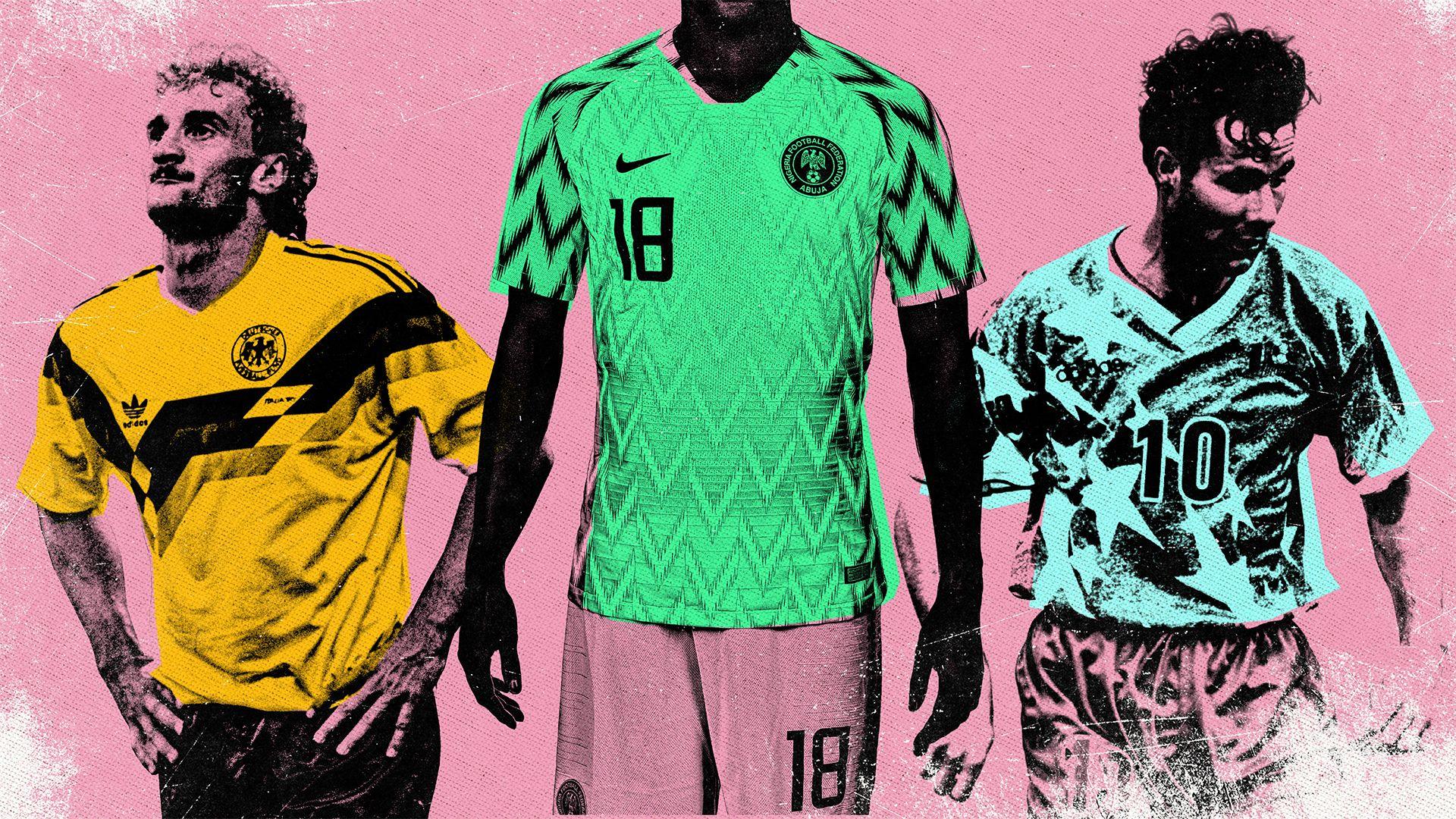
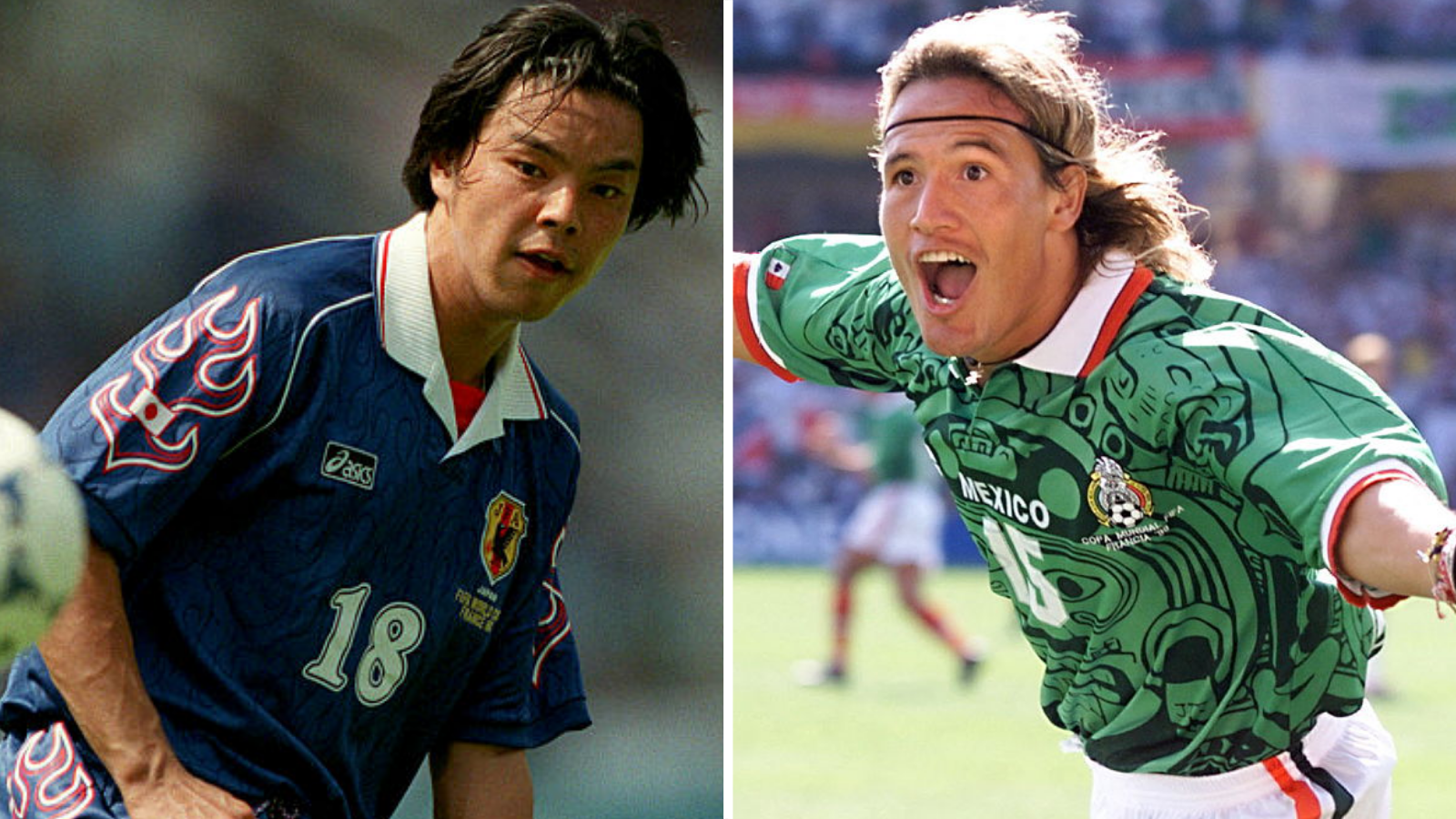
"Mexico 1998, USA 1994, Germany 1990 and 1994, Japan 1998, Nike's set from 2002, even Cameroon's sleeveless top in 2002. These are special kits in my mind because of how big and magnificent they felt to me as a young boy.

"A shirt becomes iconic partly because of what happened while someone was wearing it. The passage of time also changes how we perceive and appreciate a football kit."

Japan and Mexico both sported memorable kits at the 1998 World Cup in France

Wolff, though, believes it is harder to achieve real "iconic" status these days.

"The landscape has changed and the global market is saturated," adds Wolff.

"There are so many teams and so many new kits now - for both clubs and countries - that it's genuinely difficult for any single shirt to break through.

"While it's inspiring to see nations' aesthetics and culture represented through uniform design, it does raise questions about consumerism, about how much is genuine cultural expression versus product cycles, and about the pace at which we're churning through these garments."

Pick your favourite World Cup kits

With that in mind, we're going to be looking back. And there is always a healthy dollop of nostalgia when reminiscing about kits - those hazy childhood memories relived through a golden filter.

It would be tempting to go all in on a smorgasbord of '90s and early '00s bold prints and baggy jerseys, or late '80s designs that have reappeared as lifestyle staples.

So to avoid a splurge of festival fashion/dad on school run at the first sign of summer, this is the criteria: no more than one shirt per World Cup, and one per country.

As always, we'd love for you to share your favourites in the comments below.

Now, this is slightly contentious as this kit never actually made it to a World Cup. But that's what makes it memorable.

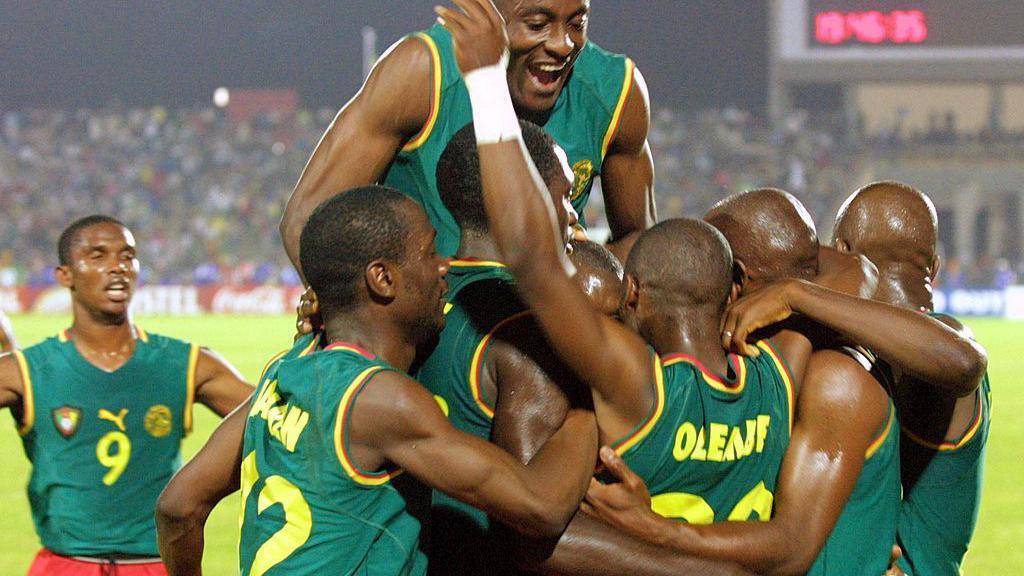
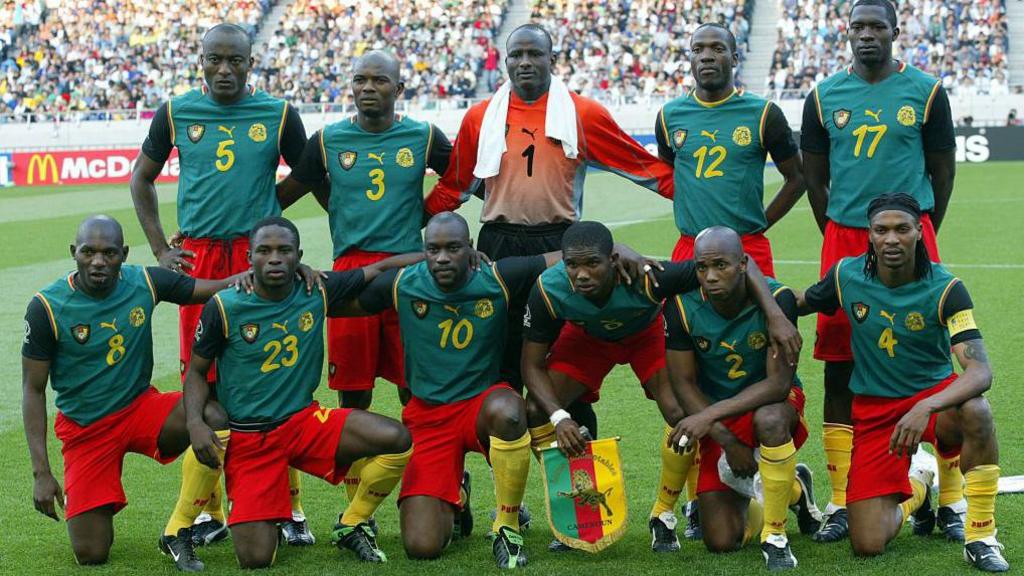
Cameroon adopted a sleeveless shirt for the Africa Cup of Nations but Fifa had other ideas by the time the 2002 tournament rolled around.

"Everybody in Africa wanted to wear that shirt," former midfielder Eric Djemba-Djemba told BBC Sport Africa.

Even Serena Williams got in on the act, sporting an outfit inspired by the banned kit at the French Open that summer - though a request to have her lucky number 26 on the back was turned down by organisers.

Instead, for the World Cup in Japan and South Korea, Puma was told to add sleeves to the design - as you can see below.

It wouldn't be the last time Cameroon's kit designers riled Fifa chiefs, though - two years later, the release of a 'onesie' kit - with shirt and shorts stitched together to make a single garment - was also banned by football's governing body.

Instantly recognisable and certain to be spotted at barbecues and in beer gardens up and down England this summer.

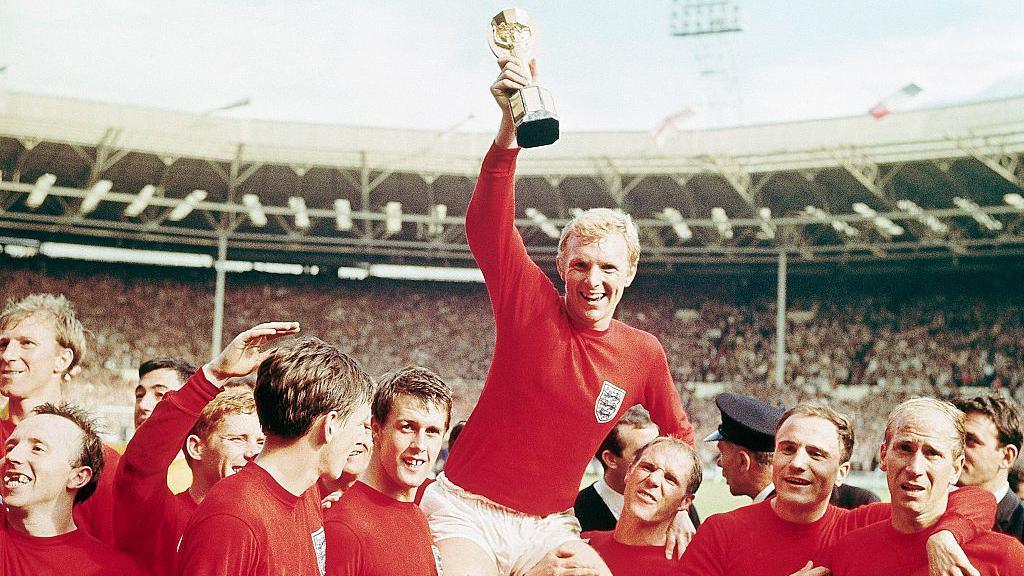
The Three Lions red jersey is iconic because of what it represents - the nation's only World Cup triumph, a seismic victory on the hallowed Wembley turf, Geoff Hurst's hat-trick and the ball that (perhaps) crossed the line.

It immediately conjures images of Bobby Moore lifting the Jules Rimet Trophy on his team-mates' shoulders.

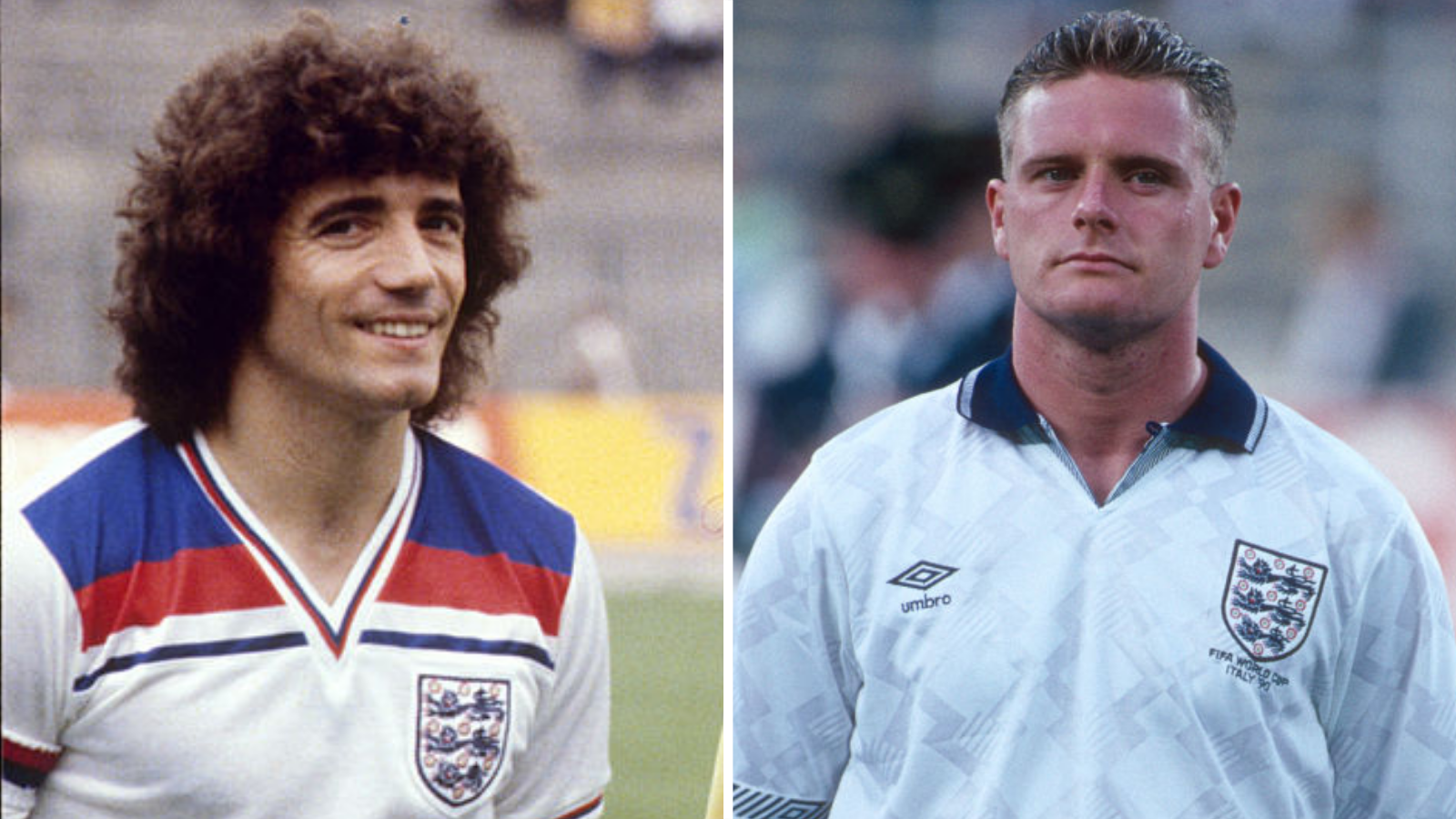
The 1982 and 1990 numbers were also in contention - shown below - but if there can only be one England jersey on the list, then this has to be it.

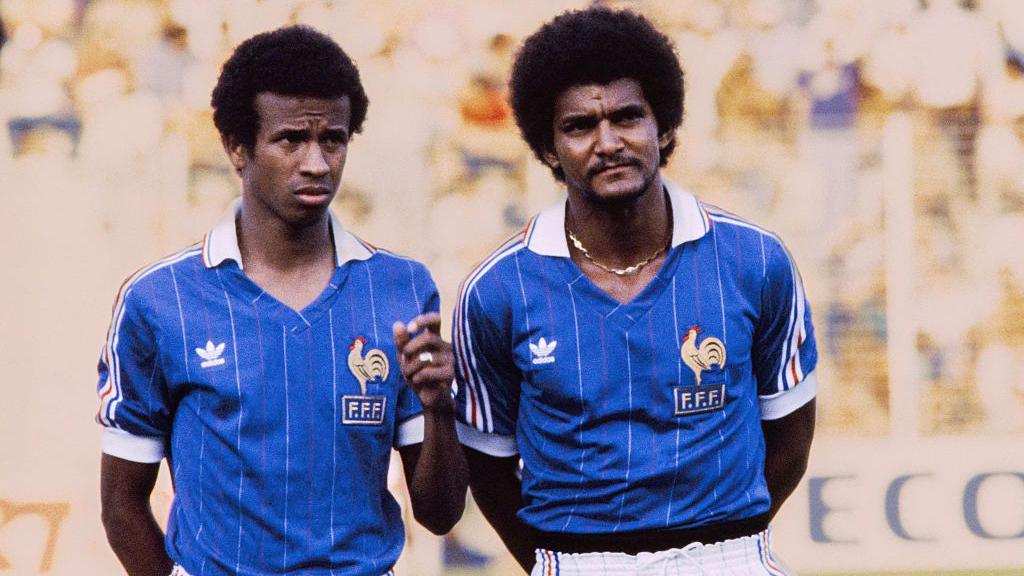
"That was my most beautiful game. No film or play could ever recapture so many contradictions and emotions. It was complete. It was fabulous," said France captain Michel Platini, reflecting on Les Bleus' semi-final defeat by West Germany in 1982.

Goalkeeper Harald Schumacher's shocking challenge on Patrick Battiston, a thrilling 3-3 draw after extra time, the first penalty shootout in World Cup history.

France looked effortlessly cool throughout in the sweltering Seville heat - the piece de resistance of that all-timer of a home kit.

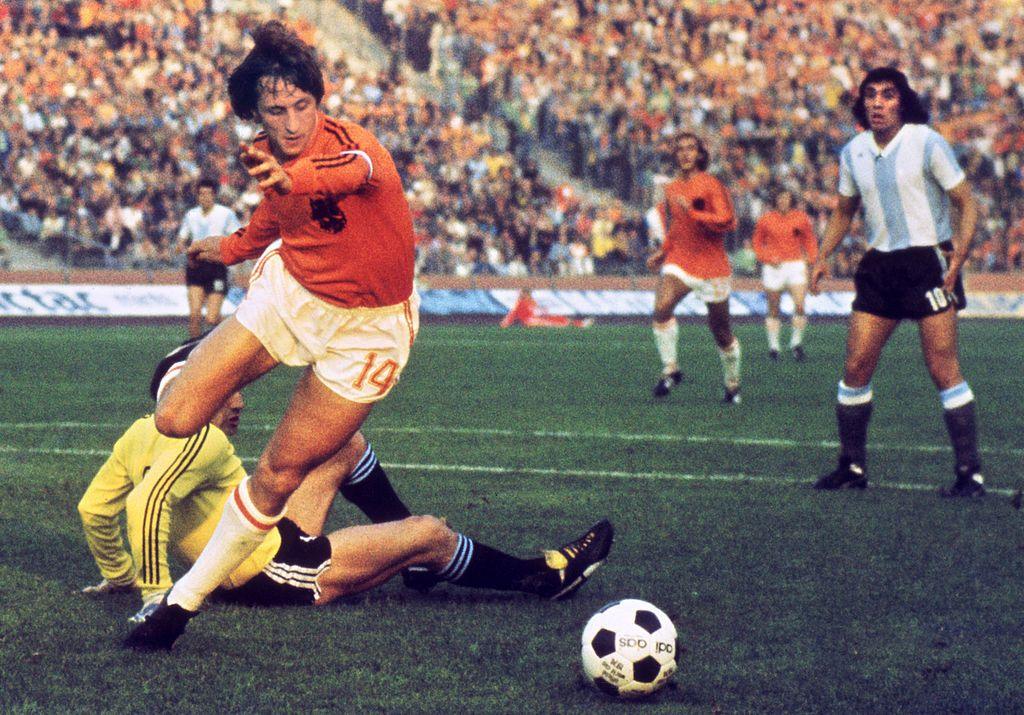
Rebellious, stubborn, seamlessly cool. Johan Cruyff was the face of the Netherlands' Total Football revolution.

Cruyff had already won three European Cups with Ajax and had twice been awarded the Ballon d'Or by the time he arrived at the 1974 World Cup, the scene of his most famous moment.

The Cruyff turn was born when the Netherlands took on Sweden at Dortmund's Westfalenstadion, though the shaggy-haired playmaker was sporting a different kit to his team-mates, who had Adidas' three stripes along their sleeves.

Cruyff, however, was contracted to Puma and already refused to wear Adidas boots - following a standoff between the brands, players and Dutch football bosses, it was also decided his kit would have a stripe removed.

"The KNVB had signed a contract with Adidas without telling the players," Cruyff wrote in his autobiography. "They thought they didn't need to because the shirt was theirs. 'But the head sticking out of it is mine,' I told them."

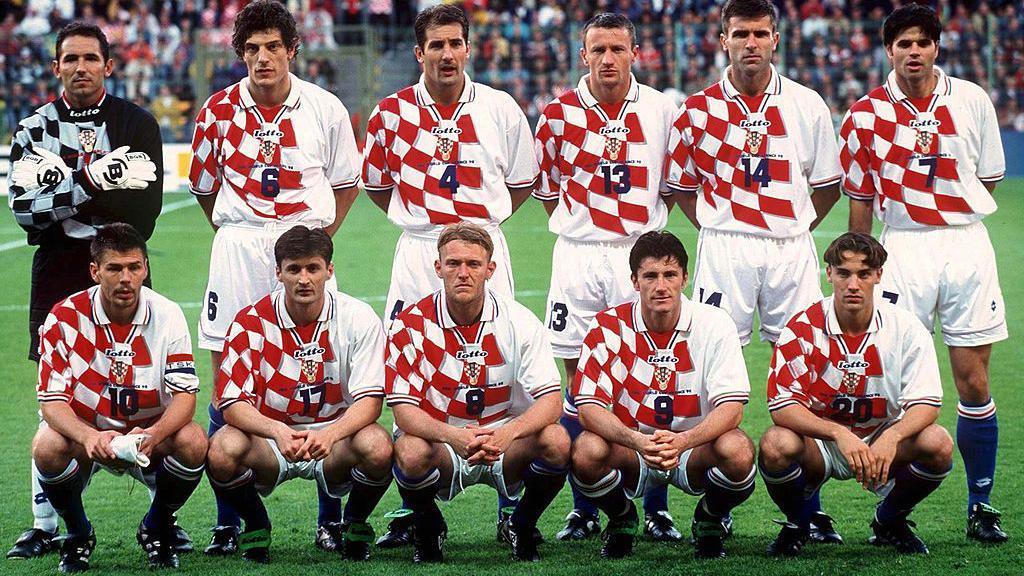
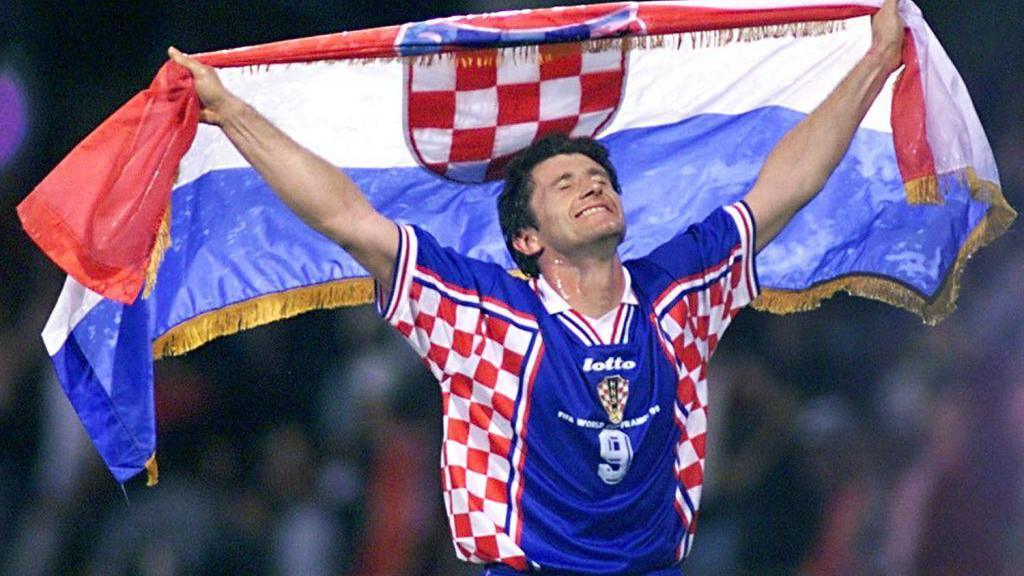
Davor Suker, France 1998, red and white checks splashed across his shoulder. Majestic. The pattern becomes Croatia's national coat of arms, and makes them immediately identifiable on the football pitch.

Croatia impressed at Euro 96, and sported a belter of a kit there too, but this was a poignant sporting moment for the country, competing at their first World Cup since declaring independence seven years earlier.

Suker - along with Robert Jarni, Zvonimir Boban, Robert Prosinecki and co - took them to the semi-finals, where the Real Madrid striker put his side 1-0 up against the hosts, before a Lilian Thuram-inspired France fought back.

Croatia, donning an equally iconic blue away number, then beat the Netherlands in a play-off to finish third.

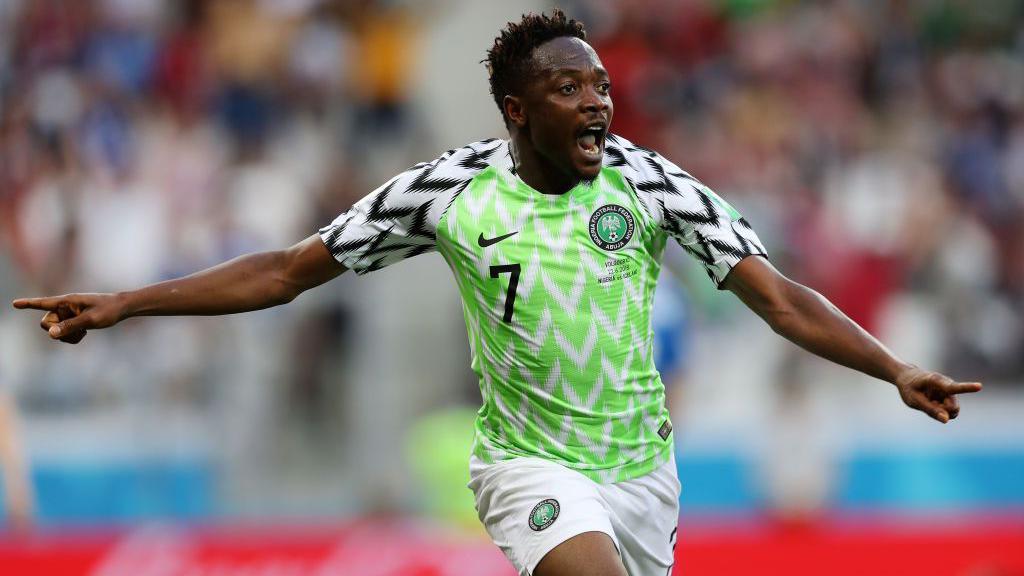
Nigeria's 2018 kit was a phenomenon, a rare example of a shirt that became instantly iconic not because of who wore it on the pitch, but because of how it resonated culturally and in fashion circles.

Three million people pre-ordered the shirt and shoppers queued outside Nike's flagship store in London upon its release.

"We drew directly from Nigeria's own kit history," explains designer Wolff. "The 2002 kit was a reference - that brilliant shade of green was something I wanted to bring back. And we obviously drew inspiration from the 1994-95 kit as well.

"The goal wasn't to invent something out of thin air, it was to pull on threads already there in the country's footballing identity.

"The timing was perfect in a lot of ways. Nigeria was having a global cultural moment in fashion, music, poetry, art, film etc. The kit landed in the middle of that wave, and I think it resonated because the wave was swelling.

"Credit to the entire team at Nike who brought it together. A kit doesn't become a phenomenon because of one designer. It becomes a phenomenon because a lot of people are doing a lot of thoughtful, thorough work."

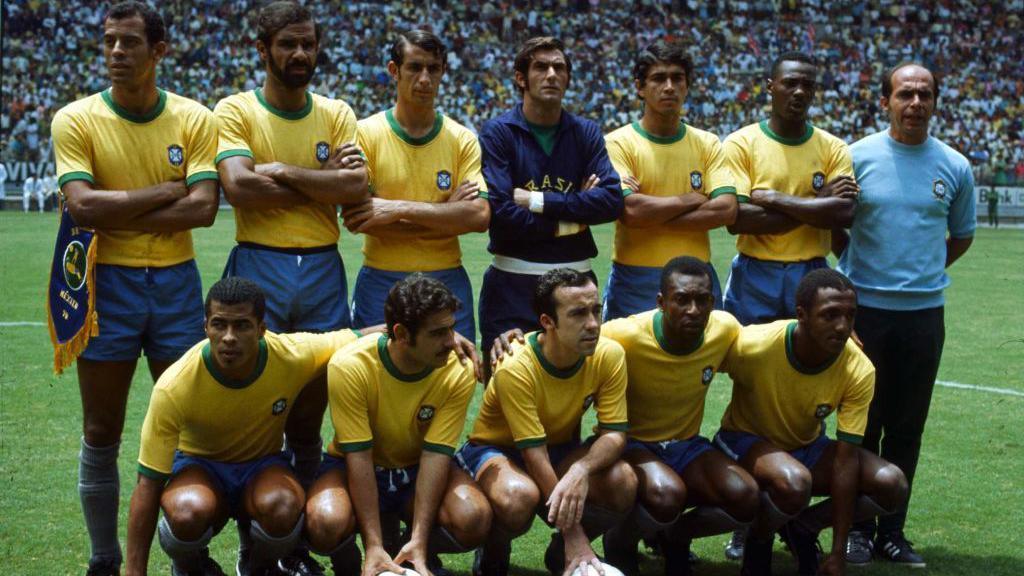
There is, arguably, no other country in world football more synonymous with one colour than Brazil.

Even through grainy, reclaimed footage, their 1970 canary-yellow shirts look vibrant and striking, fitting for the world-beating players donning them in the Mexican sunshine.

Pele, Carlos Alberto, Rivellino, Jairzinho. The archive clips rolled out every World Cup make it feel like you were at the Azteca watching the brilliant Brazilians dispatch Italy - their beautifully simple yellow shirts a masterpiece of footballing folklore.

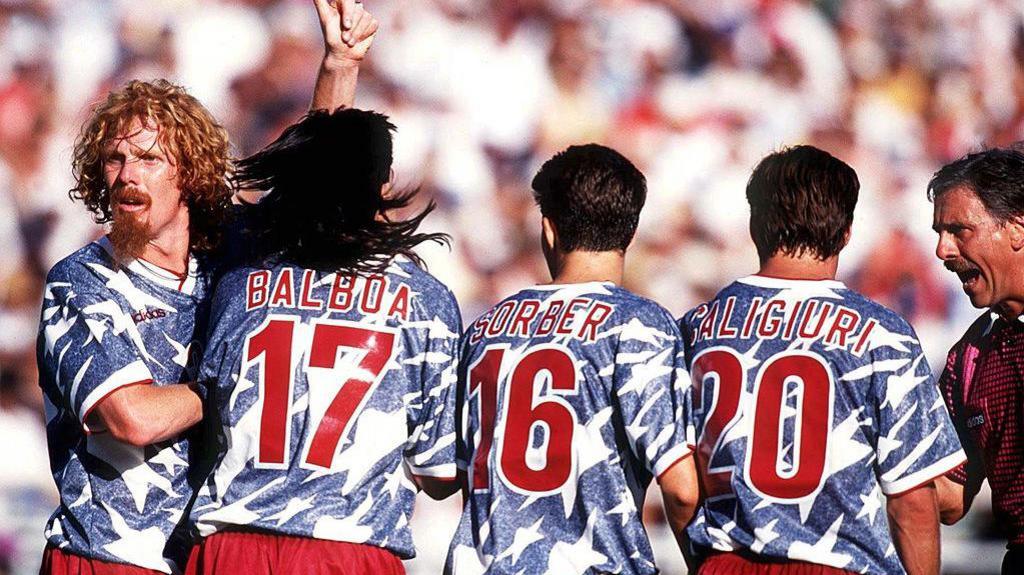
"Outside of our borders, there was a lot of scepticism from the majority of football followers in the world who were scratching their heads saying: 'How could this non-soccer-nation put this on?'" remembers former US Soccer president Alan Rothenberg, after the States landed the 1994 World Cup.

What the players - most on US central contracts rather than representing professional clubs - did not want was to become a laughing stock.

But when Adidas unveiled the kits for the tournament, swashbuckling centre back Alexi Lalas and his team-mates thought they had been pranked.

Oversized stars stretched across stone-washed denim might be quintessentially American, but it was bold and brash in a footballing sense and the squad feared they would be ridiculed. At least a proposed tie-dye number didn't get off the ground.

It would, however, become iconic and adored by both those players who wore it and the fans who idolised them - no doubt helped by the USA's performance at that tournament, exiting to eventual champions Brazil in the last 16.

This shirt making the top three is perhaps influenced by the World Cup returning to the States this summer - but 1994 was a tournament of memorable kits.

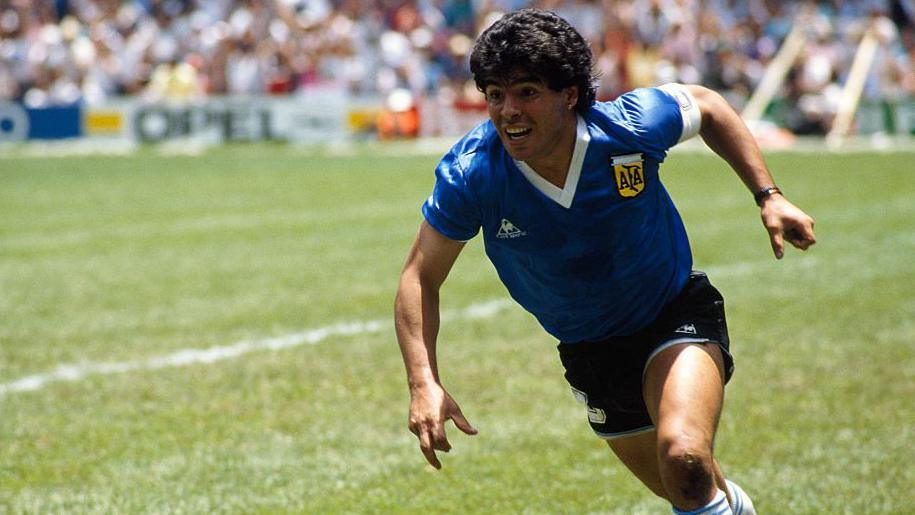
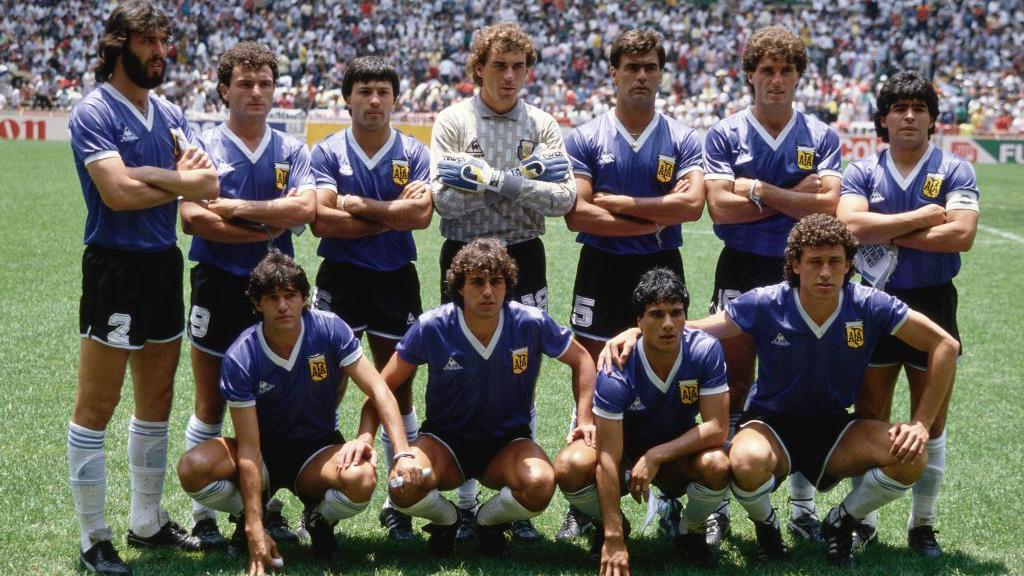
Argentina's World Cup quarter-final win over England in 1986 witnessed two of the most famous goals in history - Diego Maradona's 'Hand of God' and the mesmerising, unstoppable dribble from his own half.

But the story behind the shirts Argentina wore that day is equally remarkable.

Fifa told Argentina they would need to don their dark blue second kit in order to not clash with England's white jerseys. But in a previous win over Uruguay, the players found that shirt heavy and stifling in the sweltering Mexican heat.

Kit makers Le Coq Sportif didn't have an alternative, so the story goes that boss Carlos Bilardo sent staff out to the Mexico City neighbourhood of Tepito - renowned for knock-off goods - to find new ones.

Maradona, it is said, made the final call on the designs that were brought back, delivering the immortal line: "What a nice shirt this is, Carlos. With this one we will beat the English."

Kit men spent the 24 hours before Argentina faced England embroidering those shirts with numbers and the national crest.

Thirty-six years later, England midfielder Steve Hodge put the jersey he swapped with Maradona that day up for auction. It sold for £7.1m.

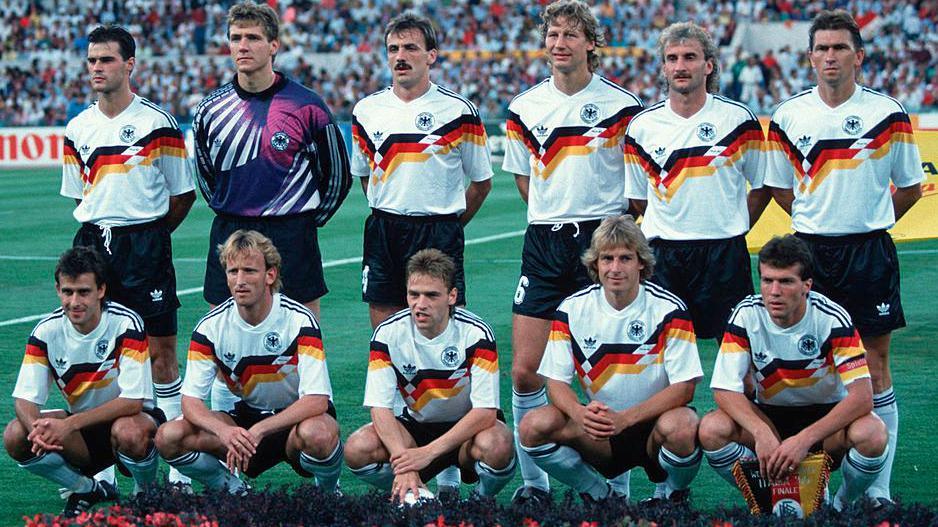
At number one is a design classic, a jersey sought by collectors and regularly held up as a pioneer for a new generation of shirts - the iconic West Germany kit of World Cup 1990.

"You have to view it from the context of what went before, and shirts were fairly plain and simplistic in design," John Blair, author of A Culture of Kits, told BBC World Service's Sporting Witness. "It is a combination of a real standout of its era, a winning team and then the first real kind of expressive design coming to the fore."

The shirt, though, was almost abandoned before the World Cup, having first been worn at Euro 88, when the hosts lost in the semi-finals.

Designer Ina Franzmann was already working on a new one, until head coach Franz Beckenbauer intervened and said he wanted to keep the original design.

This video can not be played

The woman behind West Germany's iconic 1990 football shirt

Franzmann, who also designed tennis outfits for Adidas and wasn't a football fan, was tasked with bringing "a little revolution" to the national team's shirt.

"It was Horst Dassler (son of founder Adolf) himself who came up with the idea to use a bit of colour, so it was obvious to use the German colours," she said.

Dassler died in 1987, so did not get to see West Germany lift the World Cup and catch the eye at Italia 90. It was momentous for Franzmann, though the real acclaim came decades later.

"The shirt became a masterpiece years later," she added. "I'm really proud of how much interest there is, everyone wants to know the story behind it."

World Cup fixtures and group standings

How to watch the World Cup on the BBC

Everything you need to know about the World Cup
Comments
You must be logged in to comment.