yahoo Press
More Incentives Needed To Drive EV Demand, Mazda Executive Says
Images
1 / 5
2 / 5

3 / 5

4 / 5
5 / 5
The above button links to Coinbase. Yahoo Finance is not a broker-dealer or investment adviser and does not offer securities or cryptocurrencies for sale or facilitate trading. Coinbase pays us for certain activity generated through this link. Prices displayed are informational.

Benzinga and Yahoo Finance LLC may earn commission or revenue on some items through the links below.

Automakers may need governments to shift from EV mandates toward consumer incentives as electric vehicle adoption growth slows in some regions, according to a senior Mazda executive.

Mazda Australia Managing Director Vinesh Bhindi said regulators should focus more heavily on charging infrastructure, subsidies and other measures designed to encourage consumers to switch to electric vehicles during an appearance on the EV-focused "The Electric Viking" podcast released April 6.

"There has to be more and different initiatives to drive that demand part," Bhindi said.

Don't Miss:

This Lithium Breakthrough Is Turning Heads on Wall Street — See Why Investors Are Watching

Think the biggest tech gains happen after an IPO? Click here to see why some investors are looking at opportunities before companies go public.

The industry has already succeeded in expanding the number of EV models available to consumers, according to Bhindi. "The regulations are initially more focused on bringing more options into the market," he said. "You can say tick, that's been achieved."

Bhindi said the next phase of EV growth will likely depend more heavily on convincing more consumers to adopt electric vehicles after several years of rapid expansion.

"Now it's time to focus on demand generation because even after so many options, over 100 battery EV options in the marketplace, it only represents about 8 or 9%," he told "The Electric Viking."

Bhindi also highlighted charging infrastructure support and battery subsidies as potential tools governments could use to accelerate consumer adoption. "One of the proactive things that is currently in play is the battery subsidy," he said.

The push to accelerate electric vehicle adoption is also closely tied to broader shifts in energy storage and battery supply chains, particularly as demand for lithium and other critical minerals continues to rise. Industry observers note that long-term EV growth will depend not only on vehicle availability and incentives, but also on securing the raw materials and infrastructure needed to support large-scale electrification.

Trending: NVIDIA & Tesla Steal the Spotlight — RAD Intel Emerges as an AI Stock Worth Watching

Several global automakers have warned that higher interest rates, affordability concerns and charging infrastructure limitations are slowing EV demand growth in some markets.

"In the near term, I believe EV adoption will now only be about 5% of the U.S. market," Ford Motor Company (NYSE:F) CEO Jim Farley said in October. More recent industry data has pointed to slower U.S. EV adoption than in China and Europe, with the International Energy Agency estimating EVs accounted for just under 10% of U.S. auto sales last year.

Meanwhile, governments in the U.S., Europe and China are tightening vehicle emissions standards as automakers expand electric vehicle lineups.

Legacy automakers including Ford, General Motors (NYSE:GM) and Volkswagen have adjusted EV production plans amid uneven demand growth and rising competition from Chinese EV manufacturers, according to media reports.

"The very high-end EVs — the 50, 70, $80,000 vehicles — they just weren’t selling," Farley told CNBC in December. "We evaluated the market and we made the call. We’re following customers to where the market is, not where people thought it was going to be, but where it is today."

See Also: If there was a new fund backed by Jeff Bezos offering a 7-9% target yield with monthly dividends would you invest in it?

Bhindi criticized what he called a fines-based approach to encouraging EV adoption. "As opposed to currently, it's basically a stick that's fines based," he told "The Electric Viking." "I don't think that's the only path the regulator should take."

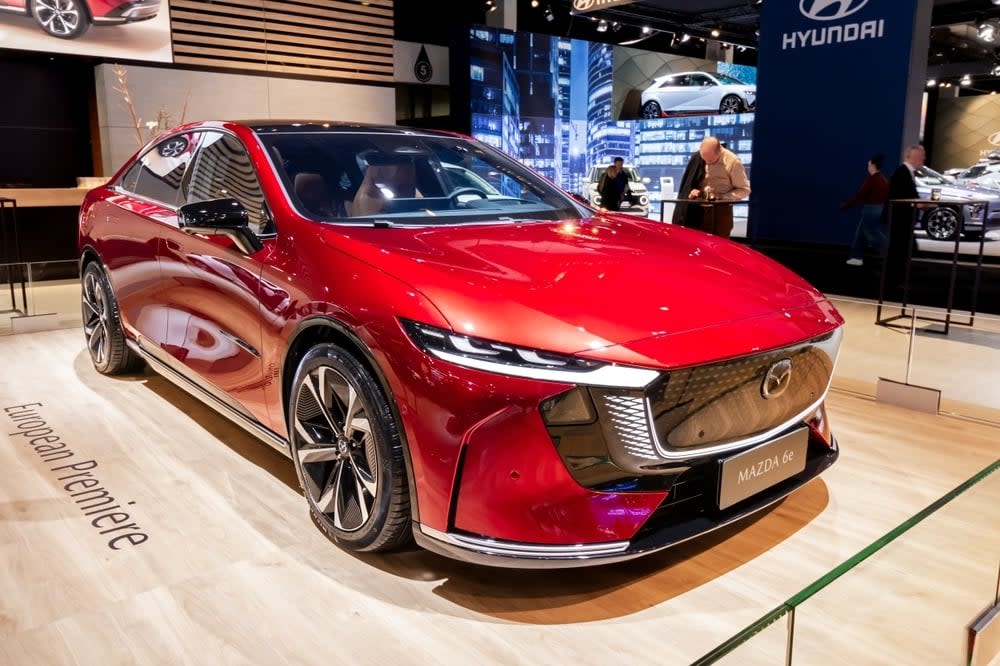
Mazda faced challenges expanding its EV lineup following the rollout of its MX-30 electric crossover, according to media reports.

Consumer hesitation remains one of the biggest obstacles slowing EV sales growth despite the growing number of available models, Bhindi said on "The Electric Viking."

"There are some other barriers, and I do understand consumers will take time to move towards that," he said. "I would encourage the regulators to think about how to drive that demand and support the consumer."

Read Next: Investors With $1M+ Often Use Advisors for Tax Strategy — This Tool Matches You With One in Minutes

Building a resilient portfolio means thinking beyond a single asset or market trend. Economic cycles shift, sectors rise and fall, and no one investment performs well in every environment. That's why many investors look to diversify with platforms that provide access to real estate, fixed-income opportunities, professional financial guidance, precious metals, and even self-directed retirement accounts. By spreading exposure across multiple asset classes, it becomes easier to manage risk, capture steady returns, and create long-term wealth that isn't tied to the fortunes of just one company or industry.

Rad AI

RAD Intel is an AI-driven marketing platform helping brands improve campaign performance by turning complex data into actionable insights for content, influencer strategy, and ROI optimization. Positioned within the multi-hundred-billion-dollar digital marketing industry, the company works with global brands across sectors to improve targeting precision and creative performance using its analytics and AI tools. With strong revenue growth, expanding enterprise contracts, and a Nasdaq ticker reserved under $RADI, RAD Intel is opening access to its Regulation A+ offering, giving investors exposure to the growing intersection of AI, marketing, and creator economy infrastructure.

Arrived

Backed by Jeff Bezos, Arrived Homes makes real estate investing accessible with a low barrier to entry. Investors can buy fractional shares of single-family rentals and vacation homes starting with as little as $100. This allows everyday investors to diversify into real estate, collect rental income, and build long-term wealth without needing to manage properties directly.

Lightstone

Lightstone DIRECT gives accredited investors access to institutional-quality multifamily real estate opportunities backed by a vertically integrated operator with more than $12 billion in assets under management and a 40-year track record. With more than 25,000 multifamily units nationwide — including significant exposure to low-supply Midwest markets where rent growth has remained resilient — Lightstone is positioning investors to benefit from tightening housing supply, strong occupancy trends, and long-term rental demand. Through Lightstone DIRECT, individuals can co-invest alongside the firm, which commits at least 20% to each deal, offering exposure to professionally managed multifamily assets designed to generate durable income and long-term appreciation beyond the traditional stock market.

AdviserMatch

AdviserMatch is a free online tool that helps individuals connect with financial advisors based on their goals, financial situation, and investment needs. Instead of spending hours researching advisors on your own, the platform asks a few quick questions and matches you with professionals who can assist with areas like retirement planning, investment strategy, and overall financial guidance. Consultations are no-obligation, and services vary by advisor, giving investors a chance to explore whether professional advice could help improve their long-term financial plan.

Accredited Debt Relief

Accredited Debt Relief is a debt consolidation company focused on helping consumers reduce and manage unsecured debt through structured programs and personalized solutions. Having supported more than 1 million clients and helped resolve over $3 billion in debt, the company operates within the growing consumer debt relief industry, where demand continues to rise alongside record household debt levels. Its process includes a quick qualification survey, personalized program matching, and ongoing support, with eligible clients potentially reducing monthly payments by 40% or more. With industry recognition, an A+ BBB rating, and multiple customer service awards, Accredited Debt Relief positions itself as a data-driven, client-focused option for individuals seeking a more manageable path toward becoming debt-free.

Finance Advisors

Finance Advisors helps Americans approach retirement with greater clarity by connecting them to vetted, fiduciary financial advisors who specialize in tax-aware retirement planning. Rather than focusing on products or investment performance alone, the platform emphasizes strategies that account for after-tax income, withdrawal sequencing, and long-term tax efficiency—factors that can materially impact retirement outcomes. Free to use, Finance Advisors gives individuals with meaningful savings access to a level of planning sophistication historically reserved for high-net-worth households, helping reduce hidden tax risk and improve long-term financial confidence.

Immersed

Immersed is a spatial computing company building immersive productivity software that enables users to work across multiple virtual screens inside VR and mixed-reality environments. Its platform is used by remote workers and enterprises to create virtual workspaces that reduce reliance on traditional physical hardware while improving focus and collaboration. The company is also developing its own lightweight VR headset and AI productivity tools, positioning itself in the future-of-work and spatial computing space. Through its pre-IPO offering, Immersed is opening access to early-stage investors looking to diversify beyond traditional assets and gain exposure to emerging technologies shaping how people work.

Image: Shutterstock

This article More Incentives Needed To Drive EV Demand, Mazda Executive Says originally appeared on Benzinga.com

© 2026 Benzinga.com. Benzinga does not provide investment advice. All rights reserved.
Comments
You must be logged in to comment.