yahoo Press
Michael Burry Just Called Nvidia’s SpaceX Chip Deal ‘Fugazi.’ Here’s Why It All Seems Wrong
Images
1 / 4
2 / 4

3 / 4

4 / 4
The above button links to Coinbase. Yahoo Finance is not a broker-dealer or investment adviser and does not offer securities or cryptocurrencies for sale or facilitate trading. Coinbase pays us for certain activity generated through this link. Prices displayed are informational.

Nvidia (NVDA) booked $5.4B in revenue from selling GB200 GPUs to Valor Compute Infrastructure, which then leased them to xAI, with Nvidia itself investing $1.9B as an anchor equity partner in the structure, allowing both companies to avoid balance sheet impact while capturing upside. Apollo Global Management (APO) provided $3.5B in debt financing routed through insurance affiliate Athene, which holds $74.2B in U.S. reserves but shifted $217B into a Bermuda captive insurer with 34.7% in Level 3 illiquid assets and 16x leverage, ultimately exposing retail annuity holders to concentrated credit risk.

Michael Burry warns that multi-layered AI infrastructure financing structures, while legal, obscure true economic risks behind complex arrangements similar to Cisco’s dot-com era accounting, as these deals multiply across the AI buildout and could amplify losses if demand weakens or hardware becomes obsolete.

The analyst who called NVIDIA in 2010 just named his top 10 AI stocks. Get them here FREE.

Investors have watched Nvidia (NASDAQ:NVDA) ride the AI wave to extraordinary heights, with data center revenue exploding in recent years. Yet amid the hype, one of Wall Street's sharpest skeptics keeps raising red flags about its financing arrangements.

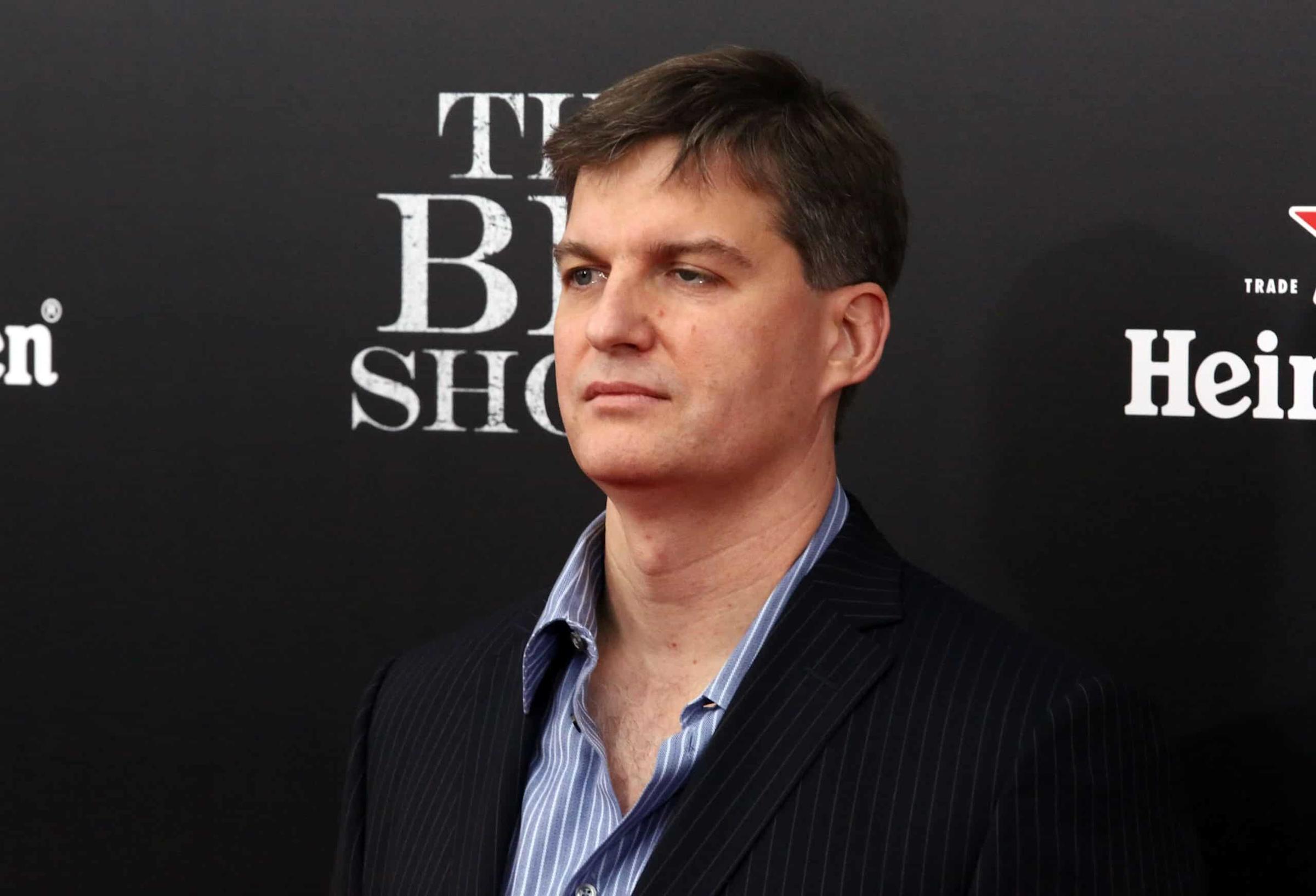
Michael Burry, the investor who foresaw the 2008 housing crisis, took to his Cassandra Unchained Substack and X to label a major Nvidia chip transaction with xAI "fugazi" -- his term for something fake or contrived.

But is it as much of a concern as Burry contends, or much ado about nothing?

The analyst who called NVIDIA in 2010 just named his top 10 stocks. Get them here FREE.

In January 2026, Valor Equity Partners -- a longtime backer of Elon Musk’s ventures -- raised $5.4 billion through a new entity called Valor Compute Infrastructure (VCI). The money funded the purchase of thousands of Nvidia’s powerful GB200 GPUs plus supporting data center equipment. These chips were then leased, under a triple-net lease structure, to a subsidiary of Elon Musk’s xAI for training its Grok AI models at one of the world’s most powerful compute clusters.

Apollo Global Management (NYSE: APO) funds led $3.5 billion of the financing, providing debt capital in a deal designed to be downside-protected. Nvidia itself stepped in as an anchor limited partner, investing roughly $1.9 billion in equity alongside other institutional investors.

This setup let xAI gain immediate access to cutting-edge hardware without booking the full multi-billion-dollar purchase on its own balance sheet. Instead, VCI owns the assets legally, and xAI pays ongoing lease and operating expenses over time. Nvidia, meanwhile, recorded the full $5.4 billion as revenue right away.

Let’s be clear: structures like this are legal and increasingly common in big AI infrastructure builds. But they add layers that smart investors should understand. They also invite comparisons to troubling circular financing arrangements.

24/7 Wall St.

When 'The Big Short' investor calls a deal a 'fugazi,' it’s time to look at the plumbing. Uncover how $5.4 billion in AI revenue is being engineered—and who is actually carrying the risk. © 24/7 Wall St.

Burry didn’t mince words. He called the entire multi-layered setup “fugazi” because the structure lets the big players book all the upside while shifting the real risks far off their balance sheets and, ultimately, toward everyday investors and retirees.

Here’s how it works: Nvidia sells the GPUs to Valor and books the revenue right away while xAI gets to use the powerful chips without adding billions in debt or assets to its own books. Apollo provides the debt financing, but packages those loans into securities, and routes much of the credit risk to its insurance affiliate, Athene, that goes on to sell annuities to small investors retirees. They think they've bought a "safe" investment, but it's been loaded with substantial risk.

This is what caught Burry’s eye. Athene holds $74.2 billion in U.S. reserves, yet it has shifted $217 billion in assets into a Bermuda-based captive insurer, outside standard U.S. regulatory oversight. Of its total portfolio, 34.7% -- some $103 billion -- sits in Level 3 assets, which don't have observable market prices, instead relying on internal models for valuation. Basically, the assets are worth whatever the company says they're worth. On top of those hard-to-price holdings sits roughly 16x leverage.

In short, the GPUs effectively “disappear” from the main balance sheets of both Nvidia and xAI through 8 to 12 carefully engineered steps. Demand looks strong and organic on paper. But part of the capital circles back because Nvidia itself put in about $1.9 billion as an anchor equity investor in the SPV.

Burry has flagged Nvidia’s aggressive revenue booking in deals like this for months. He doesn’t call it Enron -- there’s no outright fraud here. Instead, he compares Nvidia more to Cisco Systems (NASDAQ:CSCO) in the late 1990s dot-com boom: a legitimate pick-and-shovel provider whose gear fueled massive hype, only for valuations to detach from sustainable fundamentals. Cisco’s stock later fell more than 80% from its peak and took 20 years to recover.

Granted, sale-leaseback structures and SPVs aren’t new or illegal. Meta Platforms (NASDAQ:META), Microsoft (NASDAQ:MSFT), and other hyperscalers use similar approaches to scale infrastructure faster. But their proliferation doesn't make them risk-less. In fact, quite the opposite, Burry questions the long-term transparency and sustainability when these layered deals multiply across tens of billions in AI buildout.

The setup gives Nvidia a clean revenue pop today, Apollo earns structuring fees, and xAI gains compute power without ballooning its capex. But the credit risk quietly lands with annuity holders -- often retirees --- who thought they were buying safe, fixed-income-like retirement products.

Burry has critiqued Nvidia's circular deals before, yet the company delivered massive growth. While AI demand is real today, if utilization dips or newer chips make these GB200s quickly obsolete, the leverage in these structures could amplify pain -- especially for retail investors indirectly exposed via pensions or annuities.

Still, Burry's warning should not be a panic signal. Nvidia's tech moat is formidable, and the numbers aren't necessarily fake -- but they may not tell the whole story. He's questioning whether the financial plumbing behind the AI boom is becoming too complex for investors -- and that's a warning you shouldn't ignore.

This analyst's 2025 picks are up 106% on average. He just named his top 10 stocks to buy in 2026. Get them here FREE.
Comments
You must be logged in to comment.