bbc Press
Medical or a PR exercise? Why presidents get annual check-ups
Images
1 / 11

2 / 11
3 / 11
4 / 11
5 / 11
6 / 11
7 / 11
8 / 11
9 / 11
10 / 11
11 / 11
Any concerning health issues the American public should know about, Mr President?

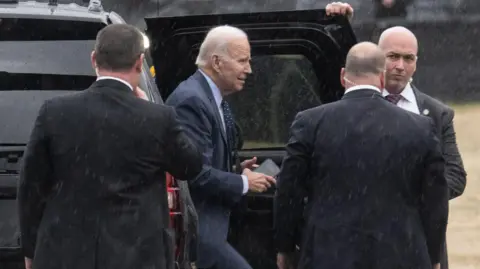
"Well, they think I look too young," Joe Biden, then aged 81, joked after his annual medical check-up as the oldest president in US history.

The US president is one of the most powerful people on the planet - and the public scrutiny of their health records has grown into a distinctly American phenomenon.

Every president in modern history has taken the short journey from the White House to Walter Reed National Military Medical Center for a regular physical exam - and it's as much about political messaging as it is about health.

"Americans historically have wanted masculine presidents, vigorous presidents," said Dr Matt Dallek, a political historian at George Washington University.

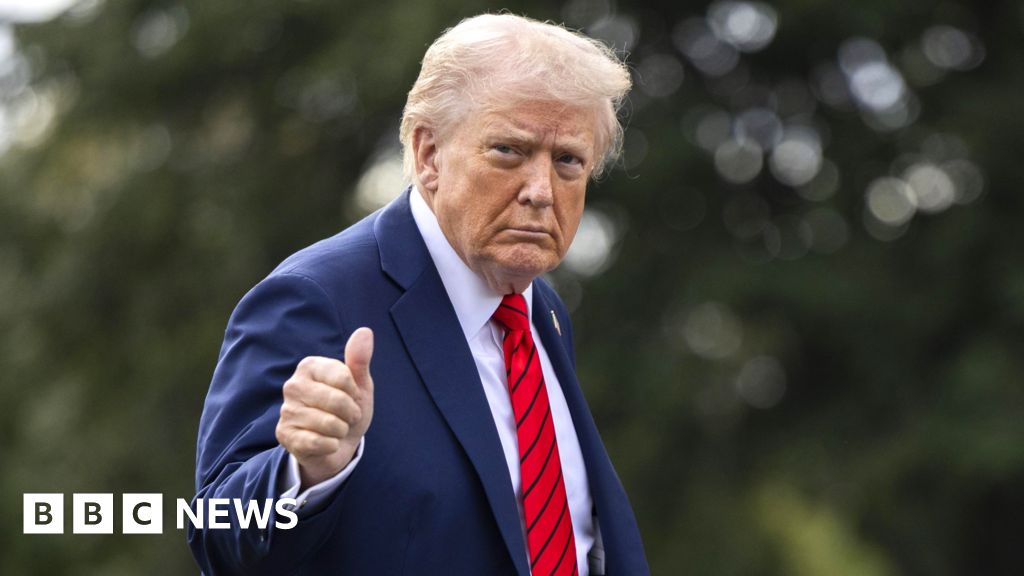
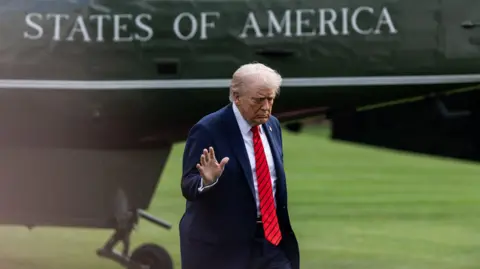
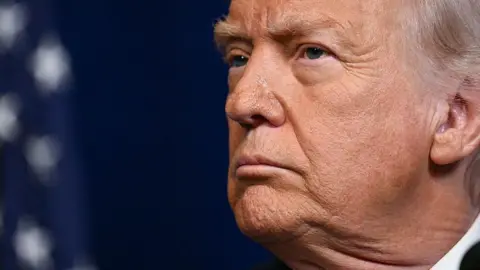
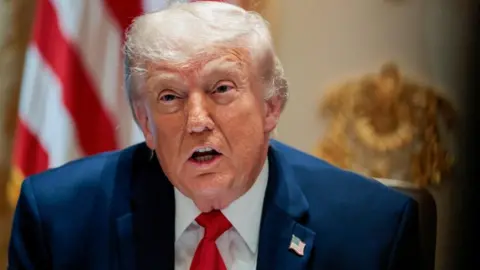
The physical exam is one way a president can outwardly demonstrate his own vitality and therefore project a sense of political power. It is something Donald Trump, just under three weeks shy of his 80th birthday, has sought to make central to his own image as president.

After his annual exam, the White House released a memo on Friday from Trump's doctor, who said he was in "excellent health", but did recommend he exercise more and lose weight.

He also noted the president had "strong cardiac, pulmonary, neurological and overall physical function" and was "fully fit to carry out all duties of the commander-in-chief and head of state".

But even an assurance of a clean bill of health by the president's doctor only goes so far. There is no requirement for the president to share their medical records, and they are protected by the same health privacy law as every other American.

Before the advent of television, it was much easier for presidents to disguise their health struggles.

In 1919, President Woodrow Wilson suffered a major stroke that left him mostly incapacitated for the final stretch of his presidency, effectively leaving his wife to make decisions for over a year. The severity of his condition was largely covered up by his physician and other staff.

Later, while the public was somewhat aware that President Franklin D Roosevelt lived with paralysis from polio, the White House downplayed his use of a wheelchair until his death in office in 1945.

Jacob Appel, a medical ethicist at New York's Mount Sinai Hospital and a presidential health historian, said it wasn't until President Lyndon B Johnson's term during the Cold War in the 1960s that results of regular physicals were announced to the public.

In the 1970s, President Gerald Ford insisted on making some of his medical information public, over the objections of his own physician, Appel told the BBC.

"I feel fit as a fiddle. Getting healthier every day," Ford told the media after his 1976 check-up, adding that he swam every day to stay in shape.

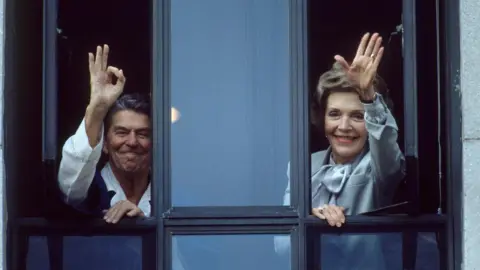
By comparison, President Ronald Reagan announced his Alzheimer's diagnosis five years after he left the White House, leading to speculation about his mental state during his second term.

"If I were the public, I would ignore that information (released by the White House) entirely," Appel said.

"The president can cherry pick what looks good, and what doesn't look good," Appel told the BBC.

Most presidential check-up reports, though, contain details of mundane ailments: "Doctors removed a precancerous skin lesion from the tip of his nose", reads a New York Times report on Bill Clinton's annual checkup from 1996. The next year, he was recommended hearing aids.

In the US's hyper-charged partisan environment, politicians have little to gain from revealing any potential weakness. And the president's health could also be a national security matter.

"Anything we released to the American public will also be known by the Russian secret service, Chinese government, and adversaries," Appel pointed out.

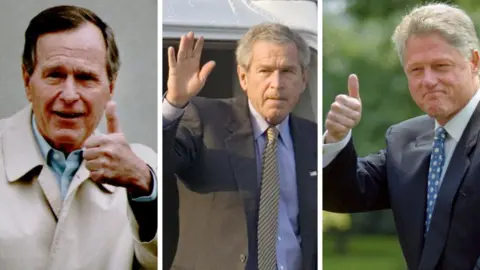
After a string of relatively young presidents (Bill Clinton was 46 when he was inaugurated, George W Bush was 54, and Barack Obama was 47), the US elected two of its oldest presidents in quick succession.

Trump was 70 when he was first inaugurated in 2017, and 78 when he took office for a second time last year.

Biden, who served between Trump's two terms, entered the White House at 78 and left at 82.

That has "turbocharged" the interest in presidents' annual physical reports, said Dallek.

"The scrutiny of Biden and Trump because of their age operates in a totally different plane," the political historian said.

"The concerns in the media, in the public, the debates that happen about whether they're fit to serve, those debates get intensified."

Biden's fitness for office became a central issue of the 2024 campaign, eventually forcing him to abandon his re-election race.

During Trump's subsequent second presidency, Republicans - and President Trump - accused former members of the Biden administration of covering up health problems and mental decline following the publishing of a bombshell book that alleged that staffers within the Biden White House sought to cover up the state of his health.

A spokesperson for Biden at the time said "evidence of aging is not evidence of mental incapacity".

Trump has himself faced increasing scrutiny about his health during his advancing years.

Recent polls, conducted before Trump's latest check-up, showed that a significant number of Americans are concerned about his health.

A Washington Post-ABC-Ipsos poll released earlier in May showed that 59% of those polled do not believe Trump has the mental acuity to serve, with 55% saying that they do not believe his physical health is sufficient.

A separate poll released by the Economist and YouGov suggested just under half of Americans believe Trump is too old to be president.

Trump's physical this year listed his "vital statistics", including height (75 inches, 191cm), weight (238 pounds, 108kg), resting heart rate (73 beats per minute), and blood pressure (105/71 mmHg).

His physician also addressed bruising on his hand, which has been photographed during public events, as being "consistent with minor soft tissue irritation related to frequent handshaking" while taking aspirin for "cardiovascular prevention".

It also noted his "lifelong abstinence" from tobacco and alcohol.

Writing on his Truth Social platform afterwards, he said "everything checked out perfectly."

Additional reporting by Caitlin Wilson

The White House releases the results of the US president's latest medical examination, which states he is "fully fit" to carry out his duties.

The testimony comes about a month after America's top prosecutor was ousted by US President Donald Trump.

The performing arts centre must also remain open despite Trump announcing a two-year closure for extensive renovations.

In a two-page order on Friday, the judge barred the justice department from taking any steps to stand up or operate the fund.

The duo's track Deep Time was used to accompany a social media clip showing dramatic shots of the American flag flying.
Comments
You must be logged in to comment.