yahoo Press
Larry Fink warns Americans’ pensions, savings will fund the trillions required for AI data centers. Protect your wealth
Images
1 / 4
2 / 4

3 / 4

4 / 4
Moneywise and Yahoo Finance LLC may earn commission or revenue through links in the content below.

Tech giants are expected to spend a whopping $7 trillion on AI infrastructure by 2030, according to McKinsey (1). That’s more than the size of Germany and Spain’s GDP combined, per World Bank data (2).

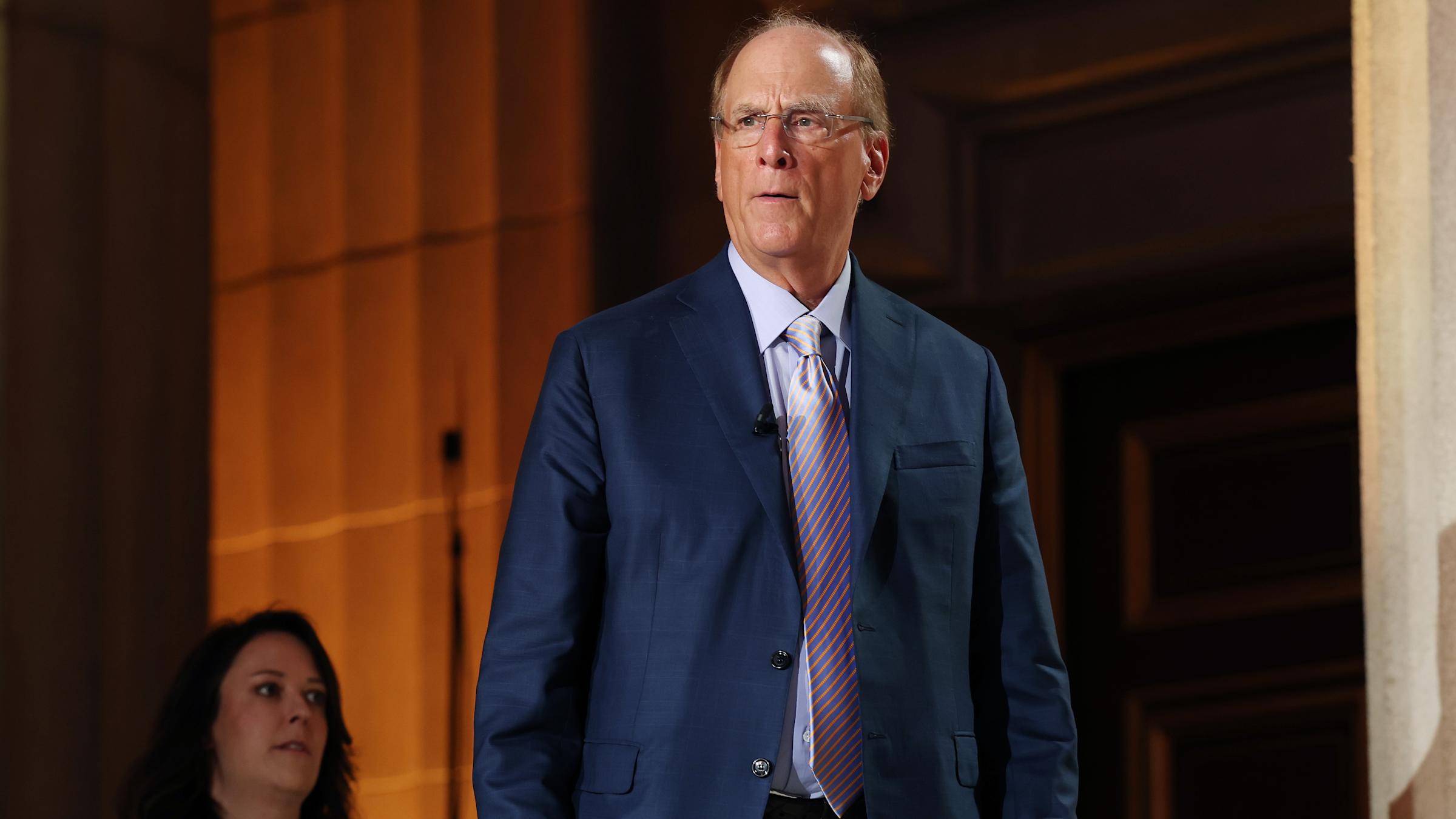
If you’re wondering where all that money is coming from, the answer might surprise you: It’s your “savings accounts and pension accounts.” That’s according to BlackRock CEO Larry Fink, who made the prediction at the Texas State Technical College in Waco alongside Texas Governor Greg Abbott, according to 25 News KXXV (3).

Here’s how to get rich from rising US property values with as little as $100 — and without the stress of angry tenants

Dave Ramsey warns nearly 50% of Americans are making 1 big Social Security mistake — here’s how to fix it ASAP

Goldman Sachs used to hoard prime real estate deals for the ultrarich. Two ex-analysts just opened the door for $250

“If we can get more and more Americans to think about growing with the United States, we will have far [more] than enough money to invest in this infrastructure,” said the banker. Altogether, Fink estimated, the nationwide build out of data centers and energy infrastructure could total $10 trillion over the next ten years.

Here’s how some of your retirement funds are already fuelling this colossal spending spree on a technology designed to take your job away.

Your 401(k) plan is propping up the AI boom, even if you’re not aware of it. That’s because a growing number of workers and savers have turned to passively investing in index funds in recent years, even as tech giants have become a larger part of these indexes.

As of April 2026, Americans collectively had $20.82 trillion invested in index mutual funds and ETFs, according to the Investment Company Institute (4). Traditionally, these index funds were well-diversified but that isn’t the case anymore. At the end of 2025, 41% of the S&P 500’s market cap was concentrated in just the top ten stocks, including familiar names like Microsoft, Amazon, Google and Tesla, according to RBC Wealth Management (5).

These tech giants are leading the data center and utility spending spree. “America is now one big bet on AI,” Ruchir Sharma wrote in the Financial Times (6). “AI better deliver for the U.S., or its economy and markets will lose the one leg they are now standing on.”

As one of the largest index fund providers (7) in the country, BlackRock has a front-row seat to this concentrated bet on AI. This is why Larry Fink’s comments are worth your attention.

If the fact that your nearing retirement now hinges on the success of AI makes you uneasy, there are ways to protect yourself.

Read More: Here’s the average income of Americans by age in 2026. Are you falling behind?

With nearly everyone piling into a single bet at the same time, taking a contrarian approach and diversifying away from the U.S. stock market could be a sound move.

You don’t need to abandon the S&P 500 altogether. Just a little exposure to alternative assets and fixed income could help make your overall portfolio more robust.

Gold, for instance, is widely considered a safe haven asset that is disentangled from the U.S. economy or stock market. Platforms like Goldco can help you set up a so-called Gold IRA that combines the benefits of this precious metal with some much needed tax advantages.

With a minimum purchase of $10,000, Goldco offers free shipping and access to a library of retirement resources. Plus, the company will match up to 10% of qualified purchases in free silver.

If you’re curious whether this is the right investment to diversify your portfolio, you can download your free gold and silver information guide today.

Another way to diversify your portfolio is to perhaps consider some tangible real estate. Rental properties with steady cash flow could serve as shock-absorbers if the AI bet goes awry.

But purchasing a property outright isn’t affordable for everyone. But even as real estate prices are prohibitively high for many Americans, it’s never been easier to invest in real estate.

Mogul is one such real estate investment platform that can help you get started with fractional ownership in blue-chip rental properties.

Founded by former Goldman Sachs real estate investors, the mogul team handpicks the top 1% of single-family rental homes nationwide for you. Simply put, you can invest in institutional quality offerings for a fraction of the usual cost.

Each property undergoes a rigorous vetting process, requiring a minimum 12% return even in downside scenarios. Across the board, the platform features an average annual IRR of 18.8%. Their cash-on-cash yields, meanwhile, average between 10% to 12% annually. Offerings often sell out in under three hours, with investments typically ranging between $15,000 and $40,000 per property.

Every investment is secured by real assets, not dependent on the platform’s viability. And each property is held in a standalone Propco LLC, so investors own the property — not the platform. Blockchain-based fractionalization adds a layer of safety, ensuring a permanent, verifiable record of each stake.

Getting started is a quick and easy process. You can sign up for an account and then browse available properties. Once you verify your information with their team, you can invest like a mogul in just a few clicks.

A few steps to diversify and add hard assets to your portfolio could protect your wealth if this concentrated AI build out slows down.

10 minutes could get you up to $2M in life insurance coverage with no medical exams. Check your rate and secure instant coverage from your couch with Ethos

Thanks to Jeff Bezos, you can now become a landlord for as little as $100 — and no, you don't have to deal with tenants or fix freezers. Here's how

Vanguard’s outlook on U.S. stocks is raising alarm bells for retirees. Here’s why and how to protect yourself

Robert Kiyosaki says this 1 asset will surge 400% in a year and begs investors not to miss this ‘explosion’

Join 250,000+ readers and get Moneywise’s best stories and exclusive interviews first — clear insights curated and delivered weekly. Subscribe now.

We rely only on vetted sources and credible third-party reporting. For details, see our ethics and guidelines.

McKinsey & Company (1); World Bank (2); YouTube (3); International Cocoa Initiative (4); RBC Wealth Management (5); Financial Times (6); ICFS (7)

This article provides information only and should not be construed as advice. It is provided without warranty of any kind.
Comments
You must be logged in to comment.