yahoo Press
Atlas V rocket launches 29 Amazon Leo internet satellites to orbit from Florida
Images
1 / 7
2 / 7

3 / 7

4 / 7
5 / 7

6 / 7

7 / 7
When you buy through links on our articles, Future and its syndication partners may earn a commission.

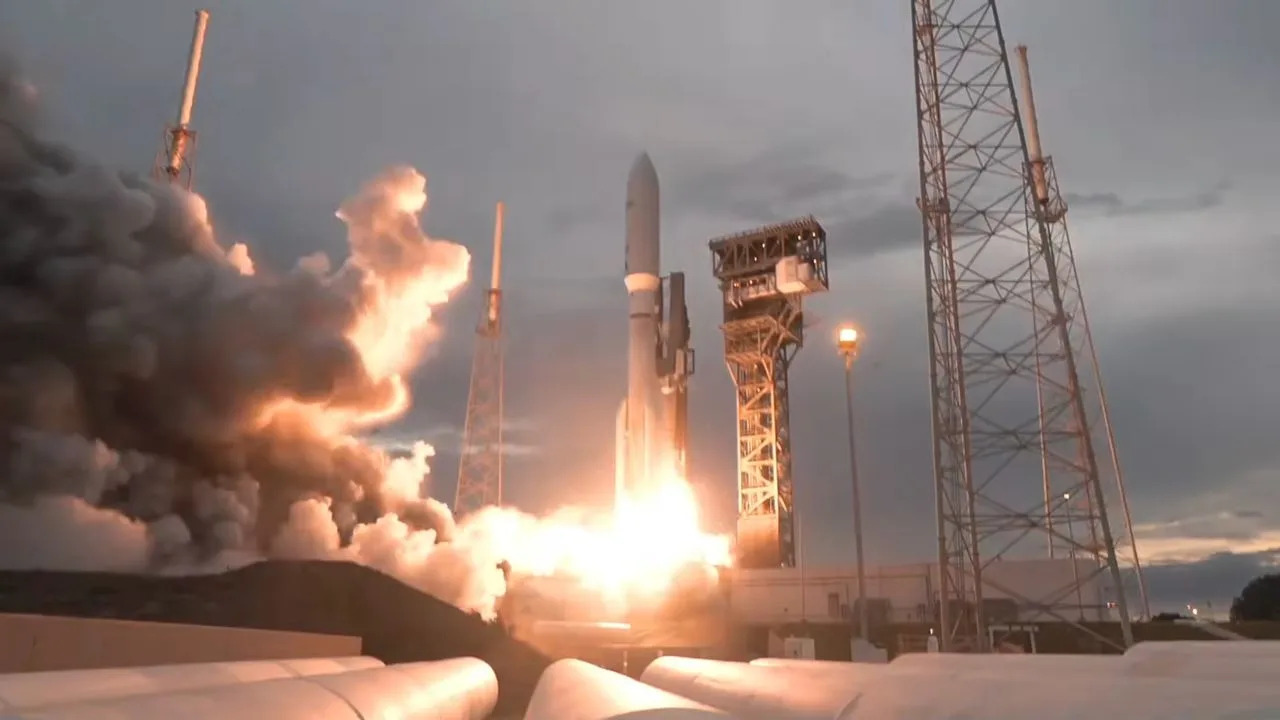
A new batch of satellites for Amazon's internet constellation made it to orbit tonight (May 29).

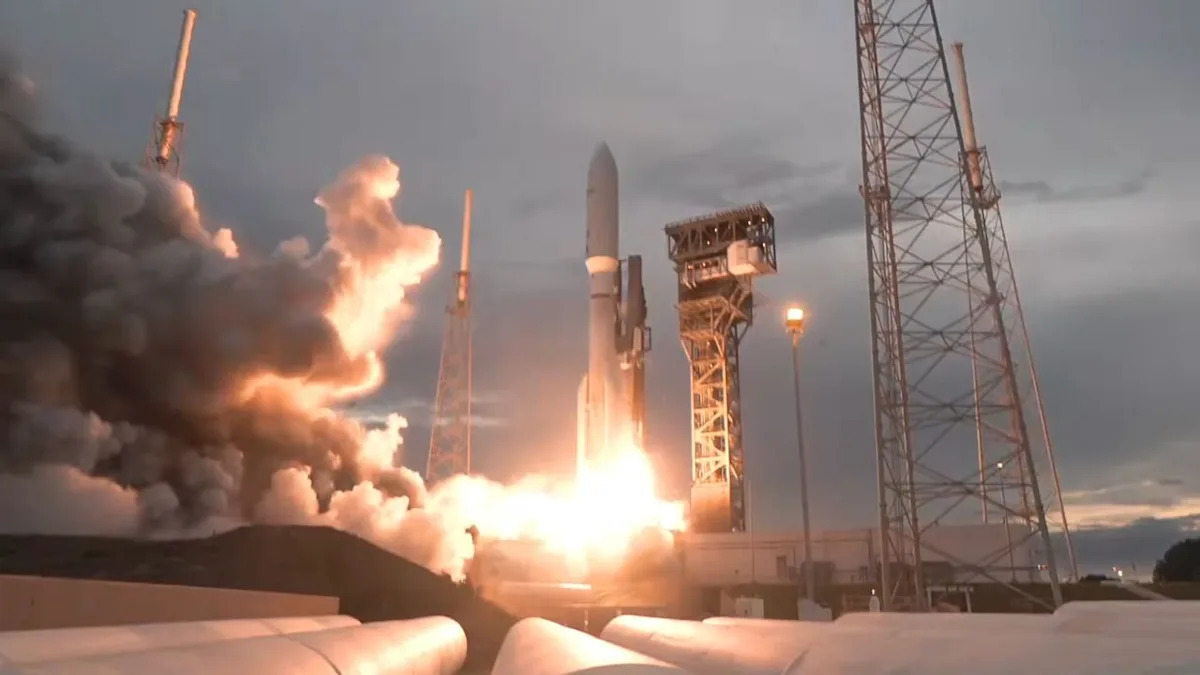
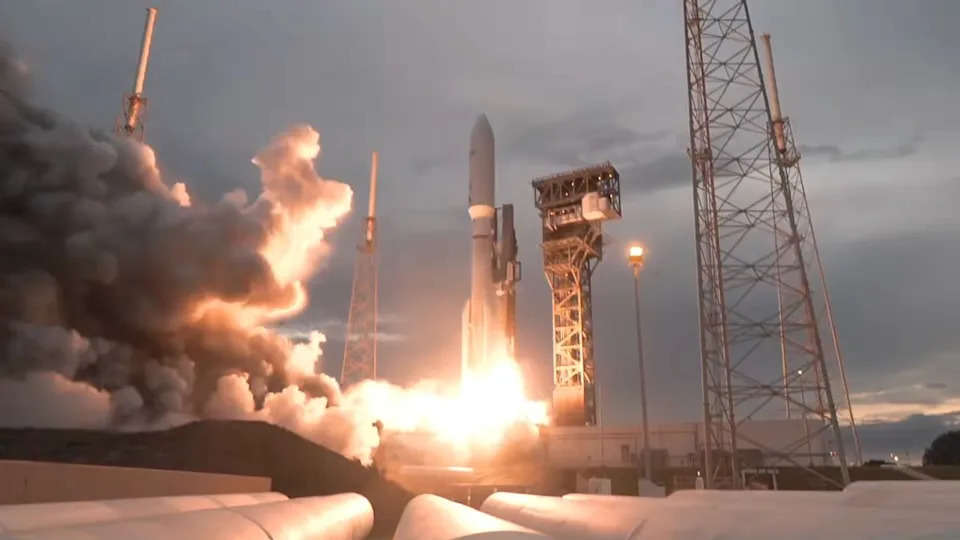
A United Launch Alliance (ULA) Atlas V 551 rocket lifted off from Launch Complex-41 at Cape Canaveral Space Force Station in Florida today at 7:53 p.m. EDT (2353 GMT).

It was the seventh Amazon Leo mission to fly on an Atlas V, and tied, for the second time, the rocket's record for heaviest payload launched to orbit — about 18 tons. Overall, this was the 12th Amazon Leo mission to fly, and it added the 29 satellites to Amazon's existing network of 300 already in orbit.

Amazon aims to raise that number more than tenfold. The company currently plans on launching about 3,200 broadband satellites to orbit to compete with SpaceX's Starlink internet megaconstellation, which currently consists of nearly 10,500 spacecraft.

The Amazon Leo constellation doesn't need that many, due to its planned infrastructure of relay stations on the ground, but will still require more than 80 launches to reach the number that Amazon is striving for. Those missions are spread across several launch providers, including SpaceX, ULA, Europe's Arianespace and Amazon's own sister company, Blue Origin, both of which were founded by billionaire Jeff Bezos.

Starlink has a significant head start in the broadband megaconstellation race, with SpaceX launching fresh batches weekly or even more frequently on its workhorse Falcon 9 rocket while also preparing to launch bigger payloads on the Starship rocket, which is currently under development. But Amazon is picking up the pace.

Today's launch was the fourth Amazon Leo mission so far this year. Another group was expected to launch on a Blue Origin New Glenn rocket next month, but that vehicle experienced a catastrophic event last night (May 28) during testing at Blue's launch pad at Cape Canaveral Space Force Station, which resulted in a massive explosion and fireball, and a complete loss of the rocket. While the Amazon Leo satellites were not aboard the rocket during the incident, it is unclear when Blue Origin will be able to support another New Glenn mission.

On today's launch, the Atlas V's second stage deployed the satellites as planned, releasing them in groups of three over the course of about 10 minutes, with the final two popping free about 38 minutes after liftoff.

The rocket's "551" configuration indicates that five solid rocket boosters supported the first stage, and that the upper stage sported a 5-meter payload fairing to house the Amazon Leo satellites. It's one of the Atlas V's most powerful flight setups, with each solid rocket engine providing 371,550 pounds (1.6 mega-Newtons) of thrust at liftoff on top of the main booster's RD-180 engine, which produces 860,200 pounds (3.83 mega-Newtons) of power itself.

Editor's note: This story was updated at 8 p.m. EDT on May 29 with news of successful liftoff, then again at 9:45 p.m. ET with news of satellite deployment.
Comments
You must be logged in to comment.