bbc Press
US and Iran 'very close' to deal but 'not there yet', Vance says
Images
1 / 9

2 / 9
3 / 9

4 / 9
5 / 9
6 / 9
7 / 9
8 / 9
9 / 9
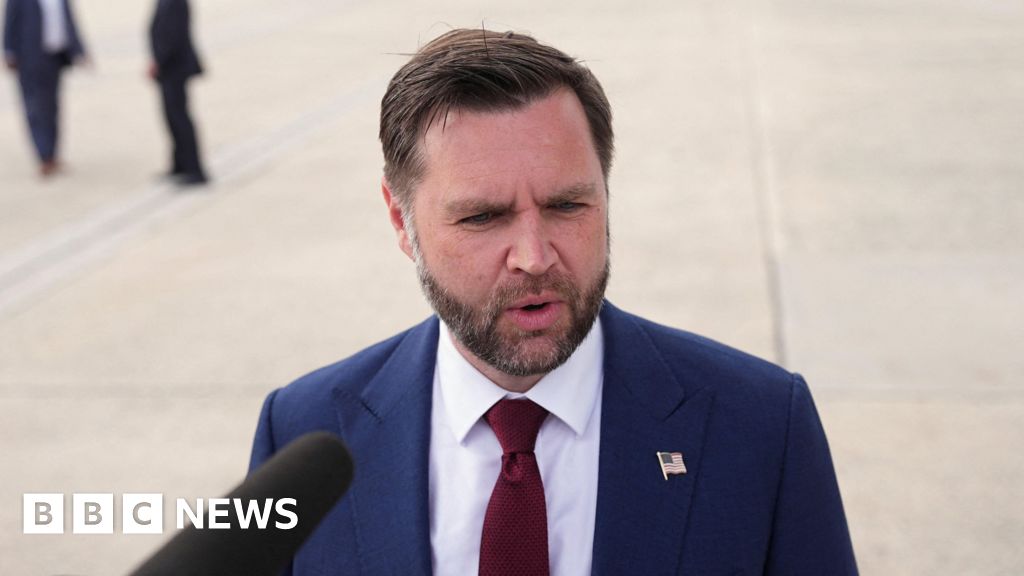
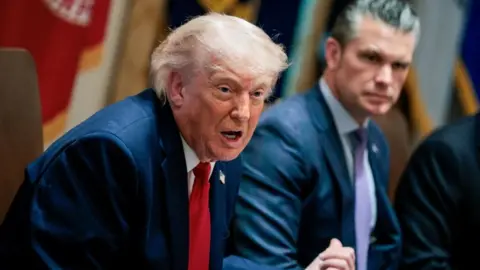
The US and Iran still need to work out several sticking points before an agreement on the war can be reached, Vice-President JD Vance has said.

Asked by the BBC if President Donald Trump was close to signing a deal, Vance said it was too early to say "when or if" the two sides would finalise an agreement.

Earlier on Thursday, US officials told the BBC the two countries had agreed a framework of a deal - known as a memorandum of understanding - pending the approval of Trump and Iran's leadership.

It would reportedly extend the ceasefire for 60 days and launch talks on the future of Iran's nuclear programme. Iran's semi-official Tasnim news agency reported it had not been finalised or confirmed.

According to reports, the framework could allow "unrestricted" passage through the Strait of Hormuz and give Iran 30 days to remove mines from the narrow shipping passageway.

The US would also lift its blockade, and issue sanction waivers to allow Iran to resume selling oil.

Axios, which first reported a tentative agreement between the US and Iran on Thursday, said Trump had been briefed on the proposal but did not immediately sign off on it and would take a couple of days to consider it.

One-fifth of the world's liquefied natural gas and oil normally pass through the Strait of Hormuz, and its closure has impacted global fuel trade.

Speaking on Thursday evening, Vance said negotiators were "going back and forth on a couple of language points", which include the "question of enrichment".

"We're not there yet, but we're very close and we're going to keep on working at it," he told reporters.

The US has long demanded that Iran stop producing highly enriched uranium and dispose of its existing stockpile, which in theory could be used to create nuclear weapons.

Iran insists its nuclear programme is entirely peaceful and denies it is seeking to develop nuclear weapons.

Vance struck an optimistic tone as he spoke to reporters in Washington DC, saying the US believed the Iranians were negotiating in "good faith".

On Wednesday, Iranian state media reported elements of what they described as an unofficial draft of a 14-point memorandum of understanding between the two countries.

The report included the lifting of Washington's naval blockade of Iranian ports, the withdrawal of US forces from the "vicinity of Iran", and the restoration of non-military traffic through the Strait of Hormuz with Iran and Oman in control of the management and routing of vessels.

The White House called the purported memorandum draft a "complete fabrication".

Since the initial ceasefire between the US and Iran came into effect on 8 April, Trump has suggested - repeatedly - that the two sides are close to a deal and that negotiations are progressing, but so far there have been no substantive results.

The president is facing mounting pressure to end the war, including from Gulf state allies, Democrats who oppose it, and some Republicans in Congress who have raised concerns about the length of the conflict.

Thursday's conflicting reports on a possible deal underscored how fluid the negotiations remain.

Both countries contradicted each other's claims and offered few details on the reported proposal, raising questions again about how close the sides actually are to ending hostilities.

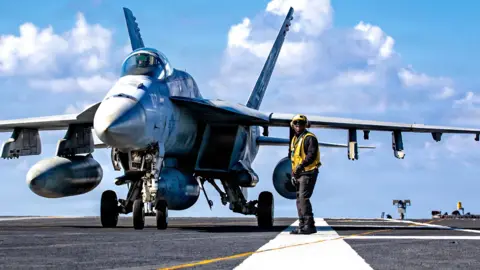
Trump and other officials have warned that "option B" - a return to combat operations - is still on the table.

Extending the ceasefire, meanwhile, would allow US and Iranian teams to discuss the far more complicated and technical issues at play, particularly about Iran's nuclear programme and its remaining stockpile of highly enriched uranium.

Trump had suggested that the US could take it, or, together with Iran, dilute it in place or in a third location.

Leading the White House briefing earlier on Thursday, Treasury Secretary Scott Bessent declined to confirm that an agreement had been reached.

"It's always a mistake to get out ahead of the president and it is all going to be the president's decision," he said.

Asked about whether any eventual peace deal includes "reconstruction" for Iran, he said: "We've got to get to the deal before we get to the other side."

Meanwhile, both Iran and the US have accused each other of violating the fragile ceasefire in the past few days.

Iran's Islamic Revolutionary Guard Corps (IRGC) said it targeted a US base in the region on Thursday, after fresh US strikes on southern Iran overnight.

Iranian state media reported on Thursday that the country's forces had taken down a US aircraft, possibly a drone. But US Central Command rejected the reports, saying on social media: "No US aircraft were shot down. All US air assets are accounted for."

Additional reporting from Bernd Debusmann Jr

Get our flagship newsletter with all the headlines you need to start the day. Sign up here.

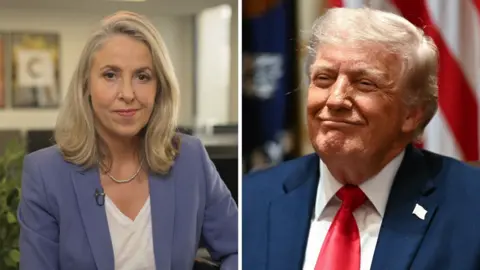
BBC’s Sarah Smith looks at why both countries are in a tense cycle of negotiations, despite the progress President Trump consistently claims.

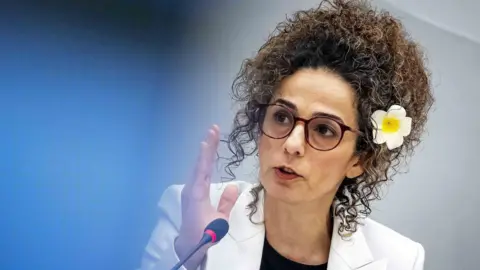
Former truck driver Jonathan Loadholt pleaded guilty to money laundering and stalking in the plot targeting activist Masih Alinejad.

Neither side seems interested in a return to all-out conflict, despite the latest exchange of strikes.

The hostilities come during a fragile ceasefire between the US and Iran, and protracted negotiations to end the three-month war.

Craig and Lindsay Foreman are on hunger strike after their phone access was cut off in May.
Comments
You must be logged in to comment.