yahoo Press
Your AI Agents Will Trade for You on Robinhood
Images
1 / 5
2 / 5

3 / 5

4 / 5
5 / 5
The above button links to Coinbase. Yahoo Finance is not a broker-dealer or investment adviser and does not offer securities or cryptocurrencies for sale or facilitate trading. Coinbase pays us for certain activity generated through this link. Prices displayed are informational.

Our analysts just identified a stock with the potential to be the next Nvidia. Tell us how you invest and we'll show you why it's our #1 pick. Tap here.

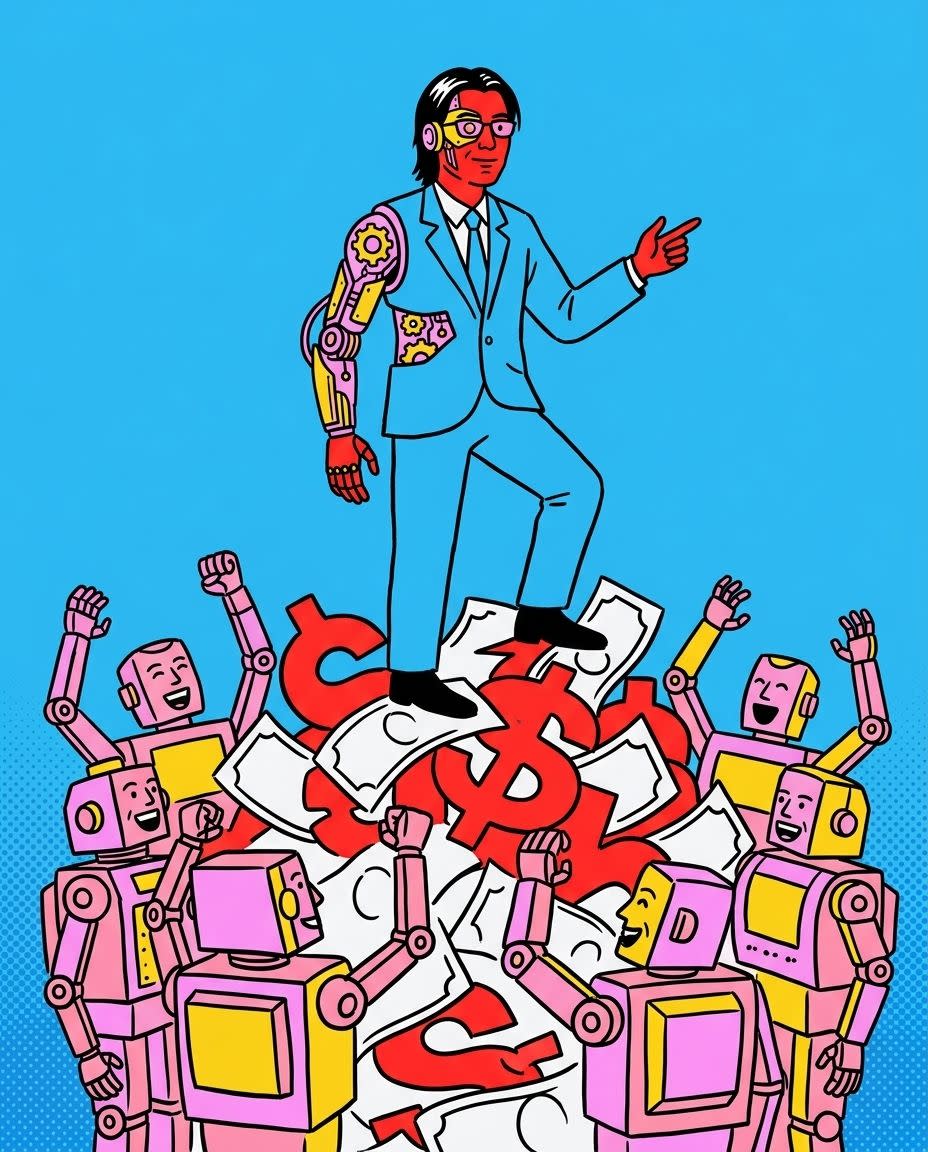
Robinhood wants to let AI trade for you.

The stock trading app is planning to build separate accounts for users that allow AI agents to trade and “build a diversified portfolio from scratch,” reports Bloomberg. The agent will only be allowed to access funds deposited specifically into that account. Still, given recent stories about Anthropic’s “Mythos Preview”, we’re not all that comforted, but it might be a smart bet for Robinhood nonetheless.

Robinhood has been waiting for this AI moment for almost two years. The company brought in Jacob Sansbury, who co-founded Pluto, an AI-research app, to provide investment advice. The tech developed from passive chatbots, which told you the price of Bitcoin, to active execution.

In August of last year, CEO Vlad Tenev made the company’s ambitions official.

“I think the third stage is what I call autonomous financial agents,” he told Forbes. “Think of this as AI performing the entire end-to-end process of what a sophisticated financial professional or a Wharton-trained expert would have been able to do.” That was once only available to high-net-worth individuals or accredited investors who could afford the advice.

But Robinhood doesn’t have proprietary agents of its own. Instead, it opened its infrastructure, letting users plug in personal or third-party AI systems to deploy whatever strategies the platform’s trading sandbox will tolerate. Security concerns aside, agentic AI trading — if it actually works — has the potential to completely upend Robinhood's reporting metrics, eventually forcing the market to answer: who is really trading on Robinhood, and if the revenue's strong, does it even matter?

The company didn’t immediately respond to a request for comment.

One stock. Nvidia-level potential. 30M+ investors trust Moby to find it first. Get the pick. Tap here.

Those security concerns are paramount. Robinhood is addressing these potential threats by deploying “zero-trust” infrastructure, which means the AI agent never has access to a user’s keys or their account. The worry here is what happens when an agent runs out of money and what they’ll do to get it.

Still, despite the security risk, the most important metric for Robinhood in Wall Street’s eyes is total platform assets (AUC), which is the sum total of the financial assets held by users. In Q2 2024, with HOOD around $20, AUC was $139.7 billion. By Q4 2025, AUC hit a record $324 billion, and the stock hit its all-time high. Then Q1 2026 came in at $307 billion — and the stock followed it down.

Average Revenue Per User (ARPU) and Gold Subscribers, a premium subscription, are also key metrics. Subscribers connect to Robinhood’s recurring revenue story while ARPU is essentially a monetization efficiency score. That said, all three are relatively manageable and, to some extent, controllable by pushing Gold subscriptions through various marketing campaigns and by expanding into banking and credit to improve ARPU.

The one metric they can’t fully control is trading volume or ADVs. This is probably Robinhood’s most short-term metric, but the most important for their earnings, because it signals the total amount of assets bought and sold on the platform, or, in other words, how active traders are for the given quarter. Remember, Robinhood doesn’t charge a flat fee to trade. Instead, ADVs are generated through fractional micro-fees, order routing, and bid-ask spreads, accounting for anywhere from 55% to 65% of their transaction-based revenue.

So where does agentic AI come into all of this?

If a user can set up a separate account, fund it with anywhere from $1 to $10,000, and press "TRADE," Robinhood has effectively created an entirely new user from the same person. One that never gets tired, bored, or discouraged, and makes as many trades as possible, 24/7, until it runs out of money. That last part, notably, isn't Robinhood's problem. The AI agents plug into MCP, so the liability remains with the user. If the agent performs, it's a win-win. If it doesn't, it's a win-lose — Robinhood keeps every fee the agent generated on the way down, and walks away with something it never had before: a lever of direct control over its most volatile and least predictable metric.

At a time when figures like Uber's operations chief Andrew Macdonald are saying it's becoming harder to "justify AI costs within the company," Robinhood, which clearly knows its customer, is doing what most companies haven't figured out yet: hand the utility of AI directly to users, let them maximize their own bottom line, and walk away from most of the responsibility for what happens next.

And as long as someone’s agent doesn’t steal their user's keys (or someone else’s) to keep trading, Robinhood’s plan might just work.
Comments
You must be logged in to comment.