yahoo Press
US families to receive $12,000 under new proposal from Bernie Sanders — and he takes a direct swipe at Jeff Bezos
Images
1 / 5
2 / 5

3 / 5

4 / 5
5 / 5
Moneywise and Yahoo Finance LLC may earn commission or revenue through links in the content below.

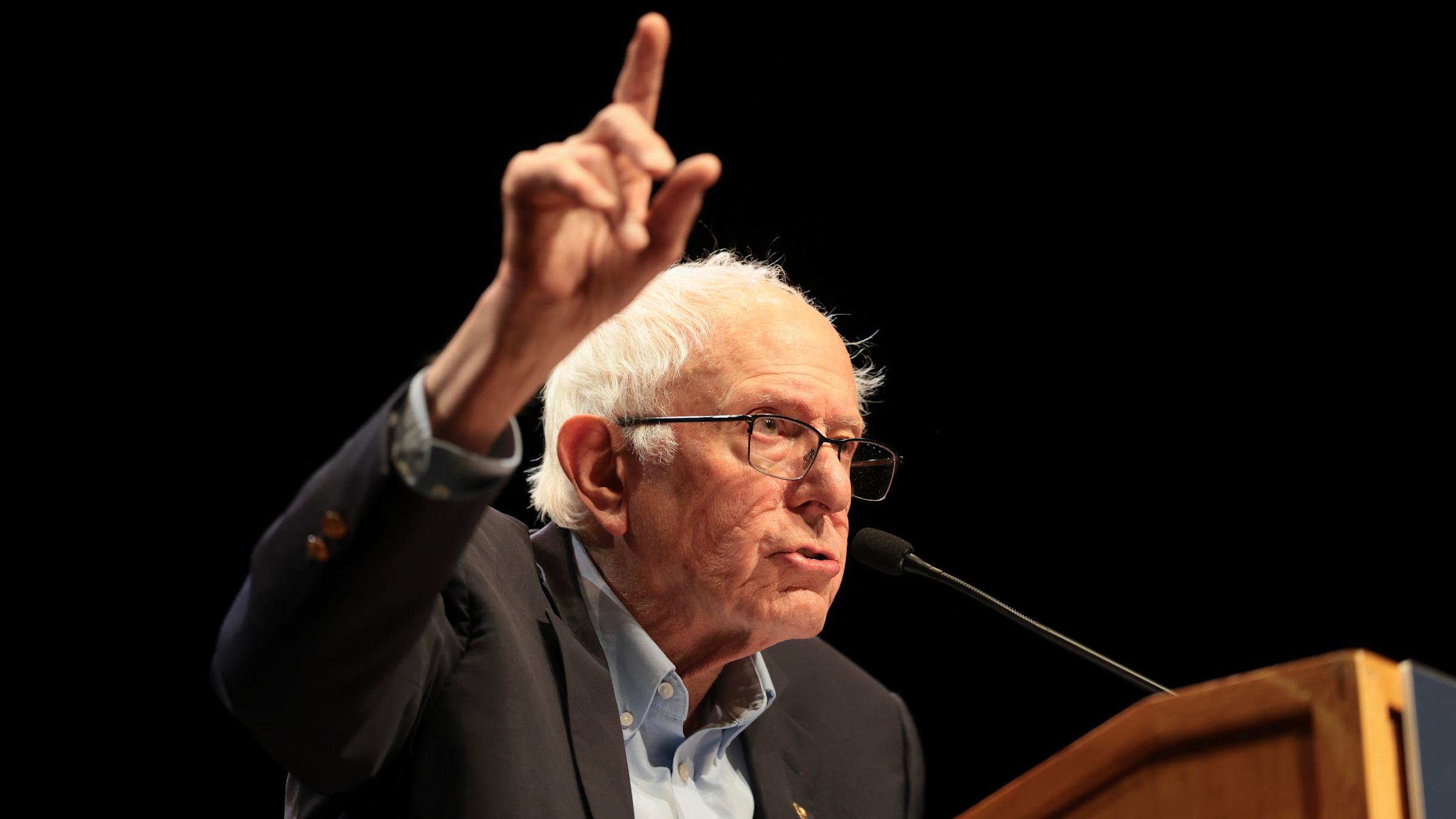
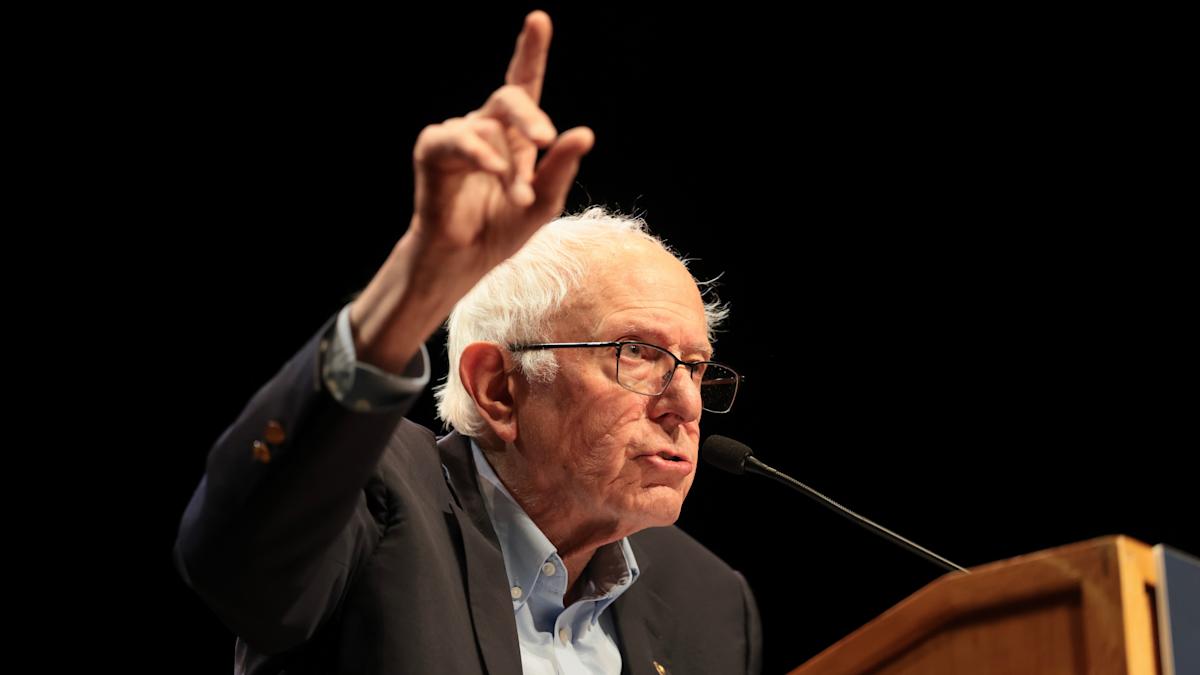
Bernie Sanders is reviving his fight to tax America’s billionaires and send money to working families — and this time, he’s using Jeff Bezos to make the point.

In a post on X, the Vermont senator responded to Bezos’s recent claim that raising taxes on him would not help “that teacher in Queens.”

Here’s how to get rich from rising US property values with as little as $100 — and without the stress of angry tenants

Dave Ramsey warns nearly 50% of Americans are making 1 big Social Security mistake — here’s how to fix it ASAP

Goldman Sachs used to hoard prime real estate deals for the ultrarich. Two ex-analysts just opened the door for $250

“Mr. Bezos: Let’s have that debate,” Sanders wrote (1).

He then pointed to his proposed tax on billionaire wealth.

“Under my 5% billionaires wealth tax, we’d: -Give $12K to a working family of 4 -Expand Medicare for dental, vision, hearing -Guarantee universal childcare -Raise starting teacher pay to $60K,” Sanders wrote.

Then came the swipe directly at Bezos: “And you’d still be worth $269 billion after taxes.”

The jab came after the Amazon founder and executive chair’s recent CNBC interview, where he rejected the idea that simply raising his tax bill would solve the problem facing lower-income Americans.

“These people sometimes say that I don’t pay taxes,” Bezos said. “That’s not true. I pay billions of dollars in taxes.”

Bezos, whose net worth is estimated at $273 billion, argued that linking higher taxes on him to direct relief for ordinary workers is misleading.

“Don’t pretend you know that that’s going to solve the problem,” Bezos said. “You could double the taxes I pay and it’s not going to help that teacher in Queens — I promise you.”

Sanders, however, is making the opposite case: that a relatively small tax on billionaire wealth could fund direct relief and major social programs for working families.

The proposal Sanders is referring to is the “Make Billionaires Pay Their Fair Share Act,” which he introduced with Rep. Ro Khanna of California (2).

The bill would establish a 5% annual wealth tax on the 938 billionaires in America, who Sanders says are collectively worth $8.2 trillion. According to Sanders’s office, no one with a net worth below $1 billion would pay more under the proposal.

In its first year, the bill would use the money raised to provide a $3,000 direct payment to every man, woman and child in a household making $150,000 or less. For a family of four, that would amount to $12,000.

The legislation would also use the estimated $4.4 trillion raised over the next decade to fund a broader list of priorities. Sanders says the money could be used to expand Medicare to cover dental, vision and hearing, build or preserve more than seven million affordable homes, ensure families pay no more than 7% of their income on child care, establish a $60,000 minimum salary for public school teachers and expand Medicaid home health care for seniors and people with disabilities.

“At a time of unprecedented income and wealth inequality, this legislation demands that the billionaire class in America finally pay their fair share of taxes,” Sanders said in announcing the bill.

His message seems to have struck a chord. As of this writing, Sanders’ post targeting Bezos has received four million views, 17,000 likes and over 7,000 comments.

Part of the resonance may come down to a blunt reality in America: Billionaires have seen their fortunes surge, while many ordinary families are still struggling with the cost of housing, groceries, health care and child care.

But whether Sanders’s billionaire tax ever becomes law is far from certain.

Critics have argued that a wealth tax could face constitutional challenges, prove difficult to administer and encourage capital flight. Wealth taxes in other countries have also produced mixed results, with some governments abandoning them after struggling with enforcement and avoidance (3).

In other words, the $12,000 payment is still just a proposal. But for families trying to keep up today, waiting for Congress may not be much of a plan.

That’s why many Americans may need to look for other ways to create extra income streams now. In an economy where the cost of everything from groceries to housing keeps climbing, building additional income — especially income that does not depend entirely on a paycheck — can be a powerful step toward greater financial stability.

Read More: Here’s the average income of Americans by age in 2026. Are you falling behind?

One way to create income beyond a regular paycheck is through real estate.

The appeal is simple: People always need a place to live and rental properties can generate recurring cash flow month after month.

It’s also a popular hedge against inflation, as property values and rental income tend to rise alongside the cost of living.

In fact, investing legend Warren Buffett often points to real estate when explaining what a productive, income-generating asset looks like. In 2022, Buffett stated that if you offered him “1% of all the apartment houses in the country” for $25 billion, he would “write you a check (4).”

Why? Because regardless of what’s happening in the broader economy, people still need a place to live and apartments can consistently produce rent money.

However, while real estate investing has clear benefits, being a landlord comes with challenges. Managing a property involves finding and screening tenants, collecting rent and handling maintenance and repair requests (out of your own pocket) — and that’s assuming you can save enough for a downpayment and get a mortgage to buy the property in the first place.

The good news? These days, you don’t need to buy a property outright to reap the benefits of real estate investing. Mogul is a crowdfunding platform that offers an easier way to get exposure to this income-generating asset class.

It works by offering fractional ownership in blue-chip rental properties, which gives investors monthly rental income, real-time appreciation and tax benefits — without the need for a hefty down payment or 3 A.M. tenant calls.

Founded by former Goldman Sachs real estate investors, the team hand-picks the top 1% of single-family rental homes nationwide for you. In other words, you gain access to institutional-quality offerings for a fraction of the usual cost.

Each property undergoes a rigorous vetting process, requiring a minimum 12% return even in downside scenarios. Across the board, the platform features an average annual IRR of 18.8%. Offerings often sell out in under three hours, with investments typically ranging between $15,000 and $40,000 per property.

You can sign up for an account and then browse available properties here.

Real estate isn’t the only way to build recurring income. Dividend-paying stocks can offer a similar benefit — providing regular payouts without the need to manage tenants or properties.

Dividends are payments companies make to shareholders out of their profits, typically on a quarterly basis. In other words, they allow investors to generate recurring cash flow without having to sell their shares — an approach many find appealing. As John D. Rockefeller, one of the richest Americans in history, once said, “Do you know the only thing that gives me pleasure? It’s to see my dividends coming in.”

While stock prices can rise and fall, companies with a strong track record of paying — and growing — dividends offer investors a steady cash flow. Over time, those increases can compound into a powerful income stream.

Today, access to the stock market is easier than ever, but for many people, the hardest part of investing isn’t getting started — it’s staying consistent.

Automating your contributions is one of the simplest ways to build momentum. When your investments go in automatically with each paycheck, your portfolio works in the background without you having to think about it.

Platforms like Stash make this incredibly straightforward.

With over 1 million active subscribers and more than $5 billion in assets under management, the intuitive app lets you set daily, weekly, or monthly recurring investments that actually match your cash flow.

You can build a diversified portfolio in just a few clicks using its award-winning Smart Portfolio, which adjusts your investment mix based on your goals and risk level. Prefer a more hands-on approach? You can also choose your own stocks and ETFs, or mix both depending on your comfort level.

And if you’re looking to take your long-term strategy a step further, a Stash+ subscription offers 3% IRA matching1, that can give your contributions a meaningful boost over time.

You can set up a recurring deposit in just a few minutes and let your portfolio work for you on autopilot.

Plus, you can get a $25 bonus investment when you fund a new Stash account with $5, plus a 3-month trial to explore the platform.*

*All investments are subject to risk and may lose value. View important disclosures. Offer is subject to T&Cs.

Of course, building an income stream from stocks isn’t just about opening an account. It’s also about choosing the right opportunities — and avoiding companies whose attractive-looking dividends may not be sustainable.

That’s where research platforms like Moby can help. Their team of former hedge fund analysts does the heavy lifting — breaking down the market, flagging quality stocks and making the research easy to digest.

In fact, across nearly 400 stock picks over the past four years, Moby’s recommendations have beaten the S&P 500 by almost 12% on average. Their research keeps you up-to-the-minute on market shifts and takes the guesswork out of choosing investments.

Plus, their reports are easy to understand for beginners, so you can become a smarter investor in just five minutes.

Thanks to Jeff Bezos, you can now become a landlord for as little as $100 — and no, you don't have to deal with tenants or fix freezers. Here's how

Robert Kiyosaki says this 1 asset will surge 400% in a year and begs investors not to miss this ‘explosion’

Dave Ramsey says this 7-step plan ‘works every single time’ to kill debt, get rich in America — and that ‘anyone’ can do it

Vanguard’s outlook on U.S. stocks is raising alarm bells for retirees. Here’s why and how to protect yourself

Join 250,000+ readers and get Moneywise’s best stories and exclusive interviews first — clear insights curated and delivered weekly. Subscribe now.

We rely only on vetted sources and credible third-party reporting. For details, see our ethics and guidelines.

X (1); Sanders Senate (2); Washingtonpost (3); Cnbc (4)

This article provides information only and should not be construed as advice. It is provided without warranty of any kind.
Comments
You must be logged in to comment.