yahoo Press
Stock market today: S&P 500, Nasdaq retreat from records as tech momentum fades, oil falls amid US-Iran talks
Images
1 / 5

2 / 5

3 / 5

4 / 5

5 / 5
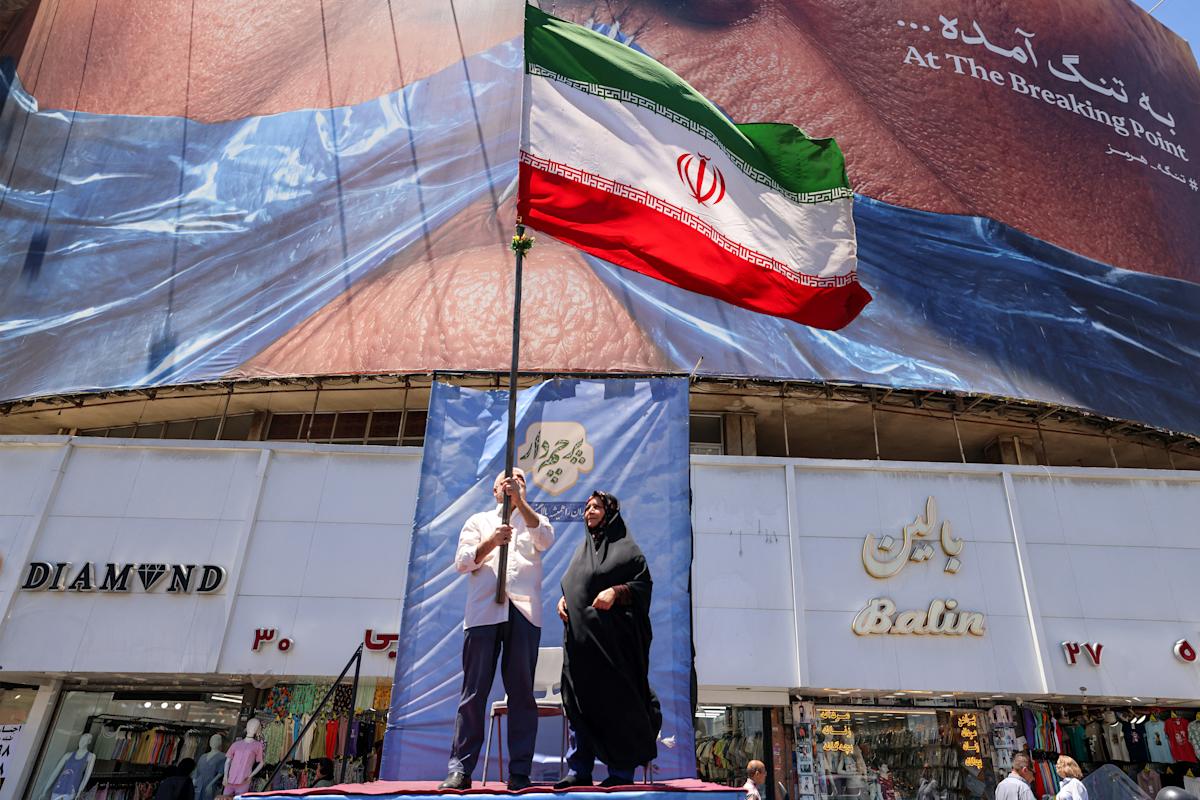
US stocks were mixed on Wednesday as AI momentum faded and oil dropped following disputed reports about a draft memorandum between the US and Iran that said Tehran would reopen the Strait of Hormuz. The Dow Jones Industrial Average (^DJI) rose 0.3%. The tech-heavy Nasdaq Composite (^IXIC) fell 0.3%, and the benchmark S&P 500 (^GSPC) declined by 0.1%, after the major indexes rose to record highs on Tuesday. Stocks searched for gains amid tepid optimism that the US and Iran could reach a lasting peace agreement in the near future. Earlier on Wednesday, Iranian state media reported that a draft peace memorandum stated that shipping through the Strait of Hormuz would resume and the US would remove its naval blockade; however, the US denied that report, and the White House called it a “complete fabrication.” A conclusive end to the US-Iran war remains murky, with Secretary of State Marco Rubio cautioning on Tuesday that any deal would likely take a few days to formalize. In the meantime, the Strait of Hormuz remains mostly shut to commercial traffic. Nevertheless, crude oil prices fell on Wednesday, with Brent (BZ=F) falling to $93 per barrel and West Texas Intermediate (CL=F) trading below $90 per barrel. Earnings season continues to wrap up this week, with Marvell Technology (MRVL), Salesforce (CRM), and Snowflake (SNOW) set to report their results after the closing bell on Wednesday. Abercrombie & Fitch (ANF) beat estimates on earnings per share but missed on revenue. Goldman Sachs raised its year-end S&P 500 (^GSPC) target to 8,000 from 7,600, the investment bank said Wednesday, as the US equity market has largely continued to perform even as the war in Iran inhibits the global energy trade. The target would represent a 6.4% premium over the benchmark index’s level around 11:30 a.m. ET on Wednesday, hovering near 7,514. Earnings have grown at an impressive pace throughout a solid start to the year and an exceptionally strong second quarter reporting period, while valuation multiples have declined, Goldman Sachs equity analysts wrote in a report Wednesday morning. “Earnings growth has powered the entire S&P 500 return so far this year, and we expect this dynamic will continue in coming months,” the analysts wrote, noting also that conditions which have historically “marked the ends of high-valuation, high-concentration bull markets in the past” remain mostly absent today. The analysts noted that the “beneficiaries of AI infrastructure investment” will account for roughly half of S&P 500 EPS growth this year, as support for the AI trade has continued to propel the market forward. That’s not to say there aren’t risks, the analysts noted. At the same time as earnings growth has surged, the outperformance of the AI trade also “raises their hurdle going forward,” marking one potential overheating risk for investors. The oil shock caused by the war in Iran could also weigh on growth and tighten financial conditions, the analysts noted. The US denied Iranian media reports of a draft US-Iran memorandum that reportedly said the Strait of Hormuz could be reopened within a month of both sides agreeing to the deal, sending oil prices back up after sharp drops earlier in the session. Futures on Brent crude (BZ=F), the international benchmark, recovered from a 4.8% loss to a 3.1% loss, trading above $93.50 per barrel. Those on US benchmark WTI crude (CL=F) held onto losses of 3.9% to trade above $90 after losing as much as 6% earlier in the session. Oil prices initially dropped on Wednesday after Iranian state media reported that a draft memorandum agreement in negotiations between Washington and Tehran included terms that would see Iran allow commercial shipping to resume through the Strait of Hormuz within 30 days of ratification, and see the US remove its naval blockade of the waterway. The White House denied those reports several hours later, writing on X: “This report from Iranian controlled media is not true and the MOU they ‘released’ is a complete fabrication. Nobody should believe what Iranian state media is putting out. FACTS MATTER.” Traders have spent the last few days looking for any progress in negotiations between the two nations after President Trump said over the weekend that Washington and Tehran are close to agreeing on a deal that would see an end to all conflict and the reopening of the Strait of Hormuz while peace talks resume. Shares in JPMorgan Chase (JPM) lost as much as 2.5% on Wednesday after the bank said it now expects full-year costs to be $1 billion higher than previously estimated. The global investment bank’s costs will be “closer” to $106 billion than the previously forecast $105 billion, CEO Jamie Dimon said on Wednesday at a conference hosted by Bernstein, as reported by Bloomberg. The increase in costs is “mostly driven by better performance, so it’s a good extra billion,” Dimon said, noting higher-than-expected fees and trading revenue are driving the number higher. Fees JPMorgan collects from its investing banking activity are expected to climb 10% and “could be a little better, depending on how the rest of the quarter turns out,” Dimon said. 2026 has so far proven to be a boom year for major banks that have raked in fees from both trading revenues driven by the AI boom and geopolitical chaos, and from a series of major M&A deals, with the long-expected SpaceX IPO coming in June. The US stock market turned into the green on Wednesday as the AI trade continued to roll forward and Iranian state media reported that a US-Iran deal would include restored shipping through the Strait of Hormuz, stoking peace hopes. The Dow Jones Industrial Average (^DJI) picked up 0.3%, while the S&P 500 (^GSPC) and Nasdaq Composite (^IXIC) both picked up less than 0.1%. US-Iran peace hopes sent oil prices plunging after Iranian state media said a draft memorandum included provisions stating Iran would allow shipping through the Strait of Hormuz to resume, and the US would remove its naval blockade. US oil fell below $90 per barrel on the news. Abercrombie & Fitch (ANF), reporting before the bell, beat estimates on earnings per share but missed on revenue. Marvell Technology (MRVL), Salesforce (CRM), and Snowflake (SNOW) are set to report after the closing bell. Oil prices fell sharply on Wednesday morning as traders looked for momentum in US-Iran negotiations, with hopes spurred by reports from Iranian state media that such a deal would reopen the Strait of Hormuz. Futures on Brent crude (BZ=F), the international benchmark, fell 4.2% to trade below $93 per barrel, while those on US benchmark WTI crude (CL=F) stumbled by a steeper 5.7% to trade below $89. Oil prices dropped precipitously at around 9 a.m. ET after Iranian state media, which is understood to be tightly controlled by the regime, reported that a draft memorandum between the US and Iran said Iran would restore shipping through the Strait of Hormuz to pre-war levels within 30 days, while the US would withdraw its military from the area and lift its naval blockade. Prices had ticked up on Monday and Tuesday after the US said it launched a new round of airstrikes in southern Iran, the US military’s first major action against the Islamic Republic since the two nations initially agreed to a ceasefire. Without further escalation — the US called the strikes “defensive” — traders have swung their focus back to President Trump’s announcement over the weekend that Washington and Tehran are close to agreeing on terms to restart peace negotiations, with a full ceasefire on all fronts and a reopening of the Strait of Hormuz as preliminary conditions. “The markets are just waiting for something tangible now when it comes to a deal between the US and Iran,” Capital.com analyst Kyle Rodda wrote in a client note. Lululemon (LULU) stock popped 3% on Wednesday morning after the company and its founder, Chip Wilson, reached an agreement to settle a long-running dispute over the company’s board leadership. The deal removes a potential obstacle ahead of the company’s shareholder meeting in June. One of the points of contention in the proxy battle between Wilson and the company’s board was the selection of Nike (NKE) veteran Heidi O’Neill to take the CEO helm later this year. “Lululemon now has a clear path forward for our incoming CEO, Heidi O’Neill, and our leadership team, as we continue to advance our strategies to foster strong brand health, reaccelerate growth, and deliver enhanced value for our shareholders,” Lululemon’s executive chair Marti Morfitt said on Wednesday morning. SK Hynix (000660.KS) shares jumped more than 12% on Wednesday, pushing the memory chip maker to a $1 trillion valuation in Asia just hours after peer Micron Technology (MU) crossed the same milestone on Tuesday. Wall Street had anticipated SK Hynix would join the club as the last of the industry’s “big three” to reach the valuation after Samsung Electronics (005930.KS) first crossed the mark earlier this month . May has become a month of trillion-dollar milestones for the memory chip giants, as soaring demand has tightened supply and created a key bottleneck in the AI trade. SK Hynix, Micron, and Samsung have become major beneficiaries of the AI boom as demand for High-Bandwidth Memory (HBM) chips has surged alongside AI training and inference workloads. Their production is allocated through 2026. Bloomberg reports: Oil dropped on optimism that the US and Iran will reach a peace deal despite fresh hostilities and uncertainty over the vital Strait of Hormuz. Brent (BZ=F) fell to near $98 a barrel after rising almost 4% on Tuesday, while West Texas Intermediate (CL=F) was around $92. US Secretary of State Marco Rubio has cautioned that any peace pact would likely take a few days to finalize. Meanwhile, US forces hit targets near the strait, while the Islamic Revolutionary Guard Corps said it fired at multiple US aircraft after they entered Iranian airspace. The strait, the key waterway through which a fifth of the world’s oil and liquefied natural gas flowed during peacetime, remains essentially shut, subject to blockades by the US and Iran. However, at least two non-Iranian supertankers exited the chokepoint on Tuesday, the first time in a week that 4 million barrels of unsanctioned crude have been seen crossing. In the US, President Donald Trump will convene his Cabinet at the White House Wednesday, moving from the originally planned location at the presidential retreat Camp David due to weather. This comes as key sticking points remain in the talks with Iran — including Tehran’s $24 billion in frozen assets and its reluctance to allow free passage through the strait. Read more here.
Comments
You must be logged in to comment.