yahoo Press
Democrats urge Trump to commute sentences of people serving for nonviolent marijuana offenses
Images
1 / 6

2 / 6

3 / 6

4 / 6

5 / 6

6 / 6
A group of nine Democrats urged President Trump to commute the sentences of people serving time for nonviolent marijuana offenses, following his decision to reclassify the drug last month.

“The Bureau of Prisons (BOP) is plagued by capacity issues, both overcrowded and understaffed. While it won’t solve the structural issues that have led us here, we believe that commuting the sentences of people with marijuana offenses would both address the overly harsh sentences while simultaneously allowing BOP to focus resources where they are needed most,” the group of lawmakers wrote in a letter to Trump and “pardon czar” Alice Johnson on Friday.

“Lastly, those serving unjust marijuana sentences should be provided with support services to ensure they have a successful reentry after years of incarceration. Unfortunately, often those with life sentences cannot access reentry services. In order to prevent recidivism, we also urge you to order BOP to provide such services to people serving marijuana sentences,” they added.

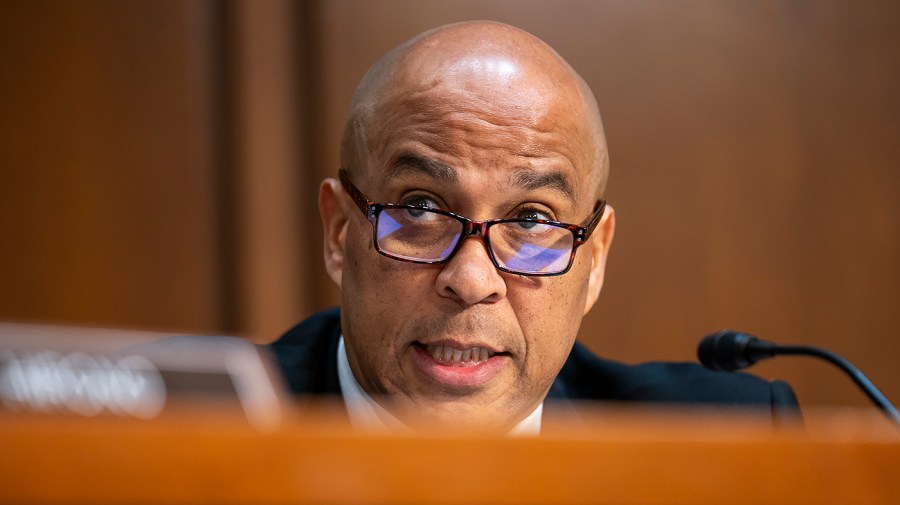
Democratic Sen. Cory Booker (N.J.) and Democratic Reps. Steve Cohen (Tenn.), Steven Horsford (Nev.), Troy Carter (La.), Rashida Tlaib (Mich.), Shri Thanedar (Mich.), Bonnie Watson Coleman (N.J.), Jonathan Jackson (Ill.) and Hank Johnson (Ga.) signed the letter.

The White House did not immediately respond to The Hill’s request for comment on the letter.

Democratic lawmakers say statistics show nearly 9 in 10 Americans believe that marijuana should be legal for medical or recreational purposes.

The group of nine elected officials said Trump’s decision to reclassify marijuana from a Schedule 1 to Schedule 3 drug was impactful but noted that more could be done for inmates behind bars.

The Democratic lawmakers said, “rescheduling marijuana does not provide relief for anyone currently in federal prison from a marijuana conviction.”

“As president, you have a unique opportunity to use your constitutional authority and issue a categorical commutation to address this continuing injustice,” they wrote.

“Those convicted of marijuana offenses face disproportionately long sentences. Based on data from the United States Sentencing Commission, it is estimated that approximately 3,000 people are still federally incarcerated for marijuana trafficking offenses, with hundreds, perhaps thousands serving harsh mandatory minimum sentences of 5 years or longer,” they added.

Earlier this year, Trump pardoned one person convicted on marijuana charges and commuted the sentence for another inmate.

Last year, he also commuted the sentence of an inmate convicted of a marijuana-related offense.

Copyright 2026 Nexstar Media, Inc. All rights reserved. This material may not be published, broadcast, rewritten, or redistributed.

For the latest news, weather, sports, and streaming video, head to The Hill.
Comments
You must be logged in to comment.