yahoo Press
Norway Doubles Down on Oil and Gas as Europe Scrambles for Supply
Images
1 / 5
2 / 5

3 / 5

4 / 5
5 / 5
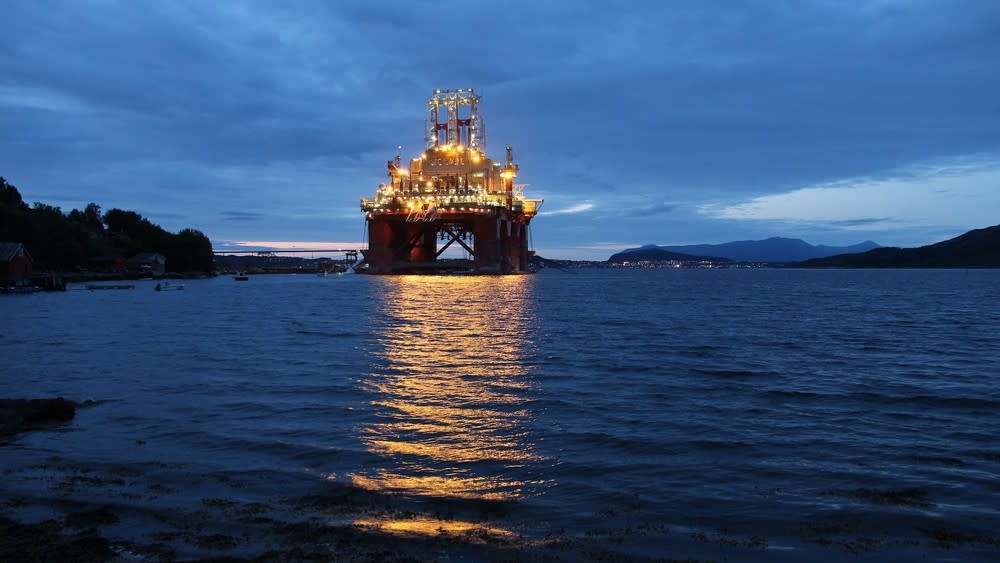
Norway, well known for its oil and gas production, has ramped up its fossil fuel output in recent weeks to fill the gap following the closure of the Strait of Hormuz and the ongoing energy trade disruptions. While some countries are grateful to Norway for helping alleviate oil and gas shortages, environmentalists have critiqued the move, suggesting that more of a focus must be placed on increasing the region’s renewable energy capacity.

Norway appears to have taken on the role of “Europe’s saviour” as it stepped in to replace Middle Eastern oil and gas imports following the closure of a key trade corridor connecting Asia and Europe. The Prime Minister of Norway’s Labour-run government, Jonas Gahr Støre, explained, “It’s [Iran] a war that appears to have no plan… In such unpredictable times, Norway needs to be reliable.”

Norway previously increased its fossil fuel output following the Russian invasion of Ukraine in 2022, as several European governments stopped purchasing oil and gas from Russia and, instead, looked to Norway to fill the gap. Norway has since become Europe’s largest pipeline gas supplier following the imposition of strict sanctions on Russian energy. Now, an estimated 90 to 95 percent of Norway’s oil goes to Europe, while the EU attains around one-third of its gas imports from Oslo.

However, Norway is close to reaching its maximum output, meaning that it cannot increase production from existing projects much further. Norway’s oil output is expected to decrease after 2030 unless it develops new projects. Therefore, if it hopes to boost output, Norway must invest in new exploration activities, a move that environmentalists are staunchly against.

Norway’s Energy Minister Terje Aasland stated in March, “Our focus is to be a stable, long and predictable supplier of energy to the European market.” The stance appears to be the same across most of the political spectrum, with most politicians seeing Norway’s oil and gas production as key to ensuring Europe’s energy security, particularly during a time of geopolitical turmoil, which has driven up energy prices significantly.

Following over two months of severe energy trade restrictions due to the ongoing Iran War, Aasland has doubled down on his comments about Norway as a major energy provider. “We will develop, not dismantle, activity on our continental shelf,” Aasland recently stated. In May, Aasland announced plans to reopen three gas fields – Albuskjell, Vest Ekofisk and Tommeliten Gamma – in the North Sea, off Norway’s southern coast, by the end of 2028, almost three decades after their closure.

The government hopes that reopening the fields will help fill the gap left by ongoing sanctions on Russian energy and the Middle East trade disruption. The reopening of the fields is expected to maintain Norway’s gas and oil production at around the output recorded in 2025.

“Norwegian offshore production plays an important role in ensuring energy security in Europe… The world, and Europe, will have a need for oil and gas for decades to come, and it is crucial that Norway continues to develop its continental shelf to remain a reliable and long-term supplier … and (with) a high level of exploration activity,” stated Aasland. “We have a responsibility. Our focus is very clear,” Aasland said about Norway’s role in providing energy to Europe.

Meanwhile, Ola Morten Aanestad, the Press Spokesperson of Norway’s state-owned oil firm Equinor, said the company plans to invest $6 billion a year up to 2035 to help it avoid a decline in output. Aanestad highlighted plans for “more drilling … a lot of new development, more pipelines … maybe smaller fields developing, but still important.”

Norway pumped 2.31 million barrels of oil equivalent per day in the first quarter of the year, according to its latest financial results, nearly 9 percent more than in the same period last year. In mid-May, Norway's government revised its earnings forecast upwards for oil and gas production this year, from $60 billion to $79 billion, citing higher global energy prices.

However, Norway’s Socialist Left party does not agree with the government’s commitment to maintaining oil and gas output. The deputy leader and environment spokesperson for the party, Lars Haltbrekken, said, “It shows that the government is once again blatantly ignoring environmental advice from its own experts. All the talk about responsible oil extraction is nothing but nonsense. It’s greenwashing through and through, with vulnerable and important natural areas being put at risk with full awareness.

While some view Norway’s plans for maintaining or increasing oil and gas output as key to ensuring Europe’s energy security, others see the government’s ongoing support for fossil fuels in a time of global crisis as “greenwashing’. While Norway is clearly filling a gap and providing European powers with a more stable and geopolitically certain oil and gas supply, environmentalists worry that plans to maintain high output beyond 2030 could reduce the urgency to achieve a green transition.

By Felicity Bradstock for Oilprice.com

More Top Reads From Oilprice.com

UK Adds New Tax Pressure as Energy Security Concerns Grow

Indonesia Tightens Grip on Key Commodity Exports

Three Supertankers Carrying 6 Million Barrels Exit Strait of Hormuz

Oilprice Intelligence brings you the signals before they become front-page news. This is the same expert analysis read by veteran traders and political advisors. Get it free, twice a week, and you'll always know why the market is moving before everyone else.

You get the geopolitical intelligence, the hidden inventory data, and the market whispers that move billions - and we'll send you $389 in premium energy intelligence, on us, just for subscribing. Join 400,000+ readers today. Get access immediately by clicking here.
Comments
You must be logged in to comment.