bbc Press
King Charles III visits victims of Golders Green stabbings
Images
1 / 11

2 / 11
3 / 11
4 / 11
5 / 11
6 / 11
7 / 11
8 / 11
9 / 11

10 / 11
11 / 11
King Charles III has visited Golders Green to meet the victims of last month's stabbings in the neighbourhood, in a show of support for the Jewish community, and spoke of his concerns about rising antisemitism.

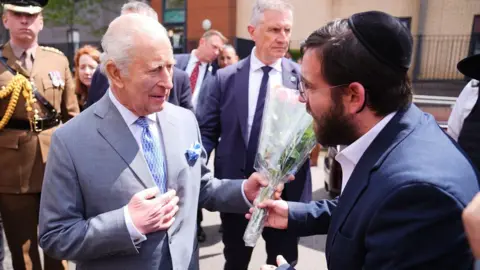
He visited a Jewish Care charity centre to meet victims Shloime Rand, 34, and 76-year-old Moshe Shine, also known as Norman Shine.

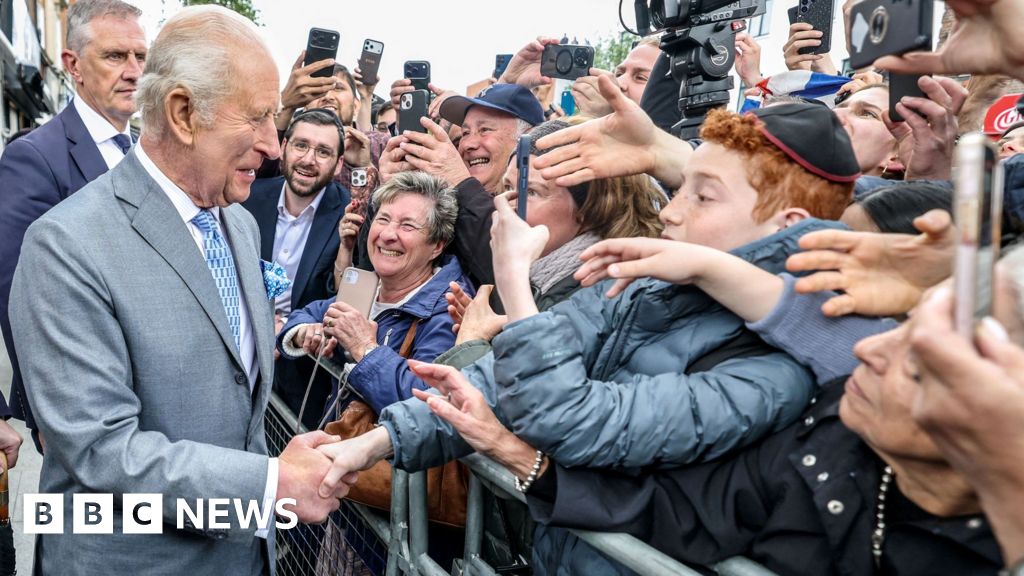
Outside, the King greeted crowds of well-wishers, commenting to one man that "it's a dangerous world isn't it?"

He also met chief rabbi Sir Ephraim Mirvis, who said the royal visit to north London was "appreciated enormously".

Sir Ephraim said: "Our Jewish community is simply overwhelmed. It's an enormous privilege and everyone is saying exactly the same thing - what an amazing day but what a sad day.

"So incredible that the King has made this gesture and so very sad that the reason for his coming is because of a  terrorist action here on the streets of Golders Green."

Shine, who was stabbed in the neck in the April attack, described the King as "inspiring".

"He was very concerned. He didn't let go of my hand, I mean it was amazing, he is the King but I felt a genuine warmth and concern."

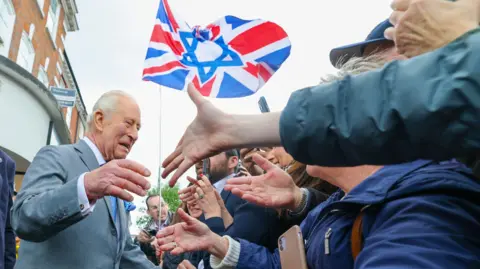
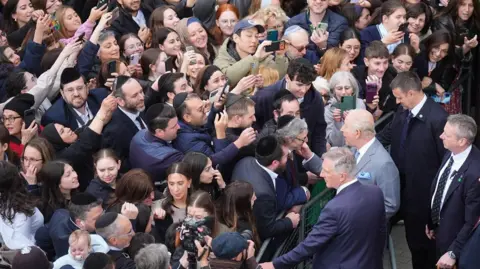
After meeting the victims, the King greeted the crowds gathered outside the charity centre on Golders Green Road who chanted "long live the King".

He said to some waiting: "I hope I haven't disrupted your normal activities too much."

Some said a special Jewish blessing recited on seeing a King.

Shaking hands with a man who turned 100 on Thursday, the King said: "I hope they give you a good celebration, and I hope you get a card from me."

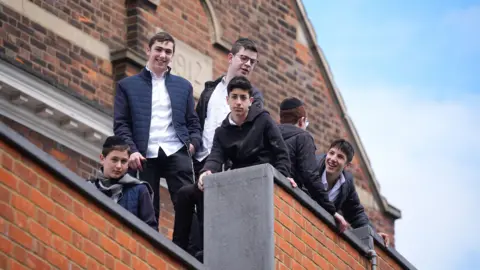
The monarch was then presented with a loaf of traditional Challah bread outside Grodz bakery on the high street, and spoke to children from a local primary school.

While at the Jewish Care charity centre, the King also met members of the first response medical and security teams who were on the scene following the stabbings and when ambulances from a Jewish charity, Hatzola, were set alight.

The King also spoke to members of the Jewish community volunteer group Shomrim, who were involved in responding to the stabbings on 29 April.

Gary Ost, from Shomrim, said: "He raised his concerns that he has regarding the rise in antisemitism, especially locally in the last few weeks.

"This is a strong message for each and every one of us; we feel that we are not alone here."

There have been a series of arson attacks against Jewish community buildings including synagogues. Police are investigating to see if there is a possible Iranian link.

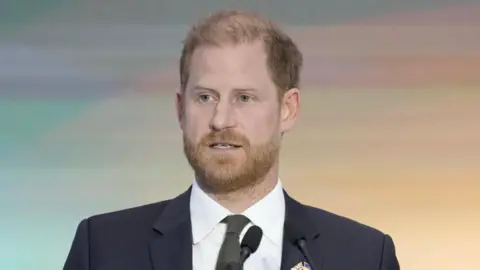
Prince Harry wrote in the New Statesman about a "deeply troubling" rise in antisemitism in the UK, which he said had led to "lethal violence" against the Jewish community.

In relation to the stabbings of 29 April, Essa Suleiman, 45, appeared in court on 1 May accused of two counts of attempted murder.

Listen to the best of BBC Radio London on Sounds and follow BBC London on Facebook, X and Instagram. Send your story ideas to hello.bbclondon@bbc.co.uk

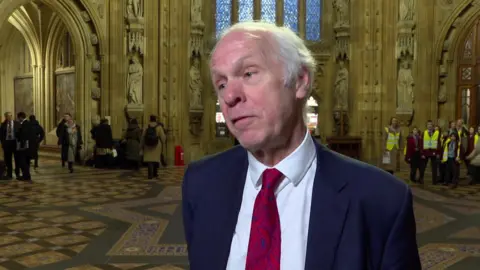
Sir Nic Dakin was held at Buckingham Palace as King Charles III delivered his speech in parliament.

The Duke of Sussex says "legitimate protest" is important but people must be more "clear" about where they are aiming their anger.

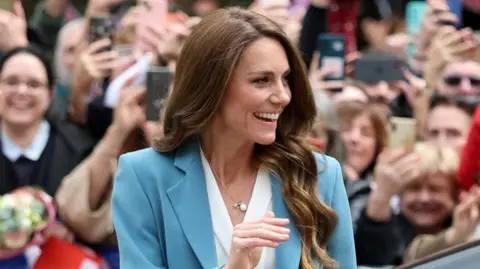
The Princess of Wales travels to Reggio Emilia, to learn about its approach to early years education.

BBC Chief Political Correspondent Henry Zeffman explains what is next for the government after the King's Speech.

The PM faces continuing pressure to stand down after bruising election results last week.
Comments
You must be logged in to comment.