bbc Press
'I nearly died after buying weight loss jab from friend of friend'
Images
1 / 5

2 / 5
3 / 5
4 / 5
5 / 5
A woman who nearly died after injecting herself with a weight loss drug she had bought from a "friend of a friend" is warning others of the potential dangers of unregulated jabs.

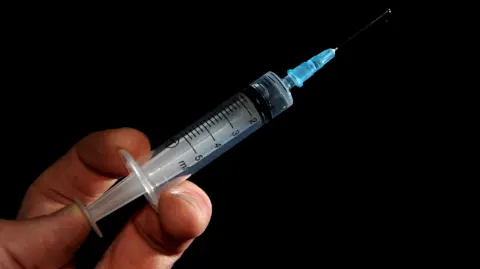
Chloe (not her real name), from Liverpool, ended up in intensive care and was off work for three months after just one dose of a pen.

Campaign group Save Face said some black market "skinny jabs" had been shown to contain windscreen wash and want the law to be more strictly enforced on illegal sellers.

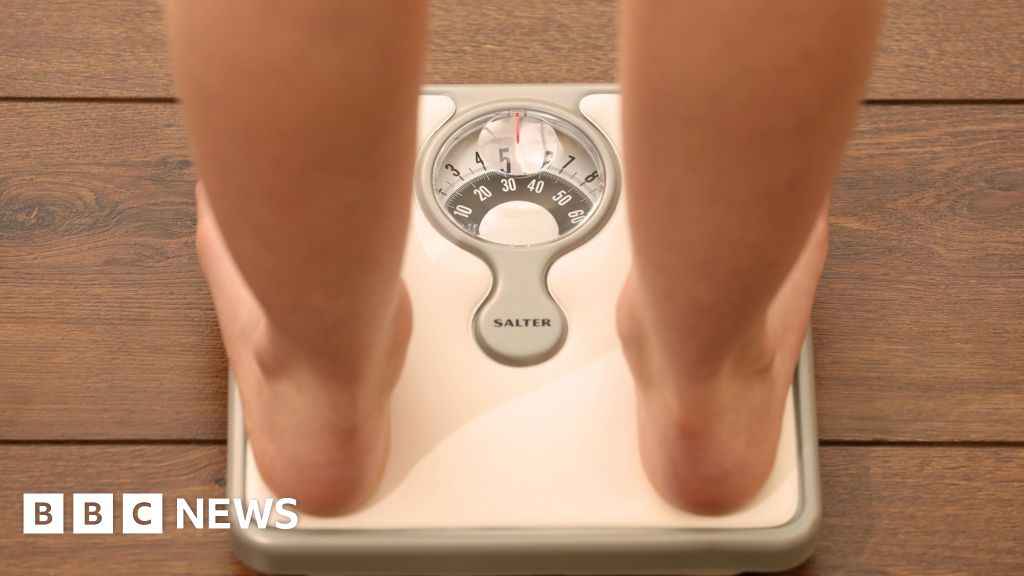
Chloe is a dress size eight – nowhere near the weight these injection were intended for. But she has an eating disorder, and said many of her friends were already getting them on the black market.

I did at one point think "I'm dying, I'm dying," said Chloe, who fell ill after her first injection.

"I collapsed in A&E. They took me straight into resus and I was there for about 18 hours.

"It's easy to get hold of really if you know the right person. You can see it everywhere, wherever you go people are talking about it," she said.

Since their introduction to the UK in 2023 as an obesity treatment, GLP-1 weight loss drugs like Wegovy and Mounjaro have rocketed in popularity.

They mimic a gut hormone which tell the brain the stomach is full. People taking them lose their appetite, particularly for fatty food.

The result is dramatic weight loss. Clinical studies have shown that patients can lose more than 20% of their body weight in a year and a half.

The injections are intended to treat obesity, but social media is full of adverts for "snatched" beach-ready bodies – aimed at mainly women who want to lose weight for special occasions.

In this country you can only legally buy GLP-1s if you have a BMI of more than 30, which is classified as obese. They can only be bought from a pharmacist with a prescription, and checks need to be carried out.

So people under that limit end up getting them from illegal sellers – often beauticians.

Chloe admits that she tried several beauticians, who turned her down because she was not overweight.

"As I've always said, it's no one else's fault but mine – I was the one who wanted it and I was the one who was determined to get it," she said.

She paid a heavy price. Within hours of her first dose she was vomiting uncontrollably and was unable to stop for days.

"There was that much of it, it burnt my stomach, my osophagus. It even burnt my nose because it was coming out of the top of my nose as well," she said.

Chloe is just one of several people in the UK who have ended up in hospital after taking "skinny jabs".

Last May, Karen McGonigal from Salford collapsed and died.

Her daughters said it was days after being injected with a £20 weight loss jab in a beauty salon, although the official cause of death hasn't yet been announced.

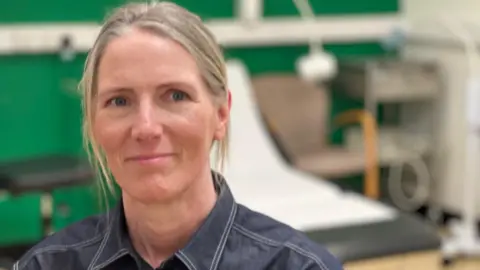
Liverpool GP partner and obesity expert Nicki Mazey said the trend was becoming increasingly worrying.

"It's not safe. I'm aware that people have ended up buying steroids instead of Mounjaro. I'm also aware that some people are sharing pens, which is a huge infection risk for HIV and hepatitis," she said.

She said part of the problem was that people who could theoretically buy them legally were unable to afford them. Doses can cost up to £300 a month.

Both Mounjaro and Wegovy are available on the NHS but the criteria is currently very strict. In theory under NICE guidelines it can be given to people with a BMI of 35 or over and one related health condition (for Mounjaro) or a BMI of 30 and over with one related health condition (for Wegovy). The criteria for patients from some ethnic minorities is slightly lower as NICE judged that they were at higher risk for weight-related diseases.

NICE calculated that for Mounjaro alone 3.4 million people would qualify under these criteria. Modelling by the NHS concluded that this would cost billions of pounds a year with a high of £3.9 billion at the end of the second year.

The NHS decided that this cost was unsustainable and restricted it initially to patients with a BMI of 40 and four related health conditions from a list of five (37.5 BMI for some groups).  In June the BMI requirement will go down to 35 but patients will still need the four health conditions.

Dr Mazey said she had even seen people with a BMI of 100 who had been unable to obtain the drugs on the NHS because they did not have all four related health conditions, and that she was having to regularly turn down patients who would benefit.

But she warned against buying cheaper drugs illegally, even if it turned out to be genuine.

"These pens have to be stored in certain temperatures. They can't be out for more than 30 days (once they've been opened)," she said.

The campaign group Save Face said the people selling these drugs illegally were largely getting away with it.

When these people are buying products from places like China and Korea and importing them, they literally have no idea what's in them" said director and founder Ashton Collins.

"In some cases they have no trace of the GLP-1 peptide in them. In some cases they have things like windscreen wash."

They want the law to be more tightly enforced.

"We need to see the regulators, the police, the MHRA (the government's Medicines and Healthcare products Regulatory Agency) really clamping down on these people, making real examples and punishing these people with the full force of the law," she added.

Chloe was off work for more than three months. Because she's got type 1 diabetes, the drug caused complications which may have led to long term liver damage.

She said the episode had an impact on the whole family, who worry that she may do something similar again.

"When I was awake, when I was thinking 'am I going to die',  I was thinking, 'my kids, my kids, 'my husband'. I saw the devastation that it caused," she said.

"Just don't do it. It's not worth it. It's not doing it."

If you, or someone you know, have been affected by eating disorders, you can find help and support on BBC Action Line.

Listen to the best of BBC Radio Merseyside on Sounds and follow BBC Merseyside on Facebook, X, and Instagram. You can also send story ideas via Whatsapp to 0808 100 2230.
Comments
You must be logged in to comment.