yahoo Press
Private capital has lost its Spirit for airlines, but not for airplanes
Images

1 / 5
2 / 5

3 / 5

4 / 5
5 / 5
Rebecca Noble/Getty Images

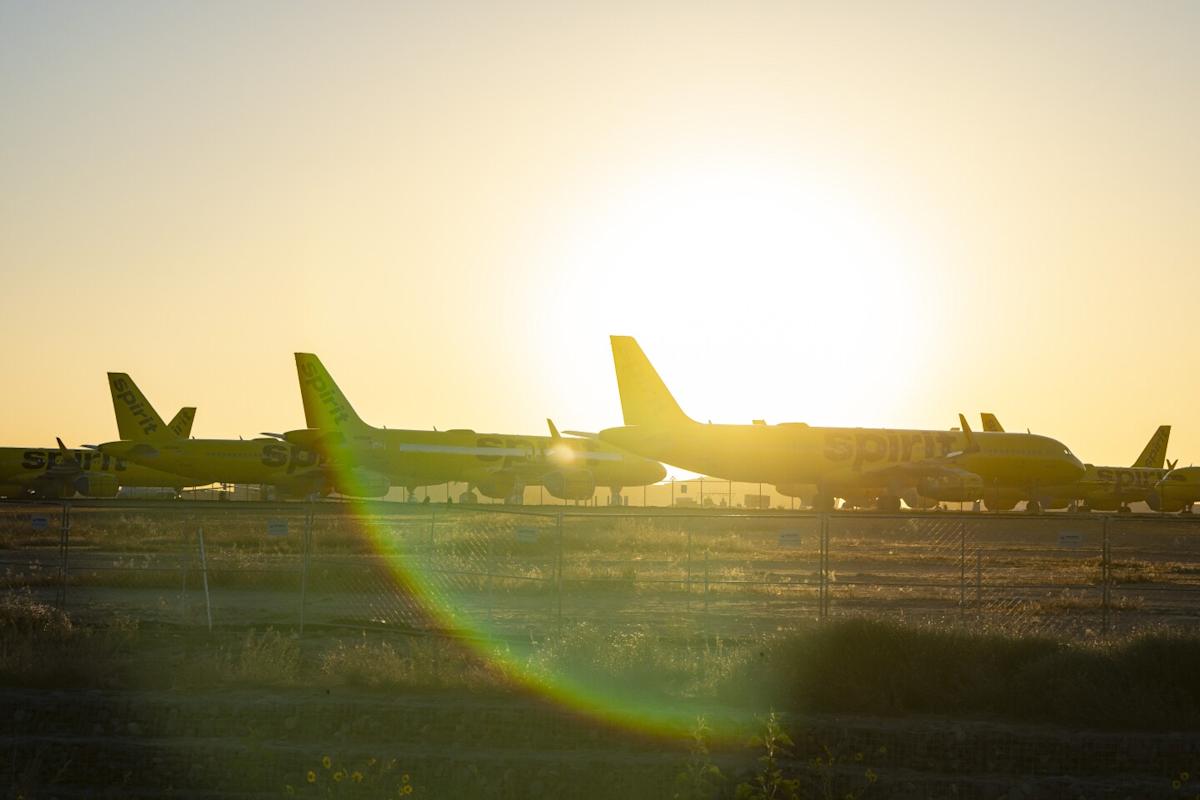
On the morning of May 2, Spirit Airlines left travelers with a message: All flights were canceled, permanently. The airline was shutting down, and neither the government nor private capital rushed in to save it.

Roughly 50,000 passengers were stranded. Some 17,000 employees lost their jobs. A one-time industry maverick with bargain-basement fares—and fees on almost everything—was gone.

After two bankruptcies in 18 months and one failed plea for a government bailout, Spirit illustrated a divide reshaping aviation finance: Investors will pour billions into aircraft, engines and airport slots, just not into the airlines that fly them.

“Underwriting an airline with a high degree of confidence is challenging—for anybody,” said Joe McConnell, deputy co-chief investment officer at Castlelake, the aviation-focused investment manager owned by Brookfield. “I don’t care how smart you are, how many airlines you’ve run in your life.”

Spirit first filed for Chapter 11 protection in November 2024, emerged from bankruptcy in March 2025, and then lost more than $250 million in roughly four months before filing again in August. Its restructuring plan would have cut debt from $7.4 billion to about $2.1 billion.

Then the Iran war happened.

“You could be sitting here three months ago and say, ‘I got it nailed,’” McConnell said. “Then fuel prices doubled and everything changed.”

Spirit’s lead bankruptcy lawyer, Marshall Huebner of Davis Polk, walked Judge Sean Lane through the math in the White Plains, NY, courtroom.

Jet fuel prices had roughly doubled in weeks after US and Israeli strikes on Iran in late February, to $4.51 a gallon from Spirit’s restructuring assumption of $2.24.

The incremental cost in March and April alone came to about $100 million, which “engulfed Spirit entirely,” Huebner said.

After the federal rescue collapsed, lenders declined to fund another reorganization.

But just four weeks earlier, on April 8, a very different aviation transaction had closed in Tokyo.

Sumitomo, its affiliate SMBC Aviation Capital, Apollo Global Management and Brookfield completed the roughly $28 billion take-private of Air Lease Corp., which owns and manages about 500 aircraft with more than 200 on order, and has more than 100 airline customers.

Spirit scrambled to find $500 million to keep flying. But private capital had just paid more than 50 times that amount for a company that owned airplanes.

Two rooms. One asset class. Opposite verdicts.

The risky business

A late-April plea to Washington produced cabinet-level talks and a proposed $500 million emergency loan. The rescue died on May 1, despite President Donald Trump saying the carrier had “some good aircrafts, some good assets” and could be sold “for a profit” once oil came down.

Spirit’s capital structure was a significant impediment to its rescue. Secured lenders, including Citadel, Cyrus Capital Partners and Ares Management, stood ahead of others to get paid on the airline’s aircraft, engines and loyalty assets. With the collateral already spoken for, that leaves new money with less protection if the turnaround failed.

One key piece of debt Spirit had to address was its 8% senior secured notes, which were originally collateralized against the intellectual property of its loyalty program, Free Spirit; its brand IP; and the Cayman Islands-domiciled special purpose vehicles that held them.

But its loyalty program lacked the scale and credit-card economics that make larger airlines’ programs lucrative, market participants said. Big carriers generate significant cash by selling miles to banks, which use them to reward credit-card customers.

In March 2025, these notes were replaced with $840 million of new notes due 2030, with liens extending to runway slots at New York’s LaGuardia Airport, certain engines and spare parts.

For lenders, liquidation offered a cleaner answer than another turnaround. They could just sell the airplanes.

Spirit’s 28 A320-family aircraft and 18 spare engines were valued at about $1.3 billion. Parts inventory accounted for another $167 million. LaGuardia slots and gates were worth $86.7 million. Real estate added $154 million. Total recoverable hard assets stood near $1.7 billion.

“If you were sitting in business school listing out the five or 10 things that make a steady business, the airlines have pretty much the opposite of all those things,” McConnell said. “Low barriers to entry. Extremely competitive. Short-term, uncontracted revenues. Volatile input costs.”

The pricing dynamics are just as punishing, added Jim Corridore, a senior PitchBook analyst who spent two decades as a public-equity aerospace analyst, explaining that Spirit’s death is actually good for remaining investors in the sector.

“If you have a lemonade stand for $2 a cup, and the person across the street opens up a lemonade stand for $1 a cup, you have to lower your price, otherwise everyone goes across the street,” Corridore said. “Spirit acted as a disruptor. Now [larger airlines] don’t have to do that anymore.”

The safer trade

Around the corner from a bad business sits an investable one, one which Castlelake has leaned into with the formation of Merit AirFinance, a dedicated aviation lending arm, in 2025.

In that world, an airplane is not just transportation equipment. Its value lives in its collateral, cash flow, optionality and scarcity, all in one package.

“We aim to have asset coverage in every investment we make in aviation,” Castlelake’s McConnell said. “Airline operating profits go up and down—but we believe aviation asset values have been shown to be relatively stable and resilient.”

Apollo runs a similar pattern. Its aircraft lending business PK AirFinance has issued about $2.8 billion of aviation-loan ABS since July 2024, including an $827 million deal backed by 114 senior aviation loans that earned Fitch’s first AAA rating for a commercial aircraft-loan ABS in more than two decades.

Apollo also took Atlas Air Worldwide private for $5.2 billion in March 2023. Atlas has long-term cargo contracts with Amazon, MSC and DHL, making it look less like a passenger airline and more like logistics infrastructure.

Apollo did not respond to requests for comment.

The aerospace roll-up

Another more reliable way to bet on the airline industry is by buying into the supply chain.

“Definitely components, logistics, software,” said Chris Anthony, a partner at Debevoise & Plimpton who advises sponsors on industrial deals. “Stuff that might service the airline industry, rather than stuff that needs the degree of capital expenditure that you would need to actually run an airline.”

Clayton, Dubilier & Rice and Greenbriar Equity combined Whitcraft and Carlyle’s Paradigm Precision into Pursuit Aerospace in 2023. Warburg Pincus and Berkshire Partners took Triumph Group private for $2.85 billion last year. KKR sold Novaria to Arcline this past April for $2.2 billion. Platinum Equity bought Héroux-Devtek, the world’s third-largest landing-gear maker. Boeing sold Jeppesen, ForeFlight and AerData to Thoma Bravo for $10.55 billion.

PE aerospace and defense deal value hit $55.6 billion in 2025, an all-time record and 19% higher than the prior year, according to PitchBook. Deal count in Q1 2026 more than doubled from a year ago.

The appeal is visibility.

“You’re taking orders 12, 18 months, sometimes longer in advance,” Anthony said. “That can be an attractive asset for PE, in terms of modeling out cash flows that are already booked to some degree.”

This article originally appeared on PitchBook News
Comments
You must be logged in to comment.