yahoo Press
30-mile-high clouds of acid on Venus are made by the largest 'hydraulic jump' in the solar system
Images
1 / 8
2 / 8

3 / 8

4 / 8
5 / 8

6 / 8

7 / 8

8 / 8
When you buy through links on our articles, Future and its syndication partners may earn a commission.

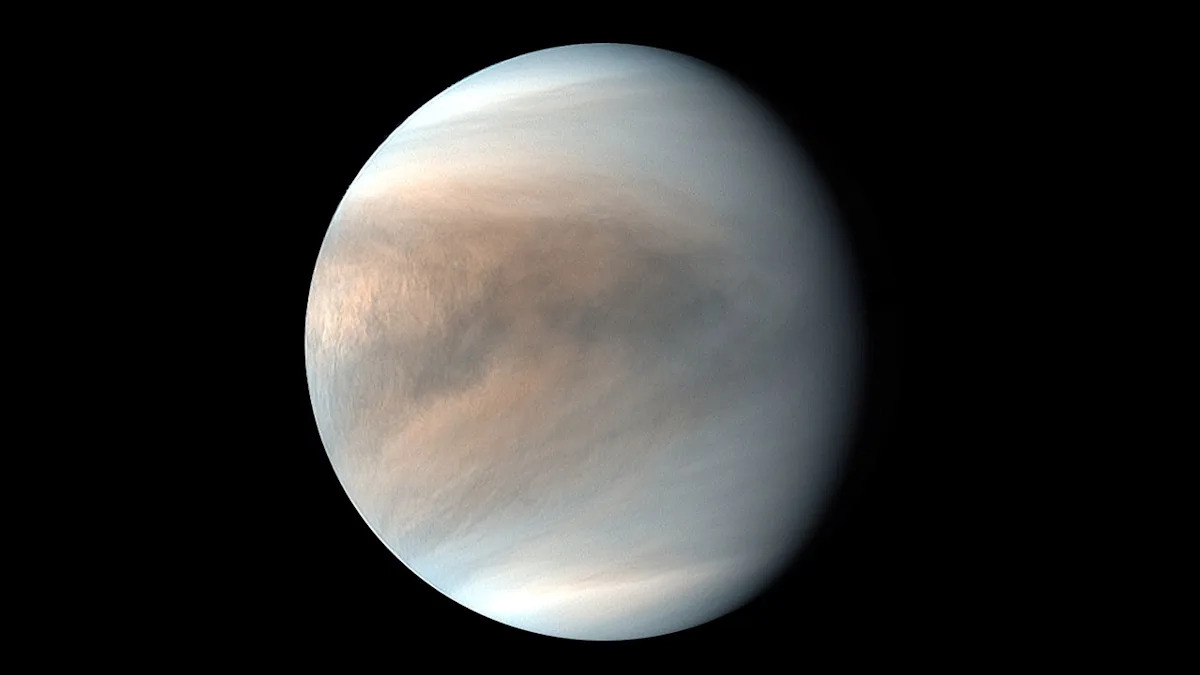
A monstrous bank of cloud 3,700 miles (6,000 kilometers) long that sweeps around Venus every few days is being generated by rising sulfuric acid vapor pushed high into the atmosphere by what is essentially the same phenomenon that describes how water from a running tap spreads out in the basin of your kitchen sink.

In 2016, the Japanese Aerospace Exploration Agency (JAXA)'s Akatsuki mission to Venus discovered the bank of clouds some 31 miles (50 km) up in Venus' dense Venus' dense atmosphere. The weather system is aligned with the planet's equator, but scientists have been unable to explain its immense size, velocity and its noticeably sharp leading edge.

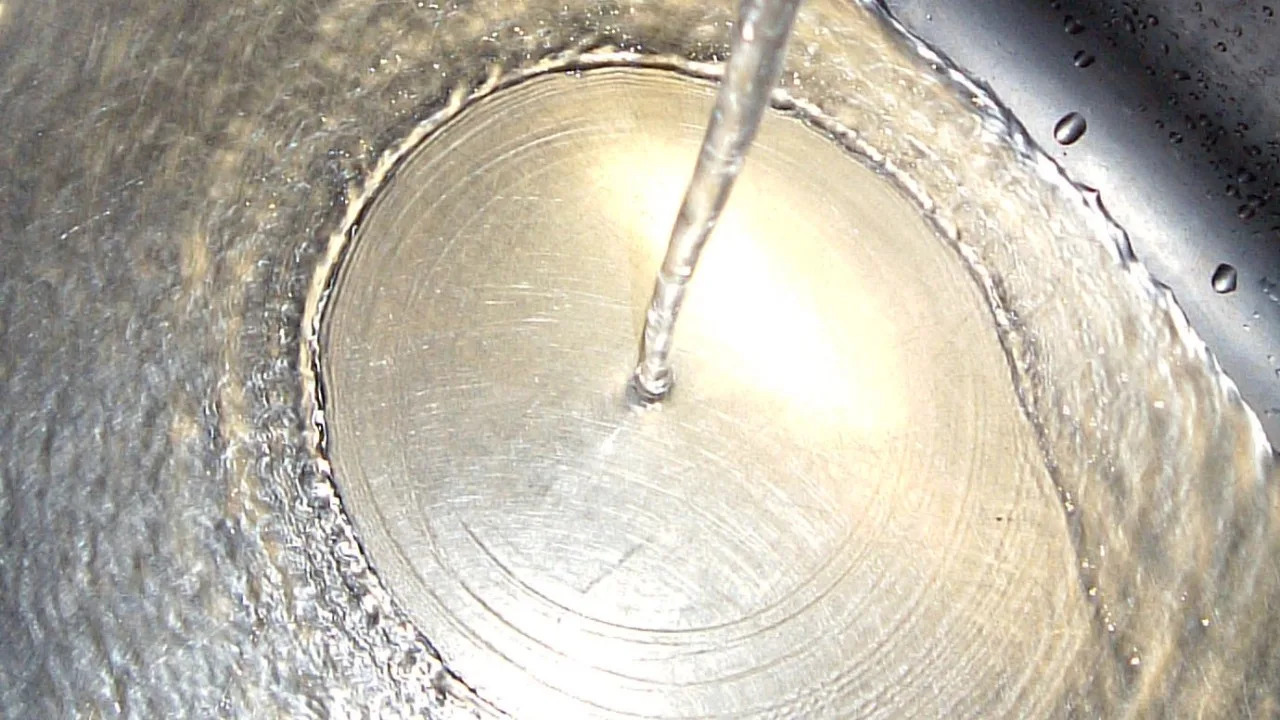
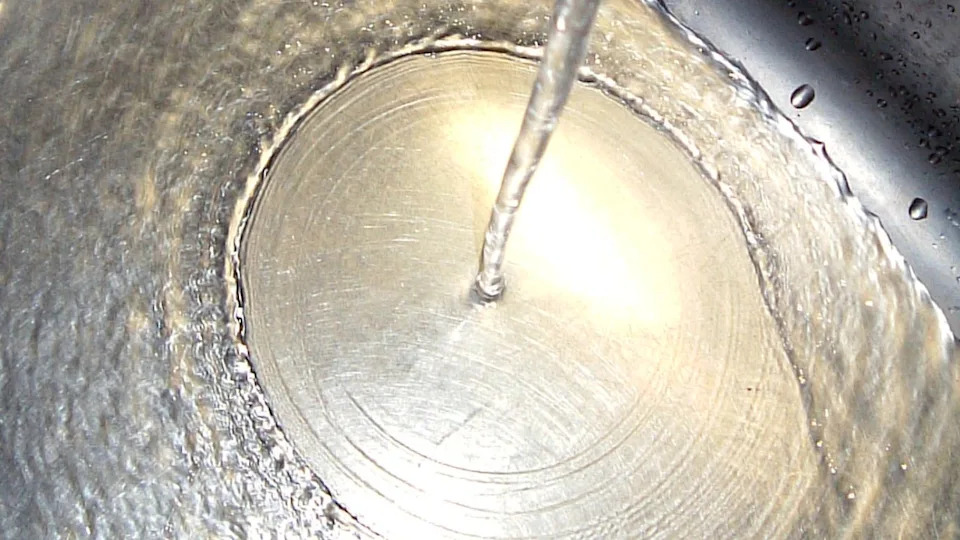
The mystery has, however, only lasted ten years. By creating mathematical models that describe the dynamical flow of gas and how pockets of gas rise, an international team of astronomers has now worked out the source of this huge atmospheric phenomenon. The answer is something called a "hydraulic jump," which occurs when a gas or fluid that is shallow but fast moving suddenly slows while becoming deeper. An everyday example is water flowing out from a tap into the basin of your kitchen sink; where it strikes the bottom of the basin, it is initially shallow but fast moving, but as the water spreads out it rapidly becomes deep and slower.

A similar thing happens in Venus's atmosphere, which is made almost entirely of carbon dioxide along with a small amount of nitrogen and trace amounts of other gases including sulfur dioxide, which can form clouds. Not too high above Venus's scorched surface there propagates an eastward-moving atmospheric wave. It's a planetary wave, meaning that it spans thousands of kilometers and is focused on the planet's equatorial region. (Venus itself has a diameter of 7,520 miles/ 12,104 kilometers, so a 3,700-mile/6,000-kilometer-wide wave is quite significant.)

On Earth we would call such a wave a 'Kelvin wave', and they can occur in the ocean as well as the atmosphere. Of course, with a surface temperature in excess of 860 degrees Fahrenheit (460 degrees Celsius), Venus has no oceans and its Kelvin wave is purely in its atmosphere.

When Venus's Kelvin wave slows, it instigates a hydraulic jump, and this allows a powerful updraft of sulfuric acid vapor to rise up to an altitude of about 31 miles (50 kilometers), where it condenses into a bank of sulfuric acid clouds of scarily enormous proportions. These clouds then start to trail behind the Kelvin wave that marks the leading edge of the cloud bank.

"We're now able to show that this cloud disruption is caused by the largest known hydraulic jump in the solar system," said study leader Takeshi Imamura, from the University of Tokyo, in a statement. "Our discovery of the hydraulic jump on Venus connecting a very large-scale horizontal process with a strong localized vertical wave is unexpected, as in fluid dynamics these are usually disconnected."

The discovery is the first time that a hydraulic jump has been found on a planet beyond Earth. So the fact that Venus's hydraulic jump behaves in unexpected ways should perhaps not be too surprising, and is a reminder that atmospheric phenomena on other planets can vary wildly from what we experience on our planet.

And Venus's atmosphere is very different to Earth's — rich in carbon dioxide, so oppressive as to create a crushing surface pressure of 92 bar and super-rotating around Venus, so that its atmosphere rotates around the planet in just four Earth days whereas the solid body of Venus takes 243 days to complete one rotation.

The discovery also plugs a gap in our understanding of Venus's dense atmosphere.

"Up until now, we used a global circulation model for Venus that is similar to Earth's, but this model doesn't include the hydraulic jump that we have now identified," said Imamura. "Our next step will be to test this discovery with a more inclusive climate model that includes other atmospheric processes. We will face some challenges due to the huge amount of processing power required to run such simulations. Even with modern supercomputers, it isn't easy."

The findings of Imamura's team were published on April 24 in the Journal of Geophysical Research — Planets.
Comments
You must be logged in to comment.