yahoo Press
Stocks wilt as oil forges higher; Iran ceasefire 'on life support'
Images
1 / 4
2 / 4

3 / 4

4 / 4
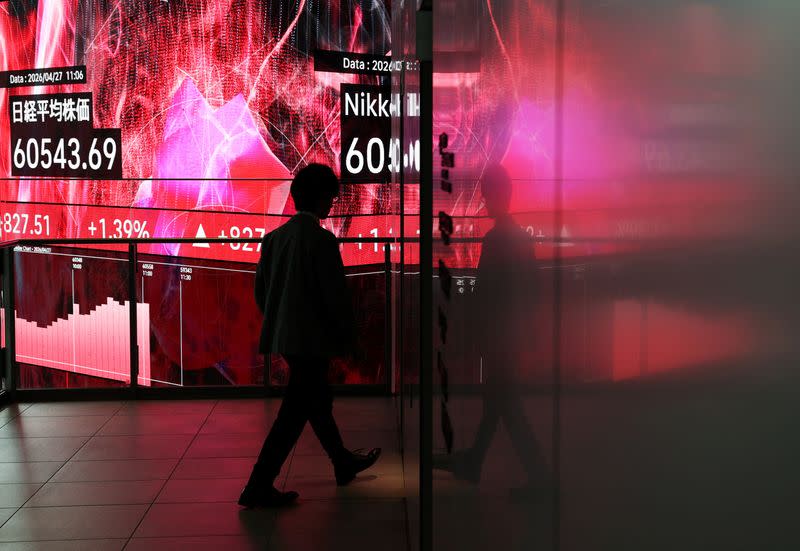
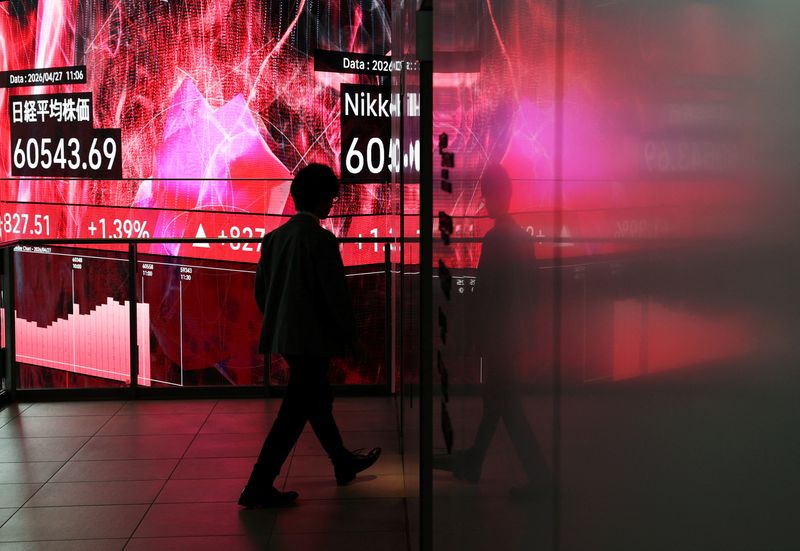
By Amanda Cooper and Tom Westbrook LONDON/SINGAPORE, May 12 (Reuters) - Oil gained for a third day on Tuesday and the dollar rose as hopes faded for a deal to get ships moving through the Strait of Hormuz, while a red-hot rally in chip stocks cooled and traders waited on U.S. inflation figures. U.S. President Donald Trump said the month-old ceasefire with Iran was "on life support" after Tehran's response to a U.S. plan to end the war made clear the sides were far apart. Brent crude futures were up almost 4% to about $108 a barrel. In Europe, the STOXX 600, which is still only 4% below late February's record high, was down 0.6%, while U.S. stock futures for the S&P 500 and Nasdaq were down 0.4% and 0.9%, respectively. TRUMP'S TRIP TO CHINA IN FOCUS The shine even came off the almost unstoppable KOSPI index in Seoul, which recoiled as it approached 8,000 points and dropped about 3.5%, pulling down other regional markets. [.KS] Deutsche Bank strategist Jim Reid said with U.S. and Iran appearing no closer to resolving their negotiation deadlock, Brent crude prices were extending the previous day's rally. "Markets are also pricing rising chances of lasting disruption, with 6-month Brent futures up 2.54% to $89.50 a barrel yesterday," he said. Markets are keeping a watchful eye on Trump's visit to China, which begins on Wednesday, with expectations low for either progress on Iran or on the trade front. "Investors should not expect sweeping agreements. A 'win' would mean no new tariffs or export controls, and perhaps small symbolic deals, such as agricultural purchases, aircraft orders, or signals on rare earths," said Daniel Casali, chief investment strategist at Evelyn Partners. "These may seem minor, but stability at the margin matters." APRIL INFLATION SPIKE EXPECTED IN U.S. DATA U.S. inflation data is due later on Tuesday, with the headline consumer price index seen posting a 3.7% year-on-year increase, after a 3.3% rise a month earlier. Any suggestion that the Federal Reserve may need to hike this year - rather than cut as investors had expected before the war - could rattle markets. Global bond yields have climbed, led by a selloff in gilts in response to the pressure building on Prime Minister Keir Starmer, who on Tuesday defied calls to resign. He told ministers he would "get on with governing" despite a "destabilising" 48 hours of growing calls to set out a timetable for his departure after heavy losses in local elections. UK gilt yields rose sharply on Tuesday. The yield on 30-year bonds hit 5.794%, its highest since 1998, according to LSEG data. Sterling was down 0.5% at $1.354, making it the worst-performing major currency against the dollar. Benchmark 10-year Treasury yields were up 2 bps at 4.43%. In the currency market, the dollar was on the front foot, rising 0.2% against the yen to 157.525. After meeting with Japanese Finance Minister Satsuki Katayama in Tokyo, U.S. Treasury Secretary Scott Bessent said on X that coordination with Japan was "constant and robust" in tackling undesirable, excessively volatile currency moves. The euro slipped 0.31% to $1.176 and the Australian dollar fell 0.34% to $0.7226. The Australian government rolled out its budget, which contained the biggest changes to investment taxes this century to help young people get into the housing market. (Additional reporting by Jihoon Lee in Seoul; Editing by John Mair, Christian Schmollinger and Alison Williams)
Comments
You must be logged in to comment.