yahoo Press
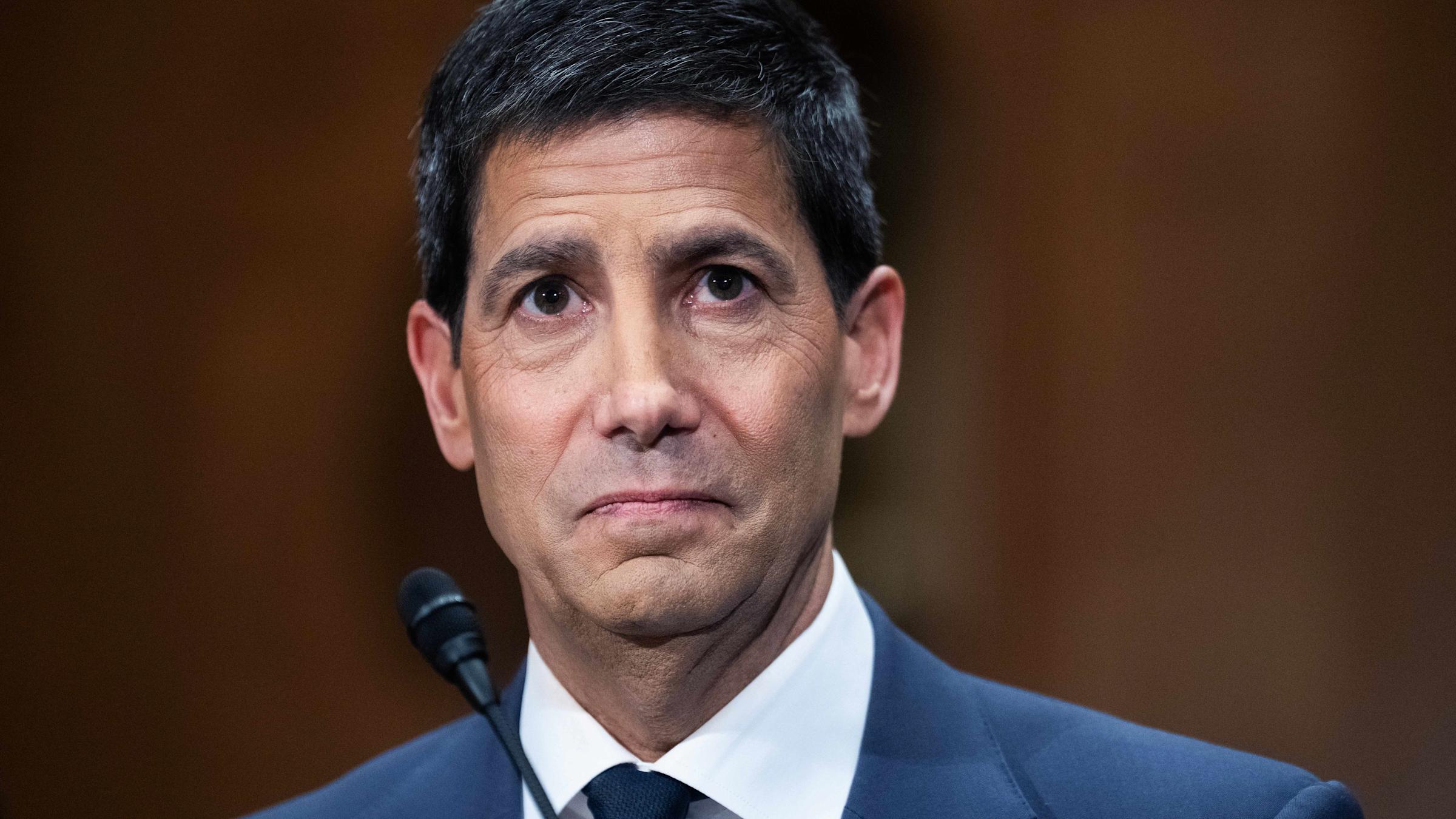
Senate set to vote on Kevin Warsh's nomination to Federal Reserve Board of Governors, ahead of Fed chair vote
Images
1 / 6
2 / 6

3 / 6

4 / 6

5 / 6
6 / 6
The US Senate is set to vote Tuesday on Kevin Warsh’s nomination to serve as a governor on the Federal Reserve Board, the first step in a two-step process that would make him the next chairman of the central bank.

The Senate would next vote on Wednesday to confirm Warsh as chair, just two days before current Fed Chair Jerome Powell’s term expires.

Warsh will take the seat of Fed Governor Stephen Miran, who was appointed to serve out the remaining term of former Governor Adriana Kugler. She departed the central bank last August, five months before her term ended, amid an ethics probe.

That seat is the only one scheduled to become vacant during the rest of President Trump’s term in office. Powell has opted to remain on the Fed board for an indeterminate period, breaking with the usual precedent for departing chairs. His term as governor is not up until January 2028.

Read more: Jerome Powell's 17 most memorable moments after leading the Federal Reserve for 8 eventful years

This leaves few avenues for Trump to name another appointee to the powerful board that sets interest rate policy.

It would take another early departure or a Supreme Court decision finding that Lisa Cook, a Biden appointee whom Trump sought to fire last year, cannot remain a Fed governor while the courts decide whether the president has the power to fire her. That outcome is seen as unlikely after the justices appeared skeptical of the administration’s position during oral arguments in January.

It has been a thorny path for Warsh’s confirmation. For months, questions swirled about whether he would be in place by the end of Powell’s term on May 15 after Republican Sen. Thom Tillis, a key member of the Senate banking committee, blocked his nomination from advancing until a Justice Department investigation into Powell was resolved. The Senate Banking Committee must vote in favor of the nominee before sending it to the full Senate.

US Attorney for the District of Columbia Jeanine Pirro opened the criminal probe in January over comments Powell made in testimony to Congress about the cost of renovations to the Fed’s headquarters in Washington. With Warsh’s confirmation coming down to the wire, Pirro dropped the investigation on April 24 and referred the matter to the Fed’s inspector general. Pirro warned that she would revisit the matter if the facts warranted, but Tillis said he was satisfied that the inquiry was fully closed, clearing the way for Warsh's confirmation.

In that charged climate, Warsh’s nomination has been mired in concerns about central bank independence. Trump spent the first year of his second term attacking Powell for not lowering interest rates enough and pledged that his next pick for Fed chair would be “someone who believes in lower interest rates, by a lot.”

Read more: How the Fed rate decision affects your bank accounts, loans, credit cards, and investments

When Powell was asked by Yahoo Finance at his last press conference whether he wants to stay on as a governor to serve as a check and balance on Fed independence, Powell replied, “I will stay until I feel it's appropriate for me to leave. And, yes, that is really what is driving this.”

Powell noted he wanted to see that things “calm down” and return to a “traditional model” of working within the committee to find consensus.

During his confirmation hearing, Warsh said Trump did not ask him to commit to lowering interest rates.

“The president never asked me to predetermine, commit, fix, decide on any interest rate decision, in any of our discussions, nor would I ever agree to do so,” Warsh said.

He called it “essential” that the Fed set interest rates independently, but added that the president expressing his views on monetary policy doesn’t threaten the central bank’s independence.

Warsh was at times critical of past and current Fed moves, saying the US economy is still dealing with ripples from a pandemic-driven spike in inflation and said the Fed made policy errors in 2021 and 2022 to address it.

He called for “regime change” and said the Fed should shrink its balance sheet and adopt a different inflation framework.

Warsh also told Senate lawmakers that he believes members of the Fed should speak less frequently, pull back forward guidance, and stop telegraphing what the central bank will do before interest rate meetings.

And he did not commit to holding a press conference after every policy meeting, a practice put in place by Powell that is closely watched by investors.

Warsh has experience at the central bank. Former President George W. Bush appointed him to serve as a governor from 2006 to 2011. He became former Fed Chair Ben Bernanke’s liaison to Wall Street during the chaos of the 2008 financial crisis. Before serving at the Fed, Warsh was special assistant to Bush for economic policy and an executive secretary at the National Economic Council, where he advised the president and senior administration officials on the economy.

Warsh has also worked in M&A at Morgan Stanley. He holds degrees in public policy from Stanford and in law from Harvard.

Jennifer Schonberger is a veteran financial journalist covering markets, the economy, and investing. At Yahoo Finance she covers the Federal Reserve, Congress, the White House, the Treasury, the SEC, the economy, cryptocurrencies, and the intersection of Washington policy with finance. Follow her on X @Jenniferisms and on Instagram.

Click here for political news related to business and money policies that will shape tomorrow's stock prices

Read the latest financial and business news from Yahoo Finance
Comments
You must be logged in to comment.