yahoo Press
Hassett brags that credit card spending is 'through the roof' — as delinquencies climb and farm bankruptcies jump 46%
Images
1 / 4
2 / 4

3 / 4

4 / 4
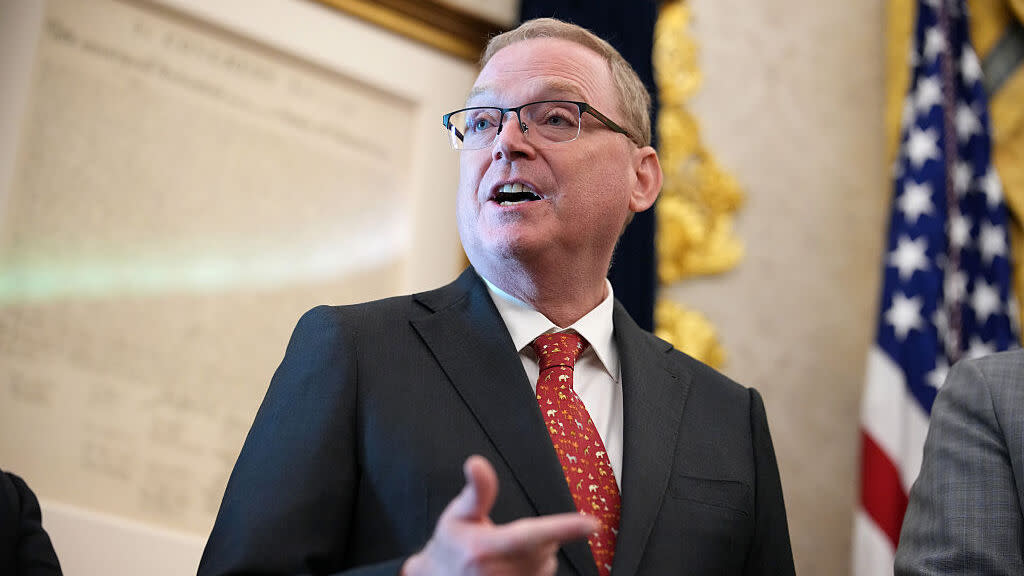
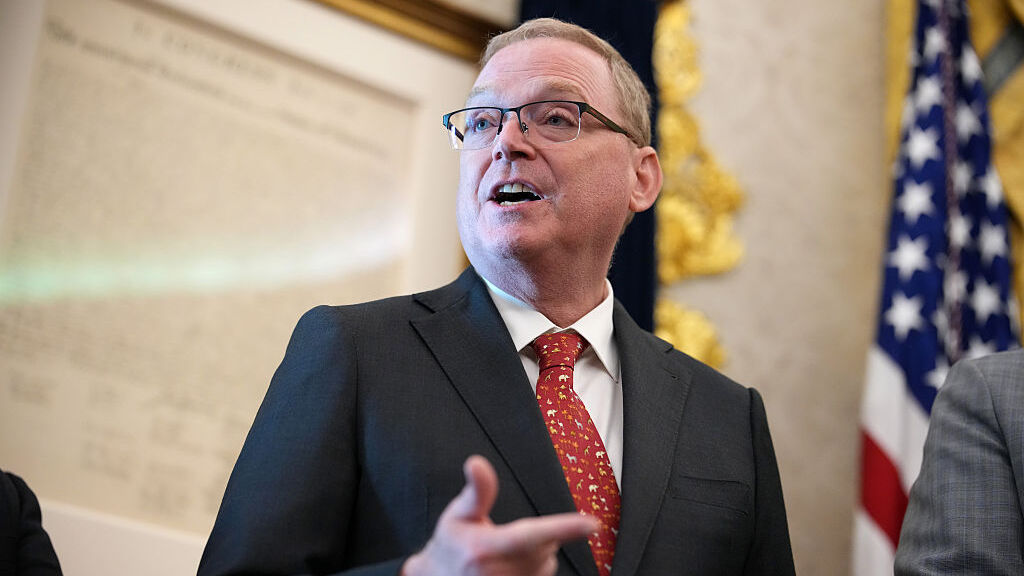
Depending on how you look at it, Americans' record-high spending could be considered good or bad. For White House National Economic Council Director Kevin Hassett, it's cause to celebrate.

"The consumer is really, really firing on all cylinders, just like the corporate sector," he told Fox Business News host Maria Bartiromo on "Mornings with Maria." (1)

Thanks to Jeff Bezos, you can now become a landlord for as little as $100 — and no, you don't have to deal with tenants or fix freezers. Here's how

Robert Kiyosaki says this 1 asset will surge 400% in a year and begs investors not to miss this ‘explosion’

Dave Ramsey warns nearly 50% of Americans are making 1 big Social Security mistake — here’s how to fix it ASAP

"Credit card spending is through the roof, [they're] spending more on gasoline ... but they're spending more on everything else, too."

The blowback from Hassett's interview came quickly, from political commentators to social media users.

One X user wrote (3), "Americans are spending more on gas because gas costs $4.54 a gallon. They're putting the rest on credit cards because their savings are gone. Kevin Hassett just accidentally described a debt crisis as a boom." Jon Favreau from Pod Save America noted that this messaging was so bad, Hassett may as well be a Democratic plant (2).

So is credit card spending really a sign of American prosperity and an improving jobs outlook, as Hassett claims, or is he off the mark? Here's a closer look at the numbers.

Hassett trumpeted the consumer expenditures as a direct result of President Donald Trump's policies, which he says have given Americans "so much more money in their pockets."

U.S. Treasury Secretary Scott Bessent, also in an interview with Bartiromo, said that 45% of Americans who filed their taxes this year received record refunds, and if they filed electronically, received it within 21 days. According to CNBC, the average refund (4) was $3,275 as of April 17, up around 11% from last year.

Hassett called out two tax deductions as helping people save more. First, the No Tax on Tips policy, which allows for up to a $25,000 deduction in tipped income. And, he said, a new tax break (6) on Social Security income helped millions of older Americans. Hassett claimed the average benefit for both breaks, which expire in 2028, was worth around $7,000. (7).

Meanwhile, Hassett added, unemployment is holding steady — 4.3% in April, unchanged from March, according to Bureau of Labor Statistics data (8).

"Nobody's really losing their job, nobody's being fired," Hassett said.

Read More: This $1B private real estate fund is now accessible to non-millionaires. Start investing with just $10

There's no question that Americans are increasing their debt levels. According to the Federal Reserve (9), in the fourth quarter of 2025:

Total household debt hit $18.8 trillion, up $191 billion from the third quarter.

Mortgage balances reached $13.17 trillion, up $98 billion.

HELOC balances hit $434 billion, up $11.6 billion.

Credit card balances grew to $1.28 trillion, up $44 billion.

Auto loan balances stood at $1.67 trillion, up $12 billion.

Student loan balances hit $1.66 trillion, up $11 billion.

But the Fed's Quarterly Report on Household Debt and Credit (10) suggests this outsize debt is not the result of average Americans having more money in their pockets.

Many Americans are putting things on credit but can't pay their debt off (11), as everyday expenses rise. Out of that $18.8 trillion in household debt, 4.8% was delinquent in December 2025. That's $900 billion in delinquent consumer loans. Early delinquencies were most pronounced in student loans and mortgages.

Serious delinquencies (90 days' late or more) on student loans are at 9.6% of balances, and the New York Fed's economic research advisor Wilbert van der Klaauw noted (12) that increasing mortgage delinquencies were “concentrated in lower-income areas and in areas with declining home prices."

Farmers are struggling as well. In 2025, they were taking out operating loans that were 30% higher than in 2024, according to the Federal Reserve Bank of Kansas City (13). A growing number of farmers were unable to keep up with costs.

Investigate Midwest (14) notes that 314 American farmers filed for Chapter 12 bankruptcies in 2025, up from 216 in 2024, a nearly 46% increase. Farmers in the Midwest and Southeast were hit particularly hard.

According to the latest Bureau of Labor Statistics data (8), there was a net gain of 115,000 jobs in April in healthcare, transportation, warehousing and retail trade.

However, more people were working part-time because they couldn't find full-time work or their hours were reduced. The number of those part-time workers grew to nearly 5 million in April (15) (an increase of 445,000 over March).

Meanwhile, as Business Insider reports, more than 100 companies — including Amazon, Citi, Nike and Verizon — have announced plans (16) to lay off staff globally in 2026. Many firms cite artificial intelligence as a reason to reduce their workforces (although overhiring during the pandemic may be a larger factor).

The federal workforce continues to shrink (8). Still, Hassett is hopeful about jobs in manufacturing, saying that foreign companies are building factories in the U.S., thanks to Trump.

He points to Novartis, which has announced (17) a $23-billion plan to construct a pharmaceutical manufacturing plant in North Carolina.

"Anybody who works in a factory is going to see a huge increase in the demand for their labor as the factories get set up," he said, claiming that 54,000 jobs have recently been created for construction workers.

Whether better news will shift the needle on America's consumer debt remains to be seen, but as the New York Times reported, even consumers who have six-figure incomes say their credit card balances are up because they can't manage monthly expenses (18).

Millionaires under 43 are reshaping investing — just 25% of their portfolios are in stocks. Here’s where their money is going

Taxes are going to change for retirees under Trump’s ‘big beautiful bill’ — here are 4 reasons you can’t afford to waste time

Robert Kiyosaki issues grim warning for baby boomers: many could be ‘wiped out’ and homeless ‘all over’ the country

Vanguard’s outlook on U.S. stocks is raising alarm bells for retirees. Here’s why and how to protect yourself

Join 250,000+ readers and get Moneywise’s best stories and exclusive interviews first — clear insights curated and delivered weekly. Subscribe now.

We rely only on vetted sources and credible third-party reporting. For details, see our ethics and guidelines.

YouTube (1),(2); X (3); CNBC (4); Scripps News (5); AARP (6); TurboTax (7); U.S. Bureau of Labor Statistics (8); Federal Reserve Bank of New York (9),(10),(12); Eye on Housing (11); Federal Reserve Bank of Kansas City (13); Investigate Midwest (14); Reuters (15); Business Insider (16); Novartis (17); The New York Times (18)

This article originally appeared on Moneywise.com under the title: Hassett brags that credit card spending is 'through the roof' — as delinquencies climb and farm bankruptcies jump 46%

This article provides information only and should not be construed as advice. It is provided without warranty of any kind.
Comments
You must be logged in to comment.