yahoo Press
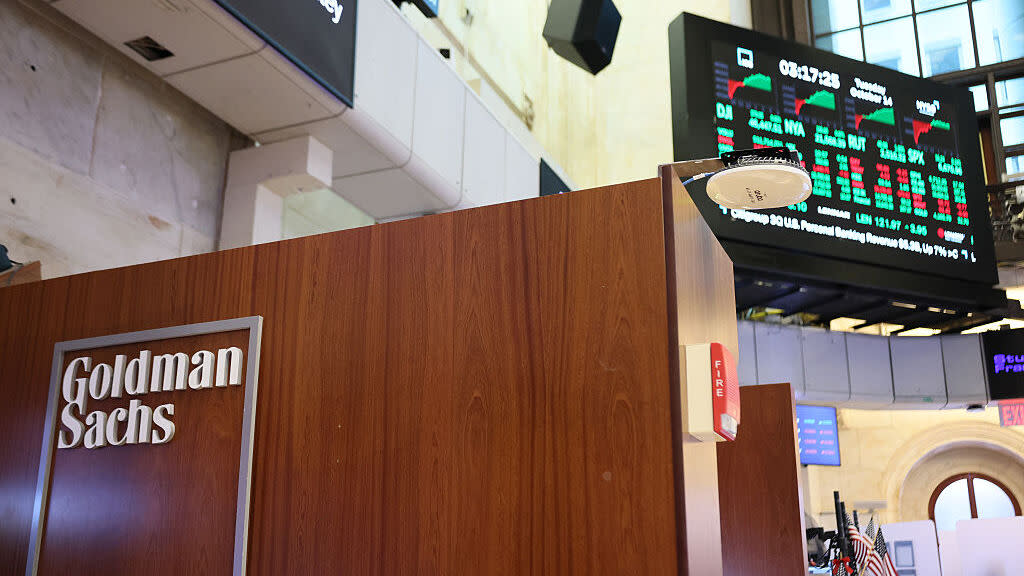
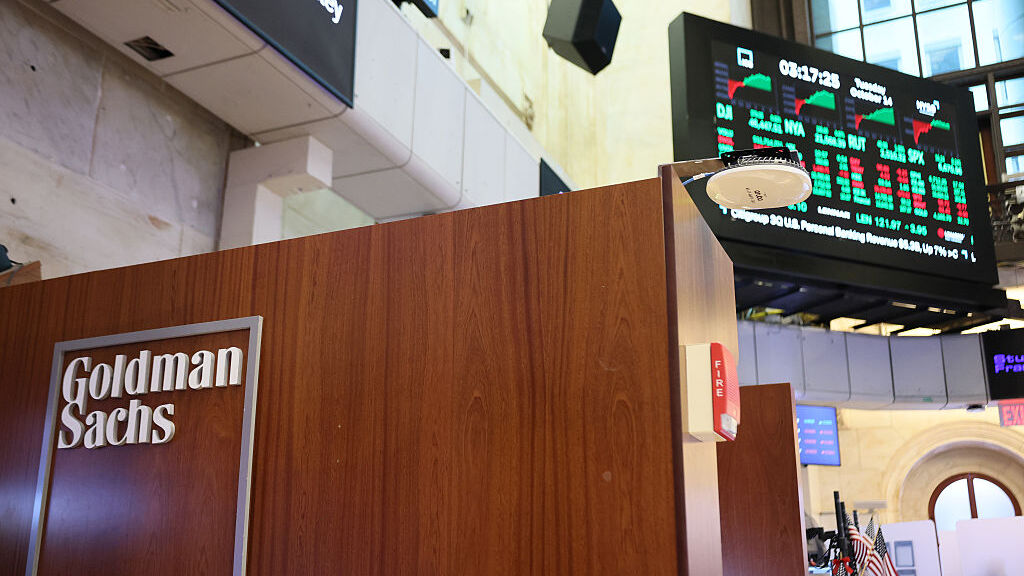
Goldman Sachs says the S&P 500's run past 7,100 is 'froth' — a previous time Wall Street said that, a crash followed
Images
1 / 4
2 / 4

3 / 4

4 / 4
Moneywise and Yahoo Finance LLC may earn commission or revenue through links in the content below.

April 2026 saw stocks hit record highs despite widespread global instability, and the trend has continued into May. The S&P 500 went over 7,400 for the first time on May 11, easing people's concerns after a turbulent March (1).

But Goldman Sachs investors suggest that these record highs won't last long (2). They attribute stock highs to "froth" rather than a genuine economic recovery.

Thanks to Jeff Bezos, you can now become a landlord for as little as $100 — and no, you don't have to deal with tenants or fix freezers. Here's how

Dave Ramsey warns nearly 50% of Americans are making 1 big Social Security mistake — here’s how to fix it ASAP

The IRS usually taxes gold as a collectible — but this little-known strategy lets you hold physical bullion tax-free. Get your free guide from Priority Gold

Here's what it means for the market to be frothy, why investors think the term might apply and the impact it could have on your wallet.

Goldman Sachs investors say they think "the market is set to let off steam in the near-term, excising the froth accrued on the rally to all-time highs (2).”

"Froth" in a market refers to prices rising very quickly — much faster than the inherent value of whatever's being priced (3).

Just like a frothy drink makes your glass look fuller than it actually is, a frothy market makes stocks look more valuable than they actually are. And just like with drinks, that froth tends to disappear — leading to a market crash.

One early use of the term came from former chairman of the Federal Reserve Alan Greenspan, who said there was some "froth" in the 2005 housing market, potentially because of the Fed keeping mortgage rates low (4).

Housing price crashes would go on to be a major aspect of the 2008 Great Recession (5).

Read More: Robert Kiyosaki warned of a 'Greater Depression' — with millions of Americans going poor. Was he right?

Froth can appear when investors are operating off of a fear of missing out, acting fast on information that quickly becomes untrue or irrelevant. Part of the reason that the S&P 500 performed well in April was that it looked like the Iran war was easing and the Strait of Hormuz was about to be open, perhaps permanently (6).

As of right now, the Strait is closed again and energy prices are even higher than they were before the ceasefire (7).

At the same time, talks between the U.S. and Iran appear to have stalled — after Trump rejected Iran’s counteroffer to end the conflict — leaving markets unsure about how long this conflict could drag on (8).

That uncertainty is colliding with renewed inflation fears, creating another potential headwind for equities. Inflation rose to 3.8% annually in April — its highest level since May 2023 — raising concerns that elevated oil prices could further delay rate cuts from the Federal Reserve (9).

Because of the S&P 500's strong performance, the market is crowded; a lot of the investors who could be buying stocks have already loaded up. Even though some financial organizations remain bullish, there might not be a lot of room left to expand.

Now probably isn't the right time to let FOMO decide what you buy.

If Goldman Sachs investors are right, there could be a market bubble burst in the near future. That means that stock prices could stall or even drop from April's highs, negatively impacting your portfolio.

You can’t predict when a war will end, or how markets will react from one headline to the next, but you can take steps to protect your portfolio from the economic fallout.

In uncertain times, having a plan matters more than trying to predict the next headline. A financial advisor can help stress-test your portfolio against inflation, market volatility and rising energy costs — while making sure your investment strategy still aligns with your long-term financial goals.

The good news is that finding reputable financial advisors is now easier than ever through platforms like Advisor.com.

You can easily connect with a vetted FINRA/SEC-registered financial advisor near you for free through Advisor.com.

All you have to do is answer a few questions about your financial situation, and Advisor.com will connect you with a vetted FINRA/SEC-registered financial advisor near you for free. Every advisor on their network is a fiduciary, meaning they’re legally obligated to act in your best interests.

Hiring a financial advisor can also be a lifelong commitment.

That’s why Advisor.com lets you set up a free initial consultation with no obligation to hire to see if your match is the right fit for you before making a decision.

Having a diverse portfolio will help you weather any possible market crashes. One way to do that is to make sure you're not just investing in stocks, but also in alternative assets that can help protect against stock market crashes.

Real estate has long been viewed as a potential safe haven during turbulent market periods because it typically doesn’t move in lockstep with stocks. Property values tend to move independently from equities, helping add stability to your portfolio.

Real estate can also act as a hedge against inflation. As the cost of labor, construction materials and land rises, home prices and property values often climb as well.

On top of that, rental properties can generate steady income even during volatile periods. As inflation pushes housing and living costs higher, rents often increase too — allowing property owners to potentially keep pace with rising expenses while maintaining cash flow.

If you wish to hedge your portfolio with real estate but don’t want to take on the responsibilities of being a landlord, crowdfunding platforms like Arrived could be worth considering.

Backed by world-class investors like Jeff Bezos, Arrived lets you invest in shares of vacation and rental properties across the country with as little as $100.

To get started, simply browse through their selection of vetted properties, each picked for their potential appreciation and income generation.

Arrived distributes any rental income generated by properties to investors monthly, allowing you to potentially set up a passive income stream without the extra work that comes with being a landlord of your own rental property.

The best part? For a limited time, when you open an account and add $1,000 or more, Arrived will credit your account with a 1% match.

And if you’re already in the real estate market, you might want to consider diversifying your investments into multifamily and industrial property.

Accredited investors can now tap into this opportunity through platforms such as Lightstone DIRECT, which gives accredited investors access to single-asset multifamily and industrial deals.

Lightstone DIRECT’s direct-to-investor model ensures a high degree of alignment between individual investors and a vertically-integrated, institutional owner-operator — a sophisticated and streamlined option for individual investors looking to diversify into private-market real estate.

With Lightstone DIRECT, accredited individuals can access the same multifamily and industrial assets Lightstone pursues with its own capital, with minimum investments starting at $100,000.

For seasoned investors with portfolios of $50K or more, you might consider diversifying your nest egg through a flat-fee self-directed retirement account.

A self-directed retirement account is a tax-advantaged individual retirement account (IRA) that lets investors allocate funds to a significantly broader range of alternative assets than typical IRAs offered by banks or brokerage firms.

While traditional IRAs limit options to stocks, bonds and mutual funds, a self-directed account allows you to invest in real estate, cryptocurrency, private businesses, precious metals and private lending.

With IRA Financial, you can work directly with experienced retirement specialists. If you prefer making your investments online, their platform and mobile app make it easy to manage your account. They also have an in-house tax team to ensure your investments stay fully compliant with IRS rules.

With over $5 billion in retirement assets under custody, guaranteed IRA audit protection, 25,000+ clients nationwide and a 97% client retention rate, IRA Financial can help you grow your retirement fund with alternative assets.

Simply answer a few questions — including the kinds of assets you would like to invest in and how much you’d like to start with — to prequalify for an account in just 90 seconds.

— With files from Kit Pulliam

Robert Kiyosaki says this 1 asset will surge 400% in a year and begs investors not to miss this ‘explosion’

No time to lower your crippling car insurance rate? Here’s how to do it within minutes — you could end up paying $29/month without a single phone call

Millionaires under 43 are reshaping investing — just 25% of their portfolios are in stocks. Here’s where their money is going

Vanguard’s outlook on U.S. stocks is raising alarm bells for retirees. Here’s why and how to protect yourself

Join 250,000+ readers and get Moneywise’s best stories and exclusive interviews first — clear insights curated and delivered weekly. Subscribe now.

We rely only on vetted sources and credible third-party reporting. For details, see our ethics and guidelines.

MarketWatch (1); Bloomberg (2); Corporate Finance Institute (3); The New York Times (4),(7); Federal Reserve History (5); Yahoo Finance (6); NBC News (7); CNN (8); CNBC (9)

This article provides information only and should not be construed as advice. It is provided without warranty of any kind.
Comments
You must be logged in to comment.