yahoo Press
eBay Says ‘Half Cash, Half Stock’ Won’t Cut It. We’re Shocked.
Images
1 / 5
2 / 5

3 / 5

4 / 5
5 / 5
The above button links to Coinbase. Yahoo Finance is not a broker-dealer or investment adviser and does not offer securities or cryptocurrencies for sale or facilitate trading. Coinbase pays us for certain activity generated through this link. Prices displayed are informational.

Our analysts just identified a stock with the potential to be the next Nvidia. Tell us how you invest and we'll show you why it's our #1 pick. Tap here.

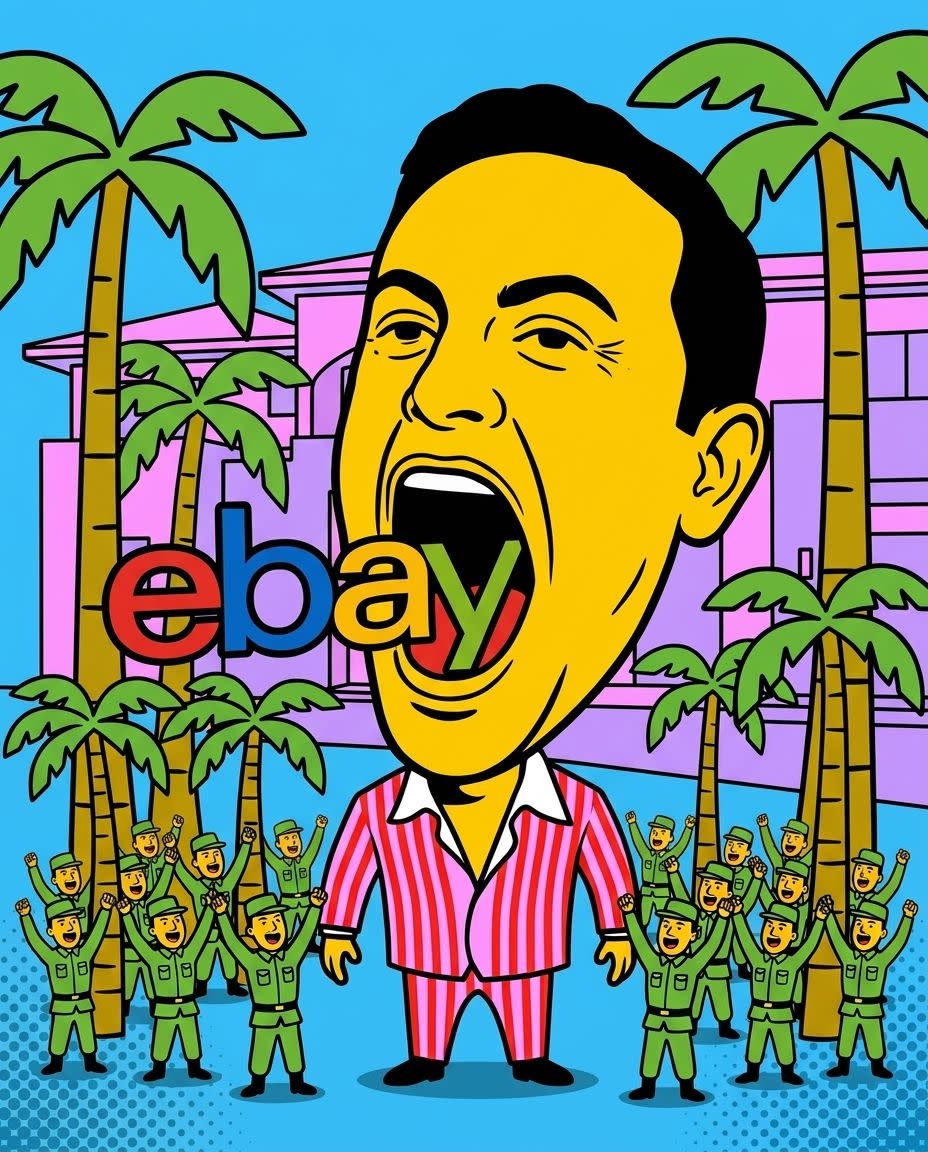
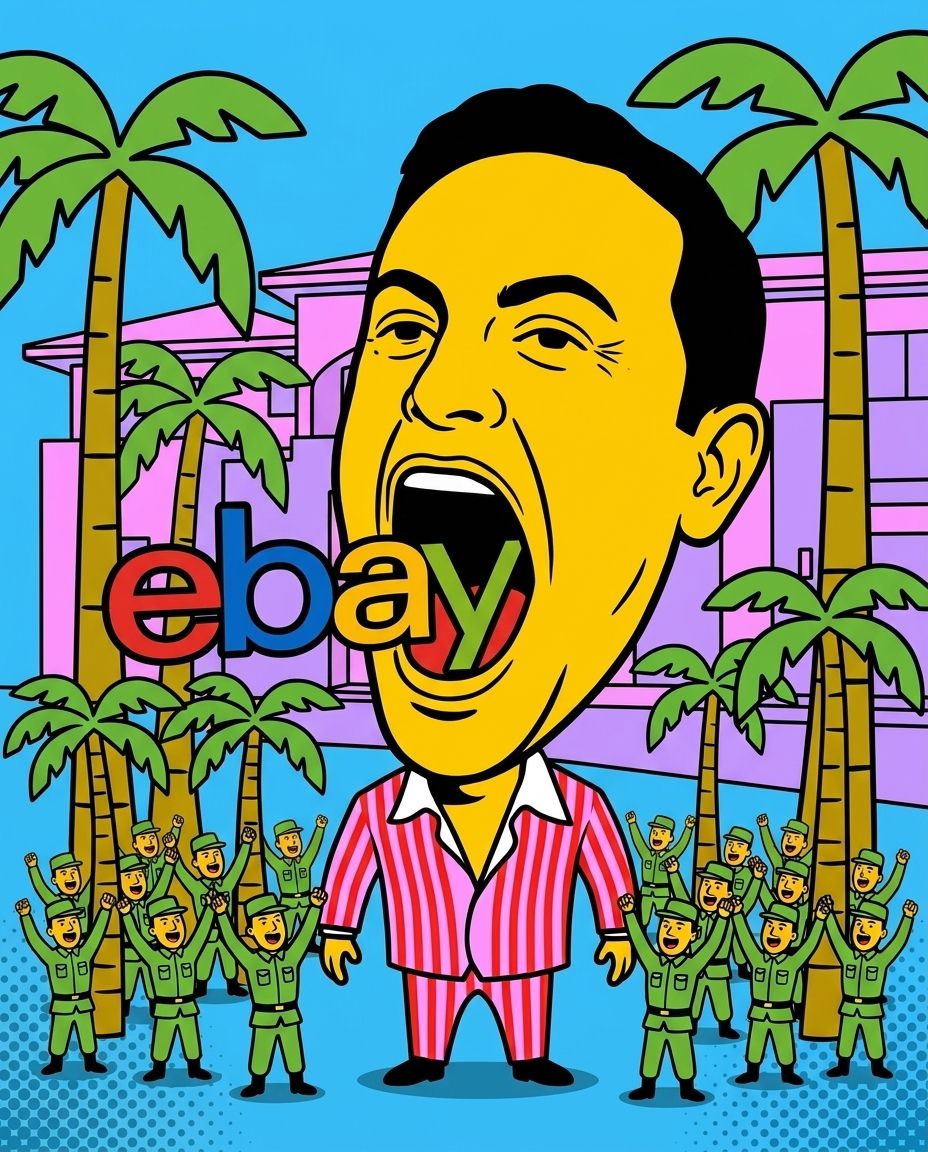
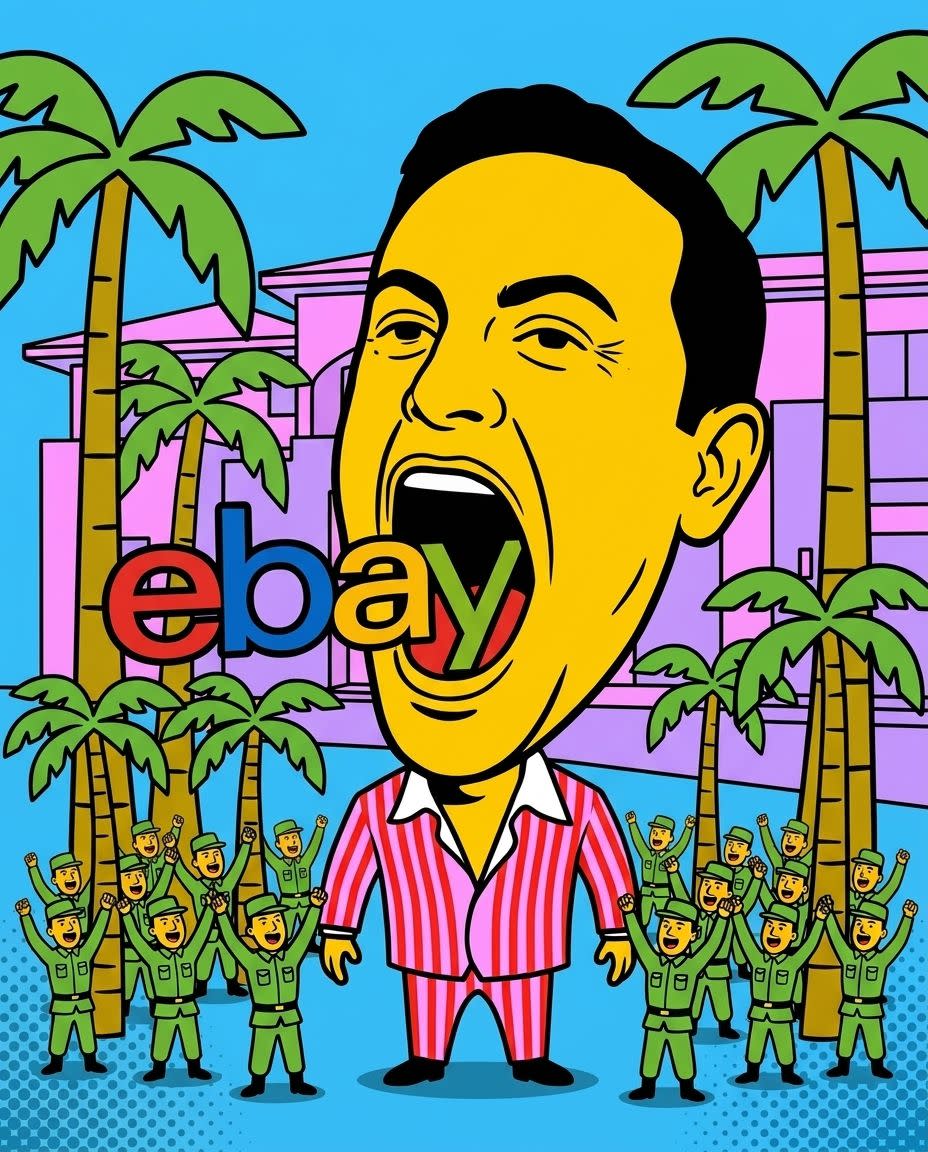
The meme-stock deal of the decade might just be crashing into reality. Ryan Cohen’s quixotic bid for eBay got a stern response from the original online marketplace: No thanks.

eBay called the GameStop CEO’s $56 billion bid “neither credible nor attractive,” which is about as close to saying “f— off” as corporate rejection letters come. eBay chairman Paul Pressler, a longtime private equity partner, cited, rather charitably, “uncertainty” regarding the deal’s financing and concerns over the debt load in a Tuesday morning letter.

Let’s walk through the deal to see where each side’s coming from.

GameStop offered $125 per share, valuing eBay at $56 billion. The stock is trading around $108 Tuesday morning, so Cohen’s bid well exceeds eBay’s $48 billion market cap. And eBay itself is nearly five times larger than GameStop, which has a $10.3 billion market cap. That makes the deal math obviously hard to swallow for anyone not named Ryan Cohen or the horde of retail investors he’s managed to convince he’ll make rich, if only Wall Street could see why this is a brilliant acquisition.

Cohen produced a financing letter from TD Securities, which says it lined up about $20 billion in financing. GameStop, for what it’s worth, also has about $9 billion in cash on the balance sheet, a significant war chest that breaks down to about $20 per share. But any third grader can tell you that 20+9 < 56, which means that GameStop would have to issue stock to cough up enough to close the deal.

That fact led to a contentious CNBC interview last week where Cohen refused to elaborate on the terms of the deal, telling host Andrew Ross Sorkin that it’s “half cash, half stock” and that Sorkin should simply check GameStop’s website for further details.

One stock. Nvidia-level potential. 30M+ investors trust Moby to find it first. Get the pick. Tap here.

The real answer Cohen didn’t want to give on air is dilution. GameStop would likely have to triple, or even quadruple share count to fund the deal and make eBay shareholders happy. And Cohen, who founded the pet food company Chewy and sold it for nearly $3.4 billion to PetSmart in 2017, is used to taking big swings.

He believes he can aggressively cut eBay’s costs, fire employees, and create “operational efficiencies” by using GameStop’s 1,600 U.S. locations to fulfill eBay orders, according to the letter to shareholders posted on the company’s website. That, the company says, would result in $2 billion in annualized cost savings, by wiping out $1.2 billion on marketing spend, $300 million from product development, and $500 million from G&A by consolidating the traditional back-office functions of compliance, HR, accounting, etc. That would increase earnings per share from $4.26 to $7.79 in the first year, per GameStop’s team.

While that reasoning is clear, Cohen’s swing relies on GameStop’s meme premium.

The gaming retailer’s stock trades on Ryan Cohen, rather than any fundamentals of how many games they’re selling and how efficient they’re doing it. If that meme premium breaks down — and investors start to look at the actual, underlying business — then instead of getting over-valued GameStop stock as compensation for the deal, eBay shareholders will basically get a lump of coal. That’s why Cohen wants to “make news,” by giving terse answers on CNBC that keep his meme-stock army meme-ing. It’s also why Cohen told the tech-bros of TBPN that he could “run eBay from his house.” He’ll say whatever to get his clips shared, and when they get shared, the stock will go up even though GameStop was forced to close over 470 stores earlier this year.

The meme army needs to believe in the Cult of Cohen above all else, regardless of the fact that his retail-fulfillment thesis might be wish-casting at best.

Cohen is making a smart bet to try and use overvalued paper, like GameStop stock, to buy a real asset like eBay.

But it involves a tightrope act that we’re not sure Cohen can walk. Without the meme premium, there’s no deal. And there’s no stomach for the dilution it will take to get there. Still, Benjamin Graham’s worst Mr. Market nightmare is Cohen’s multibillion-dollar fortune and Miami Beach mansion. We’re not counting Cohen out, but we have our doubts.
Comments
You must be logged in to comment.