yahoo Press
Trump Cannot Just Win the Strait. He Has to Win the Oil Curve
Images
1 / 4
2 / 4

3 / 4

4 / 4
The U.S.-Iran war has created a military crisis in the Gulf. But for oil markets, the more dangerous battlefield may now be the futures curve.

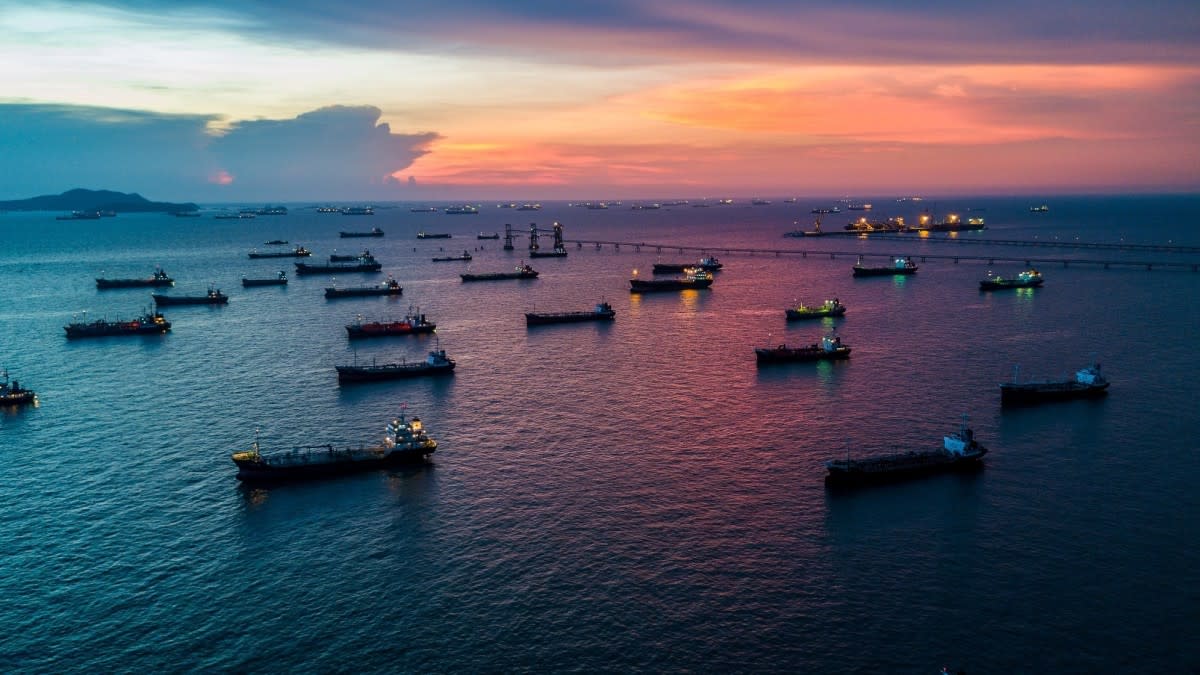
The first shock was geographic. It appeared on maps, vessel-tracking screens, insurance desks, and refinery procurement calls: the Strait of Hormuz restricted, tankers delayed, Gulf exports impaired, and refiners scrambling for replacement barrels.

The second shock is financial. It is moving through hedge books, margin accounts, cargo-finance lines, refinery schedules, LNG contracts, diesel inventories, and the working capital of companies that still have to buy, insure, ship, refine, hedge, and pay for energy while the war remains unresolved.

That is the phase Washington must now manage.

The Trump administration cannot simply try to “bring oil prices down.” That would be too crude, and potentially counterproductive. Futures markets do not respond well to political intimidation. If Washington appears to be manipulating price rather than clarifying supply, it could drain liquidity from the very markets airlines, refiners, utilities, producers, and traders need in order to hedge real physical exposure.

The better objective is more precise: reduce the panic premium.

That means making the physical barrel believable again.

A believable barrel is not merely a barrel that exists underground or appears in a futures contract. It is a barrel that can be lifted, documented, insured, financed, hedged, shipped, delivered, refined, and paid for without every link in the chain demanding a wartime premium. In ordinary times, markets take that machinery for granted. In wartime, that machinery becomes the market.

The inventory data explain why the next 45 to 90 days matter so much. The International Energy Agency reported that global observed oil inventories fell by 85 million barrels in March. Stocks outside the Middle East Gulf drew down by 205 million barrels, or 6.6 million barrels per day, as flows through the Strait of Hormuz were choked off. At the same time, floating storage of crude and oil products in the Middle East rose by 100 million barrels, onshore crude stocks in the region rose by 20 million barrels, and China added 40 million barrels to its tanks.

Related: Shell Boosts Dividend After Strong Q1 Performance

That is not a normal inventory draw. It is a mislocation of oil.

The world did not simply run out of barrels. Barrels became trapped, delayed, rerouted, legally riskier, more expensive to insure, or harder to finance. Oil that cannot move is not fully supply. Oil that cannot be insured is not fully supply. Oil that cannot be financed is not fully supply. Oil that cannot reach the right refinery is not fully supply.

This is why the futures curve matters.

The futures market prices probabilities. The physical market prices availability. In a war, those two prices can separate violently. IEA reported that spot crude benchmarks and physical differentials surged ahead of futures markets as refiners scrambled to replace locked-in Middle Eastern cargoes; at the time of its April report, North Sea Dated crude was trading around $130/bbl, about $60/bbl above pre-conflict levels. IEA also warned that physical crude prices had surged near $150/bbl while middle distillate prices in Singapore reached record highs above $290/bbl.

That is the physical-paper disconnect in its purest form.

Futures can fall on a ceasefire headline. Physical differentials can remain tight because refiners still need immediate cargoes. Brent can soften while diesel cracks stay elevated. A diplomatic rumor can move paper barrels in seconds; a real barrel still has to pass through ports, banks, ships, insurers, and refineries.

EIA’s April outlook shows how much uncertainty is embedded in the market. EIA forecast Brent averaging $103/bbl in March and peaking at $115/bbl in 2Q26 before easing as production shut-ins slowly abate. EIA also warned that the price forecast depends heavily on the duration of the Middle East conflict and resulting oil-production outages. It forecast retail gasoline peaking near $4.30/gal in April and diesel above $5.80/gal, with diesel particularly elevated because of tight global supplies and U.S. inventories below the five-year average.

That forecast is not just a price call. It is a warning that the market is now being governed by war duration.

The next 45 days will likely decide whether oil treats the war as a temporary logistics shock or a durable repricing of risk. The next 90 days will likely decide whether the inventory rebuild is orderly or defensive, whether hedging liquidity remains deep or becomes fragile, whether diesel and jet fuel stay tight or become inflationary, and whether allies view U.S. energy leadership as a working system or only as rhetoric.

There are two plausible paths.

If Hormuz traffic normalizes, reserve barrels reach buyers predictably, insurance markets regain confidence, and Washington communicates clear sanctions and shipping rules, Brent could shed part of the war premium. Reuters reported on May 6 that Brent fell below $100 intraday after a Pakistani source said the United States and Iran were nearing an initial peace deal, before paring losses as uncertainty returned.

But if negotiations stall, tanker insurance remains impaired, product inventories keep drawing, or the United States sends confusing signals about sanctions and shipping, the market will not simply price expensive oil. It will price unreliable oil.

That is worse.

Expensive oil hurts consumers. Unreliable oil paralyzes planning.

A refinery can adjust to $100 crude if it believes the cargo will arrive. An airline can hedge jet fuel if the futures market is liquid and credible. A utility can buy LNG if ships, contracts, and regasification slots are available. A trader can finance cargoes if banks understand the sanctions risk. But when the physical market and the paper market diverge, every commercial actor must finance uncertainty.

That is the real oil shock now: not just price, but working capital.

A one-million-barrel crude cargo at $70 requires $70 million before freight, insurance, letters of credit, and related costs. At $115, that same cargo requires $115 million. The barrel count has not changed. The financing burden has. Add margin calls on hedges, wider basis risk, more expensive tanker insurance, uncertain delivery windows, and tighter bank review, and the war premium becomes a balance-sheet tax.

Washington’s first task should be to publish a daily energy-security operating picture.

Not slogans. Data.

The administration should provide a disciplined daily dashboard covering Hormuz transits, tanker queues, escorted sailings, war-risk insurance conditions, Strategic Petroleum Reserve release volumes, refinery utilization, crude and product inventories, diesel and jet-fuel stocks, LNG cargo availability, and major sanctions-license updates. Silence creates risk premium. Contradiction creates risk premium. Verifiable flow data reduces risk premium.

Second, the administration should turn the Strategic Petroleum Reserve from a political headline into a predictable market instrument.

The Department of Energy announced that the United States would release 172 million barrels from the SPR as part of an IEA-coordinated 400-million-barrel emergency stock action. EIA later reported that DOE released 17.5 million barrels from the SPR between the week ending March 20 and the week ending April 24, including 7.1 million barrels in the week ending April 24. EIA said SPR stocks stood at 397.9 million barrels and that the release was structured as an exchange requiring the original volume, plus additional barrels, to be returned later.

That helps. But the market needs more than barrels. It needs a reaction function.

Washington should pre-announce the conditions under which additional SPR exchanges will be accelerated, slowed, or retargeted. The triggers should be concrete: U.S. commercial crude inventories, distillate stocks, Gulf Coast refinery needs, Brent-WTI spreads, diesel cracks, allied stock draws, and measured disruption in tanker flows. The goal should not be to cap Brent. It should be to stop panic buying by making the reserve backstop legible.

Third, Washington should prioritize products, not just crude.

Crude oil does not move trucks, aircraft, combines, generators, or military logistics chains. Diesel and jet fuel do. EIA’s April outlook said diesel prices were particularly elevated because global supplies were tight and U.S. inventories remained below their five-year average; IEA also reported that feedstock disruptions and infrastructure damage were tightening global product markets and pushing middle distillate cracks to record highs.

That is a warning light.

For the next 45 to 90 days, diesel and jet fuel should be treated as strategic products. Washington should coordinate targeted product swaps with allies, prioritize distillate availability for military logistics and critical domestic supply chains, and avoid relying only on crude releases if the real bottleneck is refinery output. The market does not consume “oil.” It consumes usable products.

Fourth, Treasury, DOE, OFAC, and the Coast Guard should create a sanctions-and-shipping fast lane for allied replacement barrels.

This is crucial. Sanctions confusion can turn physical scarcity into legal scarcity. If banks, insurers, shipowners, and refiners are unsure whether a cargo, counterparty, blend, vessel, or payment route is permissible, the barrel becomes impaired even if it is nowhere near Iran.

Washington should issue rapid, narrow, written guidance for lawful replacement supply: what can be insured, what can be financed, what can be shipped, what can be blended, what can be paid for, and which counterparties are disqualified. The goal should be ruthless clarity. Every ambiguous cargo becomes a wider differential. Every hesitant bank becomes a hidden sanction. Every unclear insurance clause becomes a tax on allies.

Fifth, Washington should support war-risk insurance for lawful commercial energy flows.

A tanker that cannot be insured is not a barrel-moving asset. It is a floating liability. The administration should work with allies, maritime insurers, shipowners, and reinsurers on temporary guarantees or backstop arrangements for non-Iranian energy cargoes moving through approved corridors. This would not eliminate the war premium, but it would reduce the panic premium attached to lawful cargo movement.

Reuters reported that the CS Anthem became the second commercial U.S.-flagged vessel known to exit the Strait of Hormuz while protected by the U.S. military, following the Alliance Fairfax. Reuters also reported that hundreds of ships had been stranded after the virtual closure of the strait in early March.

That kind of escorted transit matters not only militarily, but financially. Each successful sailing tells the physical market that the corridor is not theoretical.

Sixth, the administration should protect the futures market without trying to command it.

This is the most delicate point.

CFTC’s position-limit framework is designed to prevent excessive speculation from causing sudden or unreasonable commodity-price fluctuations while preserving flexibility for commercial end users through exemptions such as bona fide hedging. CFTC says the framework applies to 25 physically settled core referenced futures contracts and certain linked instruments, including NYMEX Henry Hub natural gas, NYMEX light sweet crude oil, NYMEX New York Harbor ULSD heating oil, and NYMEX RBOB gasoline.

That machinery should be strengthened, not politicized.

The administration should ask CFTC, CME, ICE, major clearing members, and Treasury to intensify surveillance for manipulation, spoofing, concentrated squeezes, suspicious options activity, and insider leakage around war headlines. But it should not launch a crude war on “speculators.” Commercial hedgers need speculative liquidity. If Washington frightens liquidity out of the market, hedging becomes more expensive precisely when hedging is most necessary.

The goal should be clean price discovery, not official price discovery.

Seventh, Washington should create a temporary liquidity facility for critical commercial hedgers.

This would be less visible than an SPR release, but it may be just as important over the next 90 days. CME explains that performance bonds, or margins, are deposits held at CME Clearing to ensure clearing members can meet obligations, and that margin requirements vary by product and market volatility.

That means wartime volatility can become a liquidity event even for companies hedging real physical exposure. Airlines, refiners, utilities, and import-dependent allies can be solvent and still be squeezed by margin calls or cargo-finance needs. A temporary Treasury or Export-Import Bank facility, narrowly limited to bona fide commercial hedgers and essential energy procurement, could prevent forced hedge liquidation and panic buying.

The facility should not subsidize speculative losses. It should not rescue bad trades. It should preserve the ability of critical end users to hedge real physical exposure in a disorderly market. That is a national-security function when the oil curve is being moved by war.

Eighth, Washington should coordinate allied demand management before price does it brutally.

Demand destruction always arrives. The question is whether governments shape it intelligently or allow it to arrive through crisis pricing. IEA’s April Oil Market Report said oil demand is expected to contract by 80,000 bpd in 2026 as the Iran war upends the global outlook, and that a forecast 1.5 million bpd decline in 2Q26 would be the sharpest since Covid-19 slashed fuel consumption. IEA also said initial demand cuts were deepest in the Middle East and Asia Pacific, mainly for naphtha, LPG, and jet fuel, and warned that demand destruction would spread if scarcity and high prices persisted.

Over the next 45 to 90 days, the administration should coordinate with Europe, Japan, South Korea, India, and Gulf partners on temporary, targeted measures: reducing nonessential government fuel use, prioritizing freight and emergency services, encouraging off-peak logistics, and protecting refinery and utility operations.

This is not rationing. It is buying time.

Inventories are time. Strategic reserves are time. Shipping corridors are time. Hedging liquidity is time. In an oil shock, time is the scarce commodity beneath the commodity.

Ninth, Trump should communicate war aims and energy triggers with unusual precision.

Markets can absorb bad news better than they can absorb incoherence. Reuters reported that oil prices moved sharply on peace-framework reports, with Brent briefly trading below $100 before paring losses. That is the futures market telling Washington something important: language now moves barrels before barrels move.

Every presidential statement, Pentagon briefing, sanctions announcement, and diplomatic leak now becomes part of the oil curve. If the administration wants to keep allied energy markets functioning, it should state clearly what it is trying to achieve, what conditions would reopen flows, what conduct would trigger escalation, and what energy-security measures are already in motion.

Strategic ambiguity may have military uses. In oil markets, excessive ambiguity becomes a tax.

The next 45 days will likely decide whether the war premium melts toward a diplomatic-risk premium or hardens into a structural supply premium. The next 90 days will likely decide whether companies rebuild inventories calmly or hoard defensively; whether futures liquidity remains deep or becomes brittle; whether diesel and jet-fuel shortages stay manageable or spread into inflation; and whether allies view U.S. energy leadership as an operating system or merely a slogan.

The Trump administration should not try to defeat the futures market. It should give the futures market enough verified physical information to defeat panic.

That means predictable SPR releases, clear sanctions lanes, protected shipping corridors, targeted product management, futures-market surveillance, hedging liquidity, and allied coordination. None of these steps is glamorous. But wars are not won only by dramatic acts. They are won by keeping systems from breaking.

Iran does not need to close Hormuz completely if it can make every barrel more doubtful. It does not need to destroy the futures market if it can make hedging more expensive, insurance more uncertain, and inventory less available. It does not need to defeat the U.S. Navy if it can impose a permanent uncertainty premium on American allies.

Washington’s answer should be equally systemic.

Keep the ships moving.

Keep the barrels documented.

Keep the banks comfortable.

Keep the insurers engaged.

Keep the refiners supplied.

Keep the hedgers liquid.

Keep the curve credible.

That is how the United States wins the energy side of the war.

The strait decides whether the barrel can leave.

The futures curve decides whether the market believes it will arrive.

And over the next 45 to 90 days, belief may be the most valuable barrel in the world.

Disclosure: The author holds no positions in Iranian sovereign debt, Venezuelan sovereign debt, or PDVSA debt.

By Emir Phillips for Oilprice.com

More Top Reads From Oilprice.com

Oil Prices Edge Higher as Iran Deal Doubts Resurface

Pakistan Issues Emergency LNG Tender for Two Cargoes as Power Crisis Deepens

Average U.S. Gasoline Price Tops $4.50 to Near Four-Year High

Oilprice Intelligence brings you the signals before they become front-page news. This is the same expert analysis read by veteran traders and political advisors. Get it free, twice a week, and you'll always know why the market is moving before everyone else.

You get the geopolitical intelligence, the hidden inventory data, and the market whispers that move billions - and we'll send you $389 in premium energy intelligence, on us, just for subscribing. Join 400,000+ readers today. Get access immediately by clicking here.
Comments
You must be logged in to comment.