yahoo Press
GameStop’s Ryan Cohen Sidesteps Compensation Questions on eBay Deal
Images
1 / 5
2 / 5

3 / 5

4 / 5
5 / 5
The above button links to Coinbase. Yahoo Finance is not a broker-dealer or investment adviser and does not offer securities or cryptocurrencies for sale or facilitate trading. Coinbase pays us for certain activity generated through this link. Prices displayed are informational.

Concerned about an AI bubble? Sign up for The Daily Upside for smart and actionable market news, built for investors.

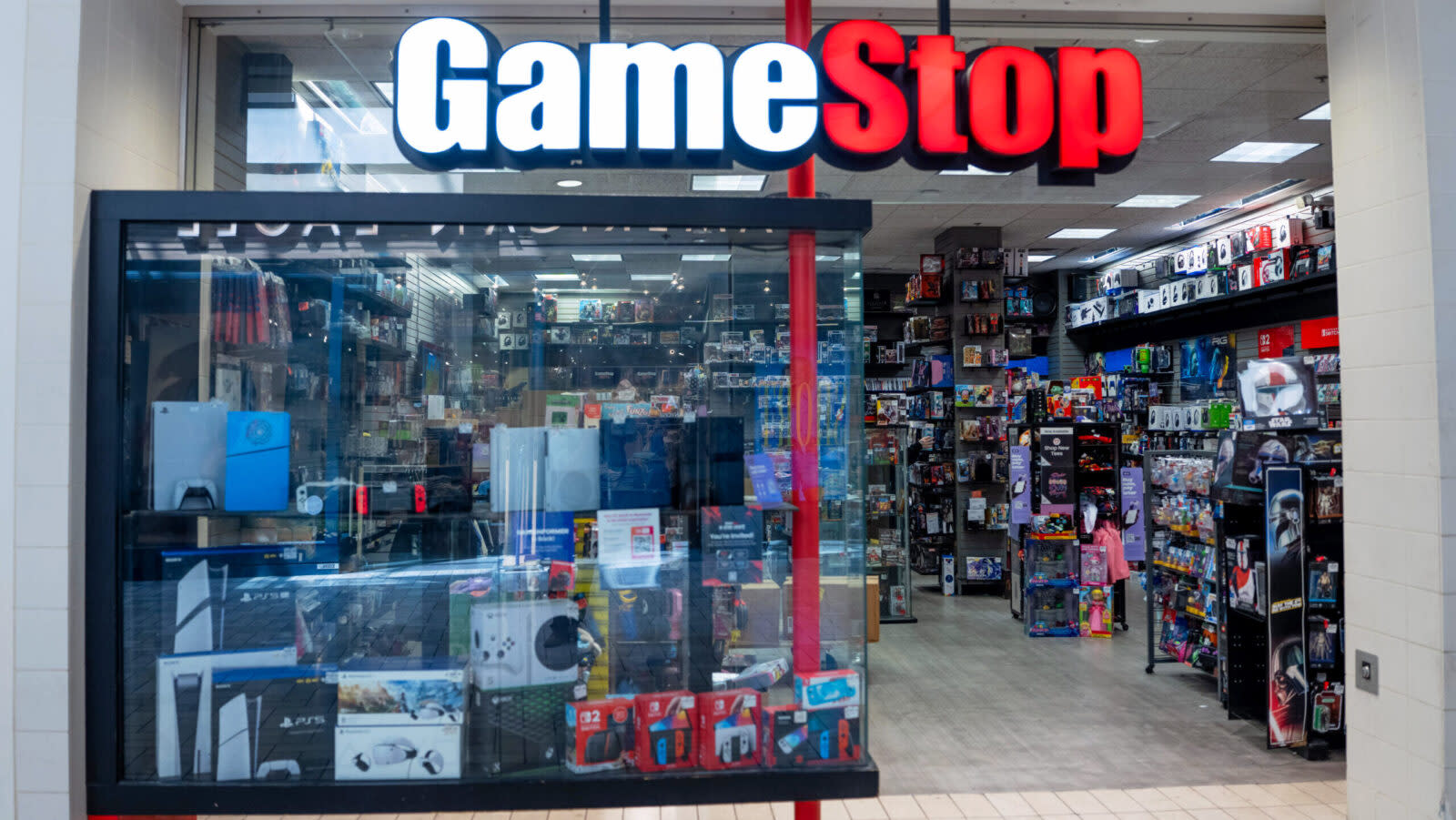
Everyone knows by now about GameStop’s $56 billion bid to take over eBay.

What’s far less clear is how the video game retailer, a one-time meme-stock darling with a market cap of $11 billion, could pull it off. Or how much GameStop and eBay shareholders would benefit if it does.

(CEO Ryan Cohen told The Wall Street Journal this week that GameStop has built up a 5% stake in the e-commerce giant but claimed Wednesday that eBay suspended his account on the site, if that’s any indication of how the offer was received.) His offer letter to eBay Chairman Paul Pressler said the bid would be half stock and half cash, with the latter including third-party equity and debt financing. Cohen, who said TD Bank is committed to providing up to $20 billion in debt, is also fielding inquiries about whether one incentive for the deal is executive awards that could net him $35 billion in stock if GameStop’s market cap reaches $100 billion. Asked directly about it, his answers were indirect.

Sign up for The Daily Upside at no cost for premium analysis on all your favorite stocks.

READ ALSO: Shell Pumps Out Banner Profits Despite Iran War’s Seismic Upheaval and Fortinet’s Earnings Beat Augurs Barnburner Returns as AI Security Threats Mount

GameStop revealed Cohen’s potential payday in a January filing with the SEC, which the company’s board said was designed to incentivize him “to achieve extraordinary growth.” Basically, Cohen is rewarded with options to buy more than 171 million shares of the company at a price of $20.66 if GameStop hits certain market cap and EBITDA targets. He gets a tranche of the award each time GameStop increases its market cap by a multiple of 10 and increases EBITDA by $1 billion. That would mean he’d get the first batch of options when GameStop reaches $20 billion in market cap and $2 billion in EBITDA, the second when it hits $30 billion in market cap and $3 billion in EBITDA, with additional payments through $100 billion in market cap and $10 billion in EBITDA)

But there’s something unclear here, which CNBC’s Becky Quick expertly put to Cohen multiple times on Monday’s broadcast of the network’s Squawk Box: Could Cohen simply reach these goals by swallowing up or merging with other companies, which wouldn’t necessarily result in commensurate gains for shareholders?

“Shareholders wouldn’t necessarily see the same gains that they would if you just grew market cap by growing operating earnings,” she said. “Does it matter if you swallow a bigger company and that’s how you get the market cap, or do the shareholders actually have to see the same gains?”

“I don’t benefit, I’m aligned with shareholders,” he said. “Unless our market cap increases substantially and earnings increase substantially, I don’t get any salary, any cash, no golden parachutes, nothing.” That, of course, doesn’t address how much shareholders would stand to gain if GameStop hit the compensation targets via acquisitions.

To be sure, though, Cohen’s incentive package includes provisions empowering a board-appointed compensation committee to adjust the performance milestones if GameStop buys a company or engages in other transactions.

To Be Determined: The modifications would be made “equitably and proportionately as determined by the committee in a manner designed to preserve the economic opportunity provided under the award,” according to the regulatory filing, which doesn’t detail a specific formula. To take effect, the package must be approved by shareholders; GameStop initially indicated they’d get a chance to do so at a special meeting in March or April. So far, one hasn’t been scheduled.

This post first appeared on The Daily Upside. To receive razor sharp analysis and perspective on all things finance, economics, and markets, subscribe to our free The Daily Upside newsletter.
Comments
You must be logged in to comment.