yahoo Press
The New Farm Bill Doubles as the Biggest Cut to Food Aid in U.S. History
Images
1 / 5
2 / 5

3 / 5

4 / 5
5 / 5
The above button links to Coinbase. Yahoo Finance is not a broker-dealer or investment adviser and does not offer securities or cryptocurrencies for sale or facilitate trading. Coinbase pays us for certain activity generated through this link. Prices displayed are informational.

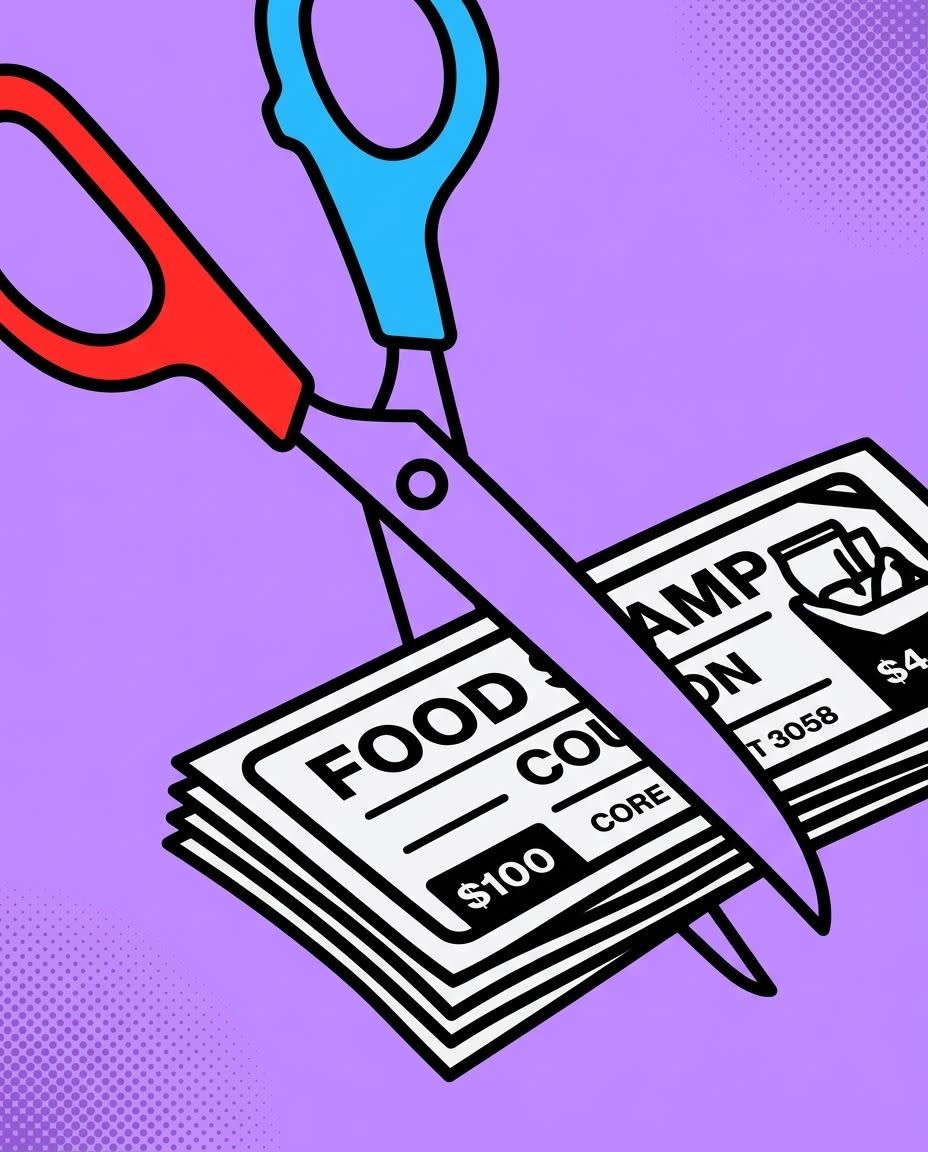
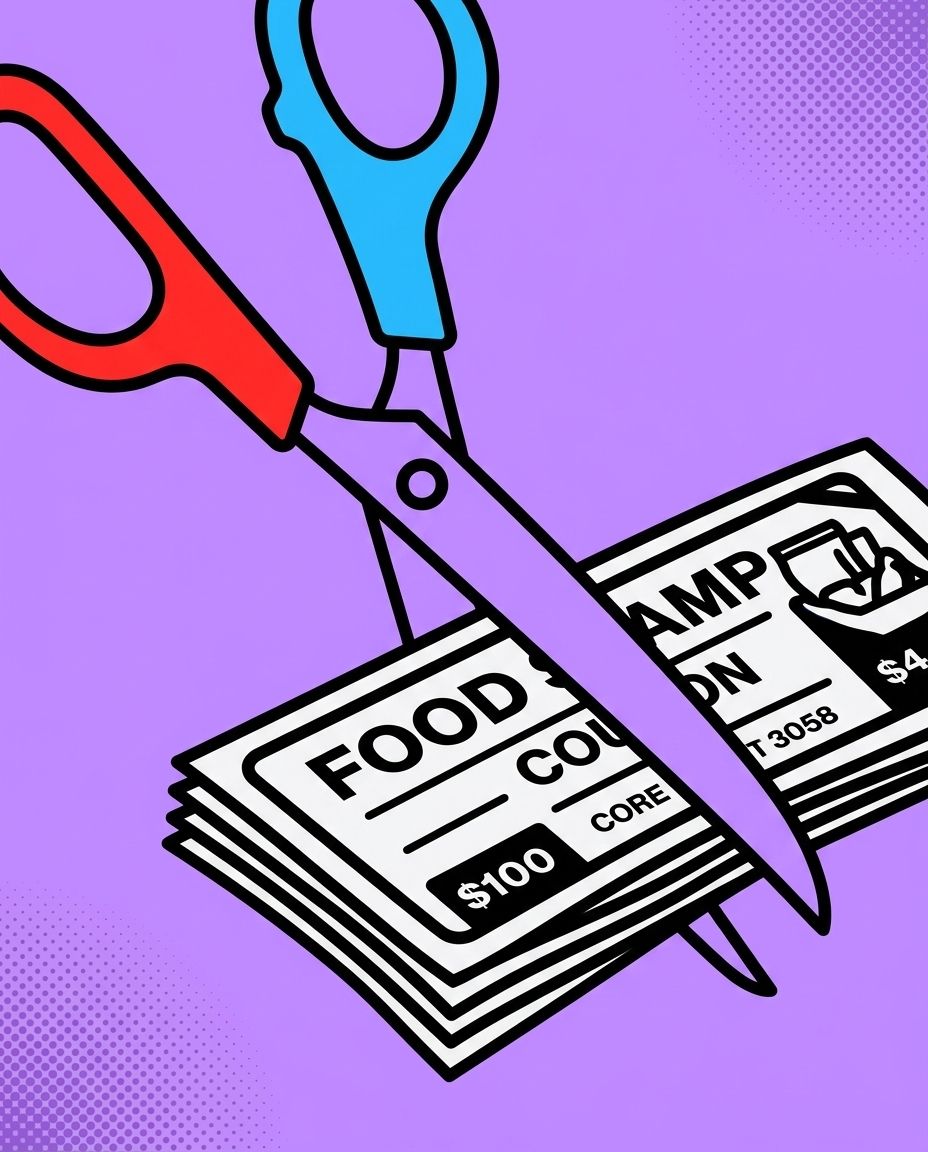
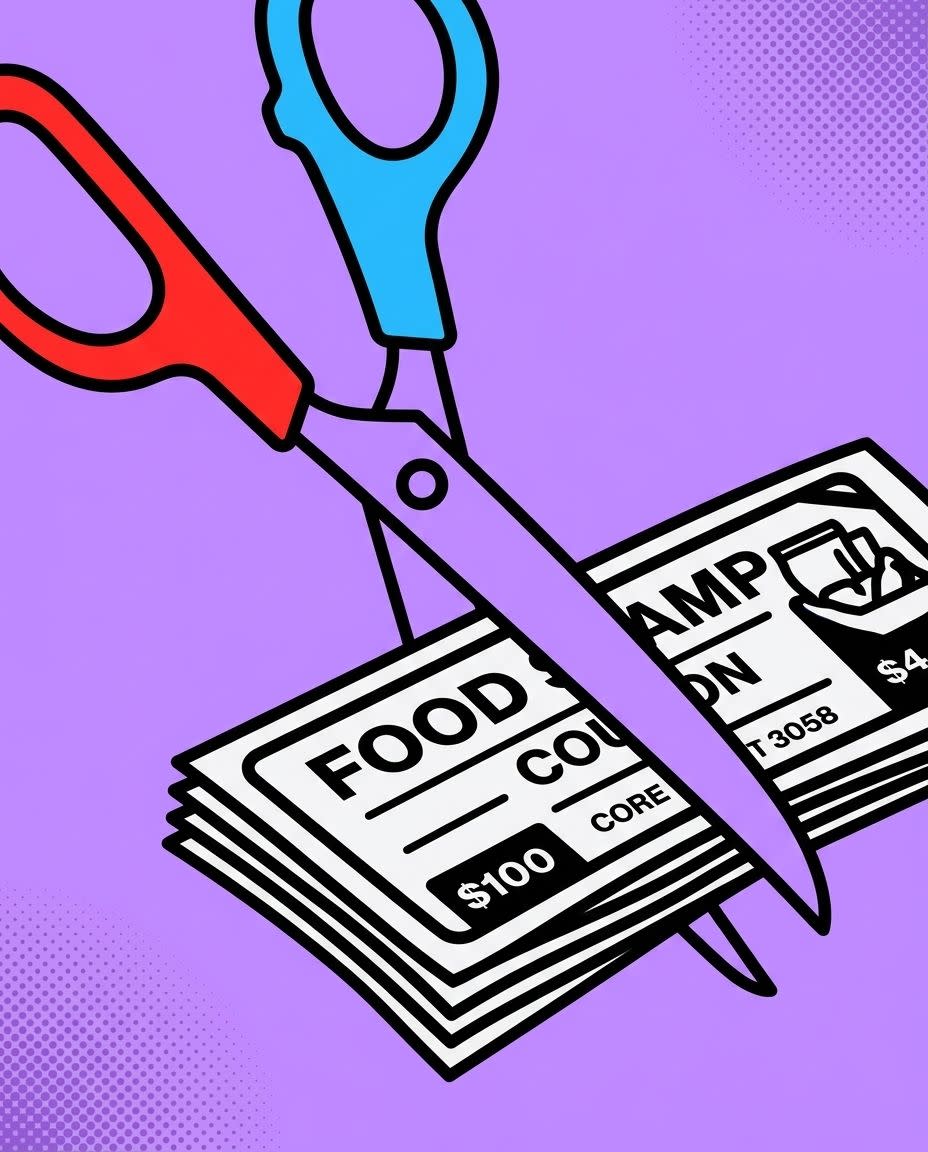
The House passed a long-overdue farm bill that gives agricultural producers real certainty for the first time in years. What’s the price? $187 billion cut from SNAP.

This is the largest reduction to federal food assistance ever, purportedly meant to ensure food security. And it has already pushed 3.4 million Americans off the program.

The Farm, Food, and National Security Act of 2026 has passed the House. All it took was for 14 Democrats to jump ship. This bill is for the farmers of America. It reauthorizes USDA programs through 2031 and covers commodities, crop insurance, conservation, trade, and nutrition.

The bill strengthens crop insurance, raises reference prices for key commodities, and expands the Market Access Program, all wins for farmers. It also includes the Save Our Bacon Act, preempting California's Prop 12 animal-welfare rules, and codifies a looming ban on hemp-derived THC products, which was a Congressional fight to begin the year.

But the price for this promise is very real. The $187 billion in SNAP cuts, first enacted via the reconciliation "One Big Beautiful Bill", are now codified as permanent agricultural law, not just a budget line. The bill is a win for American agriculture, but it’s odd that it should stand in the way of abolishing hunger. SNAP is the single largest consumer food-purchasing program in the US. At an average of $6.20 per person per day, it underpins grocery store volume across every income zip code.

The bill also exacerbates a political tension. Rising grocery prices coincide directly with the sharpest reduction to food assistance in U.S. history, a combination critics say will deepen food insecurity at exactly the wrong moment.

Cutting it by $187 billion doesn't just affect recipients. It affects every retailer, food manufacturer, and distributor that depends on that spending. Dollar stores, discount grocers, and commodity food brands will feel this most acutely. At today’s inflationary prices, this bill doesn’t change your plate (although that is the ostensible goal), it dictates who gets to eat.

The cuts also don't just reduce a government check. They eliminate real consumer spending that flows directly into the income statements of publicly traded companies. Here's how the damage distributes: Walmart dominates, capturing more than a quarter of all SNAP household grocery spend. That's enormous scale: analysts estimate a high-single digit percent of Walmart's total sales are SNAP-related, while Dollar General and Dollar Tree are in the mid-single digits. Those percentages sound modest until you apply them to annual revenues in the hundreds of billions.

And SNAP dollars don't just drive store visits, they design grocery aisles. Brands like Tyson Foods, and Conagra Brands are the top CPG manufacturers most exposed to SNAP cuts — with over 10% of Post's shopping trips, 8.4% of Tyson's, and 7.7% of Conagra's involving SNAP dollars. Kraft Heinz, General Mills, Frito-Lay, Smucker's, Bimbo Bakeries, Nestlé, and Kellanova all follow closely behind.

Kraft Heinz already reported that SNAP emergency funding cutbacks hit its first-quarter 2024 earnings, including its mac and cheese business, and that was a smaller, temporary reduction. A permanent $187 billion cut operates at a different magnitude entirely.

The House-passed version now heads to the Senate, where Senate Agriculture Committee Chairman John Boozman has signaled a draft is weeks away. The SNAP cuts, USDA restructuring provisions, and animal-welfare preemption will all face serious scrutiny. Progressive Democrats and some farm-state moderates may push to restore nutrition funding.

But right now, this begs the question: Why does it have to be either-or?

Our analysts just identified a stock with the potential to be the next Nvidia. Tell us how you invest and we'll show you why it's our #1 pick. Tap here.

Deere & Company (DE) — As a major supplier of agricultural machinery and technology, increased certainty and profitability for farmers could lead to higher equipment sales and demand for services.

Corteva (CTVA) — Benefits from increased agricultural certainty and potentially higher commodity prices, driving demand for its seeds and crop protection products.

Nutrien (NTR) — As a leading producer of potash, nitrogen, and phosphate fertilizers, improved farmer profitability and certainty will likely increase demand for agricultural inputs.

Chubb (CB) — As a major insurer, strengthened crop insurance programs could lead to more stable and potentially higher premiums or increased participation in agricultural insurance products.

Tyson Foods (TSN) — The "Save Our Bacon Act" preempting California's Prop 12 animal-welfare rules could reduce compliance costs and regulatory burdens for its pork and poultry operations.

Agriculture — Benefits from strengthened crop insurance, higher reference prices for key commodities, and expanded market access programs, providing financial stability and growth opportunities for producers.

Agricultural Inputs & Equipment — Increased financial certainty and profitability for farmers will likely drive demand for seeds, fertilizers, crop protection, and farm machinery.

Crop Insurance — Reauthorization of USDA programs and strengthened crop insurance provisions provide a stable and potentially growing market for agricultural insurance providers.

United States — The agricultural sector within the US benefits from increased government support and stability, potentially boosting domestic food production and exports.

Agricultural Commodities — Higher reference prices for key commodities provide a price floor and increased income stability for producers of crops like corn, soybeans, and wheat.

Walmart (WMT) — Faces a significant reduction in sales volume, as analysts estimate a high-single digit percentage of its total sales are SNAP-related, directly impacting its revenue and profitability.

Dollar General (DG) — Highly exposed to SNAP cuts, with mid-single digit percentages of its annual revenues tied to SNAP spending, leading to decreased store traffic and sales.

Dollar Tree (DLTR) — Similar to Dollar General, it will experience reduced sales and customer traffic due to the substantial cut in federal food assistance.

Tyson Foods (TSN) — Despite potential benefits from Prop 12 preemption, it is listed as one of the top CPG manufacturers most exposed to SNAP cuts, with 8.4% of its shopping trips involving SNAP dollars, leading to reduced demand for its products.

Conagra Brands (CAG) — Highly exposed to SNAP cuts, with 7.7% of its shopping trips involving SNAP dollars, which will negatively impact sales of its packaged food products.

Kraft Heinz (KHC) — Already reported negative impacts from smaller SNAP funding cutbacks, and a permanent $187 billion reduction will further depress sales, especially for value-oriented brands like its mac and cheese.

General Mills (GIS) — As a major CPG manufacturer, it will see reduced demand for its food products due to the significant decrease in consumer purchasing power among SNAP recipients.

Kellanova (K) — As a prominent CPG company, it will experience a decline in sales volume as SNAP recipients reduce their food purchases.

Post Holdings (POST) — Faces significant exposure to SNAP cuts, with over 10% of its shopping trips involving SNAP dollars, leading to a direct negative impact on its sales.

PepsiCo (PEP) — Its Frito-Lay division, a major CPG brand, will likely see reduced sales as SNAP recipients cut back on snack purchases.

Grupo Bimbo (GRBMF) — Its Bimbo Bakeries division, a significant bread and baked goods producer, will experience decreased demand due to reduced SNAP spending.

Nestlé (NSRGY) — As a global food and beverage giant with a presence in the US market, it will face reduced sales for its value-oriented products due to the SNAP cuts.

Food Retail (Grocery & Discount) — Will experience a substantial decrease in sales volume and customer traffic due to the $187 billion reduction in consumer purchasing power from SNAP.

Food Manufacturing / Consumer Packaged Goods (CPG) — Faces reduced demand for its products, particularly value-oriented brands, as millions of consumers lose significant food assistance.

Hemp-derived THC Products — The looming ban on these products will eliminate a market segment, negatively impacting companies operating in this space.

United States — The overall US economy will experience a drag on consumer spending, particularly in low-income communities, and an increase in food insecurity.

Food (General) — Demand for food products, especially those typically purchased by low-income households, will decrease due to reduced SNAP benefits.

[Short-term] Reduced Consumer Spending in Food Retail — The $187 billion cut to SNAP will immediately translate into a significant reduction in consumer spending at grocery stores and discount retailers, particularly impacting companies like Walmart, Dollar General, and Dollar Tree, which have high exposure to SNAP households. This will lead to lower sales volumes and potentially reduced revenue guidance for these companies. Confidence: High.

[Medium-term] Decline in CPG Sales and Profitability — Food manufacturers such as Tyson Foods, Conagra Brands, Kraft Heinz, and General Mills, which rely on SNAP dollars for a notable portion of their sales, will experience decreased demand for their products. This will likely result in lower sales, potential inventory build-ups, and pressure on profit margins as companies adjust to reduced purchasing power among a key consumer segment. Confidence: High.

[Long-term] Increased Food Insecurity and Public Health Costs — The largest reduction in federal food assistance in US history, pushing 3.4 million Americans off the program, will inevitably lead to increased food insecurity. This could result in higher public health costs related to malnutrition and diet-related diseases, and potentially broader social instability in affected communities. Confidence: High.

[Short-term] Boost to Agricultural Producer Income and Stability — Farmers and agricultural producers will benefit from strengthened crop insurance, higher reference prices for key commodities, and expanded market access programs. This provides greater financial certainty and could lead to increased investment in agricultural production and technology. Confidence: High.

[Medium-term] Regulatory Relief for Livestock Producers — The "Save Our Bacon Act" preempting California's Prop 12 animal-welfare rules will reduce compliance burdens and costs for livestock producers, particularly those in the pork industry, who previously had to meet stricter standards to sell into California. This could improve profitability for affected producers. Confidence: Medium.

↓ Consumer Spending — The $187 billion cut to SNAP will directly reduce consumer spending, particularly in the food sector, leading to a measurable decline in retail sales data.

↓ Retail Sales (Food & Beverage) — Grocery stores and discount retailers will see a direct and significant reduction in sales revenue due to the loss of SNAP purchasing power.

↑ Agricultural Producer Income — Strengthened crop insurance and higher reference prices for commodities will likely lead to an increase in overall income for the agricultural sector.

↑ Food Insecurity Rate — The reduction in federal food assistance for millions of Americans will directly contribute to a rise in the national food insecurity rate.

→ CPI (Food) — While demand from SNAP recipients decreases, the overall impact on food prices is complex; reduced demand might slightly temper price increases for some items, but other inflationary pressures remain.

One stock. Nvidia-level potential. 30M+ investors trust Moby to find it first. Get the pick. Tap here.
Comments
You must be logged in to comment.