yahoo Press
Trump Approves "Keystone Light" Canada-U.S. Oil Pipeline
Images
1 / 4
2 / 4

3 / 4

4 / 4
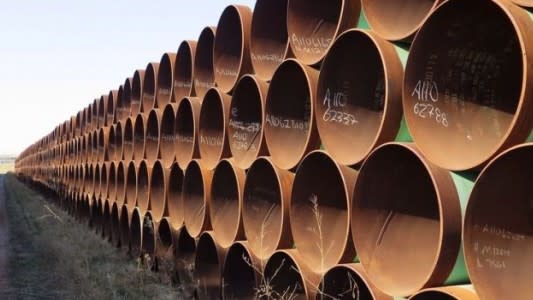
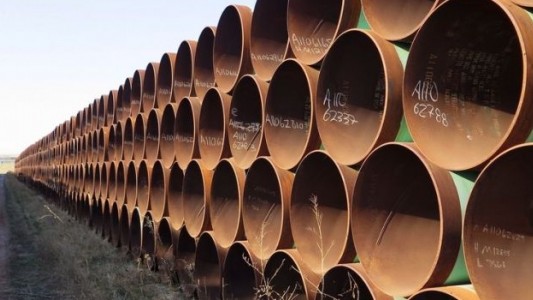
Last month, we reported that Bridger Pipeline LLC has proposed a giant pipeline with a capacity in excess of 1 million barrels per day (bpd) to transport Canadian crude into the United States. Dubbed "Keystone Light" due to its similarities to the Keystone XL project that former U.S. President Joe Biden canceled in 2021, the 36-inch pipeline would span nearly 650 miles (1,050 km) from the U.S.-Canada border in Phillips County, Montana, to Guernsey, Wyoming, and cost approximately US$2 billion.

And now U.S. President Donald Trump has given the go-ahead for development work on the pipeline to commence, marking yet another milestone in Canada's ongoing drive to diversify its oil exports.

Trump signed a presidential permit on Thursday authorizing the Bridger Pipeline Expansion, with construction expected to begin in 2027 with a goal of completion by late 2028 or early 2029.

The pipeline will initially operate at ~550,000 bpd; however, Plainview Energy Analytics has noted that batching light crude oil could allow volumes to exceed typical heavy oil ceilings of 800,000 bpd for a line of this size, and deliver up to 1.13 mbpd.

Related: Venezuela Oil Exports Hit Seven-Year High

While the primary stated purpose of the proposed 647-mile Bridger Pipeline expansion is to transport up to 550,000 barrels per day (bpd) of Canadian crude from the U.S.-Canada border in Montana to Guernsey, Wyoming, company maps and plans show it includes potential tie-ins for the Bakken shale oil field.

The design provides access to a significant portion of Bridger's existing North Dakota gathering network, “This optionality positions the project for potential future expansion beyond 550,000 bpd and creates the possibility of a new competitive egress option for Bakken shippers,” Matthew Lewis, Plainview’s founder, said.

However, the project is expected to face significant opposition from environmental groups, Indigenous communities, and landowners, with a potential need for a new presidential permit for the border crossing. To wit, the Montana Environmental Information Center (MEIC) has raised concerns regarding the inherent risk of spills and the potential environmental impact on Montana's land and water. MEIC has highlighted the history of the owner, Bridger Pipeline LLC (a subsidiary of True Companies), specifically citing the 2015 incident where over 30,000 gallons of oil spilled into the Yellowstone River near Glendive, MT, contaminating the city's water supply. It also argues the pipeline would transport environmentally destructive fuel sources, threatening wildlife habitat, local agriculture, and water quality. WildEarth Guardians and Earthjustice have expressed similar concerns.

Meanwhile, Greenpeace Canada has condemned the expansion, arguing that Canada should focus on reducing oil reliance rather than investing in new fossil fuel infrastructure. In its defense, whereas Keystone Light revives portions of the canceled Keystone XL route, it largely avoids some historical flashpoints by not crossing Native American reservations and following existing infrastructure corridors for 70% of its 650-mile route.

It’s also noteworthy that Greenpeace Canada's position is part of a broader "Greenpeace" network effort that has faced significant legal retaliation from pipeline developers for its opposition tactics, including a 2025 jury verdict in the U.S. that initially ordered the group to pay hundreds of millions in damages for protests related to other projects.

That said, the Bridger Pipeline project belies the fact that Canada’s oil sector is desperately trying to lower its reliance on the United States. To wit, Alberta is actively seeking Asian and Middle Eastern investment for a proposed 1 million barrel per day (bpd) oil pipeline to the West Coast.

This initiative, led by the provincial government, aims to diversify export markets and reduce a near-total dependence on the United States. Unlike traditional projects, the Alberta government is acting as the formal proponent for the Northwest Coast Oil Pipeline to jumpstart early planning while Enbridge (NYSE:ENB, TSX: ENB), South Bow Corp. (NYSE:SOBO, TSX: SOBO), and the government-owned Trans Mountain are providing technical guidance. According to estimates by the experts, a  1.5-million bpd increase in pipeline capacity could add approximately $31.4 billion annually to Canada's real GDP between 2027 and 2035.

More than 90% of Canadian crude oil exports are shipped to the United States, with the unusually high concentration reflecting a long-standing, integrated infrastructure where Canada serves as the primary foreign supplier of oil to the U.S., particularly heavy crude, driven by limited alternative export routes. This leaves Canada badly exposed to changes in U.S. administration, including policies that can undermine energy security and force Canadian producers to accept lower returns.

By Alex Kimani for Oilprice.com

More Top Reads From Oilprice.com

Iran Warns of $140 Oil as Trump Holds Hormuz Blockade

Pakistan Imports First LNG Cargo in Weeks in Relief for Energy Crisis

Exxon Beats Q1 Earnings on Oil Price Surge Despite 6% Production Drop

Oilprice Intelligence brings you the signals before they become front-page news. This is the same expert analysis read by veteran traders and political advisors. Get it free, twice a week, and you'll always know why the market is moving before everyone else.

You get the geopolitical intelligence, the hidden inventory data, and the market whispers that move billions - and we'll send you $389 in premium energy intelligence, on us, just for subscribing. Join 400,000+ readers today. Get access immediately by clicking here.
Comments
You must be logged in to comment.