yahoo Press
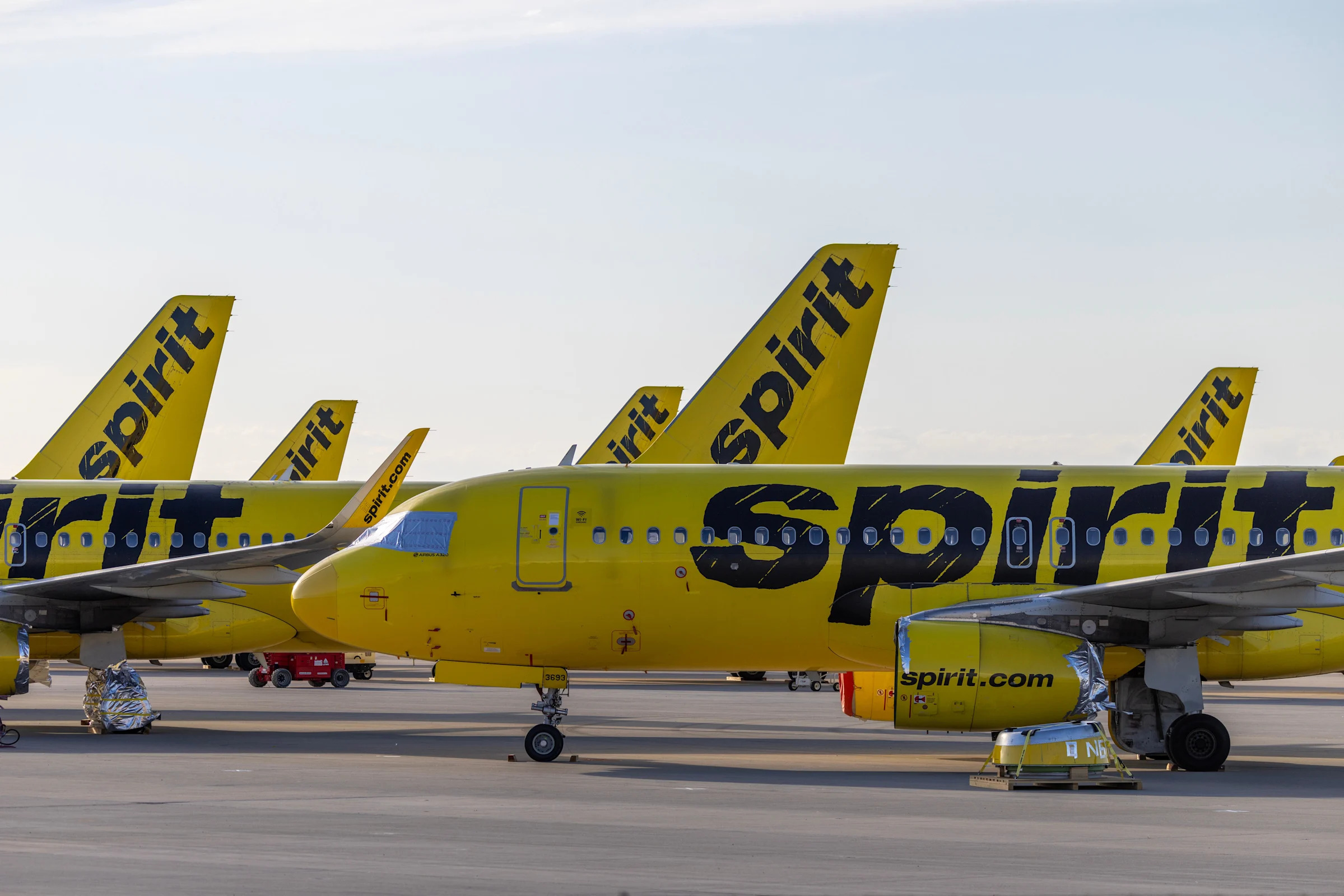
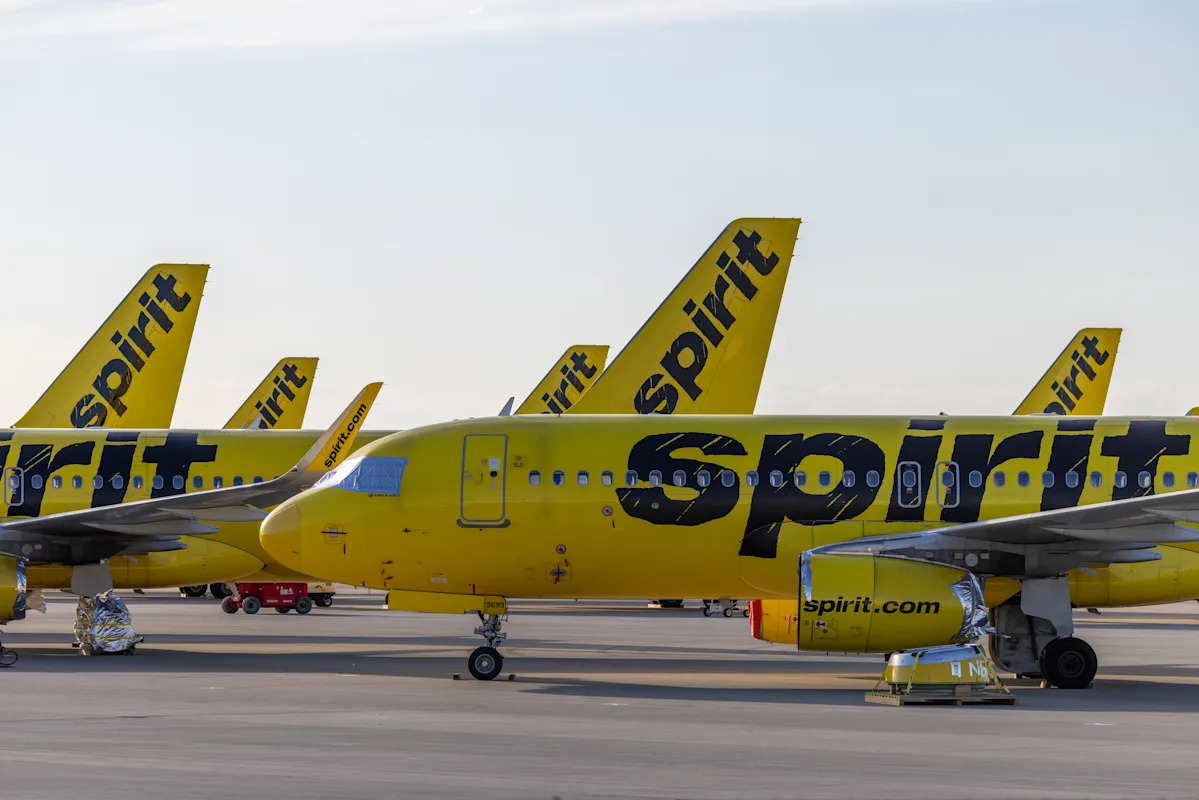
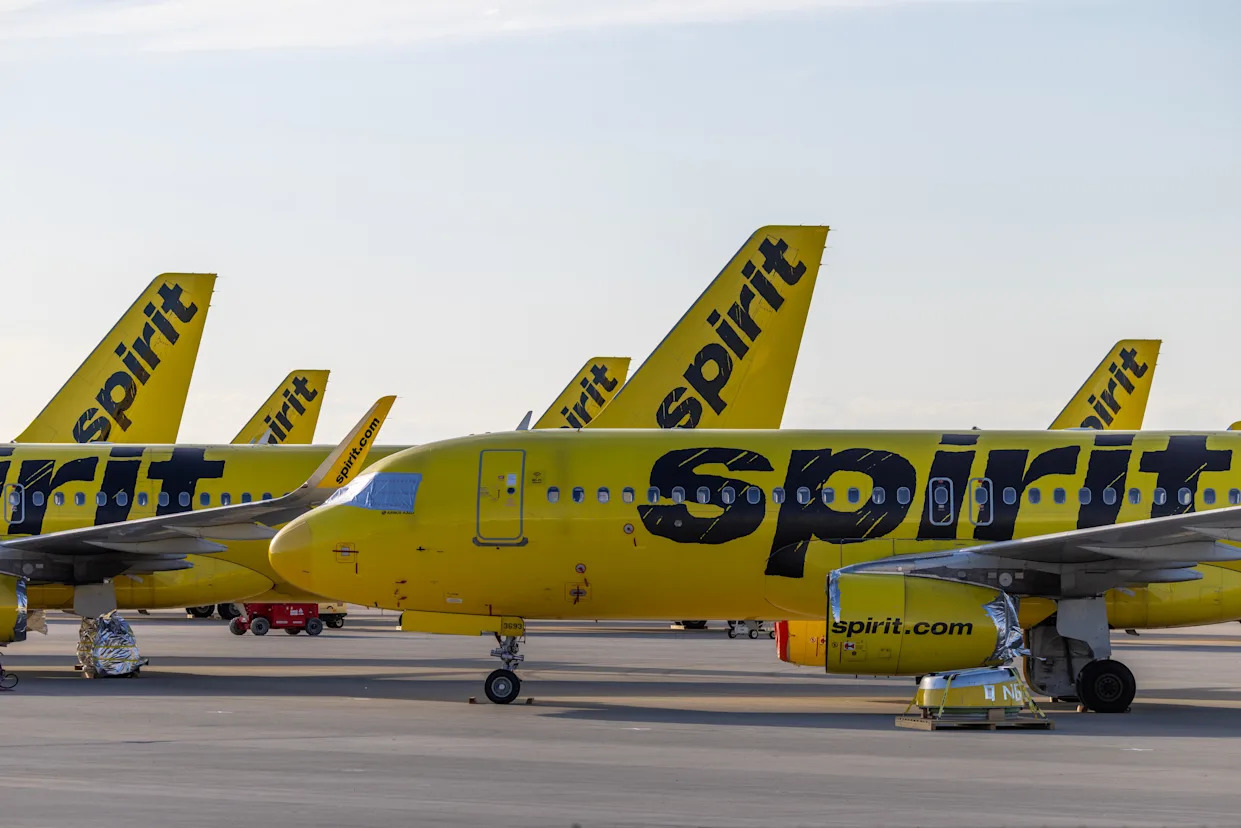
A TikTok creator's plan to crowdfund Spirit Airlines hit nearly $23 million in pledges before the site crashed
Images
1 / 11
2 / 11

3 / 11

4 / 11

5 / 11

6 / 11

7 / 11
8 / 11

9 / 11

10 / 11

11 / 11
A TikTok thought experiment about collectively buying bankrupt Spirit Airlines snowballed into a campaign that says it has drawn pledges from more than 36,000 people, totaling roughly $22.8 million — and apparently overwhelmed its own website by Sunday afternoon.

Hunter Peterson, a voice actor whose video game credits on IMDb include Hyrule Warriors: Age of Imprisonment, Honkai: Star Rail and Smite 2, launched letsbuyspirit.com on Saturday after his original TikTok about the idea drew 2.8 million views as of Sunday afternoon. By then, the search term "let's buy spirit com" was trending on Google with more than 100,000 searches in the previous 17 hours, up 1,000%.

Peterson is also the creator of an August 2025 YouTube video titled "I Flew Spirit Airlines for 24 Hours Straight!", an experience he cited in his original TikTok pitch as the reason he was suited to the cause.

In a TikTok posted Saturday, Peterson laid out the pitch: There are more than 250 million U.S. adults; if 20% of them contributed roughly the price of an average Spirit fare, between $30 and $40, the group could buy the airline outright. "This is a genius idea," he said in the video, which was set to Norman Greenbaum's "Spirit in the Sky." "We nationalize Spirit Airlines, owned by the people."

By Sunday, the site claimed it had drawn 36,605 "founding patrons" and a total of more than $22,816,377 in pledges, with an average pledge of $623, according to screen recordings circulating on TikTok. Peterson's Instagram bio now reads: "Get in losers, we're buying spirit. Voice Actor, Future Airline CEO."

The site appeared to be completely offline Sunday afternoon. Earlier in the day, screenshots circulating online showed letsbuyspirit.com displaying an overload notice: "Your response crashed our site. The movement grew so fast it overwhelmed our servers. We are upgrading infrastructure right now and will be back with full pledge functionality within 24-48 hours." But by Sunday afternoon, the site was no longer loading at all.

The campaign has directed users to a new Instagram account, @spiritair2.0, for updates while the site is offline.

Peterson addressed the crash directly in a video posted Sunday morning. "Website is very broken. I built that in like an hour and like, it's terrible," he said, identifying himself on camera as "Hunter Peterson, potential maybe future CEO of Spirit Airlines." He said he was rebuilding the site to bring pledges back online and put out a public call for help. "If you're a developer, please reach out," he said.

He said major outlets, including CBS, the Wall Street Journal, the Huffington Post and Fox & Friends, had reached out for interviews (Yahoo News could not verify these claims) and asked anyone in PR or with aviation legal experience to contact him. "Lawyers, hi, do you have aviation experience? Talk to me."

Peterson also clarified what he wants his role to be. "I really wanna run this on behalf of the people. I don't wanna own this," he said, adding that he wanted to hire people with airline experience. He restated his governance principle that any future venture capital or private equity backers would be "non-voting members," with voting power reserved for the public pledgers. "Those are the people that should vote, not venture capital, not private equity. That's not how this should work."

Peterson's first video about the campaign ended with him musing, "I should make a Venmo for this." In his next video, posted hours later after the website went up, he walked the idea back. "Register your intent. I won't take any money," he said. "We're not gonna use the Venmo anymore. That was kind of a joke."

After a Sunday repost of the campaign by social media account Pubity drew commenters questioning what would happen to any money pledged — one wrote, "Can't wait to see how badly this one turns out. What could go wrong with some guy holding onto millions of dollars of random people's money" — Peterson replied directly. "Yo do you guys want to clarify that we've taken on $0?" he wrote. "These are non binding pledges."

The pledge figures are self-reported by Peterson via the site he built and operates. Yahoo News could not independently verify the count.

Screenshots circulating online show the site branded "Spirit 2.0 / Owned by the People," with a $45 minimum pledge described as the price of a single ticket. The page frames the campaign as a public alternative to private-equity ownership.

"Private equity is already circling the wreckage," the site read. "The passengers, the workers, and the communities Spirit served can take it back. Like the Green Bay Packers. Like WinCo Foods." (The Packers are publicly owned via SEC-registered stock offerings dating to 1923; WinCo Foods is majority owned by its workers through an employee stock ownership plan.)

The page was built using Manus, an AI website-building tool, according to a "Made with Manus" credit visible in screenshots.

In a Sunday video, Peterson laid out an early framework for how his community-owned airline might work: Each participant would get one vote regardless of how much they contributed, with dividends paid proportionally to a person's pledge. "If people are going to collectively be a part of something, everyone's vote should be equal," he said. "It shouldn't be about how much money you have."

He said he was wary of outside investors but acknowledged the project would likely need them. "I don't wanna take on outside money to do this," Peterson said. "We probably will, but it will have to be something where it's like, we'll take on your money. But then we will buy you out at some point. The control still needs to be with the people."

Even with the $22.8 million the site claims it has drawn, Peterson's campaign would still represent only a small fraction of what a serious bid for the airline would cost. A Louisiana investor group called NewP3, led by businessman John Miller, proposed in February a $1 billion private capitalization of Spirit that would have moved the airline's headquarters to New Orleans. That bid did not materialize before Saturday's wind down.

Buying an airline involves more than raising money. A new operator must obtain a Federal Aviation Administration Air Operator's Certificate, a process that aviation analysts have said takes years and tens of millions of dollars. Spirit's existing certificate cannot simply be transferred without regulatory approval and creditor consent. Spirit's bondholders, including Citadel, Cyrus Capital and Ares Management, ultimately rejected the Trump administration's $500 million bailout offer last week. The New York Times reported the creditors had submitted a counterproposal with terms more favorable to investors and offered to help fund employee health care costs as part of Spirit's liquidation.

Community-owned airlines have been tried before. Kiwi International Air Lines, founded in 1992 by furloughed Eastern Airlines pilots and other laid-off workers who pooled their own savings, raised about $9 million of its $17 million in startup capital from employees. It filed for bankruptcy in 1996 and was liquidated by 1999. United Airlines tried a partial employee-ownership model through a 1995 employee stock ownership plan that collapsed by 2003, while the now-defunct People Express and Lake Central Airlines were both absorbed by larger carriers after experimenting with employee-owner-manager structures.

Peterson did not immediately respond to Yahoo’s request for comment. In a message on Instagram, Peterson said that he is “not interested in talking to any publication, news source, radio station, etc.” until he’s spoken with his “lawyer and we have a plan of action of the message.”
Comments
You must be logged in to comment.