yahoo Press
Iran says Pentagon lying about cost of war
Images
1 / 7

2 / 7

3 / 7
4 / 7

5 / 7

6 / 7

7 / 7
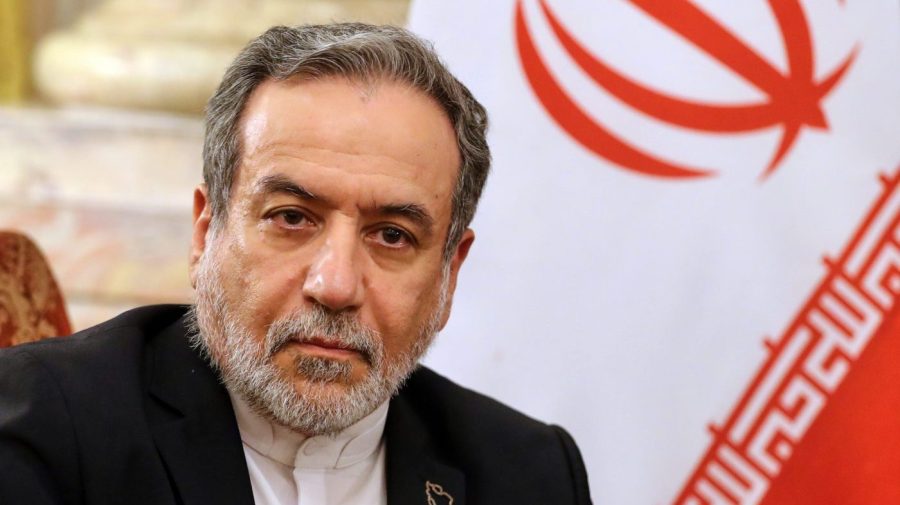
Iranian Foreign Minister Abbas Araghchi on Friday accused the Pentagon of lying about the U.S. cost of the war in Iran.

“The Pentagon is lying. Netanyahu’s gamble has directly cost America $100b so far, four times what is claimed,” Araghchi wrote in a social media post, referring to Israeli Prime Minister Benjamin Netanyahu. “Indirect costs for U.S. taxpayers are FAR higher. Monthly bill for each American household is $500 and rising fast. Israel First always means America Last.”

The conflict has so far cost the U.S. $25 billion, and “most of that is ammunitions,” the Pentagon’s acting Chief Financial Officer Jules Hurst III told members of the House Armed Services Committee on Wednesday.

Ammunition spent during the conflict has consisted of large quantities of Tomahawk missiles and Patriot interceptor missiles, with their use having depleted Pentagon reserves.

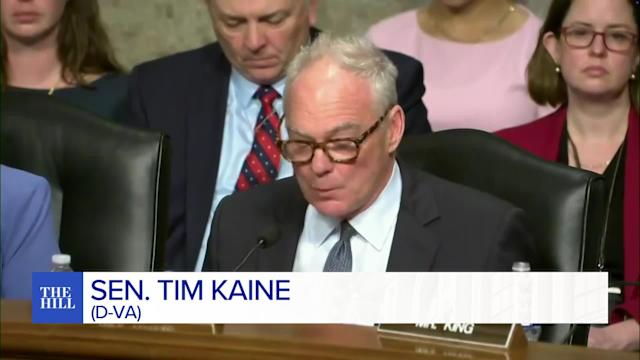
Sen. Angus King (I-Maine), a member of the Senate Armed Services Committee, told CNN on Thursday that he heard estimates cost the U.S. around $50 billion. He said the higher estimate would be based on the “billion dollars a day” spent for more than 60 days since Feb. 28.

“I’m going to try to make some inquiry into what they based their estimate on, because $25 billion is considerably below all the other estimates I’ve been seeing for the past two months,” King told the outlet.

On Thursday, CNN reported that the Pentagon’s estimate failed to account for repairing damaged U.S. military bases in the Middle East, with sources telling the outlet that those repairs could raise the cost by somewhere between $15 billion and $25 billion.

Friday marked the 60th day since the Trump administration formally notified Congress of the conflict on March 2. Administration officials, including Defense Secretary Pete Hegseth, have said the 60-day clock was on pause following the start of the latest ceasefire.

A senior administration official told The Hill’s sister network NewsNation that Operation Epic Fury was already “terminated” ahead of the 60-day limit imposed by the 1973 War Powers Act. This limit is imposed on the president, who is allowed 60 days to deploy U.S. troops into a conflict without congressional approval if there is an “imminent threat,” though the president can request a 30-day extension to ensure a safe withdrawal of troops.

Bipartisan lawmakers have echoed concerns about the conflict going beyond 60 days without congressional approval. Attempts at passing war powers resolutions have failed six times, though Sens. Susan Collins (R-Maine) and Rand Paul (R-Ky.) joined most Democrats in supporting the latest resolution blocked by Senate Republicans on Thursday.

House Speaker Mike Johnson (R-La.) cited the ceasefire and attempts at peace negotiations as being the reason why the U.S. is “not at war” with Iran.

“I would be very reluctant to get in front of the administration in the midst of these very sensitive negotiations, so we’ll have to see how that plays out,” Johnson told NBC News on Thursday.

Copyright 2026 Nexstar Media, Inc. All rights reserved. This material may not be published, broadcast, rewritten, or redistributed.

For the latest news, weather, sports, and streaming video, head to The Hill.
Comments
You must be logged in to comment.