bbc Press
BP profits more than double as Iran war sends oil prices higher
Images
1 / 8

2 / 8
3 / 8
4 / 8
5 / 8

6 / 8

7 / 8

8 / 8
BP's profits for the first three months of the year have more than doubled following a surge in oil prices since the beginning of the Iran war.

In its first results since the conflict broke out, the energy giant reported profits of $3.2bn (£2.4bn) between January and March after an "exceptional" performance in its oil trading business.

The figure was far higher than analysts had expected and more than double the $1.38bn it reported in the same period last year.

The results are the first under new chief executive Meg O'Neill, who took over at the beginning of April when her predecessor, Murray Auchincloss, left after less than two years in the role.

The US-Israel conflict with Iran, which began on 28 February, has led to a surge in oil prices, as the key Strait of Hormuz - which usually carries about 20% of the global supplies of oil and liquid natural gas - has been effectively closed.

Brent crude, the global benchmark for oil prices,  is currently trading at about $110 a barrel, compared with around $73 before the Iran war began.

O'Neill said she had joined "at a time when our industry is operating in an environment of conflict and complexity".

She added BP had been "working with customers and governments to get fuel where it's needed, helping minimize disruption and the impact it can have on people's lives".

Profits at the company's customers and products division, which includes its oil trading unit, surged to $2.5bn compared with just $103m a year ago.

However, BP said its upstream production - which refers to the search and extraction of oil and gas - had been flat in the quarter.

It also expected production in the second quarter to be lower, partly due to the  "effects of disruption in the Middle East".

Charles Hall, head of research at Peel Hunt, said BP was being cautious about business in the second quarter between April and June.

While the strong performance from the trading side was "probably going to last a little bit longer", he said: "There are other things going on and obviously it's a pretty uncertain world at the moment."

Environmental groups were sharply critical of BP's latest results.

Mike Childs, head of science, policy and research at Friends of the Earth, said: "Just as we saw in 2022 following Russia's invasion of Ukraine, fossil fuel giants are quids-in when global instability drastically inflates fuel prices.

"But again, it's ordinary people who pay the price when soaring energy prices threaten to plunge the UK into an even deeper cost of living crisis."

He added the UK needed to reduce its vulnerability to energy price shocks by increasing investment in renewable energy, as well as providing support for energy efficiency measures.

Energy firms operating in the UK are subject to a windfall tax that was introduced in 2022 as a response to soaring profits following Russia's full-scale invasion of Ukraine.

However, the levy only applies to profits made from extracting UK oil and gas. BP has said its UK businesses account for less than 10% of its global profits.

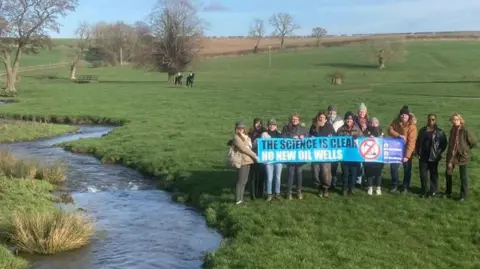
The work comes after plans to drill for oil at the site in Biscathorpe were scrapped last year.

Governments around the world have introduced measures to limit the impact of price increases.

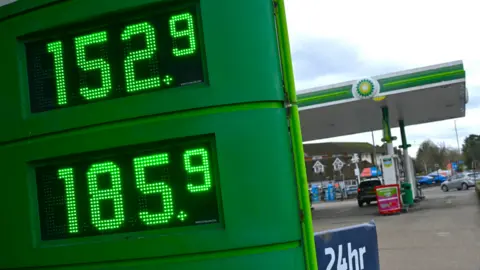
UK petrol and diesel prices have started to fall after 46 consecutive days of rises at the pump.

Drivers have seen weeks of increases as the US-Israeli war with Iran pushed up wholesale oil prices.

Flights could soon be cancelled if supplies from the Gulf remain blocked, says the International Energy Agency.
Comments
You must be logged in to comment.